


Free Funnel Audit
Convert more customers today!
SEO
10 mins read

SEO
10 mins read
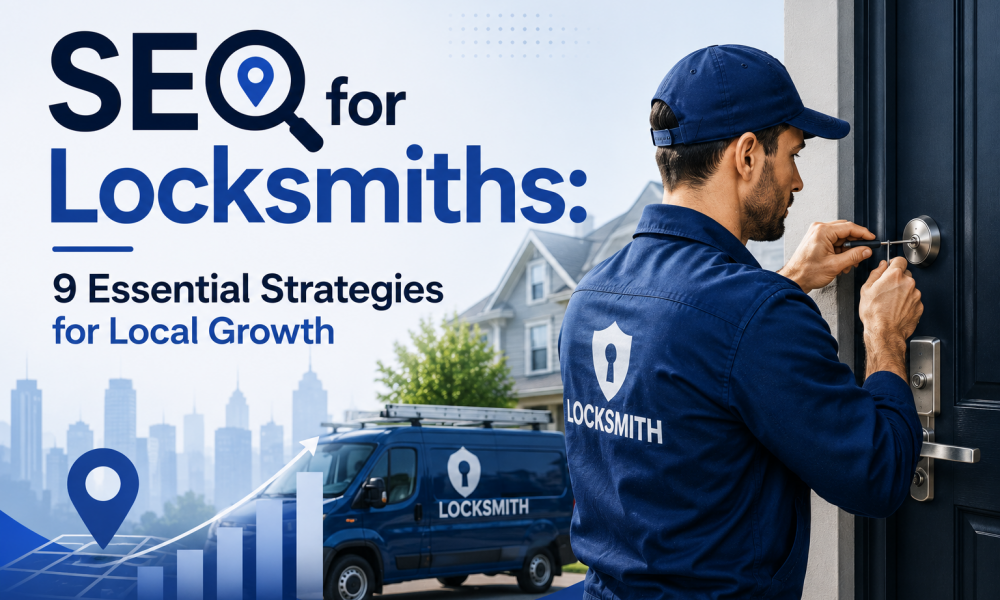
SEO for locksmiths helps your business appear when nearby customers urgently need lock, key, or security services. It improves your visibility across Google Search and Maps, which brings more visibility meaning more calls, bookings, and profitable local jobs.
Timing matters more in locksmith marketing than in most industries. This is because someone locked outside their home will not research providers for three days. They will likely call a trusted company near the top.
That makes local search visibility a key source of revenue. Yet higher rankings alone are not enough. Your listing, website, reviews, and phone experience must work together.
A strong locksmith SEO plan connects each part of that journey. It helps customers find you, trust you, and call quickly. Here are nine practical strategies that can drive steady local growth.
SEO for locksmiths is the process of improving a locksmith company’s visibility online. It helps nearby customers find the business through Google Search and Maps. The main goal is to turn local searches into calls and bookings.
The process covers both the company’s website and local business listings. It includes keyword research, service pages, technical fixes, reviews, and local citations. Each part helps search engines understand the business and its service area.
For example, someone may search “emergency locksmith near me” after losing their keys. Another person may need car key programming or commercial lock repair. Good locksmith SEO connects each searcher with the most relevant service page.
It also helps build trust before customers make contact. Clear service details, genuine reviews, and accurate hours can ease common concerns. That matters because customers often choose a locksmith during stressful situations.
Unlike paid advertising, organic traffic does not charge you for every click. Still, SEO requires steady work and regular updates. The strongest results come from helping real customers make quick, informed choices.
Most locksmith searches have strong buying intent. A person searching “locksmith near me” often needs immediate help. They may be stranded, worried, or short on time. That urgency can lead to quick decisions. Customers often scan the map results, read a few reviews, and call. If your company is hard to find, a competitor gets that job.
This is when paid ads can produce fast visibility. However, each click costs money, even when nobody books. Organic rankings can keep generating leads without a charge per click.
Local visibility also builds trust over time. Customers may see your name across maps, search results, and directories. That repeated exposure makes your company feel familiar.
Google says local results mainly depend on relevance, distance, and prominence. These factors help it select suitable businesses for each search. No company can pay Google for better organic local rankings.
Your goal is to strengthen every factor you can control. You cannot move closer to every searcher. But you can improve relevance, credibility, and online prominence.
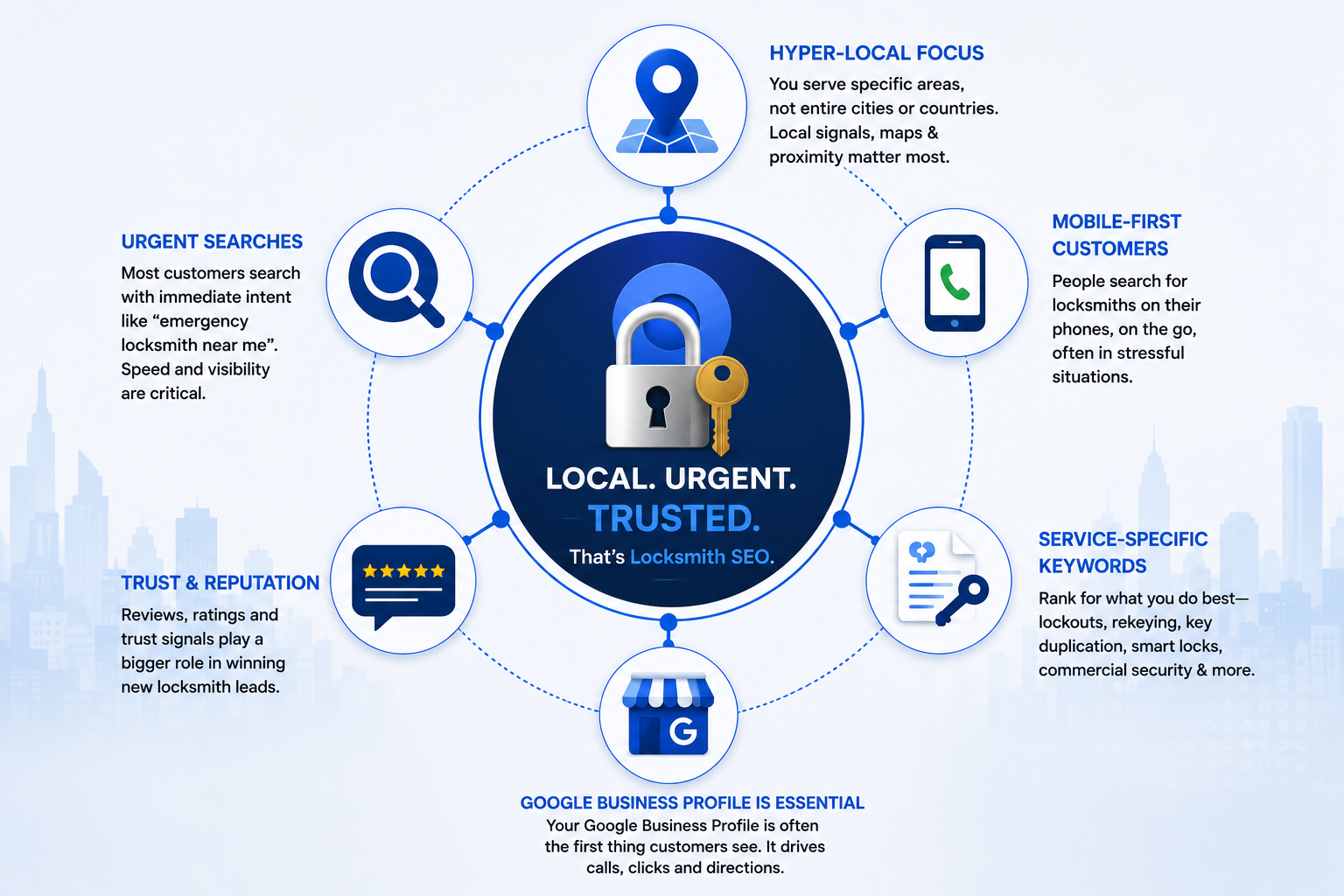
Locksmith searches are local, urgent, and highly competitive. They also cover many different needs. A car lockout differs greatly from a commercial master key project.
Customers use terms that describe both the service and the location. They may search for “car locksmith in Phoenix” or “lock repair near me.” Your online presence must match those clear needs.
Trust is another major issue. Customers give locksmiths access to homes, vehicles, and workplaces. Vague company details can quickly raise alarm bells.
Price concerns also affect the choice. People fear hidden fees during stressful emergencies. Clear service details and honest pricing guidance can ease that fear.
An effective campaign must address several real questions:
Good SEO for locksmiths answers these questions before a customer calls. It removes doubt from an already stressful choice. That is why clarity often beats clever marketing.
Your Google Business Profile can become your strongest local asset. It supports visibility in Google Maps and nearby search results. It also gives customers a quick path to call.
Why does completeness matter? Google needs accurate facts about your company. Customers need those same facts before they trust you.
Make sure to choose the most accurate primary business category available. Then add suitable secondary categories without stretching the truth. More categories do not always mean more visibility.
Complete every relevant profile field:
Do not add keywords to your business name unless they belong there. A fake name may create a short boost and can also cause edits, distrust, or profile suspension.
Many locksmiths work from vans and visit customer locations. If customers cannot visit your address, set up the profile correctly as a service-area business. Do not display an address that lacks a genuine customer-facing location.
Another thing that matters a lot is the profile activity matters as well. Add new photos from real jobs when appropriate and publish useful updates about seasonal services or business hours.
Picture this common search. A driver loses a key outside a grocery store. Two listings appear, but only one shows fresh photos, current hours, and strong reviews. Which company feels safer to call?
Keyword research reveals how people describe their problems. It also shows which services deserve separate pages. Without this step, a website may target terms nobody nearby uses.
Remember, the “why” comes before the “how.” Every search phrase reflects a different need. “Key copy shop” may signal a simple visit, while “emergency locksmith” signals urgent action.
Start with your core services, then combine each service with towns, districts, and natural local terms. Avoid creating hundreds of forced variations.
Useful keyword groups may include:
Add local modifiers where they fit naturally:
Do not treat every keyword as equal. “How does rekeying work?” has research intent. “Rekey locksmith near me” has stronger booking intent.
Map each valuable phrase to the right page. Your automotive page should target car-related searches. Whereas your commercial page should address offices, shops, and property managers.
The homepage can target your main service and core location. On the other hand, dedicated pages can support each major service. Local landing pages can cover real service areas with useful details.
Strong locksmith SEO focuses on customers, not keyword volume alone. A smaller phrase can still produce valuable jobs. Ten qualified visitors may beat one hundred casual readers.
A single services page rarely covers every customer’s need well. It forces unrelated topics into one crowded space. Search engines may struggle to identify the page’s main purpose.
Dedicated pages provide better answers. They let you explain the job, process, timing, and common concerns. They also create clear destinations for local keywords.
Each core service page should include:
Suppose a customer needs a smart lock installation. A general page saying “we handle all locks” offers no help. However, a focused page can discuss lock types, door fit, setup, and support.
Location pages need the same level of care. Changing only the city name creates thin, repetitive content, giving visitors very little value.
A useful local page should reflect the actual market. Mention genuine neighborhoods, service limits, travel patterns, and common property types. Local references must feel natural. Do not scatter place names through every sentence. Write as someone who understands the area, not someone reading a map.
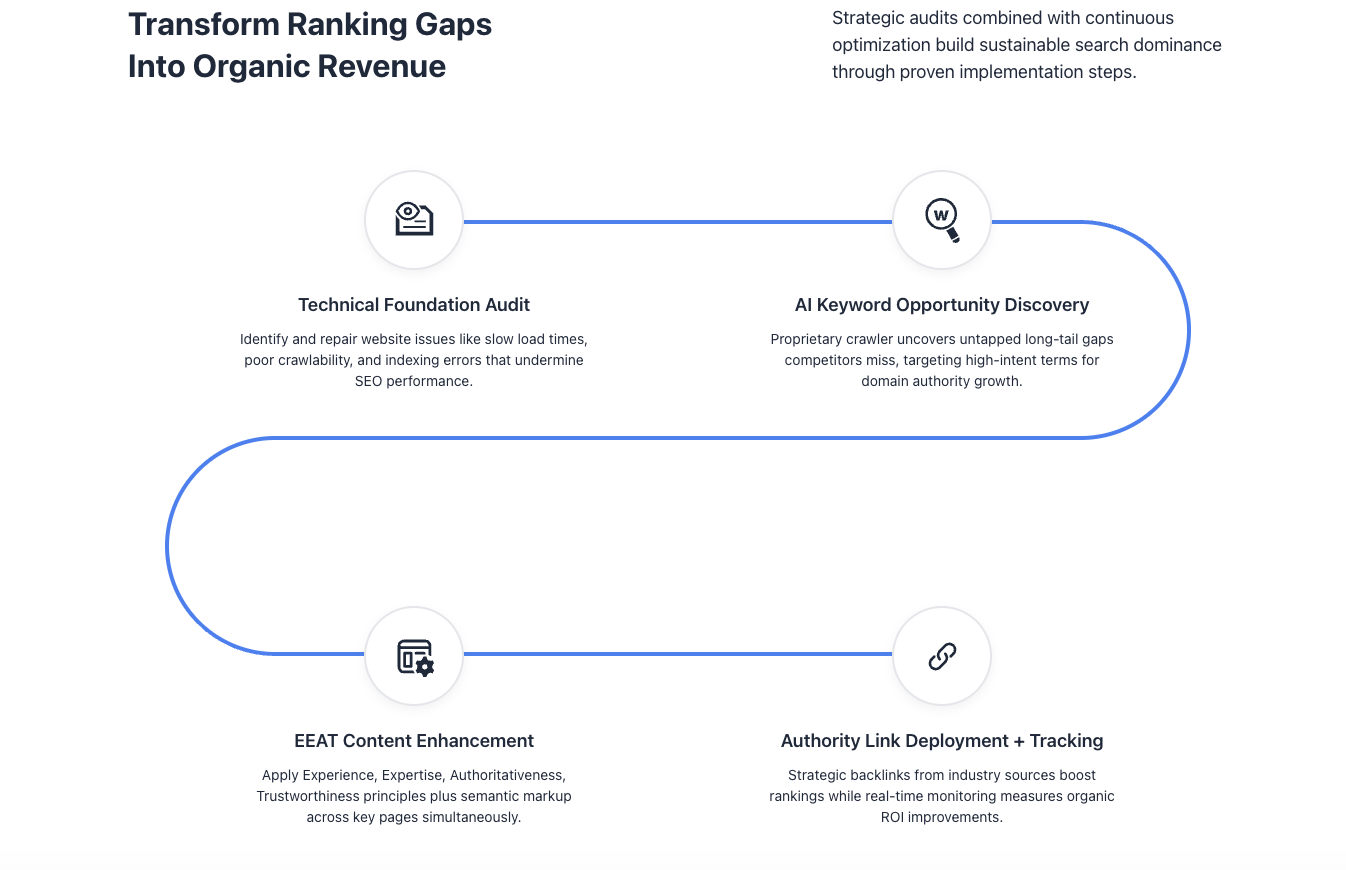
CausalFunnel offers SEO solutions that connect search opportunities with measurable business growth. Its approach can help businesses find content gaps and attract qualified traffic. This matters when several service pages compete for limited local demand.
Service pages target people ready to hire. This is where helpful articles reach customers earlier in their decision-making process. They can also support your main pages through internal links.
Why give away useful advice? Because clear advice proves that your team knows the work. It can turn uncertainty into trust long before a phone call.
Strong blog topics come from real customer questions:
To write helpful content, answer the main question in the first few lines. Then explain the choices, risks, and next steps. Do not bury the answer beneath a long introduction.
One of the most important elements of good content is experience. Experience makes the content stronger. So, explain what customers often misunderstand. Share practical examples without revealing anyone’s private details.
For example, a tenant may assume a stiff lock needs replacement. Sometimes the issue is a worn key or poor alignment. That detail feels more useful than a vague paragraph about “quality solutions.”
Keep all safety advice responsible. Do not provide instructions that could help someone bypass security. Focus on prevention, maintenance, and when professional help makes sense.
Effective SEO for locksmiths should make the company more useful, not merely more visible. Useful content earns trust and natural links. It also gives sales staff better resources to share.
Reviews can shape a customer’s decision within seconds. A strong star rating helps, but the written details matter too. People want proof that you arrive, communicate, and charge fairly.
When visitors come across recent reviews, they carry special weight with customers. A high rating from years ago may not reflect today’s service, but a recent review shows authenticity and trust. This is why you should build review requests into your normal workflow.
A good review process may look like this:
Do not tell customers which words to use, as that can make reviews feel staged. Honest details often include the service, area, response, or technician.
Respond to positive reviews with warmth, and avoid posting the same canned sentence each time. A short, specific reply feels more human.
On the other hand, negative reviews need calm handling. A sharp public reply can cause more harm than the complaint. Therefore, acknowledge the concern and offer a direct path to help.
Never reveal sensitive job details in a response. Locksmith work may involve addresses, vehicles, or security issues. Protect the customer’s privacy at all times.
Reviews can also reveal business problems. Repeated complaints about quotes or delays deserve attention. SEO cannot cover cracks in the actual customer experience.
A citation is an online mention of your business details. It may appear on a chamber site, directory, or trade platform. Accurate citations help create a consistent local identity.
Your name, address, and phone details should match everywhere. Even small variations can confuse customers. Old numbers may also send valuable calls into a black hole.
Start with major and relevant platforms. Then look for local groups that real residents use. Quality matters more than listing your company on hundreds of weak sites.
Potential citation sources include:
Check each listing by hand when possible and remove duplicate profiles. Also, remember to update old hours, links, addresses, and phone numbers.
Local links can strengthen authority too. A community site linking to your security checklist carries real context. A random overseas directory offers far less value.
Partnerships create natural opportunities. A locksmith might support apartment managers, towing companies, real estate agents, or auto shops. Useful local relationships can lead to mentions and referrals.
Furthermore, avoid buying bundles of cheap backlinks. Those links rarely build real trust. Some may create cleanup work later. Think like a respected local business. Sponsor a relevant event or create a landlord safety guide. Authority grows when your company contributes something useful.
Many emergency searches happen on phones. A customer may stand beside a locked car with poor reception. When the website is slow and cluttered, it will test their patience.
Mobile design affects trust as much as speed. Phone numbers should be easy to tap, and service areas and hours should be easy to spot.
Run through the website like a stressed customer would. Can someone find the right service within seconds? Can that person call without pinching and zooming?
Focus on these core improvements:
Add LocalBusiness structured data where it matches visible page content. It can help Google understand details such as hours and business information. Markup does not guarantee higher rankings, but it gives search engines clearer context. 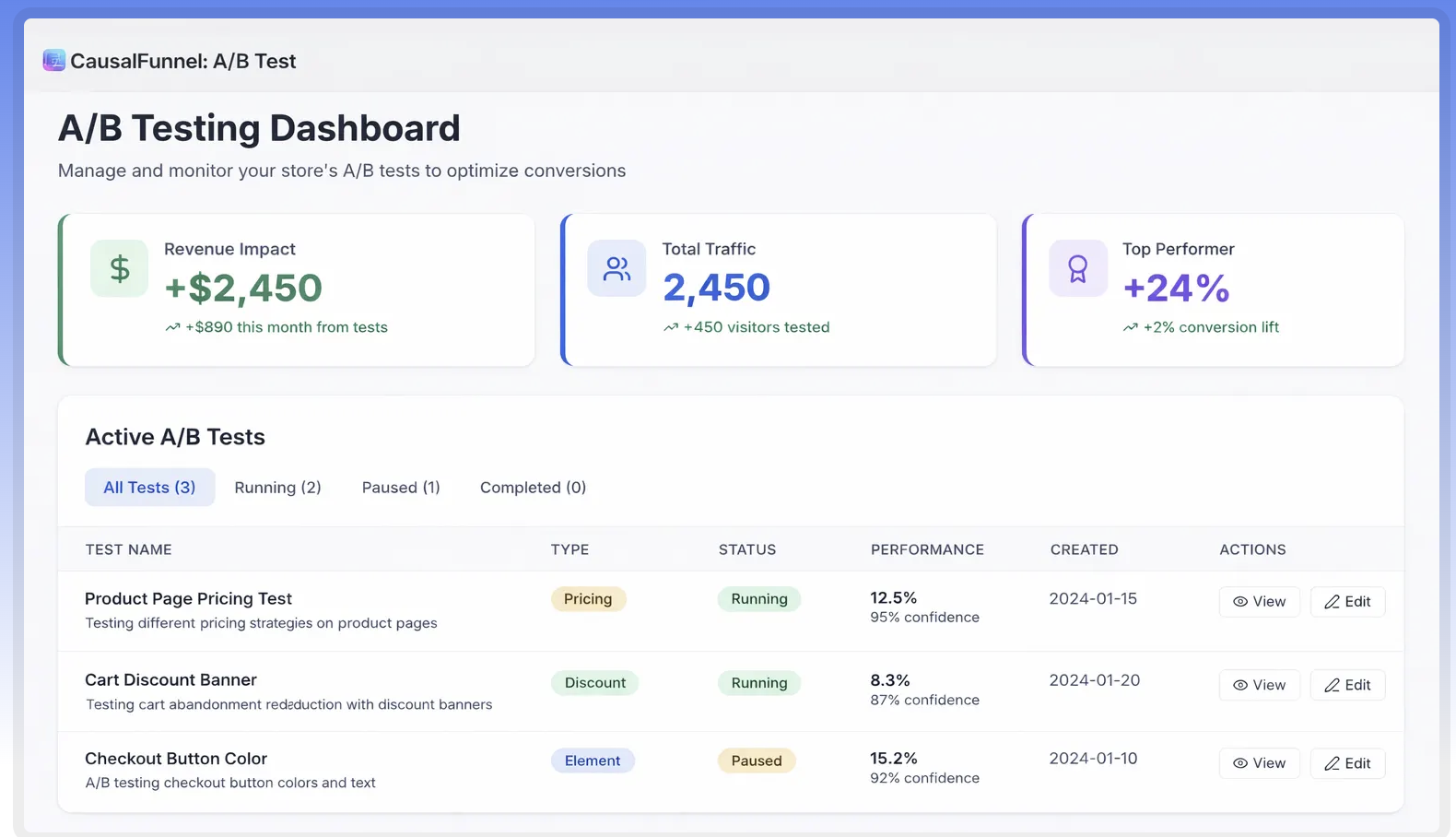
CausalFunnel provides conversion-focused tools such as visitor behavior analysis, funnel audits, personalization, and A/B testing. These services can show where site visitors hesitate or leave. That insight helps turn more search traffic into calls.
Traffic is only the start. A page can rank well and still produce few jobs. This often happens when the page feels vague or hard to trust.
Visitors need quick proof that your company fits their problem. They also need a simple next step. Make the path from search to contact almost effortless.
Place a clear call button near the top, and repeat it after helpful sections where it makes sense. On longer pages, a mobile call button can remain easy to reach.
Trust signals should be visible, specific, and true:
Avoid claims you cannot prove. “Fastest locksmith in town” sounds hollow without evidence. “Average arrival times vary by traffic and location” feels more honest.
Pricing deserves careful thought. Fixed quotes may not suit every lock problem. Still, you can explain call-out fees and factors that change the cost.
Forms should ask only what the team needs. Name, phone, location, service type, and a short message may be enough. Long forms feel absurd during a lockout.
Track calls and forms by page. This shows which services create real leads. It also stops you from judging success through traffic alone.
CausalFunnel combines conversion rate optimization with user journey tracking and AI-led personalization. Its tools can help teams test calls to action and find funnel leaks. That support can make existing visibility more profitable without chasing traffic for its own sake.
SEO is not a one-time repair. You’ll notice that search behavior changes, competitors improve, and business details shift. Regular tracking helps you catch changes before leads decline.
Start with metrics tied to revenue. Rankings provide useful context, but they do not pay the bills. Calls, qualified leads, bookings, and completed jobs matter more.
Track a focused set of measures:
Review your numbers once each month. Look for patterns rather than reacting to one bad week. Local demand may change during holidays, cold spells, travel seasons, or moving periods.
Some tactics look like shortcuts but create long-term risk. Locksmith businesses face close scrutiny because spam has affected the industry. Accuracy and honesty are worth protecting.
The most common mistakes include:
Another mistake is trying to serve everywhere. A huge service area may sound impressive. Yet it can create delays, weak local relevance, and unhappy customers.
Focus first on places you can serve well. Earn strong visibility in that core area. Growth becomes easier when the service operation supports the marketing promise.
Small improvements may appear within weeks. Strong and stable growth often takes several months. The exact timing depends on competition, website health, location, and current authority.
A verified profile with good reviews may move faster. Whereas a new business in a major city may need more time. Previous spam or technical issues can also slow progress.
Early work should create a clean foundation. That includes profile updates, page fixes, keyword mapping, and tracking. Content, reviews, and local authority then build momentum.
Be cautious when anyone guarantees first place. Google clearly states that businesses cannot request or pay for better local organic rankings. Good work improves your odds, but nobody controls the full result.
It can be worthwhile when local search already influences sales. First, estimate the value of one booked job. Then compare that amount with your current cost per lead.
Suppose an organic campaign brings 25 qualified calls monthly. If 15 become profitable jobs, the channel may pay for itself. But weak call handling could waste half those leads.
Ask these questions before hiring help:
The cheapest package can become expensive when it creates risk. The priciest plan is not always the best either. Look for clear thinking, honest reporting, and measurable goals.

The first month should fix the foundation. Audit your profile, website, citations, reviews, and tracking. Identify the services and locations that matter most.
During the second month, strengthen priority pages. You can do this by publishing content for clear customer questions. Begin a steady and ethical review process.
The third month should focus on authority and conversion. Build useful local relationships. Test page elements that may affect calls.
A simple plan might follow this order:
Strong SEO for locksmiths starts with accurate local information. It then builds trust through useful pages, credible reviews, and simple contact options. Each part should help a real customer make a quick, safe choice.
Do not chase rankings in isolation. Track whether visibility creates calls and profitable jobs. A number-one position has little value if visitors leave confused.
The best locksmith SEO strategy feels less like a trick and more like good service. It gives people the right answer at a stressful moment. When someone nearby needs help tonight, will your business be the easiest, trustworthy choice to find?
SEO for locksmiths improves a locksmith company’s visibility in local search results. It includes website optimization, local content, reviews, citations, and Google Business Profile management. The goal is to attract nearby customers seeking specific locksmith services.
Most customers want a locksmith who can arrive quickly. Local SEO helps your business appear for searches within your service area. Better visibility can generate more calls from people ready to book.
Some improvements may appear within several weeks. Meaningful growth often takes three to six months. The timeline depends on competition, reviews, website health, and current local authority.
Yes, when pages target urgent searches and provide clear contact options. Accurate hours and easy-to-tap call buttons are vital. Your team must also answer calls quickly and confirm availability honestly.
Yes, especially in a smaller or less competitive market. Start with profile accuracy, reviews, service pages, and website speed. Professional help may save time when technical issues or heavy competition arise.
Start using our A/B test platform now and unlock the hidden potential of your website traffic. Your success begins with giving users the personalized experiences they want.
Start Your Free Trial

Empowering businesses to optimize their conversion funnels with AI-driven insights and automation. Turn traffic into sales with our advanced attribution platform.
Trusted by Customers


©CausalFunnel Inc. All rights reserved.