


Free Funnel Audit
Convert more customers today!
SEO
10 mins read

SEO
10 mins read
Pest control searches often carry strong intent. Someone who spots termites, roaches, or bed bugs wants help as soon as they can. They are not browsing for a solution for the next month, rather they want a trusted technician right away.
This is when Google Ads can help for pest control. Google Ads for pest control can generate qualified leads quickly when campaigns target urgent local searches, track real bookings, and filter wasted clicks.
This guide explains nine strategies for doing that. It also covers costs, tracking, landing pages, and common mistakes. More importantly, it shows how to turn clicks into booked treatments.
Pest control is built around moments of urgent need. A homeowner may ignore one ant near the door, but the same ant with a full trail across the kitchen changes that.
Search ads place your business near the top of Google. That visibility matters when homeowners compare several providers within minutes. If your pest control company has strong ads, it can capture demand that already exists.
The model also gives you useful control. You can choose locations, schedules, services, keywords, and daily budgets. You can pause weak campaigns without changing your whole marketing plan.
Still, paid search is not a magic tap. Google sends traffic based on your campaign signals. If those signals are vague, the traffic may be vague too. A campaign might report many conversions while producing poor jobs. Perhaps forms come from tenants seeking free advice. Maybe calls come from areas your trucks never serve.
The real aim is not the cheapest possible click. It is a profitable, serviceable customer. That difference shapes every strategy below.
Before building campaigns, decide what a good lead is worth. This step prevents blind spending later. It also helps you set practical acquisition goals.
Suppose a one-time treatment brings $250 in revenue. The job may also create fuel, labor, chemical, and support costs. Paying $150 for that customer could leave very less profit.
On the other hand, recurring plans tell a different story. A customer may stay for several seasons. That relationship could justify a higher first-sale cost.
Use this simple formula:
Target cost per lead = Target customer acquisition cost × Lead-to-sale rate
Assume you can pay $120 for each new customer. Your team closes 40% of qualified leads. Your target cost per lead would be about $48.
You should also track lead value by service. A mosquito treatment and a termite job have different margins. Treating every inquiry as equal gives Google the wrong lesson.
Ask these questions before setting your budget:
These numbers do not need to be perfect initially. A sound estimate beats a random target. You can refine it as sales data grows.
Campaign structure determines how much control you have later. One giant campaign looks easy to manage but in reality, it hides what drives results.
A person searching “termite inspection near me” has a clear need. Someone searching “how to stop ants naturally” may just want some advice. Those searches should not receive the same bid or page.
Build separate campaigns around your main revenue groups. Then create tight ad groups for related searches. Make sure to keep language close to the customer’s exact concern for them to understand the campaign better.
A practical account could include:
You may also split campaigns by city or service zone. This works well when prices, travel time, or competition differ. A dense downtown route may behave differently from distant suburbs.
Avoid building hundreds of tiny ad groups without enough traffic as too much separation slows learning and adds work. Start with the services that already produce solid revenue.
This structure answers an important business question. Which exact service earns the next dollar of budget? Without clear groups, that answer stays buried.

Keyword volume can look exciting, yet high volume does not always show buying intent. Pest control firms need searches tied closely to action.
To target high-intent keywords, start with terms that name a pest and a service. Local phrases also signal that the searcher wants help nearby. However, urgent words can point toward an immediate booking.
Strong keyword themes may include:
Use phrases and exact matches when launching a new account. They offer more control while you learn. Broad match can expand reach once tracking and lead data become reliable.
But beware, do not assume every long keyword is better. For example, “Affordable local ant exterminator open today” sounds precise, yet it may receive almost no traffic in a smaller market.
Look at meaning, not just length. Does the search suggest a real pest problem? Does your team provide that service in that area?
CausalFunnel’s Ads Optimizer can support this process through campaign performance analysis, automated testing, and revenue attribution. Its platform also connects paid traffic data with funnel results. That helps teams judge campaigns by business outcomes, not surface-level clicks.
Negative keywords protect your budget from poor-fit searches. They tell Google when your ads should not appear. While this task may feel dull, it often saves money the fastest.
Imagine paying for “DIY mouse trap plans.” That search may include the word “mouse,” yet the person wants instructions. They are not ready to hire your company.
Start with negatives tied to jobs, education, products, and free advice. Then expand the list using real search data by reviewing each term carefully before blocking it.
Common negative themes include:
Do not add broad negatives without checking context. The word “home” could appear in valuable residential searches. One careless exclusion may hide your ads from good customers.
Create shared account-level lists for terms that never fit. Use campaign lists when a term is wrong only for one service. For example, exclude “commercial” from a residential-only campaign.
Google recommends reviewing search insights and adding irrelevant terms as negatives. The goal is to remove traffic that cannot become a useful lead.
A lead has little value when your team cannot serve it. Yet location settings are one of the easiest places to make mistakes. A campaign can target a city while still reaching interested outsiders.
Google’s default option may include people showing interest in your chosen area. That reach works for some businesses and can cause trouble for a local service company.
Consider using the “Presence” option for tightly local campaigns. It focuses ads on people likely located within your targets. Google notes that this setting produces more focused geographic traffic.
Therefore, build targets around real operating limits. Do not choose a huge radius simply to gain impressions. Rather, ask your dispatcher where crews can travel profitably.
Useful location controls include:
Some firms still run ads overnight with an online booking option. That can work for urgent searches but just make the next step clear and honest.
A strong pest control ad should feel like a direct reply. When the searcher names a problem, your ad should show that the company solves it nearby.
Avoid opening with empty claims like “We Are the Best,” because every competitor says something similar. Rather, use details customers can understand and verify.
A termite ad might include:
On the other hand, a rodent campaign needs a different language. Mention inspections, entry-point checks, or removal when those services apply. Do not send every pest to the same generic promise.
Good responsive search ad assets can highlight:
Each headline should make sense on its own because Google may show assets in different orders. Therefore, the platform specifically advises writing assets that remain clear in any combination.
Use call assets, sitelinks, structured snippets, and location assets. These make the ad more useful before the click. They also give customers more ways to act.
Sitelinks could direct users toward termite control, rodent removal, or commercial plans. A pricing or estimate page may also help. Keep each destination closely tied to its label.
Do not stuff every headline with the same phrase. This is because when you repeat them, it wastes valuable space. You can instead mix service terms, proof, location, and action.
The click is only the front door of getting a lead. What works more is that your landing page must finish the conversation. A weak page can waste even the best traffic.
Do not send urgent searches to a broad homepage. The visitor should see the same pest and service from the ad that leads to building trust within seconds.
A useful landing page answers these questions quickly:
Place the main action near the top and use a clear button such as “Request an Inspection.” Add a tap-to-call number for mobile visitors.
Keep forms short at first. Name, phone, ZIP code, pest type, and a brief message may be enough. Extra fields can come later during the call.
Proof should feel specific. Add real reviews, certifications, service guarantees, and technician photos when available. Avoid stock images that look unrelated to your team.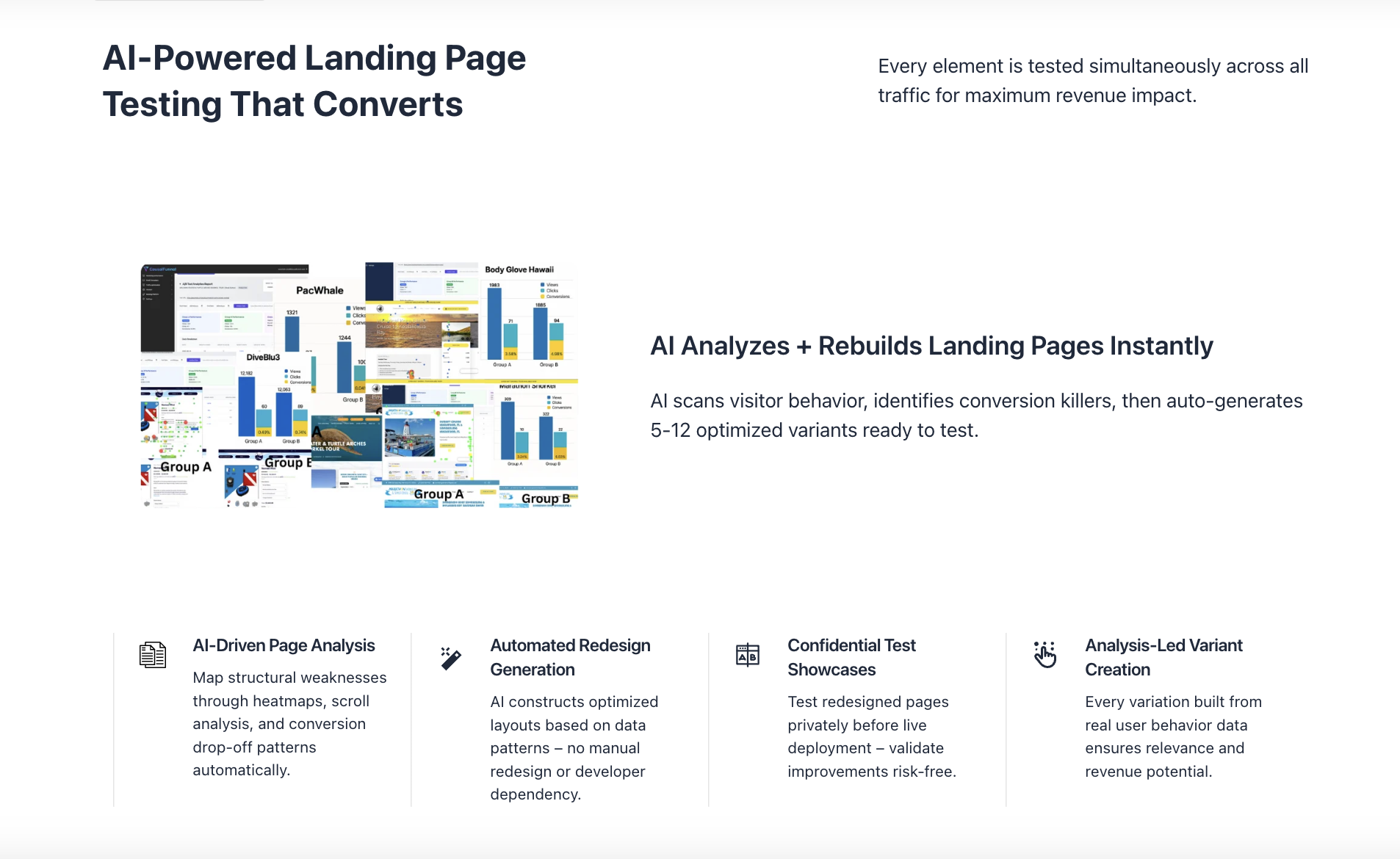
CausalFunnel’s Landing Page Optimizer and A/B testing tools can help identify page drop-offs and test stronger messages. Its conversion tools connect on-site behavior with campaign data. That gives pest control firms a clearer view of what happens after each ad click.
Page speed also matters. A homeowner dealing with a roach problem will not wait patiently and large images, popups, and slow scripts can send them back to Google.
Test every page on a phone. Try calling, submitting the form, and using the menu. If any step feels annoying, fix it before buying more traffic.
Google Ads cannot optimize toward outcomes it cannot see. If tracking counts every form equally, Google assumes every form has equal value.
Therefore, track the first lead action correctly. This includes form submissions, qualified phone calls, chats, and online bookings. Avoid counting simple page views as primary conversions.
Call tracking is vital for pest control. This is because many homeowners prefer calling during urgent problems. To track the calls, set a reasonable call-length threshold. A five-second wrong number should not equal a ten-minute booking call. Review recorded or scored calls where local laws and consent rules allow.
Then pass deeper outcomes back into the ad platform. Useful stages might include:
This step changes how automated bidding learns. It stops rewarding campaigns that generate spam. Instead, it can favor searches connected to real revenue.
Automated bidding can save time and improve results. But it needs clean conversion signals. Feeding it weak data only speeds up weak choices.
A new campaign may begin with Maximize Clicks under strict controls. Another may use Maximize Conversions if tracking already works. The right choice depends on account history.
Target CPA can make sense once qualified conversion data grows. It tells Google the average acquisition goal, yet an unrealistic target can choke traffic.
Suppose recent qualified leads cost $90, setting a $25 target overnight will not create a miracle. It may reduce reach and slow learning.
Before using stronger automation, check these points:
Avoid changing bids, budgets, ads, and targets every day. Each large change can disturb learning. Give the campaign time to collect useful evidence.
Seasonality can also distort results. A sudden termite swarm may raise search demand while a cold snap may increase rodent calls within days.
Use business context when reading the dashboard. The system sees patterns in data and it does not know that three trucks were unavailable Tuesday.
A low cost per lead looks good in reports, but it does not prove the campaign makes money. Cheap leads may come from weak areas or low-value services.
Therefore, track results from keyword to completed job. Compare revenue, close rates, and repeat plans. This reveals which traffic deserves more budget.
A simple scorecard could include:
Metric | What It Tells You |
Search impression share | How often your ads appear |
Click-through rate | Whether ads attract attention |
Cost per click | What traffic costs |
Qualified lead rate | How often inquiries fit |
Booking rate | How often good leads schedule |
Cost per booked job | The real acquisition cost |
Job completion rate | Whether booked work happens |
Customer value | What the relationship earns |
Return on ad spend | Revenue compared with ad cost |
Do not judge keywords too quickly after one weak lead. Local service data can be messy, that is why it is important to look for patterns across enough calls and bookings.
Review performance by device, hour, location, pest, and search term. You may find mobile calls close well before noon. However, evening forms may produce more cancellations.
CausalFunnel combines Ads Optimizer, conversion optimization, attribution, and funnel analysis within one platform. These services can help connect ad spend with qualified leads and revenue. That wider view matters when click metrics tell only part of the story.
Move the budget toward profitable services carefully. If termite campaigns deliver strong margins, increase spend in steps. Make sure your team can handle the extra inspections.
Marketing cannot fix a full schedule or missed calls. Operations and advertising must move together. Otherwise, new demand becomes a pile of voicemails.
There is no single correct budget. Local competition, service prices, geography, and close rates all matter. A national benchmark cannot know your margins.
Start with a test budget that can generate useful data. A budget allowing only two clicks each day may learn very slowly. Yet spending heavily before tracking work is just as risky.
Use this planning method:
For example, assume clicks cost $12. One in ten visitors becomes a lead, so, your estimated lead cost is then $120.
If half those leads qualify, each qualified lead costs $240. If your team closes half, the customer acquisition cost reaches $480.
Would that be profitable? It may work for high-value termite contracts. It may fail for a small one-time treatment.
This is why cheap-click thinking causes trouble. The numbers must reach the completed job. Anything less leaves the main question unanswered.
Ads can begin receiving traffic shortly after approval. However, qualified lead flow may still take longer. This is because campaigns need search demand, proper bids, and strong pages.
The first month is often a learning period where search terms reveal hidden waste. On the other hand, call reviews expose weak intent or poor handling.
Some businesses see useful leads within days, while others need several weeks of refinement. No honest agency can promise a fixed number without account and market data.
Early reviews should follow a steady rhythm:
Do not rebuild the account after two quiet days as small samples can mislead. Fix clear waste, then allow sound tests to run.
The same mistakes appear in many local accounts. Most come from chasing volume without checking quality while a few seem harmless until the invoice arrives.
A clear launch plan keeps the team focused. It also prevents random edits based on mood. Make sure to use the first month to build reliable signals.
Choose profitable pests and service areas. During this period, confirm prices, capacity, and phone coverage. You should also set up forms, call tracking, and booking events.
To build the foundation, create focused landing pages before launch and test each action on desktop and mobile. Make sure thank-you pages and tags work.
Start with exact and phrase keyword themes. Add strong negative lists, use service-specific ads and location settings.
Ensure to keep budgets high enough to gather evidence. Do not spread a small budget across ten campaigns. Begin with the services that matter most.
Read search terms and inspect calls and mark leads as qualified, unqualified, booked, or lost. While reviewing, look for repeated causes of poor quality.
Check locations and schedules too. A cheap lead from outside your territory is not a win. Neither is a midnight call nobody answers.
Pause obvious waste and expand proven terms. Test one meaningful landing page change, and compare ads using qualified lead data.
Send booked and completed outcomes back into reporting. Then decide where the next budget increase belongs. Let sales quality guide that choice.
Strong campaigns are rarely flashy. They are precise, local, and easy to measure. Every part supports the same customer need.
They share several traits:
Google Ads for pest control works best as a full system. Keywords bring the searcher, ads earn attention, and pages build trust. Finally, your team ends it by closing the job.
The dashboard cannot replace sound judgment. It can only show what your setup measures. If the account rewards real customers, it can learn from real value.
So, before raising next month’s budget, ask one hard question: Are your ads buying more clicks, or are they building a steadier route of profitable pest control jobs?
Yes, Google Ads can work well for local pest control companies. They reach people already searching for quick help. Strong targeting and accurate tracking improve lead quality.
The right budget depends on competition, service value, and location. Start with enough money to gather useful conversion data. Increase spending only when campaigns produce profitable jobs.
A campaign may generate leads within its first few days. Stable results usually take several weeks of testing. Search terms, ads, bids, and landing pages need regular reviews.
The best Google Ads for pest control match urgent local searches. They mention the pest, service area, and clear next step. Each ad should lead to a relevant service page.
Yes, but the campaign should track recurring plan sales separately. These customers may hold more long-term value than one-time bookings. That value can justify a higher acquisition cost.
Start using our A/B test platform now and unlock the hidden potential of your website traffic. Your success begins with giving users the personalized experiences they want.
Start Your Free Trial

Empowering businesses to optimize their conversion funnels with AI-driven insights and automation. Turn traffic into sales with our advanced attribution platform.
Trusted by Customers


©CausalFunnel Inc. All rights reserved.