


Free Funnel Audit
Convert more customers today!
SEO
10 mins read

SEO
10 mins read
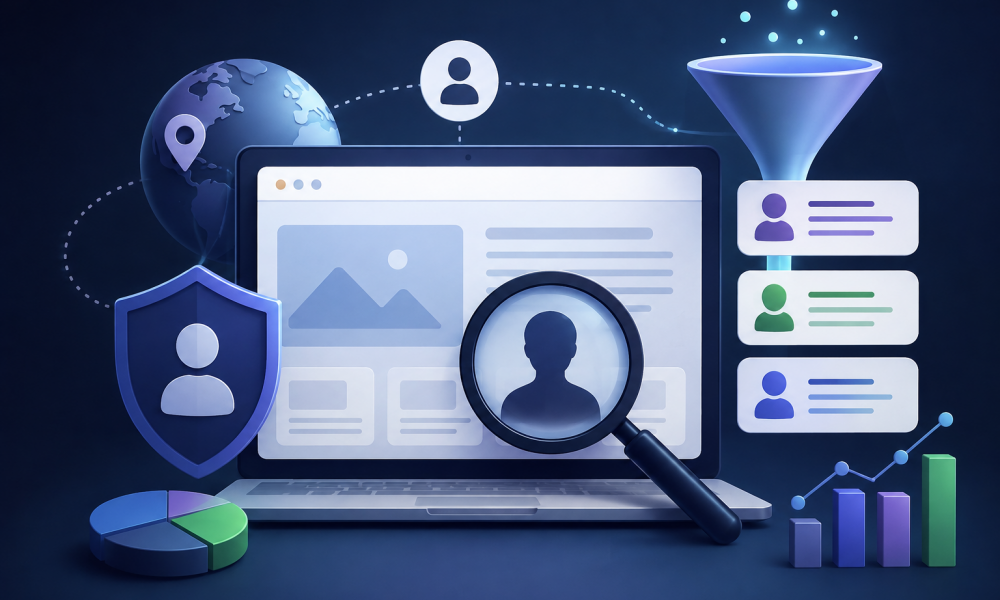
Most websites receive thousands of visitors every month. However, most visitors leave without sharing their identity. They browse pages, read content, compare products, and leave. Traditional analytics tools show visitor actions. They show pages viewed, traffic sources, and engagement rates. But they usually cannot reveal who those visitors are.
This creates a major challenge for businesses. High-intent visitors may leave without becoming leads. Sales teams may miss valuable prospects. Marketing teams may struggle to personalize campaigns.
Anonymous visitor identification solves this problem. It helps businesses understand unknown website visitors. It uses privacy-safe methods to connect visitor activity with useful identity signals. In 2026, visitor identification has become more advanced. Businesses now use identity resolution, AI enrichment, behavioral data, and first-party data. These technologies help companies discover valuable opportunities. They also help improve personalization and visitor security.
This guide explains how anonymous visitor identification works. It covers different methods, tools, and privacy-safe practices.
An anonymous website visitor is someone who visits a website without revealing personal information. They may browse product pages, or view pricing information. However, the business does not know their name, email, or company.
For example, a visitor may land on a software website through Google search. They may read several pages and check pricing. But they leave without filling out a form. The company knows their actions but not their identity.
Anonymous visitors can include:
Most websites have many anonymous visitors. In fact, only a small percentage of visitors usually convert into known leads.
Website analytics tools can collect information such as:
For example, analytics may show that someone visited a pricing page three times. This indicates possible buying interest.
However, analytics cannot answer important questions. Businesses still cannot know:
This difference separates visitor tracking from visitor identification.
Tools like Google Analytics are excellent for measuring website performance. They help businesses understand overall traffic patterns. You understand pages perform well and where visitors come from.
However, they focus on anonymous behavior. They answer questions like:
They generally cannot answer:
Visitor identification combines different signals to create a clearer visitor profile. For example, a visitor identification platform may connect:
This creates more useful insights for sales and marketing teams.
Anonymous visitors represent missed opportunities. If businesses only focus on known leads, they lose valuable signals. Identifying anonymous visitors helps businesses improve several areas.
Not every visitor has the same buying interest. Someone reading a blog post may be exploring. Someone visiting pricing pages may be closer to buying. Visitor identification helps businesses prioritize valuable visitors. Sales teams can focus on accounts showing strong interest.
Sales teams often rely on form submissions. This limits outreach opportunities. Visitor identification helps sales teams discover interested companies. For example, a SaaS company may notice repeated visits from a target account. The sales team can then create a personalized outreach message.
Anonymous visitors often receive the same marketing messages. Visitor identification allows more personalized experiences. Businesses can customize:
Anonymous visitor identification also supports security teams. Not every unknown visitor is a potential customer. Some visitors may be:
Security teams can analyze visitor signals. They can identify unusual behavior patterns. This reduces risks while protecting genuine users.
Businesses need complete customer information. Anonymous visitor data can add more context. It helps connect:
This creates a clearer view of the customer journey.
Anonymous visitor identification uses different technologies and data sources. Businesses combine multiple signals to understand unknown visitors better.
First-party data comes directly from website visitors. Businesses collect this information through their own websites and platforms. This method gives companies more control over collected data. It also creates stronger privacy and compliance practices.
Cookies are small files stored inside a visitor’s browser. Websites use cookies to remember visitor activity between sessions. They help businesses understand returning visitor behavior.
For example, cookies can show repeated visits to product pages. Businesses can track:
Cookies help identify returning visitors. However, cookies have important limitations. Many browsers restrict third-party cookies today. Some users also block cookies through privacy settings. Businesses must collect cookie data with proper consent.
Visitors provide information through different website forms. Common examples include:
Once visitors submit forms, businesses can connect their activity. For example, someone downloads a pricing guide. The business can later see their website interactions.
Login systems provide strong visitor identification because users reveal their identity when creating accounts. Businesses can track activity across multiple sessions. Examples include:
Login data helps businesses understand user behavior and improves personalization.
Newsletter signups create valuable first-party data. Visitors usually provide information voluntarily. This may include:
Businesses can connect newsletter activity with website behavior and see what subscribers really read. This creates more relevant email campaigns.
Account creation provides one of the strongest identity signals.
Users usually provide personal and business details.
This information may include:
Businesses can connect previous website activity with accounts.
For example, a visitor researches products before signing up.
The company can understand their complete buying journey.
IP-based identification uses network information and helps understand where website visitors come from. This method is especially useful for B2B companies because it reveals the organizations visiting a website.
IP enrichment adds information to visitor IP addresses. Businesses use specialized databases for this process. The data may reveal:
For example, an IP address may belong to a company network. IP enrichment can connect that address with the organization. This helps sales teams discover potential accounts.
Reverse IP lookup analyzes a visitor’s IP address. It attempts to identify the organization behind it. To understand this, let’s suppose a company visits a software website. Reverse IP lookup may identify that company. But results depend on database accuracy.
Company identification focuses on organizations and does not always identify individual visitors. Businesses can discover:
It helps companies understand account interest. It connects anonymous visits with business information. Common tracking signals include:
IP identification is useful but has limitations.
Many people can use the same IP address, like:
VPNs hide a visitor’s original IP address and replace it with another network address. This can affect location and company identification.
Remote employees often use personal networks. They may not browse through company systems. This makes company identification more difficult.
Browser and device fingerprinting uses technical signals, identifying visitors without relying only on cookies. It creates a unique digital profile.
Browsers provide many identification signals, such as:
A combination of these signals creates a browser fingerprint.
Devices also provide useful identification information. Common signals include:
These signals help recognize returning devices.
Fingerprinting helps recognize repeat visitors. The system compares new activity with previous patterns. For example, the same device returns after several days. The system can connect those visits together.
Companies use fingerprinting to identify risky activity. Its used for:
Identity resolution connects anonymous activity with known profiles. It is behind many modern marketing platforms.
Anonymous visitors create many digital signals, like:
Identity resolution connects these signals to create a more complete visitor profile.
Identity systems use deterministic and probabilistic matching.
Deterministic matching uses confirmed information. Examples include:
This method provides high accuracy. However, it requires known visitor data.
Probabilistic matching uses patterns and predictions. It analyzes signals such as:
The system estimates possible matches.
Effective identity systems use many signals together. They combine:
This improves identification accuracy.
AI has analyzes large amounts of visitor data and find patterns faster than manual analysis.
AI enrichment analyzes multiple data sources. This may include:
AI helps create richer visitor profiles.
AI studies how visitors interact with websites. It analyzes patterns such as:
These patterns help identify visitor interests.
Intent signals show possible buying interest, such as:
AI can identify these signals automatically.
Predictive systems estimate future visitor actions by analyzing previous behavior patterns. They can predict:
This helps teams prioritize valuable visitors.
Behavioral tracking focuses on visitor actions to enable an understanding of visitor interest.
Pages visited reveal visitor interests, like:
These actions help measure intent.
Time spent shows engagement levels. Visitors spending more time may show stronger interest. However, time alone does not confirm buying intent. It’s important to combine it with other signals.
Returning visitors often show higher interest. Multiple visits may indicate active research. Businesses can use this information for follow-up.
Content interactions reveal visitor needs. Examples include:
These actions provide useful intent signals.
Buying signals indicate purchase readiness, for example:
Businesses can use these signals for better outreach.

Before choosing a platform, understand your requirements. The right tool should provide accurate data, strong privacy controls, and useful integrations.
Consider these factors before selecting a tool.
A tool should correctly identify visitors and companies. Look for platforms that use multiple data signals. These may include:
Multiple signals usually improve identification quality.
Better data sources create better visitor profiles. Common data sources include:
Privacy compliance is essential for visitor identification. Businesses must protect visitor information. A good tool should support privacy requirements.
Important areas include:
Common regulations include GDPR and CCPA.
Choose tools that clearly explain their privacy practices.
Integrations help teams use visitor data effectively. A visitor identification tool should connect with existing systems. Useful integrations include:
CRM support is important for sales teams. Visitor data becomes more valuable when connected with customer records. A good tool should help sales teams:
Real-time alerts help teams respond quickly. Timing is critical when visitors show buying interest. For example, a company may visit your pricing page repeatedly. A real-time alert can notify the sales team. The team can then follow up while interest is high.
Modern tools use AI to identify patterns. AI can help with:
Visitor identification tools serve different business needs.
B2B visitor identification platforms focus on company-level identification. Here’s what they do:
B2B platforms analyze visitor signals. They match website activity with company information. Businesses can discover:
This helps teams understand hidden website demand.
B2B tools analyze visitor behavior. They identify actions that suggest purchase interest. Examples include:
These signals help teams find active prospects.
Sales teams can use visitor data for outreach. They can personalize conversations based on website activity. For example, a sales representative can mention relevant content for more useful customer interactions.
Marketing-focused tools help businesses improve campaigns. Below are their functions:
Visitor identification tools help build targeted audiences. Businesses can group visitors based on behavior, like:
These audiences improve marketing campaigns.
Anonymous visitors often leave without converting. Retargeting helps businesses reconnect with them. Visitor identification tools improve audience targeting and shows more relevant ads to interested visitors.
Visitor data helps create personalized experiences. Businesses can customize:
Security-focused tools protect websites and applications by identifying suspicious visitor behavior. These tools do the following:
Fraud detection tools analyze visitor activity to find unusual patterns, like:
Bots can affect website performance and security. Bot detection tools identify automated activity. They help businesses separate real users from harmful bots.
Risk scoring evaluates visitor behavior. The system assigns a risk level. Factors may include:
The best visitor identification tool depends on your business needs.
B2B companies often need company identification. They focus on:
B2C companies often need customer personalization. They focus on:
Choose a tool that matches your customer journey.
Small websites may need simple solutions. Large websites may need advanced platforms. High-traffic businesses often need:
Choose a tool that can handle your growth.
Different regions have different regulations. Consider:
A compliant tool reduces legal risks.
Visitor data should connect with your workflow. Consider compatibility with:
Privacy-safe identification combines proper consent, accurate data, and responsible practices.
Privacy regulations control how businesses collect and use visitor data. Companies must follow these rules when identifying website visitors.
The General Data Protection Regulation (GDPR) applies to businesses handling data from European users. It requires businesses to collect and process personal data responsibly.
Companies must explain:
Businesses should also provide user rights. These include:
Visitor identification tools should support GDPR requirements.
The California Consumer Privacy Act (CCPA) protects California residents. It gives users more control over their personal information. Businesses must provide transparency about data collection. They should explain:
Cookies can collect valuable visitor information. However, businesses must collect consent where required. A proper cookie consent process should:
Businesses should clearly explain their data practices. A privacy policy should include:
Each identification method has limitations. The best systems combine multiple signals.
IP addresses do not always identify individual visitors. Several factors reduce IP accuracy, like:
Modern visitor identification uses multiple data sources. These signals work together. Examples include:
Knowing who visits your website is useful. However, understanding why they visit is more valuable.
Some visitor actions show stronger interest. Examples include:
These actions indicate deeper engagement. Businesses should prioritize visitors showing these behaviors.
Buying signals show possible purchase readiness. Common signals include:
These signals help sales teams identify opportunities.
Visitors have different needs at different stages. A new visitor may need educational content. A returning visitor may need product information. Understanding customer stages improves communication.
Visitor identification becomes more valuable when connected with existing tools.
CRM systems store customer and prospect information. Connecting visitor data with CRM platforms helps teams:
Marketing automation platforms use visitor data for campaigns. Businesses can create more relevant communication, such as:
Visitor insights improve campaign effectiveness.
Sales teams need timely information. Visitor data can trigger useful actions, like:
This helps representatives contact prospects at the right time.
Personalization platforms customize user experiences. Visitor data can improve:
CausalFunnel helps businesses uncover the value hidden in anonymous website traffic. Its AI-powered DeepID technology recognizes returning visitors without relying on traditional third-party cookies. Instead, it uses advanced behavioral fingerprinting and cookie-agnostic tracking to connect visitor activity across sessions and devices.
The platform goes beyond simple visitor recognition. It analyzes browsing behavior, identifies buying intent, and enriches anonymous visitor profiles with valuable business insights. This allows sales and marketing teams to spot high-intent prospects sooner, prioritize outreach, and deliver more personalized experiences. With seamless integrations for CRM and marketing automation platforms, CausalFunnel turns anonymous website traffic into actionable opportunities that drive better lead generation and conversions.
Anonymous visitors represent potential customers, business opportunities, and valuable insights. Businesses can identify valuable visitors using privacy-safe methods. The strongest strategy combines multiple technologies and practices, such as:
A balanced approach helps companies improve marketing, sales, and customer experiences.
Customer lifetime value estimates the profit a customer creates throughout their relationship with a business. It includes spending, purchase frequency, retention, margins, and service costs.
CLV helps businesses set acquisition budgets and find profitable customer groups. It also guides decisions about retention, pricing, support, rewards, and personalized marketing.
Multiply average order value by purchase frequency, customer lifespan, and gross margin. Subscription businesses can divide monthly profit per customer by the monthly churn rate.
Start by fixing early customer churn. Better onboarding, quick support, and failed-payment recovery can often improve retention without needing large discounts or expensive reward programs.
A good CLV varies by industry, margins, and acquisition costs. Many businesses aim for a CLV-to-CAC ratio near 3:1, but it is only a general benchmark.
Ecommerce brands can improve CLV through useful loyalty rewards, refill reminders, product bundles, personalized suggestions, strong post-purchase care, and well-timed repeat-purchase offers.
Start using our A/B test platform now and unlock the hidden potential of your website traffic. Your success begins with giving users the personalized experiences they want.
Start Your Free Trial

Empowering businesses to optimize their conversion funnels with AI-driven insights and automation. Turn traffic into sales with our advanced attribution platform.
Trusted by Customers


©CausalFunnel Inc. All rights reserved.