


Free Funnel Audit
Convert more customers today!

SEO
10 mins read


SEO
10 mins read

Many firms need a steady flow of strong new leads. Word of mouth helps, but it may not drive steady growth.
Google Ads can reach people who want help right now. These people may seek tax, wealth, or retirement advice. Yet paid clicks do not always turn into new clients. Strong results need good words, clear ads, and trusted pages. Your plan must also follow all key ad rules. It must treat each search user with care and respect.
Need expert support with paid search? Visit CausalFunnel to explore strategies built for sustainable growth. Our team can refine your ads, improve lead quality, and drive stronger campaign results.
Google Ads for financial advisors can work quite well. They reach people who already want some form of help. That need makes paid search unlike most social media ads. Social ads often reach people with no clear need.
Search ads can show when a lead wants to act. They may seek help with tax, wealth, or later-life plans. Still, ads cannot fix a weak offer or poor site. They cannot replace trust, fast calls, or sound advice.
A strong ad plan needs enough funds for useful data. Your team must also reply to each lead fast.
| Google Ads may fit when | Google Ads may struggle when |
| Your work meets a clear need from search | Your offer stays broad or hard to grasp |
| You serve one place or client group | Your best leads rarely use web search |
| Your site builds trust very fast | Your site lacks proof and a clear goal |
| Your team calls each new lead quite soon | Your team waits too long to respond |
| You track calls, forms, and booked meetings | You only count views, clicks, and forms |
Google Ads work best when your offer stays clear. Clear offers show why people should choose your firm. Strong plans often focus on one place or clear need. This focus can improve ads, words, and page fit.
Good ad themes may include these focused services:
Your firm should know what one new client brings. That value helps set a fair test budget. You also need a clear lead follow-up plan. Fast calls can lift trust and book meeting rates.
Google Ads may fail without a clear work offer. Broad claims rarely match the need behind each search. Tiny budgets can also lead to weak test results. You may not get enough clicks for sound choices. Paid search may not fit each type of client. Some niche clients still rely on close peer referrals.
Your firm should wait when lead tracking is weak. Poor tracking hides which words bring strong new leads. You should also wait when ad rules remain unclear. Late checks can cause waste, risk, and slow launches.
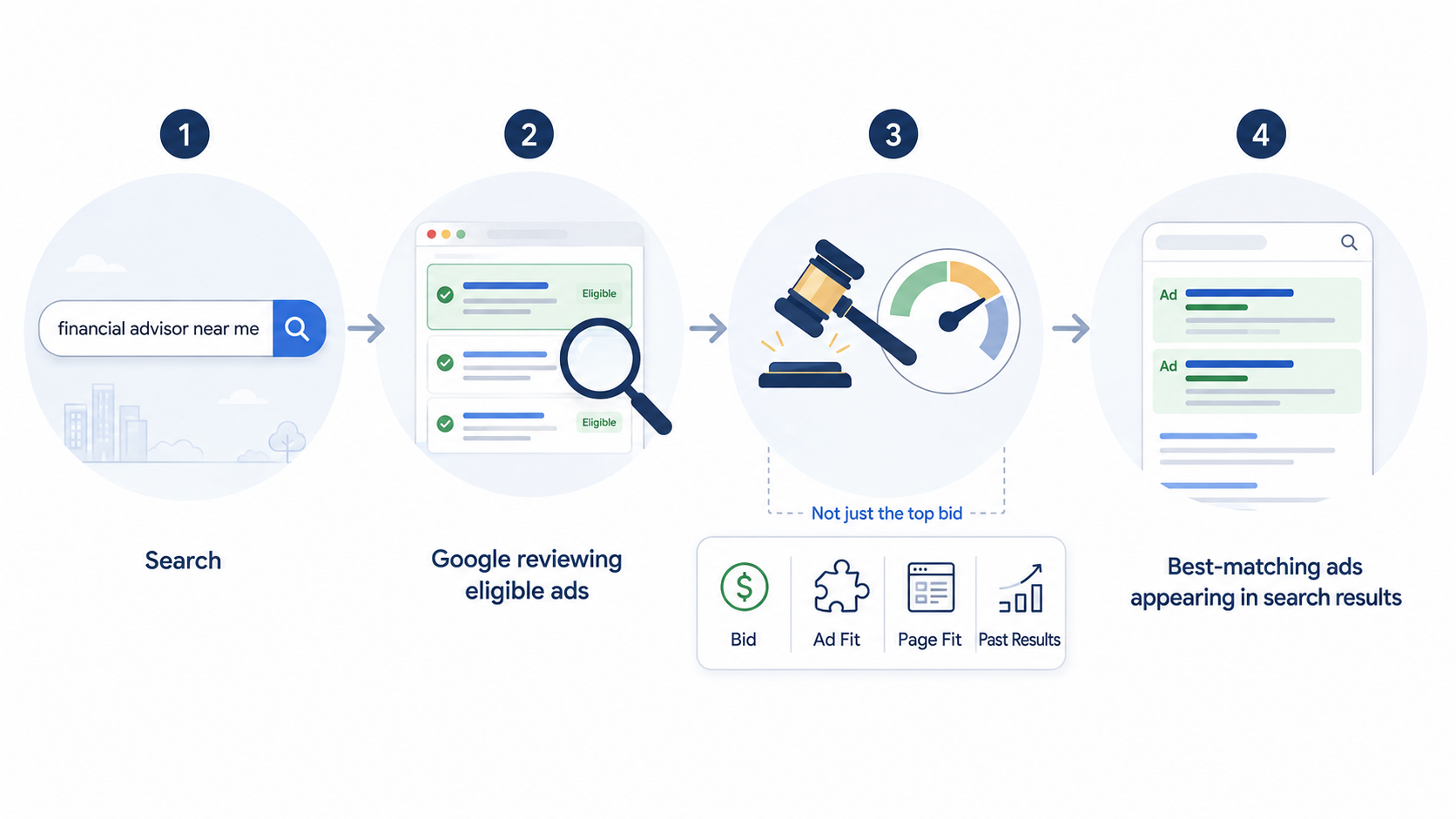
Paid search starts when someone types a clear need. Google checks which firms may show for that search. The valid ads enter a quick auction before results show. This auction looks at far more than the top bid. Google checks bids, ad fit, page fit, and past results. These points help decide which ads may show.
The full ad process includes these eight main steps:
This model is known as pay-per-click, or PPC. PPC for financial advisors should target strong leads first. A cheap click has little worth without a lead. A costly click may work when it gains clients.
Each valid search can start a fresh Google auction. Your firm does not own one fixed search spot. Your bid shows what each click may be worth. Still, high bids cannot fix weak ads or pages.
Think about two firms using “later-life advisor near me.” The first firm sends users to its broad home page. The next firm uses a page about local planning help. That page fits both the search and ad well.
This close match may help both trust and results. It also helps people grasp the service much faster.
Search intent shows what a person wants to find. Each search can show a new level of need. A broad question may show early thought and low need. A near-me search may show a wish to act soon.
| Search example | Likely intent | Ad value |
| What does a money advisor do | Early research | Usually low |
| How much do advisors charge | Cost research | Medium |
| Fee-only advisor near me | Local service search | High |
| Later-life planner for doctors | Niche service search | High |
| Trust-based advisor in Denver | Local choice search | High |
High-intent financial advisor keywords often add place or need. Some also name the client type or key life need. Yet high intent does not prove a good client fit. Your page and sales team must check each lead.
These core terms will help you read ad reports.
| Term | Simple meaning |
| Impression | One time your ad gets shown |
| Click | One person taps or selects your ad |
| CPC | The mean cost paid for each click |
| CTR | The share of views that earn clicks |
| Conversion | A tracked act, such as a booking |
| Conversion rate | The share of clicks that drive actions |
| CPL | The mean cost paid for each lead |
| Search term | The exact words typed by each user |
| Keyword | A phrase used to target likely searches |
| Ad group | A set of words with one shared theme |
| Landing page | The page shown after someone clicks |
These terms help you judge results with much more care. They stop one weak score from guiding each choice.
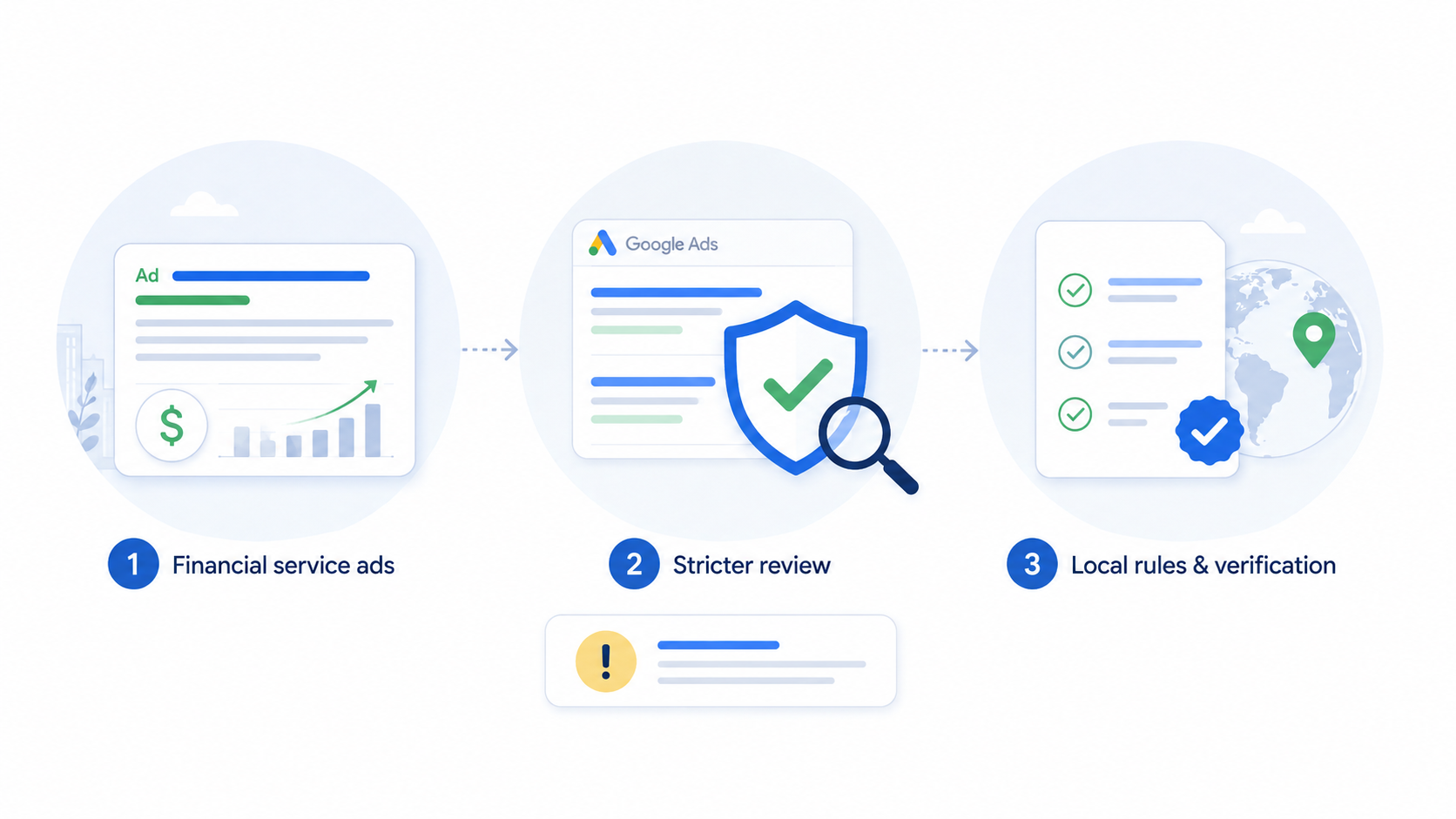
Money ads need more care than most other ads. One weak claim can bring risk to your firm. Google treats personal money advice as a financial service. Its rules seek to block false or harmful claims. Your ads must also follow rules in each target area. Some places may ask for added checks before ads run.
Your ad should name your firm and service clearly. The next page should show the same core offer. Do not hide key terms inside small or vague text. People should know the offer before sharing private details. Some areas require added checks for financial service ads. Check every chosen target market before your campaign launch.
Use this short review before your ads go live:
The SEC Marketing Rule covers many adviser ads and claims. It has rules for reviews, praise, ratings, and results. Each claim must give a fair and truthful view. Key risks should appear near each stated client benefit. Paid praise may need clear facts about fees and ties. Past results also need close review before public use.
Ask these key questions before final approval work begins:
Give each review task to one clear team owner. Plan enough time for checks before the launch date. Keep one final copy of ads and linked pages. Record dates, names, edits, and final approved versions. Never reuse old copy without another full review. Rules, offers, and chosen target areas may change.
Each paid campaign needs one main business goal. That goal should guide ads, pages, bids, and reports. A goal like “gain more traffic” lacks clear value. Strong goals name one action from a possible client.
Choose an action that shows real interest in your service. Strong lead goals may include these useful actions:
Page views should remain a support measure only. They do not prove strong need or client fit. Your sales team should define a qualified lead. Marketing reports should use that same shared meaning.
A strong financial advisor PPC needs a clear client picture. Avoid targeting everyone who may need money help. List the traits shared by your best current clients. Focus on needs your firm can serve very well.
Your ideal client plan should include these points:
Use private traits only when rules allow them. Every target choice should stay fair and useful.
Your Google Ads budget for financial advisors needs enough useful data. Very small tests often create weak and mixed results. Build the test amount from simple working numbers. Use likely click costs and needed visit counts.
| Budget factor | What your team should estimate |
| Click cost | Likely cost for one useful site visit |
| Visit goal | Visits needed before judging early trends |
| Lead rate | Share of visits that become tracked leads |
| Fit rate | Share of leads meeting your firm standards |
| Close rate | Share of strong leads becoming new clients |
Keep media costs apart from setup and service fees. Include page work, tracking work, and review time. Do not judge success through cheap leads alone. One strong lead may beat many poor form fills.

Each campaign type meets a different user need. New firms should not launch every format together.
Search ads for financial advisors support tightly focused service offers. They also give firms control over words and places.
A search campaign may support these focused offers:
Use one page for each close service theme. This keeps ads and page messages closely linked.
Display ads can build recall across other websites. Video can explain hard topics through short lessons. These formats often reach people before direct service searches. They may need more time to create strong leads.
Automated campaigns can widen reach across Google channels. They still need clean goals and trusted lead data. Add broader formats after your search campaign works. This order protects funds and makes reports easier.
A clean account makes changes safer and reports clearer. Each campaign should serve one main service or market.
Account level | Main job |
Campaign | Controls budget, place, goal, and bid plan |
Ad group | Holds one close service or search theme |
Keywords | Match ads with useful search terms |
Ads | Show the offer and next clear step |
Assets | Add links, calls, and service facts |
Landing page | Explains one offer and earns the lead |
Do not mix tax, wealth, and retirement work. Each service has different needs, words, and pages. You can also split campaigns by key service areas. This helps control funds across costly and cheaper markets. Keep each ad group narrow enough for clear copy. Broad groups often weaken links between ads and pages.
Target only places your firm can truly serve. Exclude areas that bring poor or barred leads. Check whether users must live within each target area. Do not rely only on interest in that place. Use audience groups for added insight before strict limits. Early results may show which groups respond best. Review devices, hours, and places after traffic grows. Then change settings based on true lead quality.
Your Google Ads bidding strategy should match tracking quality. Click-based bids may help during very early tests. Conversion bidding works best with clean goal data. Google can set bids around likely goal actions.
Do not send weak form fills into smart bidding. Poor signals can teach systems to seek poor leads. Use qualified lead data as your tracking improves. Better signals can guide bids toward stronger business results.
Pick words that show a clear need for expert help. Link each word group with one main service page. The best Google Ads keywords for financial advisors show need, place, or client type. These terms can bring leads who know what they want.
Search group | Sample term |
Local help | Fee-only financial advisor in Austin |
Clear need | Retirement planning help for doctors |
Client type | Wealth advisor for small business owners |
Trust term | Fiduciary financial planner near me |
Do not start with broad words like “money” or “stocks.” Those words can bring clicks from people seeking basic facts. Use phrases and exact matches during your first tests. These match types can give your team more control.
Google says match types change which searches may show ads. Broad match can reach more searches than other match types.
The search terms report shows what people typed before ads appeared. Check this list on the same day each week. Block terms that do not fit your paid work. Common blocks may cover jobs, pay, classes, tools, and free help. This step can cut waste from your financial advisor PPC keywords. Google also links search reports with new negative word ideas.
Good ads answer one clear need with very few words. They should name the service and show the next step.
A strong financial advisor ad copy set needs several useful parts.
Keep each claim clear, fair, and easy to prove. Do not use hype that could harm a reader’s trust.
Write several headlines with fresh but linked ideas. Add short text lines that support those main themes. Test service words, place words, trust words, and calls. Change only one main theme during each planned test. One ad could say “Retirement Planning for Doctors.” Another ad could test “Fee-Only Advice for Boston Families.”
A financial advisor landing page should serve one main goal. It should not work like a large site menu. Repeat the ad’s main offer near the page top. Then show who gets help and what happens next.
Use these page parts in one clear order:
Remove links that pull users toward pages they do not need. Keep the main call clear on phones and large screens. Top pages often ask whether ads should use homepages. A focused page can match one search and service better.
Strong Google Ads conversion tracking should record more than form fills. Track calls, booked talks, held talks, and signed clients. Google supports web, call, and offline lead tracking. These tools can link ads with useful actions.
Use one shared lead path for sales and marketing:
Lead stage | What your team records |
New lead | The person called, booked, or sent a form |
Reached lead | A team member spoke with the person |
Good fit | The lead met your firm’s main rules |
Talk held | The planned first talk took place |
New client | The lead signed and joined your firm |
This path gives more value than raw form totals. It can also show where good leads drop away.
Review results on the same day each week. Start with search terms, lead fit, pages, and ads. Change one key part during each clear test. This helps show which change caused the new result.
Watch cost per qualified lead and booked call costs. Do not judge success through cheap clicks alone. Fix clear waste before you raise the daily spend. More cash can make a weak campaign lose faster.
Several small errors can hurt strong paid search work. Check for these issues during each weekly review.
Strong Google Ads for financial advisors link each search with one useful next step. Each part should guide the same person toward a clear choice.
Use sharp words, plain ads, focused pages, and full lead tracking. Then improve each part through small and fair tests. Do not chase more clicks without checking the lead fit. Build a plan that earns trust and starts real talks.
For expert paid search support, visit CausalFunnel and explore our proven growth strategies. Our team turns campaign data into focused actions that improve lead quality and results.
The best terms show a clear service and strong need. Add a place, client type, or key life event. Good terms include “fee-only advisor near me” and “retirement planner for doctors.” Judge each term by the leads it brings.
A focused page will often give each user a clearer path. It can fit one ad, service, place, and client group. A homepage may give paid users too many choices. Use it only when it fits the search very well.
Track calls, forms, booked talks, held talks, and signed clients. Also mark which leads meet your firm’s fit rules. This view links ad costs with real sales value. It stops weak form fills from guiding later choices.
A good cost depends on lead fit and client value. A cheap lead can still waste staff time. Track cost per good lead and booked first talk. Those two costs show campaign health more clearly.
Google Ads can bring paid search visits much sooner. SEO can build long-term reach through useful site pages. Many firms use both tools for two different jobs. Ads test offers, while SEO builds trust with time.
Start using our A/B test platform now and unlock the hidden potential of your website traffic. Your success begins with giving users the personalized experiences they want.
Start Your Free Trial

Empowering businesses to optimize their conversion funnels with AI-driven insights and automation. Turn traffic into sales with our advanced attribution platform.
Trusted by Customers


©CausalFunnel Inc. All rights reserved.