



Free Funnel Audit
Convert more customers today!
SEO
10 mins read

SEO
10 mins read
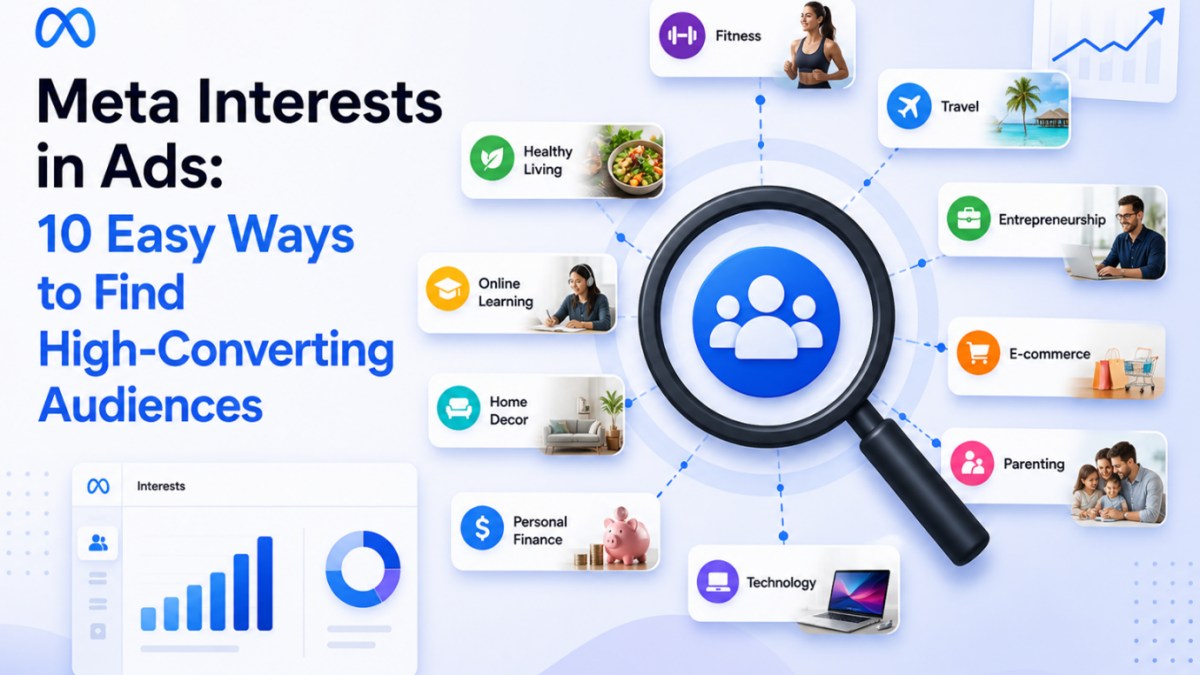
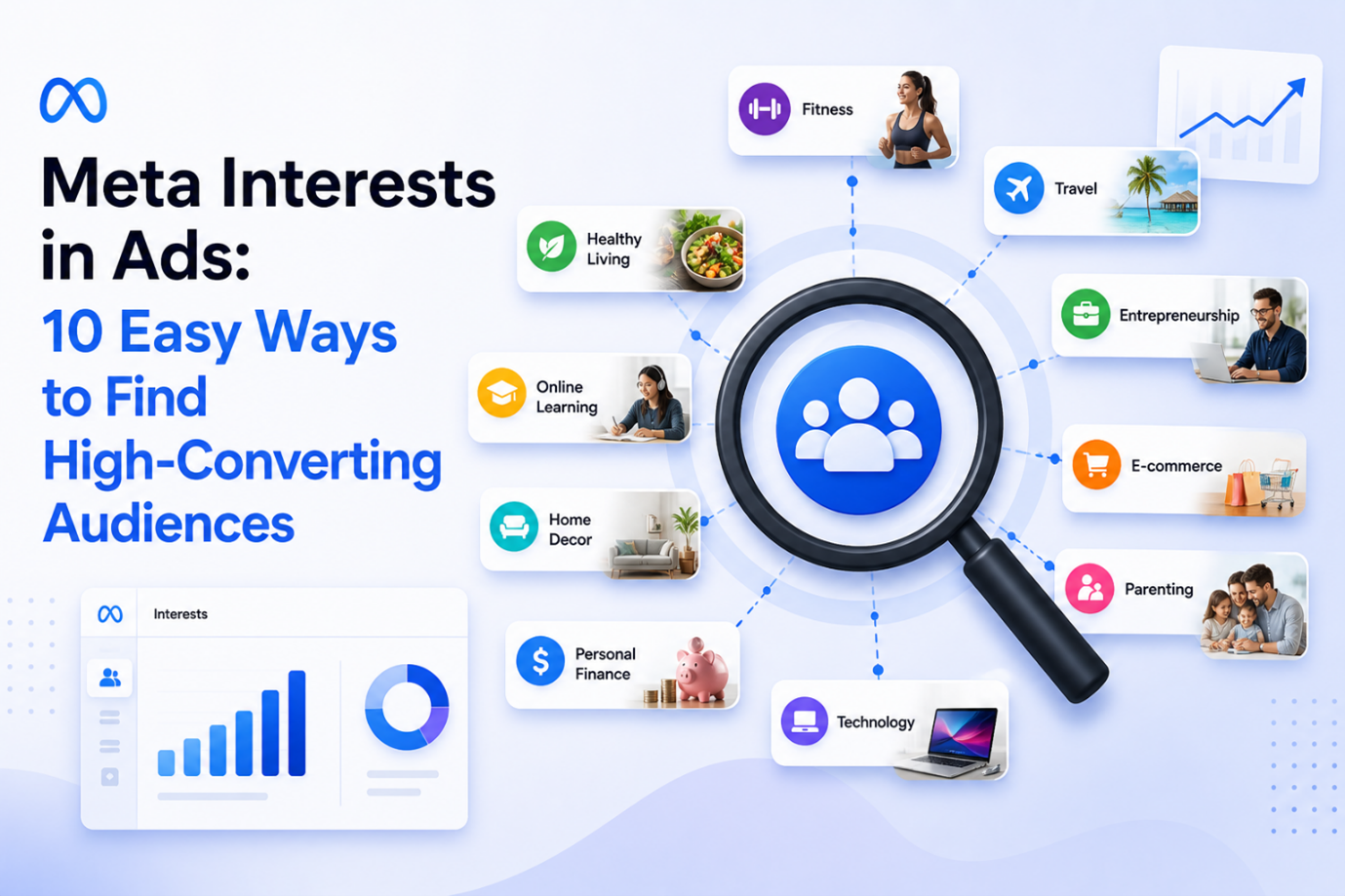
Most advertisers still ask one simple question before running campaigns: “What exactly are meta interests, and why does it still matter today?”
In short, Meta interests help you target users based on behavior and platform activity. These signals come from how people interact across apps and online content.
Now, coming to the part, why does it matter? Interest targeting still matters because it helps reach new cold audiences faster. But many advertisers choose the wrong interests, wasting valuable ad spend.
In this guide, we’ll show simple ways to find audiences that actually convert better.
Meta’s interest in advertising is based on user behavior signals. These signals include likes, follows, content engagement, and platform activity.
Meta now relies more on AI models to group users dynamically. The data used to group users mainly comes from platforms like Facebook and Instagram, along with privacy-safe signals. Third-party tracking is now limited due to stricter privacy rules globally.
Instead of static interests, Meta now predicts interests using machine learning. These predictions update faster based on recent user behavior changes.
For example, a user watches home workout videos and follows fitness pages. They may get interests like home fitness or strength training assigned.
On the other hand, another user engages with vegan recipes and healthy lifestyle content regularly. They may get interests like plant-based diet or clean eating categories.
A meta-interest targeting list helps reach relevant audiences quickly. But interests now reflect patterns, not exact intent or buying readiness. This shift means advertisers must test more and rely less on assumptions.
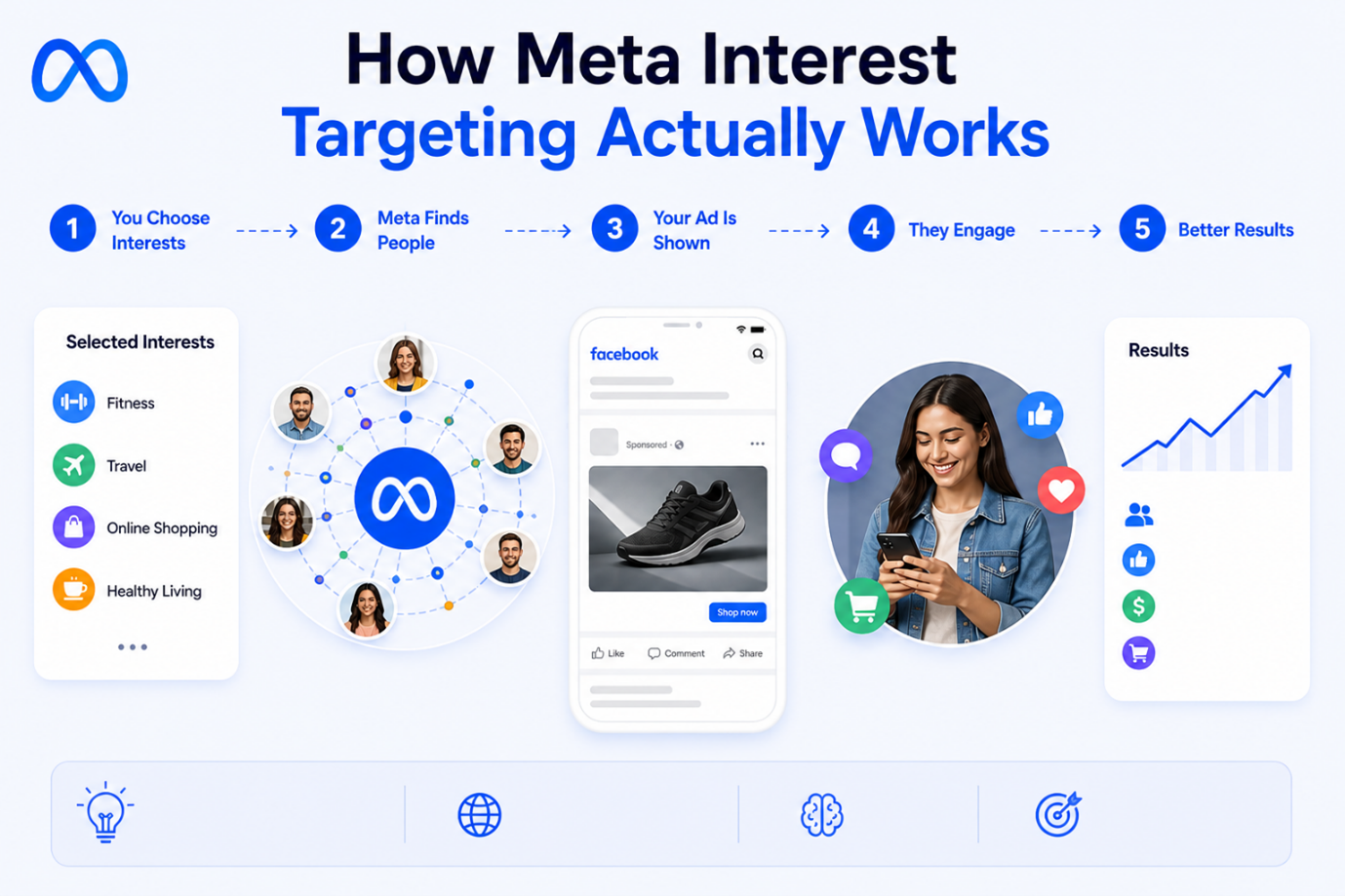
Meta interest targeting works by analyzing how users behave across platforms. The algorithm collects signals and groups users into interest categories. These categories are not static and can change based on new behavior. That is why targeting sometimes feels accurate and sometimes slightly off.
Meta assigns interests using several types of user actions, such as:
The system keeps updating profiles as users interact with new content daily. However, this process is not perfect and can lead to mismatched targeting sometimes.
Understanding this helps you avoid relying on interests blindly in campaigns.
Choosing the right targeting method can improve campaign results significantly. Different options serve different stages of the customer journey.
The table below shows the targeting method and who and how it helps campaigns.
Type | Best For | Limitation |
Interests | Cold audiences | Accuracy issues |
Custom audiences | Warm users | Limited scale |
Lookalike audiences | Scaling campaigns | Requires data |
Interest targeting works best when you want to reach new users quickly. However, combining it with other targeting methods often improves performance.
Many advertisers fail because they misunderstand how interests actually work. They assume interests directly reflect strong purchase intent, which is incorrect.
Most campaigns fail due to poor targeting decisions and a lack of testing. This leads to wasted budget and low conversion rates over time.
Common mistakes include:
Many advertisers pick interests like fitness or business without narrowing them down. These audiences are too large and include users with very different intent levels. This reduces ad relevance and increases wasted spend quickly.
Very small audiences limit reach and slow down campaign learning phases. On the other hand, very large audiences reduce precision and bring low-quality traffic. Finding a balanced range helps improve both reach and conversions.
Combining many interests makes it hard to track what actually works. Eventually, the algorithm struggles to optimize when signals are too mixed. This leads to unclear data and poor decision-making later.
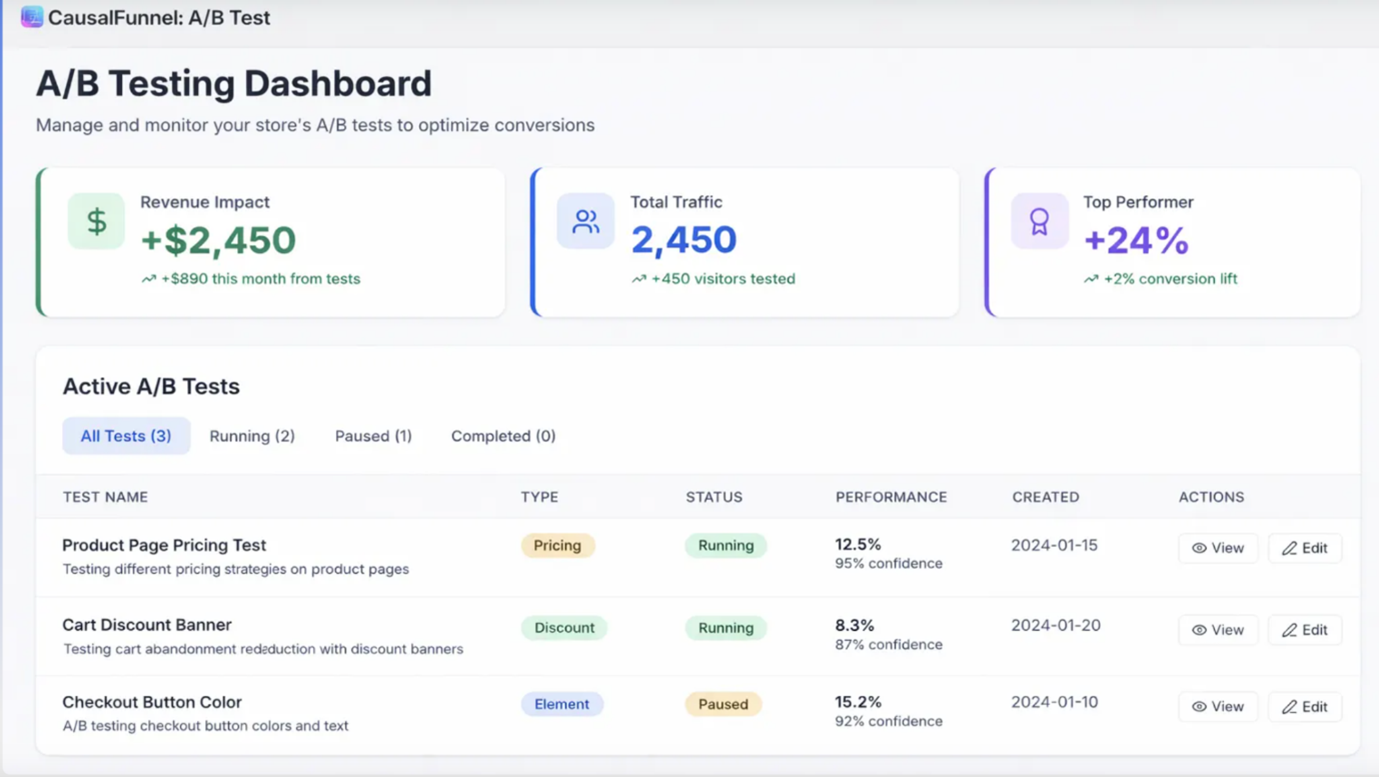
Many advertisers launch campaigns and expect instant results without testing. Without A/B testing, you cannot identify winning audiences or creatives. Regular testing helps improve performance and reduce costs over time. This is when CausalFunnel helps businesses. Their A/B Testing platform allows marketing teams to do segment-specific testing, which gives them control over their products and services and conversion optimization.
Avoiding these mistakes can improve your campaign performance significantly.
Finding the right interests takes research, testing, and continuous improvement. There is no single perfect list that works for every business or audience. Instead, you should focus on testing different approaches and refining results.
These strategies will help you discover interests that actually convert better.
Start by analyzing competitors who already target your ideal audience. Their followers often reveal clear patterns about interests, behavior, and content preferences. You can see what pages they follow, what content they engage with most. This helps you understand what actually attracts and retains that audience.
Look at page likes, audience engagement, and ad interactions carefully, as this helps you build a strong Meta interest targeting list for testing.
You can explore:
This approach gives you real-world data instead of guessing interests blindly.
Meta Ads Manager provides built-in suggestions when selecting targeting options. These suggestions help expand your audience beyond initial interest choices.
The system recommends related interests based on user behavior patterns that help you discover new audience clusters quickly and efficiently.
However, make sure to always review these suggestions and test them in separate ad sets.
Broad interests often attract large but less targeted audiences. On the other hand, niche interests usually bring better engagement and higher conversions.
For example, instead of targeting fitness, try more specific interests.
Niche targeting improves precision and reduces wasted ad spend significantly.
Before choosing interests, define who you want to target clearly. This helps you connect real behavior with better targeting decisions.
For example, imagine you are selling home workout equipment online. Your ideal customer could be a busy working professional aged twenty-five to forty. This section of people prefer quick workouts and follow fitness creators on social platforms.
Their behavior may include watching short workout videos during weekdays. They may also engage with content about weight loss and home routines.
Based on this persona, you can target more relevant interests like:
This approach makes your targeting more focused and conversion-friendly. Instead of guessing, you now target users who match real behavior patterns.
Layering helps narrow down your audience using multiple filters together. You can combine interests with demographics or behavioral conditions.
For example, you can refine targeting by combining:
This reduces irrelevant traffic and improves conversion quality significantly.
Avoid testing multiple interests inside one ad set during campaigns. This makes it hard to understand which interest is driving results.
For example, imagine you are promoting a fitness coaching program online. You create three separate ad sets, each with one specific interest.
After running ads, you compare performance across all three ad sets. You may find that CrossFit gives a lower cost per lead than others. This clearly shows which interest performs better for your offer.
Now you can scale that winning audience with more budget confidently. Testing one interest per ad set gives clean data and better decisions.
Audience size plays a critical role in campaign performance outcomes. Too small audiences limit reach, while too large audiences reduce precision.
A good starting range is between one and four million users. You can also adjust based on your budget and campaign goals carefully.
Remember, balanced audience size improves both reach and targeting accuracy.
Audience overlap happens when multiple ad sets target the same users. This often occurs when interests are similar or too closely related.
For example, you target fitness, gym workouts, and bodybuilding separately. These audiences may share many of the same users across segments.
But when overlap happens, your ad sets compete against each other in auctions. This increases costs and reduces overall campaign efficiency over time.
You may also see unstable performance and inconsistent conversion results, and then Meta struggles to decide which ad set should deliver to the same users.
To reduce overlap:
You can also check overlap using Meta’s audience overlap tool inside Ads Manager. This helps you identify conflicts before launching campaigns.
Reducing overlap improves budget usage and leads to better overall results.
Your existing audience data is a powerful source of targeting insights. Therefore, analyze which posts and ads receive the most engagement regularly.
To look into the engagements, look at comments, shares, and interactions for patterns. These patterns reveal interests that resonate with your audience.
For example, imagine you run a skincare brand on social platforms. One post about acne treatment gets high saves and comments quickly. Another post about luxury skincare gets very low engagement overall.
This clearly shows your audience cares more about problem-solving content. So, you can now target interests related to acne care and skin treatments.
You may also explore related interests like dermatology and skincare routines. These insights help you build more accurate and high-converting audiences.
Using engagement data connects targeting with real user behavior patterns. This improves ad relevance and increases chances of better conversions.
You can then target similar users with these refined interests.
Interests change over time as user behavior evolves continuously. Relying on outdated targeting reduces campaign performance significantly.
Update your Meta interest targeting list regularly for better results. Testing new interests helps you stay competitive in changing markets.
Testing is essential for improving targeting performance over time. You should never rely on assumptions without validating them with data.
Start with A/B testing to compare different audience variations. This helps identify which interests perform better in real campaigns.
Focus on testing:
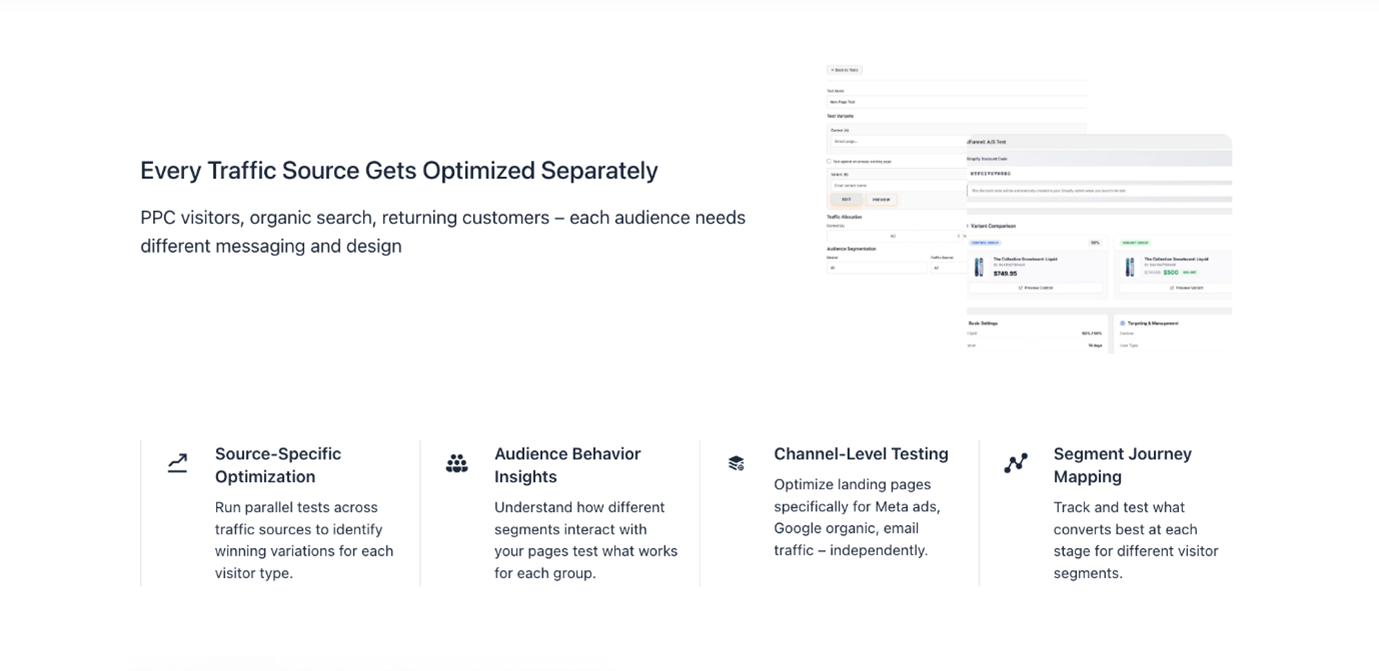
Platforms like CausalFunnel can make this process much easier. It helps identify high-intent users based on real behavior patterns.
So, instead of wondering what’s happening, you can see where users drop off in your funnel. This also allows you to refine targeting and improve conversions consistently.
CausalFunnel also sends better conversion signals back to ad platforms, which helps improve campaign performance and optimize your ad spend over time.
Tracking the right metrics helps measure campaign performance clearly. Focus on these key indicators for better decision-making:
These metrics guide optimization and improve long-term results.
Scaling should happen only after consistent performance is achieved. Increase the budget gradually instead of making sudden, large changes.
A common approach is to increase the budget by around twenty percent. You can then monitor cost per acquisition and click-through rate closely.
If performance remains stable, continue scaling step by step carefully.
A structured Meta interest targeting list helps simplify audience selection. Different industries require different targeting approaches for the best results.
Industry | Broad Interest | High-Converting Niche |
Fitness | Fitness | CrossFit, bodybuilding |
Food | Cooking | Vegan recipes, keto diet |
Fashion | Fashion | Streetwear, sustainable fashion |
Beauty & Skincare | Skincare | Acne treatment, anti-aging skincare |
Technology | Technology | AI tools, productivity apps |
Travel | Travel | Budget travel, solo travel |
Real Estate | Real estate | First-time home buyers, property investment |
Education | Education | Online courses, skill development |
Finance | Finance | Personal finance, stock investing |
Parenting | Parenting | New moms, toddler care |
Gaming | Gaming | Mobile gaming, esports |
Health & Wellness | Health | Mental health, yoga, meditation |
E-commerce | Online shopping | Dropshipping, Amazon FBA |
Automotive | Cars | Electric vehicles, car modification |
Using niche interests improves precision and overall campaign performance.
Finding the right interests takes patience, testing, and consistent effort. There is no shortcut or fixed formula that guarantees instant results.
Focus on data, not assumptions, when building your targeting strategy. Keep testing, refining, and updating your approach regularly.
This is how you build campaigns that deliver strong and consistent performance.
Yes, Meta interests still work when used with proper testing and strategy. They are useful for reaching cold audiences and discovering new users. However, combining them with other targeting methods improves results significantly.
Start with competitor research and analyze audience engagement patterns. Use testing and data analysis to refine your interest targeting continuously. Avoid guessing and rely on performance data for better decisions.
Both options work depending on your campaign goals and data availability. Interest targeting works well for testing and cold audience discovery. Advantage+ works better when you already have strong conversion data.
An ideal audience size usually falls between one and four million users. This range balances reach and targeting precision effectively. Adjust the size based on your budget and campaign goals.
Start using our A/B test platform now and unlock the hidden potential of your website traffic. Your success begins with giving users the personalized experiences they want.
Start Your Free Trial

Empowering businesses to optimize their conversion funnels with AI-driven insights and automation. Turn traffic into sales with our advanced attribution platform.
Trusted by Customers


©CausalFunnel Inc. All rights reserved.