



Free Funnel Audit
Convert more customers today!
SEO
10 mins read

SEO
10 mins read
Writing Google Ads copy takes more time than most marketers expect. You need fresh ideas everyday and at some point of time, you’re actually out of ideas. Lack of thinking and ideas often lead to poor headlines, which reduces clicks and wastes advertising budgets quickly. That is why many businesses now use a Google ad copy tool daily.
Modern AI tools can create headlines, descriptions, and call-to-actions within seconds. Some tools even predict which ads may perform better before launching campaigns. These platforms help marketers save time while improving campaign consistency.
In this guide, you will discover the best free and paid tools available today. Each tool includes features, pricing, pros, cons, and best use cases. We also explain how to write Google Ads copy with AI effectively.
A Google ad copy tool helps users create advertising headlines and descriptions faster. These platforms use AI technology to generate copy based on prompts and campaign goals.
Most tools can create multiple ad variations within seconds automatically. Some platforms also suggest stronger headlines or conversion-focused messaging improvements, saving marketers time while improving campaign efficiency significantly.
Modern AI-powered tools often support:
Many businesses now use AI because manual copywriting takes considerable time daily. These tools simplify advertising workflows while helping non-writers create effective campaigns.
Choosing the right features improves advertising performance and workflow efficiency quickly. Some platforms focus only on content generation while others offer optimization support too.
Look for these essential features before selecting any AI advertising platform:
Character limit optimization remains especially important for Google Ads campaigns. Long headlines often get cut off before users can read them properly.
Performance scoring tools also help marketers test stronger messaging before campaign launches. That reduces wasted spending and improves advertising efficiency significantly.
Templates matter because they simplify campaign creation for beginners quickly. Many marketers save hours weekly using pre-built advertising frameworks consistently.
We reviewed these tools using real advertising prompts and sample campaign briefs. Each platform was tested for speed, usability, copy quality, and customization flexibility. We also compared free plans, pricing structure, and Google Ads-focused features carefully.
Some tools performed better for beginners and small businesses. Others worked best for agencies handling large advertising campaigns regularly. Our goal was providing an unbiased comparison that helps different users choose confidently.
We evaluated every platform using these important factors:
Choosing the right google ad copy tool depends on your goals and budget. Some platforms focus on speed while others emphasize optimization and testing.
The table below compares the best tools quickly and clearly.
Tool Name | Best For | Free Plan / Trial | Starting Price | Key Feature |
Anyword | Performance-focused marketers | Free trial | $49/month | Predictive performance scoring |
Rytr | Budget-friendly writing | Free plan | $7.50/month | Affordable AI content generation |
Writesonic | Multi-platform advertising | Free trial | $79/month | Google Ads templates |
Copy.ai | Beginners and startups | Free plan | $29/month | Easy-to-use workflows |
OpenAI | Flexible AI writing | Free plan available | $19/month | Conversational content generation |
AdCreative.ai | Ad creatives and copy | Free trial | $20/month | AI ad optimization |
Hypotenuse AI | Ecommerce businesses | Free trial | Custom Pricing | Product-focused copywriting |
Copysmith | Large content teams | Free trial | $19/month | Bulk content generation |
Quickads.ai | Fast ad creation | Free trial | $99/month | Quick ad generation |
HubSpot | CRM users and teams | Free tools | $8/month | Marketing automation integration |
Every tool below was tested using similar campaign prompts and advertising goals. We checked headline quality, AI accuracy, ease of editing, and workflow flexibility carefully.
Some tools generated stronger emotional headlines while others focused on conversions and optimization. We also compared how quickly users could create multiple ad variations efficiently.
These detailed reviews cover features, pros, cons, pricing, and ideal use cases.
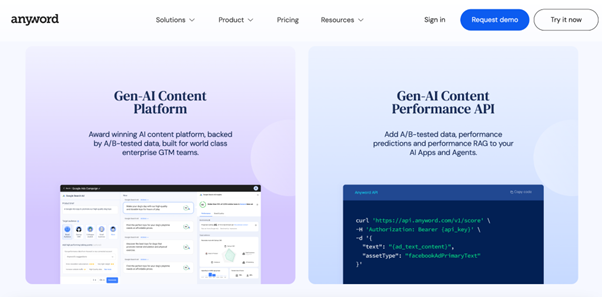
Anyword focuses heavily on data-driven advertising copy generation. The platform predicts how headlines may perform before campaigns even launch. That makes it useful for businesses running performance-focused advertising campaigns regularly.
Anyword’s predictive scoring feels genuinely helpful for advertisers. Most AI writing tools only generate content without deeper optimization insights. Anyword adds conversion-focused suggestions and audience targeting recommendations naturally.
Performance marketers and agencies needing data-backed advertising copy suggestions.
Rytr offers one of the most affordable AI writing solutions available today. The platform supports Google Ads copy generation alongside blogs, emails, and social media content.
Rytr works well because beginners can start quickly without overwhelming learning curves. Its interface stays simple while still offering enough customization for effective advertising campaigns. Small businesses often prefer Rytr because pricing remains extremely accessible.
Freelancers, startups, and small businesses with limited marketing budgets.
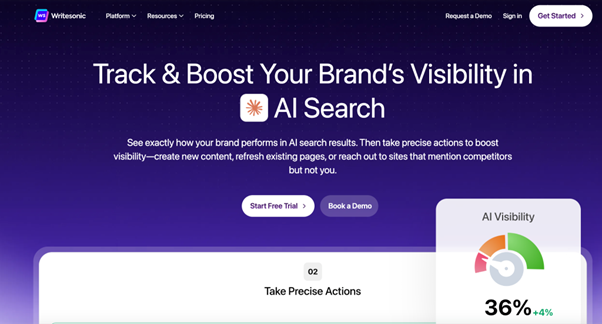
Writesonic helps marketers create ads, blogs, landing pages, and emails efficiently. The platform includes dedicated templates for Google Ads campaigns and marketing copy.
The tool balances speed and content quality effectively, and users can create multiple ad variations quickly without losing message consistency. The platform also integrates useful AI chatbot and SEO writing features.
Businesses managing advertising campaigns across several marketing platforms.
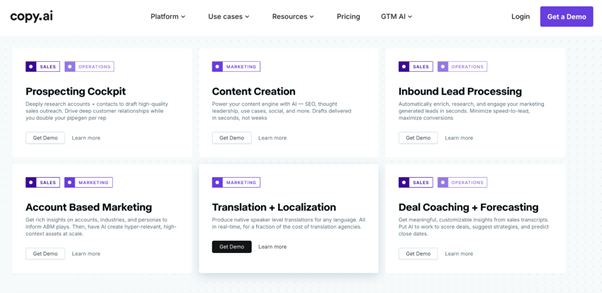
Copy.ai simplifies AI content creation through guided workflows and templates. The platform works well for marketers needing fast ad copy ideas regularly.
Copy.ai is easy to use as its interface feels beginner-friendly without sacrificing functionality completely. Users can generate headlines, descriptions, and promotional copy within minutes. The workflow builder also improves team collaboration significantly.
Beginners and startups needing quick advertising copy generation support.
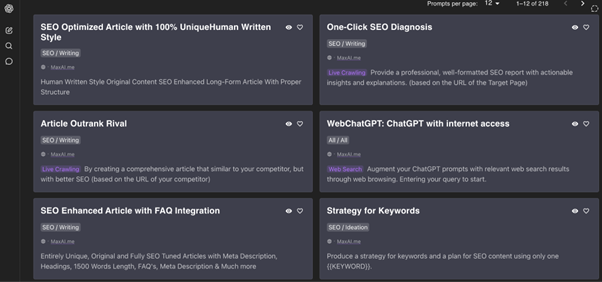
OpenAI powers one of the most flexible AI writing experiences available today. Users can create highly customized advertising copy using detailed prompts and instructions.
Because of its flexibility to work around different formats, ChatGPT remains its biggest advantage over competitors. Users can refine messaging, adjust tone, and generate endless advertising variations quickly.
Marketers can also write Google Ads copy with AI while brainstorming campaign strategies simultaneously.
Marketers wanting full creative control over AI-generated advertising content.
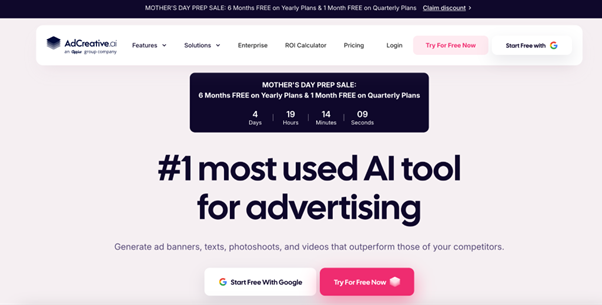
AdCreative.ai combines AI-generated copy with advertising creative generation tools. The platform focuses heavily on improving advertising performance and conversion rates.
AdCreative.ai goes beyond simple text generation completely. Users can create visual creatives alongside optimized Google Ads headlines and descriptions. That creates faster workflows for advertising teams handling multiple campaigns.
Agencies and advertisers managing visual advertising campaigns regularly.
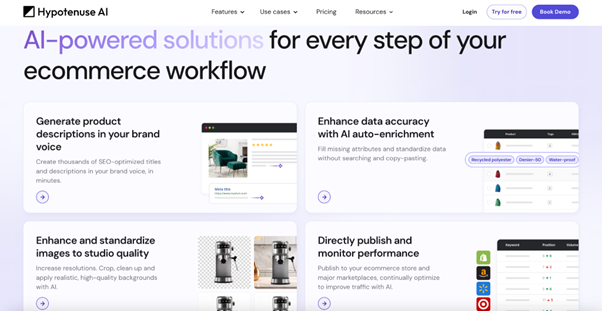
Hypotenuse AI specializes in product-focused content generation for ecommerce businesses. The platform creates advertising copy, product descriptions, and marketing content efficiently.
Hypotenuse AI is beneficial for ecommerce brands that need scalable product marketing content consistently. The platform handles large product catalogs while maintaining strong message consistency across campaigns.
Ecommerce stores managing many products and advertising campaigns simultaneously.
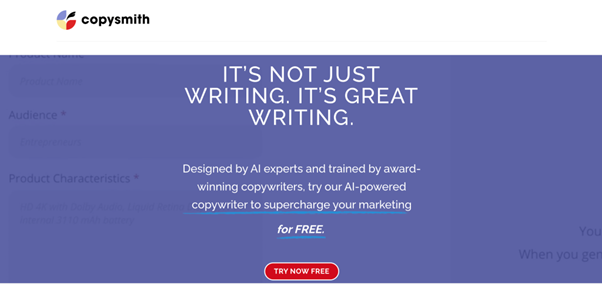
Copysmith focuses heavily on team collaboration and large-scale content generation workflows. The platform supports advertising copy alongside ecommerce and marketing content.
Copysmith works best for enterprise teams that often need scalable collaboration systems. The platform simplifies approval workflows while maintaining content consistency across large campaigns.
Large businesses and agencies managing multiple marketing teams.
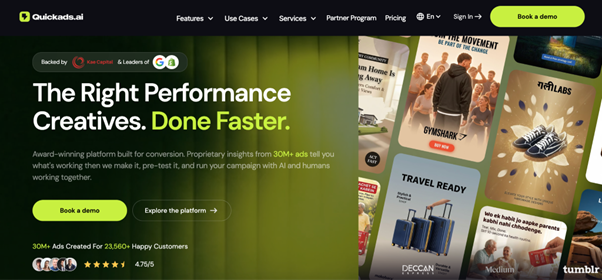
Quickads.ai focuses primarily on generating advertising copy quickly across different marketing platforms. Users can create campaigns within minutes using AI-powered templates.
Quickads.ai is quick and speed matters for fast-moving advertising campaigns often. The platform helps marketers test multiple advertising angles without lengthy writing processes.
Marketers needing quick advertising copy generation for testing campaigns rapidly.
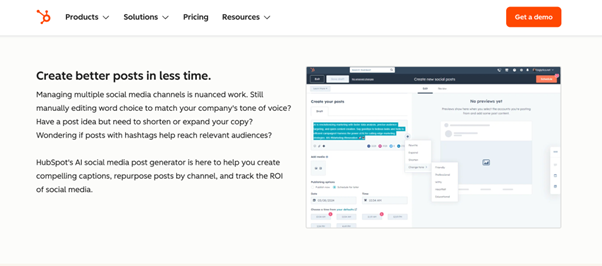
HubSpot combines AI content tools with broader marketing and CRM capabilities. The platform supports advertising copy alongside email and automation workflows.
HubSpot AI integrates marketing systems, saving significant operational time. Businesses already using HubSpot can manage advertising and customer data within one platform.
Businesses are already using HubSpot for marketing and customer management.
Free tools work well for beginners testing AI-powered advertising workflows initially. They help users create headlines, descriptions, and ideas without large upfront investments. However, free plans usually include limited credits and fewer optimization features.
On the other hand, paid tools offer deeper customization, advanced analytics, and stronger workflow support. Businesses managing multiple campaigns often benefit from premium optimization features significantly. Many paid platforms also improve collaboration and brand consistency across teams.
If you only need occasional advertising ideas, free plans usually feel sufficient. Larger businesses often need stronger scalability and automation features eventually. Many marketers also prefer paid platforms when they regularly write Google Ads copy with AI.
Many marketers also combine AI writing tools with platforms like CausalFunnel. It helps businesses improve attribution, identify high-intent visitors, and optimize campaigns more accurately.
Feature | Free Tools | Paid Tools |
Monthly Cost | Low or free | Higher monthly pricing |
AI Features | Basic generation | Advanced optimization |
Customization | Limited | More flexible |
Team Support | Rarely included | Usually included |
Performance Analytics | Minimal | Detailed reporting |
Scalability | Limited credits | Better campaign scaling |
The best tool depends on your budget, goals, and campaign complexity levels. Some businesses need quick headline ideas while others require advanced optimization features. Understanding your priorities helps narrow options much faster.
Start by checking your monthly advertising and content creation budget carefully. Some platforms remain affordable while others target enterprise-level marketing teams directly. Avoid paying for advanced features your business may never actually use.
Ease of use matters more than many marketers initially expect. Complicated dashboards often slow workflows and reduce productivity over time. Beginners usually benefit from simpler platforms with guided templates and intuitive navigation.
You should also evaluate AI accuracy and output consistency carefully. Poor AI-generated copy often requires heavy editing before campaign launches. Testing free trials helps measure actual content quality before long-term commitments.
Look for these important features before choosing a platform:
Businesses running large campaigns should prioritize scalability and optimization features strongly. Smaller businesses may value affordability and simplicity much more initially.
AI tools help marketers create advertising campaigns faster and more efficiently today. Businesses no longer need hours for brainstorming headlines and descriptions manually.
One major advantage involves saving valuable production time during campaign creation workflows. AI platforms generate several advertising variations within seconds automatically.
Another benefit involves improving click-through rates through better headline experimentation. Marketers can test multiple messaging angles without writing everything manually.
AI tools also help businesses scale advertising campaigns across many products quickly. Ecommerce brands especially benefit from faster product-focused content generation systems.
Here are the biggest benefits marketers usually experience:
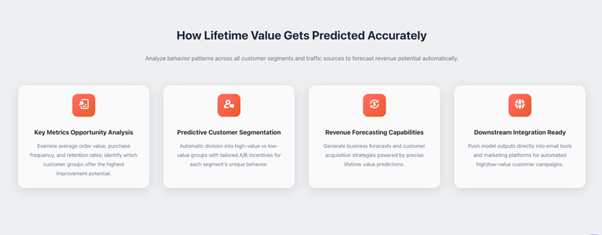
AI tools help generate ad copy faster, but optimization still matters greatly. Platforms like CausalFunnel help marketers analyze user behavior and improve campaign performance using better audience insights.
For example, a business may generate several ad variations using AI tools first. Then, CausalFunnel can help identify which audiences engage and convert more consistently.
Many businesses now write Google Ads copy with AI because workflows feel simpler. These tools have helped teams focus more on strategy instead of repetitive writing tasks daily.
AI tools improve efficiency greatly, but poor usage still creates weak advertising campaigns. Many marketers rely too heavily on generated copy without proper editing.
One common mistake involves publishing AI-generated copy without reviewing audience relevance carefully. Generic messaging often reduces engagement and conversion rates significantly.
Another problem involves ignoring customer intent during campaign creation completely. AI tools still need strong prompts and clear audience direction consistently.
Avoid these common mistakes while using AI advertising platforms:
Good advertising still requires human judgment and audience understanding regularly. AI should support creativity instead of replacing strategic thinking completely.
The best platform depends on your business goals and advertising workflow needs. Some tools prioritize affordability while others focus heavily on optimization capabilities.
Many businesses also combine these AI writing tools with CausalFunnel for stronger advertising performance insights. This approach helps marketers improve both ad messaging and conversion optimization together.
Testing free plans first usually helps businesses choose the right platform confidently. The best tool should simplify workflows while improving campaign performance steadily.
Yes, most businesses save significant time using AI advertising platforms regularly. These tools simplify workflows and improve campaign production speed effectively.
AI tools can create strong advertising copy with proper prompts and editing support. However, marketers should still refine messaging for audience relevance carefully.
Free tools work well for beginners and occasional advertising campaigns initially. Larger businesses usually need stronger optimization and collaboration features eventually.
Some platforms integrate directly with Google Ads and marketing systems easily. Others focus mainly on content generation without campaign management support.
Copy.ai and Rytr work especially well for beginners and smaller businesses. Their interfaces remain simple while still offering helpful advertising templates.
Anyword and AdCreative.ai provide stronger optimization and performance-focused advertising insights. These platforms help marketers improve campaigns more strategically.
Start using our A/B test platform now and unlock the hidden potential of your website traffic. Your success begins with giving users the personalized experiences they want.
Start Your Free Trial

Empowering businesses to optimize their conversion funnels with AI-driven insights and automation. Turn traffic into sales with our advanced attribution platform.
Trusted by Customers


©CausalFunnel Inc. All rights reserved.