



Free Funnel Audit
Convert more customers today!
SEO
10 mins read

SEO
10 mins read
Most online stores lose sales every single day without even realizing it.
Running an online store feels exciting at first. Sales come in, but growth often slows down shortly after. Many store owners face one common problem: Traffic is high, but conversion rates stay low. That is where CRO ecommerce becomes very important. It helps turn visitors into real buyers.
CRO (Conversion Rate Optimization) means improving your website to increase conversions. Even small changes can bring strong results over time. You do not need more traffic every time. You need better results from your existing visitors by improving how they interact with your site and complete actions.
That is the real power of conversion rate optimization.
If you want faster growth without wasting money, you need a smart system. Start optimizing your conversions with expert tools at CausalFunnel. We assist you in improving results using data and real user behavior insights.
CRO ecommerce means improving your store to increase conversions.
A conversion happens when a visitor takes a desired action. That action can be a purchase or a sign-up. Your ecommerce conversion rate shows how many visitors actually convert.
Here is a simple example to understand this better.
CRO focuses on improving this percentage over time.
It works by understanding how users think and behave. Small design changes can improve user decisions. CRO is not guesswork. It is a conversion optimization process based on data and testing. It also connects strongly with user experience (UX), because a smooth and easy design helps users find products quickly and complete actions without confusion.
If your site feels easy and clear, users stay longer. When users feel confused, they leave quickly. That is why CRO ecommerce focuses on reducing friction at every step.
Many store owners think more traffic means more sales. That idea is not always true. If your site does not convert, traffic alone will not help.
CRO ecommerce helps you get better results from your current traffic.
Here are some key benefits you should know:
Let’s look at a simple situation:
A store gets 10,000 visitors each month. Only 1% of visitors convert.
Now imagine improving the rate to just 2%.
Sales will double without increasing traffic.
That is why CRO is so powerful.
A clothing store improved its checkout process. They removed extra form fields and added trust badges.
The result was a 25% increase in conversions.
This shows how small improvements create a big business impact.
Understanding your numbers is very important for growth. The conversion rate formula is simple and easy to use.
To calculate your conversion rate, use this formula:
Conversion Rate = (Conversions ÷ Total Visitors) × 100
Here is a simple table to help you understand it better:
Total Visitors | Conversions | Conversion Rate |
1,000 | 20 | 2% |
5,000 | 150 | 3% |
10,000 | 500 | 5% |
Tracking your conversion rate helps you see real progress. You cannot improve what you do not measure. When you track conversions, you understand what works and what fails. Over time, this data helps you make smarter decisions.
Also Read: Ecommerce SEO Best Practices: The Ultimate 2026 Step-by-Step Guide

Now let’s move to the most important part.
You understand what CRO is and why it matters. Now it is time to take action. CRO ecommerce strategies help you improve your store step by step. These strategies are based on real user behavior and testing. They focus on removing friction and improving user experience.
You do not need to change everything at once. Start small and improve gradually.
Below are proven strategies that actually increase conversions.
Checkout is the most critical stage in your funnel. Many users leave the site during checkout. This is called cart abandonment.
A complicated checkout process is the main reason behind this problem. You should make the checkout process fast and simple.
Here are some ways to improve it:
A smooth checkout experience increases trust and confidence.
An online store reduced its checkout steps from five to three.
The result was a significant increase in completed purchases.
This shows how simplification improves conversions quickly.
Trust plays a huge role in online shopping decisions. Users often hesitate before entering payment details. They need signals that your site is safe and reliable. Trust signals help reduce fear and increase confidence.
Some common trust signals include:
These elements create a sense of safety for users. When users feel secure, they are more likely to complete purchases.
People trust other buyers more than brands. That is why reviews play a powerful role in conversions.
Product reviews help users make better decisions quickly. They answer common questions and reduce doubts.
Here is how you can use reviews effectively:
A store added customer reviews on product pages.
This change increased conversions by building strong trust.
Social proof works because people follow other people’s choices.
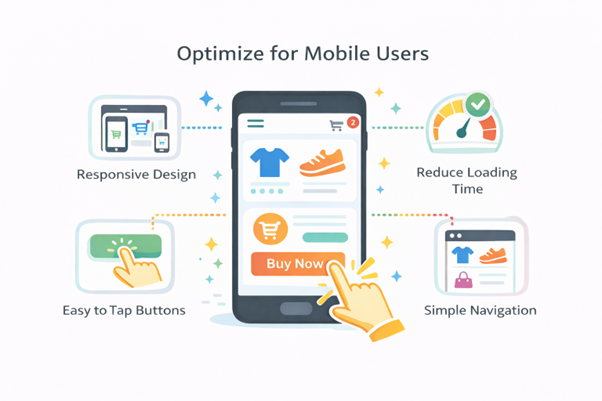
Most users now shop using mobile devices. If your site is not mobile-friendly, you will lose sales. Mobile optimization is not optional anymore. It is essential. A good mobile experience should feel fast and simple.
Here are key things to improve:
Users expect smooth experiences on mobile devices. If your site feels slow or confusing, they will leave quickly.
Users cannot touch products in online stores. That is why visuals become very important. High-quality images help users understand the product better. They also build trust and reduce confusion.
Here is what you should focus on:
Good visuals help users feel confident about their purchase. They also reduce return rates and increase satisfaction.
Long forms often frustrate users and slow down the buying process. Users want a fast and smooth checkout experience. They do not like filling in many fields.
A complex form increases errors and causes drop-offs. You should keep your checkout forms short and simple.
Here are smart ways to improve your forms:
A simple form reduces friction and improves user flow. When users face fewer steps, they complete purchases more easily.
Users often feel confused when forms are unclear. They may not know which fields are required. This leads to mistakes.
Confusion slows down the process and increases frustration. That is why clear labeling is very important. You should always mark both required and optional fields clearly. This helps users complete forms without guessing.
Here is what you can do:
This small change improves user confidence and reduces errors. It also speeds up the checkout process significantly.
Live chat can help users when used correctly. However, too many pop-ups can annoy users quickly. Users do not like interruptions while browsing products. That is why timing matters a lot in live chat. You should use live chat only when users need help.
Here are better ways to implement it:
Live chat works best when it feels helpful, not pushy. A well-timed chat improves user experience and conversions.
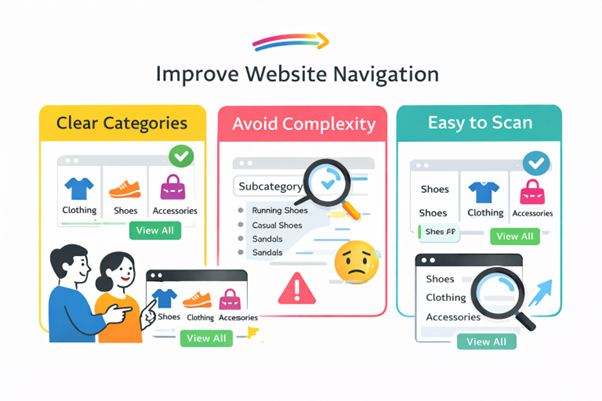
Users should find products quickly without confusion. Poor navigation creates frustration and increases bounce rates. A clear structure helps users explore your store easily. You should make navigation simple and logical.
Here are some useful improvements:
Good navigation reduces effort for users. When users find products faster, they are more likely to buy.
Many users check policies before making a purchase. Unclear policies create doubt and stop users from buying. Transparency builds trust and improves decision-making. You should make this information easy to find.
Here is what you can do:
Users feel safer when they understand your policies. This reduces hesitation and increases conversions.
Forcing users to create accounts can hurt conversions.
Many users prefer quick checkout without registration. Guest checkout removes this barrier and speeds up purchases. You should always offer a guest checkout option. At the same time, account creation still has benefits. The key is to ask at the right moment.
Here is a better approach:
This method balances user experience and business goals. It helps you increase conversions without losing future customers.
Users often search for specific products within categories. If your search shows site-wide results, it creates confusion. Users expect search results to match their current category. You should provide category-based search functionality.
Here is how it helps:
A better search experience keeps users engaged longer. It also increases the chances of conversion.
Also Read: User Search Behavior Analysis: 6 Actionable Steps with Top Tools
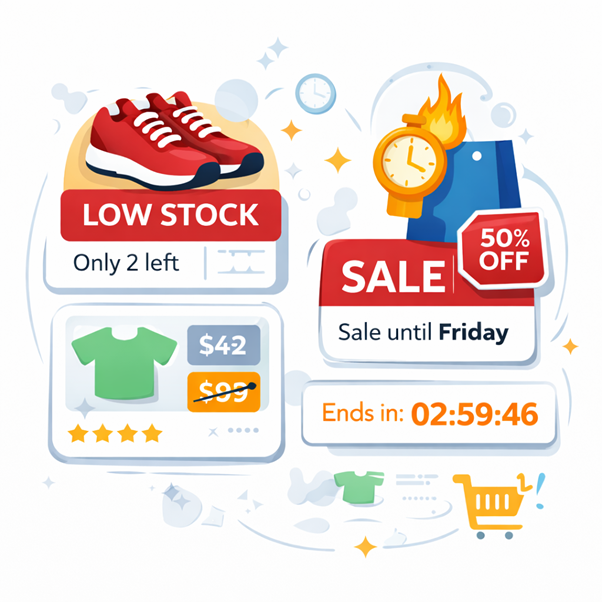
Urgency can push users to take action faster. When users feel they might miss out, they decide quickly. Scarcity works well when used honestly and carefully. You should avoid fake urgency, as it reduces trust.
Here are effective ways to use urgency:
These tactics create a sense of importance. They help increase the conversion rate of ecommerce effectively.
Personalization makes users feel understood and valued. It shows them products based on their interests and behavior. This improves engagement and increases purchase chances. You should use data to create better experiences.
Here are some ideas:
Personalization reduces decision time for users. It also improves the overall shopping experience.
CRO is not a one-time task. It is a continuous process. You should test different versions of your pages regularly. A/B testing helps you find what works best. It removes guesswork and improves decision-making.
Here are things you can test:
All these changes can create big improvements. Testing helps you grow based on real data.
Also Read: Google Ads A/B Testing: The 2026 Step-by-Step Playbook to Higher Conversions
Manual optimization takes time and effort. You need smart tools to make better decisions faster. Data-driven tools help you understand user behavior clearly. They show what users like and where they drop off.
If you want to improve results faster, explore CausalFunnel. Our team of experts helps you optimize conversions using AI and real data insights. This makes your CRO ecommerce strategy more effective and scalable.
Understanding strategies is helpful, but real examples make things clearer. These CRO ecommerce examples show how small changes create big results. They also help you see what works in real situations.
An online fashion store had a long checkout process.
Users had to fill out many fields before completing a purchase.
This caused high cart abandonment rates.
The store made a simple change.
They reduced form fields and allowed guest checkout.
Result:
This is one of the most common cro ecommerce examples.
A new ecommerce store struggled with low sales.
Users did not trust the website enough to enter payment details.
The store added trust elements to fix this issue.
They included:
Result:
Trust signals play a major role in CRO ecommerce success.
An electronics store used low-quality product images.
Users found it hard to understand the product details.
The store upgraded its visuals.
They added:
Result:
Visual clarity improves user confidence and buying decisions.
A store used basic product listings without personalization.
Users had to search manually for relevant items.
The store added personalized product suggestions.
They showed items based on user behavior.
Result:
Personalization is a powerful CRO ecommerce strategy.
Use this checklist to improve your store step by step. These actions are simple but highly effective.
This checklist helps you focus on what matters most. You can implement these changes without major effort.
Also Read: CRO Audit: 13 Proven Steps to Increase Conversions and Grow Revenue Faster
Improving conversions is not about luck or random guesses. It is about understanding your users and making smart changes that truly matter.
Every improvement on your site can bring better results over time. CRO ecommerce helps you grow without spending more on traffic. It turns your existing visitors into paying customers more effectively.
The brands that win are the ones that test, learn, and improve constantly. If you ignore optimization, you leave money on the table every single day. But if you act now, you can unlock real growth quickly.
Start optimizing your conversions with smart tools at CausalFunnel. We help you turn user data into clear actions and better results.
Your traffic is already there. Now it is time to convert it.
A good conversion rate depends on your industry and audience. Most ecommerce stores see conversion rates between 2% and 4%. However, top-performing stores often achieve higher rates. You should focus on improving your own performance over time.
The best cro ecommerce examples include checkout optimization and personalization. Stores that simplify user journeys often see strong results. Adding reviews and improving visuals also increases conversions. These examples show how user-focused changes drive growth.
Users abandon carts due to friction and confusion. Common reasons include long forms and hidden costs. Lack of trust and unclear policies also affect decisions. Improving these areas helps reduce cart abandonment.
Testing should be a continuous process for the best results. You should test key elements like buttons and layouts regularly. Even small changes can improve your conversion rate. Regular testing helps you grow based on real data.
Start using our A/B test platform now and unlock the hidden potential of your website traffic. Your success begins with giving users the personalized experiences they want.
Start Your Free Trial

Empowering businesses to optimize their conversion funnels with AI-driven insights and automation. Turn traffic into sales with our advanced attribution platform.
Trusted by Customers


©CausalFunnel Inc. All rights reserved.