



Free Funnel Audit
Convert more customers today!
SEO
10 mins read

SEO
10 mins read
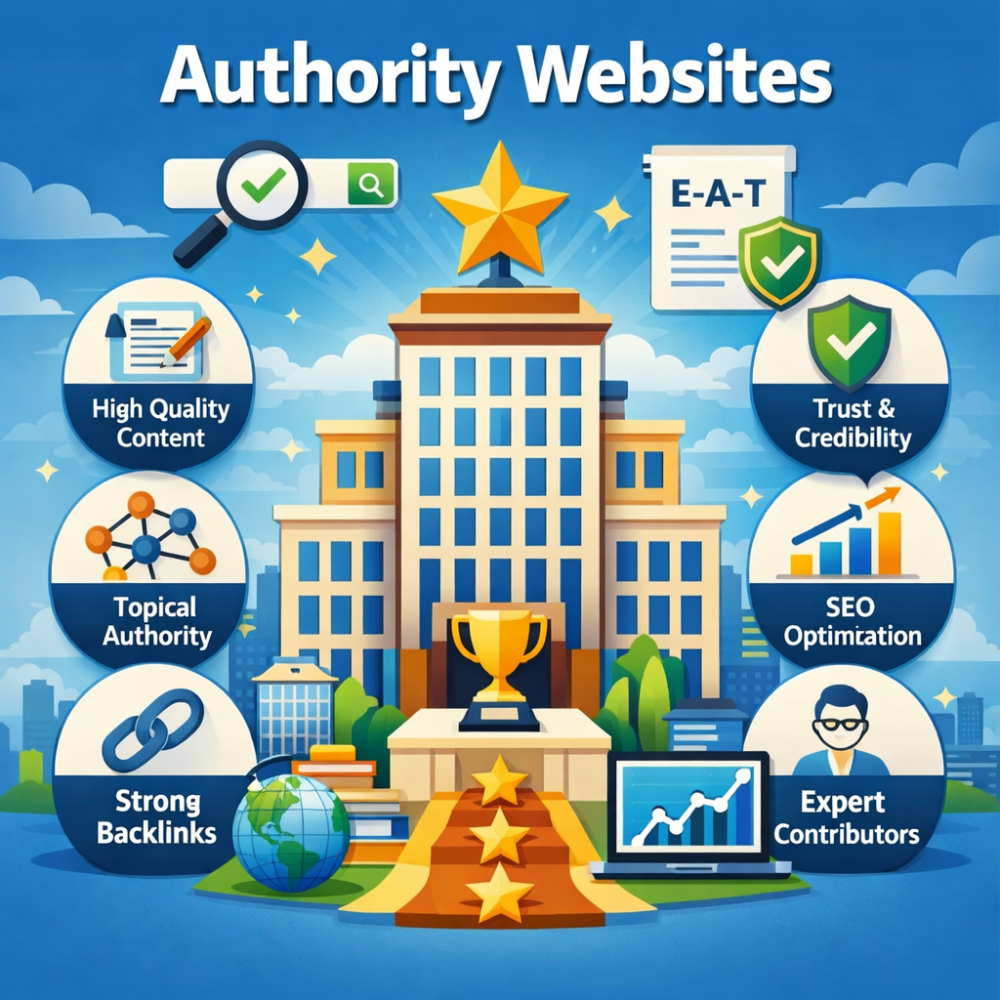
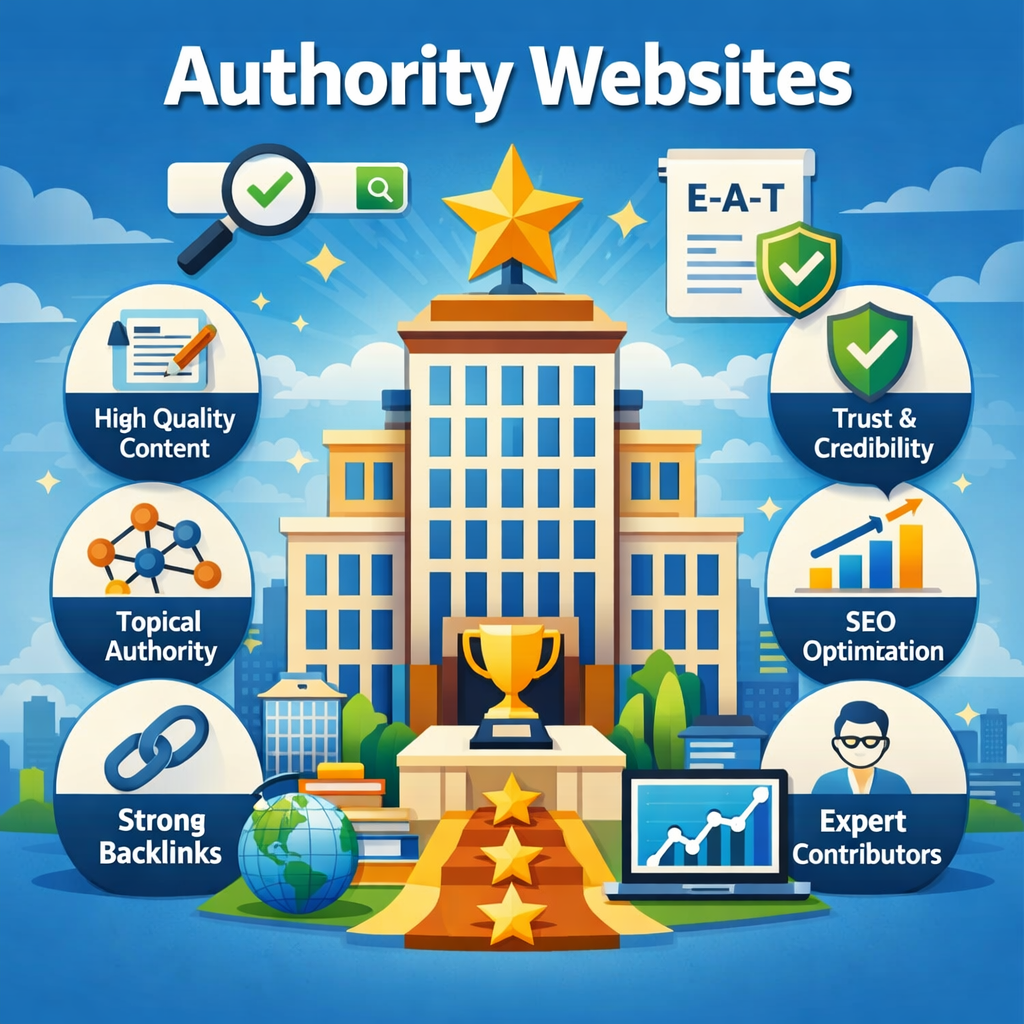
Authority websites are trusted, content-rich sites. They cover a topic in depth, earn strong backlinks, and rank consistently on Google. This is because users and search engines see them as reliable sources.
Ever searched something on Google and kept clicking results from the same site? That’s not random. That’s authority at work.
Let’s break it down properly.
An authority website is a site that Google and users trust. It covers a topic in depth and answers most questions people have about it.
It’s not just about size. It’s about reputation.
People trust it. They return. They recommend it.
| Factor | Authority Website | Regular Website |
| Trust level | High | Low |
| Content depth | Extensive | Basic |
| Rankings | Consistent | Fluctuating |
| Backlinks | Strong | Weak |
| Traffic | High | Limited |
Google wants one thing. It wants to give users the best answer fast.
Authority websites make that easy.
They send strong signals like:
Imagine searching “best credit cards” and landing on a thin 500-word blog. Would that feel reliable? Probably not.
Now compare that to a detailed guide with charts, updates, and expert insights. Which one feels safer?
That’s why authority websites win.
Building one takes time. But the payoff is huge.
Here’s a real moment to think about:
“Is this worth the effort?”
Short answer: yes, if patience exists. No, if quick wins are the goal.
| Factor | Authority Website | Niche Website |
| Topic coverage | Broad | Narrow |
| Content depth | High | Limited |
| Growth potential | Long-term | Short-term |
| Monetization | Multiple streams | Limited |
This depends on goals.
Choose an authority site if:
Choose a niche site if:
Authority comes from a mix of signals.
Content must be helpful. Not fluffy.
It should:
Think of it like a guidebook, not a brochure.
acklinks can be thought of as votes that signal credibility to search engines, but it is important to understand that not all votes carry the same level of influence or value. A single link from a highly trusted and authoritative website can have a much stronger impact on your rankings and overall SEO performance than multiple links from low-quality or unrelated sources, which may provide little to no benefit.
Cover one topic fully.
Not just one blog. Many.
For example, a fitness site should cover:
Google starts seeing patterns.
These are small things. But they matter.
Ever left a slow, messy site in seconds? That’s why this matters.
People tend to trust other people, especially when they can clearly see who is behind the content and what experience they bring to the table, which is why transparency plays such an important role in building credibility online. Clear and well-written author bios help establish this trust by giving readers insight into the writer’s background, while demonstrated experience and expertise make that trust even stronger and more convincing. Even a simple line such as “5 years in digital marketing” can go a long way in reassuring readers and building confidence in the information being presented.
Google does not use one single metric. It looks at many signals.
DA is a score from SEO tools like Moz, Ahrefs, and SEMRush. It predicts how well a website might rank in search engines. Scores range from 0–20 (low), 20–50 (moderate), 50–70 (strong), and 70+ (very strong). It’s best used to compare your site against competitors in your niche rather than chasing the number itself.
Instead of focusing only on DA, look at Domain Rating (DR), organic traffic, and referring domains to see how your site stacks up. Then, ask, would a real user trust this page? Real trust drives rankings more than scores.
| Factor | Domain Authority (DA) | Page Authority (PA) |
| What it measures | Overall website strength | Strength of a single page |
| Scope | Entire domain | Individual URL |
| Impact | Helps all pages rank faster | Helps one page rank higher |
| Example | A trusted blog site | One high-ranking article |
Domain Authority reflects how strong the entire website is.
It grows over time as:
A site with strong authority often finds it easier to rank new content. That’s why big sites can publish a new blog and see it rank quickly.
But here’s an important point. Domain Authority is a third-party metric. Tools like Moz created it to estimate ranking strength. Google does not officially use it.
Still, it’s useful as a directional signal.
Page Authority focuses on one page, not the whole site.
This means:
Why does this happen?
Because each page has its own signals, such as:
So even on a strong website, weak pages exist. And on a small website, one great page can still outperform big players.
So, if your site has good authority, will every page rank?
Not always. Here’s what actually happens:
So both matter. And they work together.
To grow Domain Authority:
To improve Page Authority:
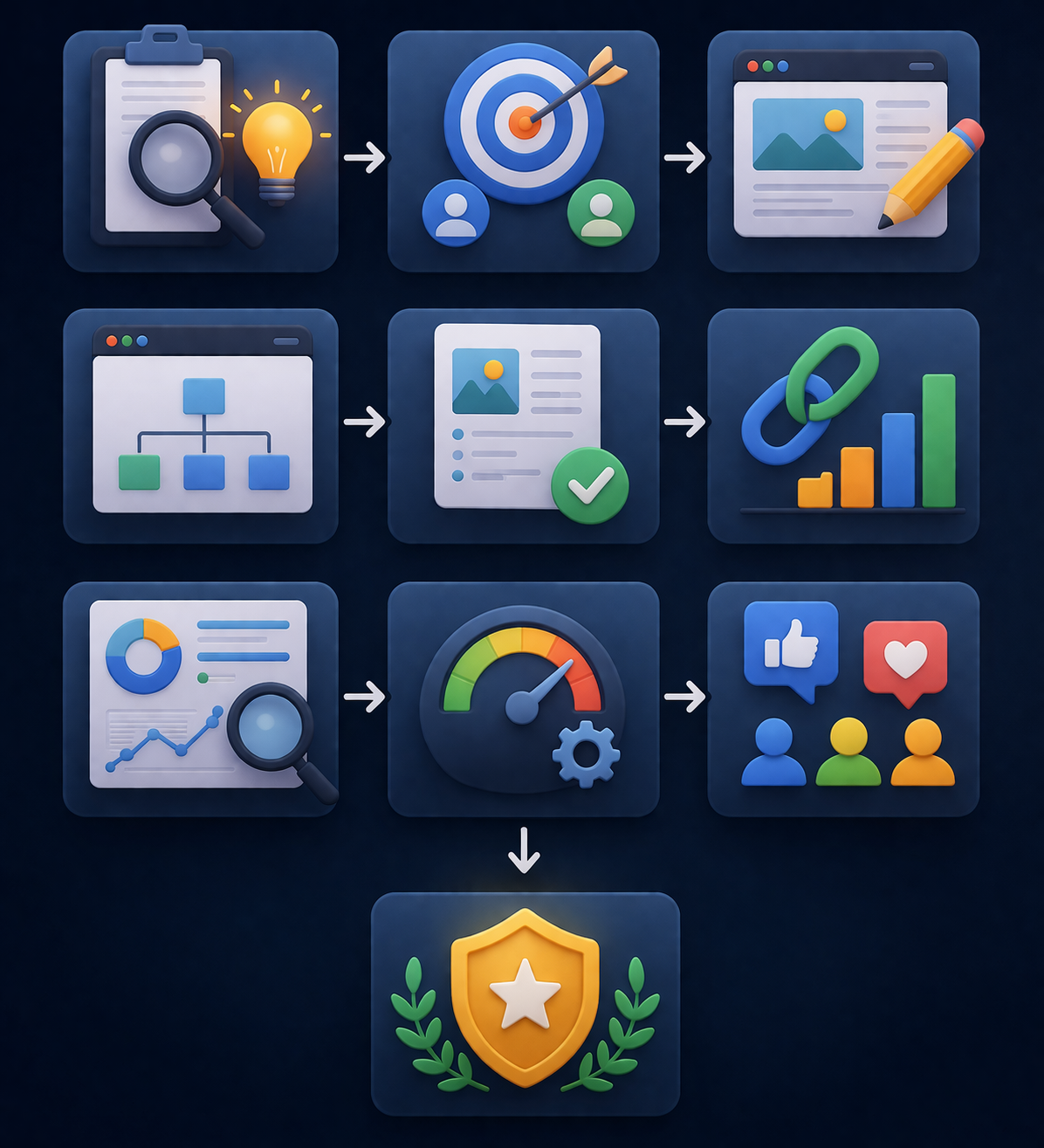
Below is a practical guide to build an authority website.
Avoid going too narrow.
Bad example: “Protein shakes for runners in winter”
Better: “Fitness” or “Nutrition”
Still focused. But scalable.
Ask:
“Can 100+ articles be written on this topic?”
If not, it’s too small.
Building topic clusters is a strategy that changes everything about how Google sees your site. Instead of publishing random posts, you create a structured network of content around a central theme.
A strong cluster usually looks like this:
This is the central, comprehensive guide covering the main topic in depth.
Each article addresses a specific subtopic or question related to the pillar. Examples include:
Each supporting article targets a specific search intent:
Mapping intent ensures your content satisfies real user needs. Google can understand the context of your cluster better, which improves rankings for all pages in it.
Google’s December 2025 update confirmed this approach. The update favored sites with deep topical authority using clusters over general, surface-level content. Sites that organized content in pillar + supporting articles started outranking larger competitors.
Internal linking between the pillar and supporting articles shows Google the relationship between pages. It also guides users naturally through your content.
Consistency beats bursts. Publishing 50 weak posts won’t help.
Instead:
Think:
“Would this help a beginner fully understand the topic?”
Backlinks are still one of the strongest signals that show Google your site is trustworthy. But you have to earn them thoughtfully.
Editorial Links
Links that naturally appear in articles because your content adds real value. These are highly trusted by search engines.
Digital PR
Sharing newsworthy stories, research, or insights to earn links from media sites. A well-timed story can attract attention from authoritative outlets.
HARO Outreach
Responding to journalist requests through platforms like Help a Reporter Out. This can get you mentions in high-quality publications.
Relevance over Quantity
A link from a site in your niche matters more than many links from unrelated sites. It tells Google your content is trusted within your field.
Follow vs. Nofollow
Follow links pass authority to your site. Nofollow links don’t pass authority directly but can still drive traffic and signal credibility.
Anchor Text Strategy
Use descriptive anchor text naturally. It helps Google understand what your page is about without looking spammy.
Internal links guide users and Google. They show relationships between pages.
Simple rule:
Trust is built in layers.
Add:
Think like a user.
“Would this site feel safe to trust?”
Old content fades.
Refresh it.
Some sites double traffic just by updating old posts.
These examples show what “authority” looks like in the real world.
Healthline focuses on health and wellness. It covers topics in a deep and structured way.
What stands out is how seriously it treats accuracy. Most articles are reviewed by medical professionals. That builds trust right away.
The content is also easy to read. Pages are clean, well-organized, and broken into clear sections. Even complex topics feel simple.
From a performance angle, Healthline attracts millions of visitors each month. Its domain authority score sits in the very high range, often above 90 on most SEO tools. That level of trust comes from consistent quality and strong editorial standards.
NerdWallet is all about personal finance. It helps people make decisions about credit cards, loans, banking, and more.
The biggest strength here is usefulness. Content is not just informative. It is actionable.
Users can compare options, use calculators, and see real numbers. This makes the site feel practical, not theoretical.
Trust signals are strong too. Content is regularly updated, and sources are clearly cited. Over time, this builds credibility with both users and search engines.
In terms of scale, NerdWallet brings in millions of organic visitors every month. Its domain authority is also very high. Typically, its in the 80 to 90 range depending on the tool used.
Investopedia focuses on financial education. It explains complex topics in a simple way.
One thing that stands out is depth. Almost every finance-related term has a detailed explanation. There is also a large glossary that keeps growing over time.
Content is updated often. This is important in finance, where information changes quickly.
The site has built strong authority over the years. It ranks for a huge number of keywords and attracts a large global audience. Its domain authority is consistently high, usually above 90.
Nerd Fitness takes a different route. It focuses on fitness, but speaks to a very specific audience.
Instead of trying to appeal to everyone, it targets beginners who feel out of place in traditional fitness spaces. Gamers, office workers, and everyday people feel at home here.
Content is simple, friendly, and easy to follow. There is no heavy jargon. Workouts, diet advice, and mindset topics are all explained in plain language.
The site builds strong community trust. Emails, guides, and programs all feel personal and relatable.
Over time, this approach has paid off. Nerd Fitness attracts steady organic traffic and has built a solid domain authority, often reported in the 60 to 70 range. That may be lower than massive sites, but within its niche, it performs extremely well.
Many websites struggle to become true authorities. Avoid these common mistakes:
Timelines vary depending on your niche, competition, and how consistently you execute your strategy. Here’s a realistic view:
Google’s recent updates make one thing very clear. Depth beats breadth.
In late 2025, a major update shifted rankings in a noticeable way. Sites that covered topics deeply started winning over bigger, more general websites.
Earlier, large sites could rank just because of their overall strength. Now, Google looks closer at how well a topic is covered.
Here’s what started happening after the update:
In short, Google started rewarding topical authority, not just domain size.
Take a look at this shift:
Search Type | What Happened |
Niche-specific keywords | Focused sites ranked higher |
Broad websites | Lost positions in some cases |
For example, FreshBooks, a site focused on accounting and invoicing, began outranking larger platforms like Zapier or CNBC for certain niche terms.
Why did that happen?
Because FreshBooks covers its core topic in depth. It doesn’t just touch the surface. It answers real user questions again and again, from different angles.
That’s exactly what Google now prefers.
This change raises an important question:
“Is it better to be broad or focused?”
The answer is clearer now.
Google is no longer impressed by size alone. It wants expertise.
If building authority websites is the goal, this update actually makes things easier to understand.
Focus on these:
An authority website is a trusted site that covers a topic deeply and ranks well because of strong content, backlinks, and credibility.
Focus on quality content, backlinks, internal linking, and trust signals. Stay consistent over time.
It is a score by SEO tools that predicts ranking ability. It is not used directly by Google.
Usually 6 to 12 months for noticeable growth, and longer for strong authority.
Yes. They remain one of the strongest ranking signals.
Start using our A/B test platform now and unlock the hidden potential of your website traffic. Your success begins with giving users the personalized experiences they want.
Start Your Free Trial

Empowering businesses to optimize their conversion funnels with AI-driven insights and automation. Turn traffic into sales with our advanced attribution platform.
Trusted by Customers


©CausalFunnel Inc. All rights reserved.