



Free Funnel Audit
Convert more customers today!
SEO
10 mins read

SEO
10 mins read
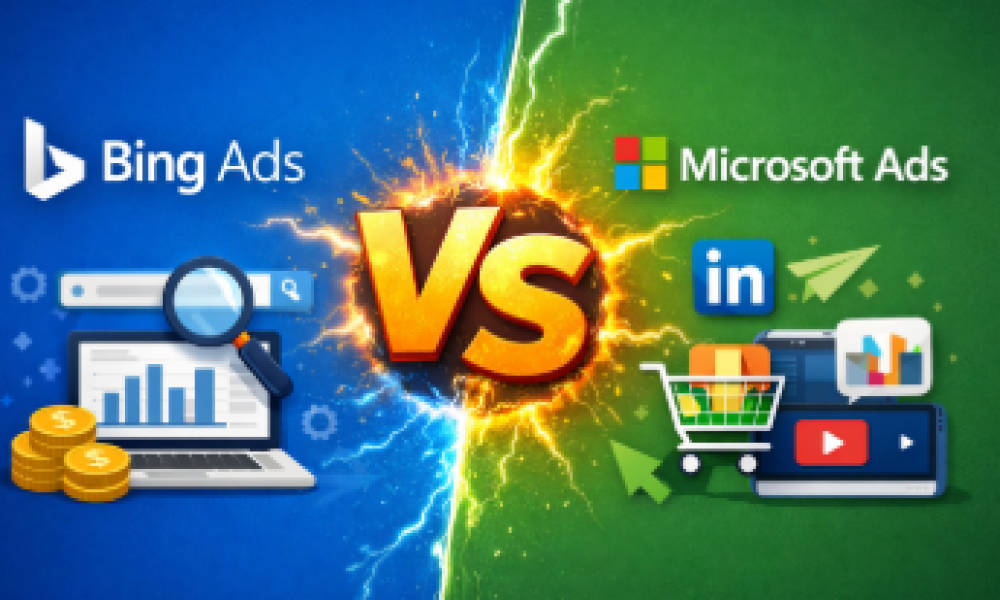
Bing Ads and Microsoft Ads are the same platform, just rebranded, but the newer version is far more powerful and reaches a wider audience.
That simple answer clears the confusion. But it also opens a bigger question. If it’s the same platform, why does it feel different now? And more importantly, should it matter for your ad strategy in 2026?
Let’s break it down.
Yes. Bing Ads became Microsoft Ads in 2019.
That’s the short answer.
The longer version is where things get interesting. The name changed because the platform outgrew Bing. Ads no longer show only on a single search engine. They now run across a full ecosystem.
So who should care?
If ads feel too expensive or too crowded, this shift matters more than it seems.
Before the rebrand, Bing Ads was Microsoft’s answer to Google Ads.
It worked like this:
Back then, it felt like a smaller, quieter version of Google Ads. Less traffic, yes. But also less competition.
Many advertisers treated it as an afterthought.
That is the problem.
It worked. But it didn’t stand out.
Microsoft Ads is a full digital advertising platform that goes beyond search.
That’s the key shift.
After the rebrand, Microsoft expanded everything:
It’s no longer just “ads on Bing.”
In simple terms, it evolved from a search tool into an ecosystem.
This is where most people get clarity fast.
| Feature | Bing Ads (Old) | Microsoft Ads (Now) |
| Name & branding | Focused on Bing | Microsoft-wide platform |
| Network reach | Bing + limited partners | Bing, Yahoo, AOL, MSN, Outlook, Edge, audience network |
| Targeting options | Basic | Advanced audience + intent targeting |
| LinkedIn integration | Not available | Yes (job role, company, industry) |
| AI & automation | Limited | Smart bidding, automation tools |
| Ad formats | Mostly search ads | Search, display, shopping, audience ads |
If this table sparks a thought like, “Wait, I didn’t know it could do all that,” you’re not alone.
Most people still think it’s just Bing.
The name change wasn’t cosmetic. It was strategic.
Microsoft wanted to move from being “just a search engine” to becoming a full advertising ecosystem.
Think about how people use Microsoft products daily:
Now imagine ads flowing across all of these touchpoints.
That’s the real reason behind the rebrand.
It’s like upgrading from a single shop to a whole marketplace.
Your ads don’t stay limited to search results anymore. They move across a wider network, often without extra setup.
This is the core layer. It’s where ads show when someone searches for something.
Even though DuckDuckGo is known for privacy, it still pulls search ads through Microsoft’s network. So your ads can show there too, depending on distribution.
Now it goes beyond search.
Your ads can appear across Microsoft-owned platforms that people use every day:
Think about how often people check mail, read news, or browse at work. Your ads show up in those moments.
This is where reach expands even further.
Instead of waiting for users to search, ads appear while they read articles or explore content.
The impact of these changes runs deeper.
So it’s not just about where ads show.
It’s about how often and in what context people see them.
A quick reality check helps here.
Microsoft Ads often has lower cost per click.
Fewer advertisers. Less bidding pressure.
If Google feels crowded, Microsoft Ads feels like a quieter street with serious buyers.
Short answer. Yes, often.
But why?
Fewer advertisers means lower bids.
Users tend to be:
Many marketers have a common question.
“Should I spend $50,000 on Google or test Microsoft Ads first?”
In many cases, testing here first gives better ROI.
Here’s what recent data shows:
| Metric | Microsoft Ads (Bing Network) | Google Ads |
| Average CPC | $1.54 | $2.69 |
| Cost Difference | ~42% lower | Higher due to competition |
| Search Market Share (US) | 12.76% | Dominant majority |
Think about this.
Paying 42% less per click is not a small difference. It can stretch a tight budget much further. For small businesses or early-stage campaigns, this alone can change the game.
But there’s another side to it.
Not always.
Lower cost does not automatically mean better ROI. What matters is:
Microsoft Ads often brings in users who take more time before making a decision. These users browse on the desktop. They compare options, and then act. That’s very different from quick mobile searches on Google.
So the question is:
“Would you rather get cheaper clicks, or faster traffic?”
There is no single right answer. It depends on the goal.
These stats help build trust with search engines and with readers.
It’s not just about how many people you reach. It’s about who you reach.
The user base here feels different from other platforms. You notice it once campaigns start running.
This is not the typical scroll-fast, impulse-click crowd. These are people who take time, compare options. They often have higher spending power.
That alone changes how ads perform.
A big reason is something very simple.
Bing comes as the default search engine on many corporate Windows systems.
So think about it.
A lot of professionals don’t switch the default. They just search and move on.
That means your ads often show up in front of:
Not just casual browsers.
Microsoft Ads connects with LinkedIn data. That opens up targeting options most platforms don’t offer at this level.
You can narrow down your audience by:
The audience here is not massive, but it is focused.
That leads to a few important outcomes:
So a question naturally comes up.
Would you rather get 1,000 random clicks or 200 clicks from people who can actually buy?
That’s the real trade-off.
The platform didn’t just get a new name. It actually grew up.
Let’s walk through what really changed.
| Feature | What It Does | Why It Matters |
| LinkedIn targeting | Targets users by job role, company, industry | Great for B2B and high-value leads |
| AI-powered bidding | Automatically adjusts bids in real time | Saves time and improves ROI |
| Audience network ads | Shows ads beyond search on partner sites | Expands reach without extra effort |
| Improved shopping ads | Better product visibility and feed control | Helps eCommerce campaigns perform better |
| Ad customizers by audience | Personalizes ads based on user segments | Makes ads feel more relevant |
| Video extensions on search ads | Adds video directly into search ads | Grabs attention quickly |
| Microsoft Experiments (A/B testing) | Tests different campaign variations | Helps find what actually works |
| Copilot integration | AI helps create ads and optimize campaigns | Speeds up setup and improves quality |
Trying to reach decision-makers?
LinkedIn targeting changes everything. Ads can be shown to people based on their job title or industry. That’s something most platforms still struggle with.
Tired of adjusting bids every day?
AI-powered bidding takes over. It watches performance and tweaks bids in real time. Less manual work, fewer late-night checks.
Feeling like your ads aren’t seen enough?
Audience network ads push campaigns beyond search. Ads appear on partner websites, apps, and content platforms. More eyes without building new campaigns.
Some upgrades don’t get talked about much. But they quietly improve results.
These features together solve common problems:
Each feature removes one layer of friction.
And when those layers add up, campaigns start to feel smoother. More controlled. Less stressful.
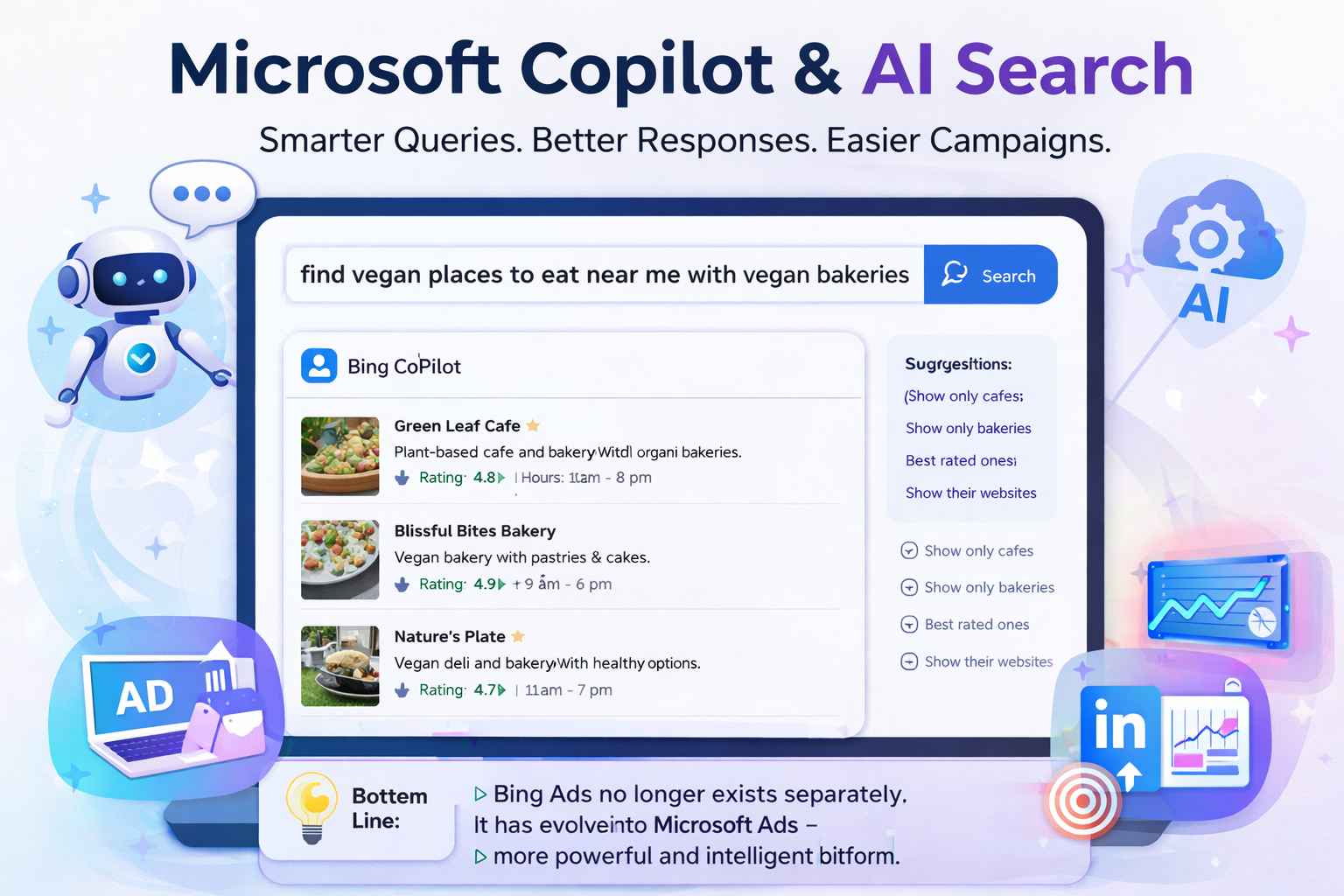
Microsoft is not just improving ads. It is reshaping how people search. A huge part of that shift comes from Microsoft Copilot and AI-powered search.
Search is no longer just a list of blue links. It is becoming more like a conversation.
Microsoft has deeply integrated AI into its search experience.
What’s important is:
Bing is also part of AI-powered search experiences connected to tools like ChatGPT.
That means search is expanding beyond traditional search engines.
At first glance, this may feel like a tech update. But it directly affects how ads work.
Think about user behavior.
Earlier:
Now:
That changes intent. It also changes visibility.
Ads are evolving alongside this AI experience.
In simple words, ads are becoming smarter because search is becoming smarter.
This might lead many advertisers to think:
“Will AI reduce clicks on ads?”
It can, in some cases. But it also does something powerful.
It filters users.
People who still click are often:
So even if traffic drops slightly, quality can improve.
Microsoft has invested heavily in AI. Not just small updates, but a full shift.
This creates three clear advantages:
No need to overthink it. Just:
And most importantly, start testing early.
Because by the time AI-driven ads become standard, early adopters usually win.
Not every platform fits every goal.
Think of it like this.
If the goal is quality over quantity, Microsoft Ads fits well.
It works well in many cases. But there are moments when it starts to feel limiting.
Instead of guessing, it helps to watch a few clear signals.
Yes, in most cases.
Then adjust based on results.
This balanced approach reduces risk and improves returns.
These mistakes cost money.
It doesn’t. It’s Microsoft Ads now.
Many businesses skip it. That’s a lost opportunity.
What works on Google may not work here.
Different audience. Different behavior.
Getting started feels simple at first. But a few smart steps early on can save a lot of wasted spend later. Wasted ad spend refers to all the money wasted in things like paying for irrelevant clicks, targeting the wrong audience, or running ads without proper tracking.
Let’s go step by step.
First, sign up on Microsoft Ads. That part takes only a few minutes.
But don’t stop there.
Before running ads, set up the UET (Universal Event Tracking) tag.
Why this matters:
What to do:
Skipping this step is like running ads blind. You get clicks, but no clear idea what they do next.
If campaigns already exist on Google Ads, importing them is the fastest way to start.
You can bring in:
But here’s the catch.
Don’t just import and leave it as is.
Take a few minutes to adjust:
If starting fresh, keep it simple. Start with a small set of high-intent keywords and build from there.
This is where Microsoft Ads really stands out.
You can layer in LinkedIn targeting directly into campaigns.
Options include:
This works especially well for B2B campaigns.
Running an eCommerce store? Then this step is important.
Microsoft Merchant Center lets you upload product data and run shopping ads.
Basic setup includes:
Once done, products can show directly in search results with images, price, and details.
This often improves click quality because users already see what they’re getting.
Now the campaigns are live. But this is where real improvement begins.
Focus on small, consistent changes:
Also, try running simple A/B tests using Microsoft Experiments when possible.
Start with a small budget. Let data guide decisions.
Bing Ads and Microsoft Ads are the same platform. But Microsoft Ads is the upgraded version built for modern advertising.
What changed is not just the name. It’s the capability.
In 2026, ignoring Microsoft Ads is like leaving money on the table.
Especially if:
Sometimes the smarter move isn’t louder marketing.
It’s quieter, sharper targeting
No, Bing Ads is no longer available as a separate platform. It was officially rebranded and replaced by Microsoft Ads. It now includes a wider network and more advanced features than the old version.
Yes, Microsoft Ads is worth considering in 2026, especially if ad costs feel too high elsewhere. It offers lower competition and strong B2B targeting through LinkedIn data. It also often delivers better value for money in the right industries.
There is no separate platform anymore. This is because Bing Ads has simply evolved into Microsoft Ads. The newer version goes beyond search. It includes more placements, smarter targeting, and better automation tools.
In many cases, Microsoft Ads is cheaper because fewer advertisers compete for the same keywords. This usually leads to a lower cost per click. However, actual results still depend on your industry and targeting.
Not exactly, because ads are distributed across the full Microsoft network by default. This includes Bing, Yahoo, AOL, and other partner sites. It helps increase reach without needing separate campaigns.
Start using our A/B test platform now and unlock the hidden potential of your website traffic. Your success begins with giving users the personalized experiences they want.
Start Your Free Trial

Empowering businesses to optimize their conversion funnels with AI-driven insights and automation. Turn traffic into sales with our advanced attribution platform.
Trusted by Customers


©CausalFunnel Inc. All rights reserved.