



Free Funnel Audit
Convert more customers today!

SEO
10 mins read


SEO
10 mins read

Shopify product & collection SEO helps your store rank higher in search results. It improves traffic from buyers who are ready to purchase. Many store owners focus only on product pages, but they forget the power of collection pages. That mistake limits long-term growth.
Product pages rank for specific buying searches. Collection pages rank for broader category searches. Both page types must work together. This guide explains how to optimize both correctly. It works for experts and Shopify SEO for beginners alike.
If you want expert help instead, check out CausalFunnel. Our team specializes in growth-focused SEO strategy and data-driven optimization.
Search engines rank pages based on user intent. Understanding that intent changes everything. Product pages usually rank for transactional keywords. For example, someone searches for “Nike Air Zoom Pegasus 40.” Google will likely show the product page first.
Collection pages rank for broader category searches. For example, someone searches for “running shoes.” Google often shows category pages instead of products.
This is where Shopify product & collection SEO becomes powerful. It helps you capture traffic at every buying stage.
Here is how they work together:
Ignoring collection pages is a common mistake. Many beginners focus only on product optimization. That leaves large search opportunities untapped.
Shopify SEO for beginners should always start with structure. Good structure supports every other SEO effort.
When done correctly, this strategy can:
Search intent explains why someone searches online. You must understand it before optimizing pages.
There are three main intent types:
Informational searches look for knowledge or advice. Commercial searches compare options before purchase. And, transactional searches show clear buying intent.
Collection pages often match commercial investigation intent. Product pages often match transactional intent.
If you optimize the wrong page type, rankings suffer. Google will not rank a product for broad category searches. It also will not rank a category for brand-specific queries.
To optimize Shopify product & collection SEO correctly:
Shopify SEO for beginners often misses this step. They choose keywords without checking search results first. Always study the top-ranking pages before optimization.
Search results tell you which page type Google prefers. That insight saves time and prevents wasted effort.
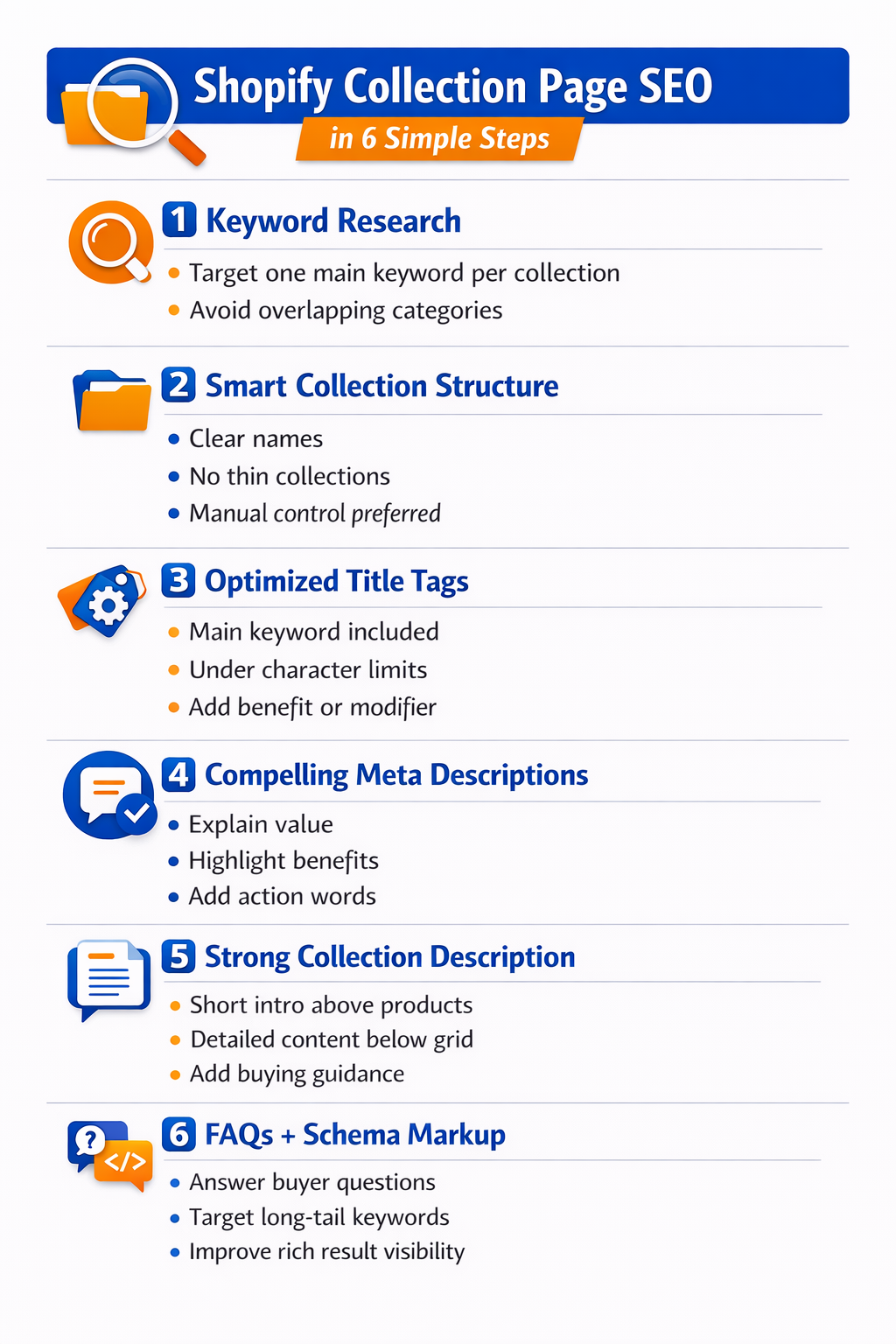
Collection pages are powerful SEO assets. They target broad and competitive keywords. They also pass authority to product pages. Shopify collection page SEO requires strategy and clarity. You must avoid thin and duplicate collections.
Start with keyword research first. Do not create collections without demand. Each collection should target one main topic. Avoid overlapping categories that confuse search engines.
Here are the best practices to follow:
Manual collections offer better control. Automated collections save time but need review. Choose based on your store size and needs. A strong structure improves Shopify product & collection SEO results. It also improves user experience across your store.
If you need help designing your structure, consult CausalFunnel. Our experts can audit and improve your Shopify setup.
Title tags are strong ranking signals. They tell search engines what the page covers.
A good collection title should:
For example, use “Men’s Running Shoes | Free Shipping.” This avoids keyword stuffing inside title tags. Keep titles clear and simple.
Meta descriptions improve click-through rates. They do not directly affect rankings. However, higher clicks improve performance over time.
Write meta descriptions that:
Keep them clear and persuasive, and avoid repeating the same phrase.
Collection descriptions add depth and context. They help Google understand the category better. Place short content above the product grid. Place longer content below the grid if needed.
A good description should:
Avoid stuffing keywords repeatedly. Write for real users first. Strong descriptions improve Shopify product & collection SEO naturally. They also help beginners understand product differences easily.
For Shopify SEO for beginners, start simple. Write clear and helpful content first. Then improve it based on performance data.
Adding FAQs strengthens collection pages greatly. They answer common buyer questions directly.
FAQs help you:
Use simple questions and short answers. Keep answers clear and helpful.
You can also add structured data markup. Schema markup helps search engines understand content. It may increase visibility with rich results.
FAQ sections work well for competitive categories. They also support Shopify SEO for beginners who need guidance.
Product pages drive direct sales from search traffic. They target high-intent buyers ready to purchase. Strong Shopify product page SEO improves visibility and revenue. It also supports your overall Shopify product & collection SEO strategy.
Many stores use manufacturer descriptions without changes. That creates duplicate content across many websites. Search engines rarely rank duplicate content highly. Unique content gives you a strong advantage.
Let us break down product optimization step by step:
Product titles must be clear and specific. They should match how customers actually search.
A strong product title should:
For example, write “Nike Air Zoom Pegasus 40 Men’s Running Shoes.”
Avoid writing vague titles like “Comfortable Running Shoes.”
Keep titles focused and readable. Do not overload them with too many keywords. Strong titles improve click-through rates and rankings. They also help shoppers scan search results quickly.
Your product description must be unique and helpful. It should explain features and real benefits clearly. Avoid copying text from suppliers or brands. Search engines detect duplicate content very easily.
Structure descriptions in a simple format:
For example:
Keep sentences short and direct. Avoid technical jargon when possible.
Shopify SEO for beginners should focus on clarity first. Clear writing improves both rankings and conversions. Descriptions should also include related terms naturally. Do not force the primary keyword repeatedly.
Good content improves Shopify product & collection SEO results over time. It also builds trust with potential buyers.
Images play a big role in e-commerce SEO. They improve engagement and reduce bounce rates.
Each product image should:
Alt text helps search engines understand images better. It also improves accessibility for screen readers.
For example, use “Men’s black running shoes side view.”
Avoid writing “image1” or random file names.
Use WebP format when possible. Smaller file sizes improve loading speed. Fast pages improve rankings and user satisfaction.
Reviews add fresh and valuable content. They increase trust and improve conversion rates. Search engines value authentic user content. It signals real activity on your site.
Encourage customers to leave honest reviews. Display star ratings clearly on product pages. Reviews help Shopify product & collection SEO naturally. They also improve click-through rates in search results.
If possible, add review schema markup. Structured data may enable rich snippets.
Rich snippets increase visibility in competitive results.
Clean URLs improve crawl efficiency and clarity. Avoid unnecessary numbers or random characters.
A clean URL should look like this:
“yourstore.com/products/mens-running-shoes.”
Avoid indexing tag-based filter URLs. They often create duplicate content issues. Internal linking also strengthens SEO performance. Link from collections to important product pages, and link between related products where helpful.
Internal links pass authority across your store. They also guide users toward relevant items.
This structure supports strong Shopify product & collection SEO. It creates a logical flow for users and search engines.
For a full SEO audit, book a consultation with CausalFunnel.
Technical SEO supports everything else you build. Without it, rankings remain unstable and weak. Shopify handles many basics automatically. However, you must still monitor important areas.
Here are the most important technical elements:
Shopify automatically generates canonical tags. These tags prevent duplicate content issues. However, always double-check theme customization. Custom themes sometimes break default behavior.
Canonical tags should point to the main version. They should not reference filtered URLs.
Shopify creates multiple URL paths for products. For example, products may appear under collections. That can create duplicate page versions. Make sure canonical tags handle these variations correctly.
Avoid allowing search engines to index tag pages. Tag pages often provide thin and low-value content.
Filters improve user experience greatly. However, they can create crawl problems. Do not allow filtered combinations to be indexed. Use noindex tags where necessary for control.
This protects your crawl budget effectively.
Page speed affects rankings and conversions. Large images often slow down collection pages.
Improve performance by:
Fast pages create better user experiences. They also support Shopify SEO for beginners who want steady growth.
Shopify automatically generates XML sitemaps. Make sure only important pages are indexed. Remove low-value pages when possible. Submit your sitemap to Google Search Console.
Track coverage reports regularly for errors.
Many stores repeat the same SEO mistakes. These errors limit traffic and sales growth. Avoiding them improves results quickly.
Here are the most common problems.
Thin collections rarely rank for competitive keywords. Duplicate content weakens your store’s authority. Keyword overlap confuses search engines easily.
Strong Shopify product & collection SEO requires focus. Each page must have one clear keyword goal. Many beginners try to optimize everything at once. That often creates messy structure and weak signals.
Shopify SEO for beginners should start with clarity. Fix the structure first before adding advanced tactics. If you want expert guidance, visit CausalFunnel. Our team can identify and fix hidden SEO issues.
If you are new to SEO, stay calm. You do not need complex strategies first. Shopify SEO for beginners works best with a clear order. Follow these steps carefully and consistently:
Start with keyword research tools. Look for keywords with buying intent. Check what type of pages rank already. Study whether Google shows products or collections.
Match keywords to the correct page type. This protects your Shopify product & collection SEO structure.
Create collections around strong keyword themes. Avoid overlapping categories with a similar focus. Use clear and descriptive collection names. Add short helpful descriptions for context.
Do not create empty or weak collections. Every collection must serve real search demand.
Write unique and helpful product descriptions. Add strong product titles with main keywords. Optimize images with descriptive alt text. Encourage customer reviews for fresh content. Link products to related collections properly.
This strengthens Shopify product & collection SEO together.
Check for duplicate URLs and indexing issues. Ensure canonical tags work correctly. Compress large images for better speed. Remove unnecessary apps that slow down pages.
Submit your sitemap to Google Search Console. Monitor coverage and indexing errors regularly.
SEO is not a one-time task. Track impressions and clicks every month. Identify pages with strong impressions but low clicks. Improve their titles and meta descriptions. Look for keywords ranking on page two. Strengthen those pages with better content and links.
Shopify SEO for beginners improves with steady adjustments. Small improvements often bring large results over time.
Use this checklist to review your store. Go step by step without rushing changes.
This checklist supports long-term growth. It also simplifies Shopify product & collection SEO management.
Shopify product & collection SEO requires a balanced strategy. Products and collections must support each other. Strong structure improves crawl clarity and rankings. Helpful content increases trust and conversions. Technical health protects your SEO efforts long term. Consistent tracking helps you refine performance gradually.
Do not rush the process or skip steps. Focus on steady improvements with clear goals.
If you want expert help accelerating results, visit CausalFunnel today! Our team of experts helps Shopify brands grow with proven SEO strategies.
Start with collection pages if you target broad keywords. Collections rank better for high-volume category searches. They help attract shoppers who are still comparing options. This approach builds strong visibility early.
Product pages should target specific buying keywords. These pages convert users who already know what they want. Both page types must work together. Strong Shopify product & collection SEO depends on this balance.
Shopify SEO takes time and steady effort. Most stores notice ranking movement within three to six months. Competitive industries may take longer to show strong growth. Results depend heavily on keyword difficulty.
Consistent updates improve performance over time: quality content and internal linking speed up progress. Backlinks also influence authority and trust. A long-term strategy always beats quick shortcuts.
Shopify covers basic technical SEO automatically. It creates sitemaps and manages clean hosting infrastructure. The platform also ensures mobile-friendly themes. These features help beginners start easily.
However, content and structure require manual optimization. You must improve titles, descriptions, and keywords yourself. Shopify SEO for beginners works best with active effort. The platform supports you, but strategy drives results.
The core SEO principles remain the same. Google still values helpful content and user experience. Keywords, structure, and authority matter equally. Search intent remains the main focus.
However, Shopify has platform-specific limitations. URL flexibility and deep customization options are limited. WordPress allows more technical control overall. Understanding these differences improves strategic decisions.
Yes, beginners can learn and apply the basics. Shopify SEO for beginners becomes manageable with structured guidance. The dashboard feels simple and easy to navigate. Many tasks require no coding knowledge.
However, advanced growth may require expert support. Competitive markets demand deeper optimization strategies. Technical audits and backlink planning add complexity. Beginners can start strong and scale later with help.
Start using our A/B test platform now and unlock the hidden potential of your website traffic. Your success begins with giving users the personalized experiences they want.
Start Your Free Trial

Empowering businesses to optimize their conversion funnels with AI-driven insights and automation. Turn traffic into sales with our advanced attribution platform.
Trusted by Customers


©CausalFunnel Inc. All rights reserved.