



Free Funnel Audit
Convert more customers today!
SEO
10 mins read

SEO
10 mins read
Most people search online first when they need flowers. If your shop doesn’t show up, those customers simply go somewhere else. That’s where SEO for florists makes a real difference. It helps your business appear in search results right when people are looking to buy.
Good SEO brings more visitors to your website and more people to your store. It also builds brand trust. When customers keep seeing your shop in local search results, your name starts to feel familiar and reliable.
Local search is especially important for flower shops as most buyers search for things like “flowers near me” or “florist nearby.” SEO makes sure your shop shows up in those moments that matter most. Without SEO, your competitors get those customers instead. With SEO, you attract high-intent buyers who already know what they want and are ready to order.
Over time, SEO also turns your website into a helpful resource. That trust increases the chances of people choosing you again and again, giving your flower shop long-term visibility, not just short-term traffic.
The trend of buying flowers online has grown massively in the past few years. Indeed, more people want to order at home just with a few clicks, rather than going to the store physically. They look for fast delivery, nearby shops, and options they can trust.
Most people perform these searches through their mobile phones. Therefore, if your website speed is adequately fast and works smoothly on smaller screens, you have only done the first. Add to that strong local SEO, and your shop is a lot more likely to display in Google Maps for someone searching for flowers near them.
There are also huge peaks in seasonality around those special days like Valentine’s Day or other such occasions. Search strings such as ‘Valentine’s Day roses near me’ or ‘birthday flowers delivery’ tend to spike sharply in search volume. Targeting such phrases will get your business in front of consumers precisely at the time they are ready to purchase.
The key is understanding what your customers are looking for at each stage of their journey. Simple tools for SEO help track search patterns and trends.
Running a successful flower shop online isn’t just about having a beautiful website. It’s about using the right SEO strategies to help customers find you easily, understand your services, and choose you over competitors.
The following are the ways to strengthen your SEO game:
Keyword research finds terms your customers use. Tools like Google Keyword Planner help find search volumes. Look for local and seasonal phrases with buying intent.
Examples might be:
Long-tail keywords like these attract high-intent customers. They are specific search phrases used by people who already know what they want to buy. These users are closer to making a purchase, so they convert more often than general visitors. Therefore, update keywords every season for the best performance.
On-page SEO tells search engines what your pages are about. Use clear titles and meta descriptions with relevant phrases. Headings should outline what each section covers.
Add alt text descriptions to your images. This helps both users and search engines understand them. Use natural language, not repetitive or forced wording.
Internal links connect related pages on your site. They help users explore and spend more time on your site. This also sends positive signals to search engines.
Product descriptions should help customers decide quickly. Use clear terms like flower type and delivery options. Example: “Red roses with same-day delivery for birthdays.” This helps both users and ranking engines understand value.
Highlight special touches like handcrafted bouquets. Mention any guarantees like freshness or delivery windows. These details improve conversion and search relevance.
Seasonal demand floods flower searches at key times. Planning content for these seasons increases visibility.
For example:
Create landing pages just for these events. This lets you target specific search trends easily. Seasonal landing pages can also boost both traffic and sales. They help customers find exactly what they need fast.

Local SEO helps nearby customers find your flower shop quickly. Most flower orders come from people searching within their city. If your business does not appear in local results, sales will drop. Local SEO fixes this problem in a simple and practical way.
Start with your Google Business Profile optimization. This listing controls how your shop appears on Google Maps.
Important steps to follow:
Customer reviews also play a major role in rankings. They influence trust and buying decisions strongly.
Encourage reviews using simple steps:
Local citations help Google trust your business information. These are mentions on directories like Yelp or local business websites.
Best citation practices include:
Create location pages if you serve multiple areas. Each page should mention services for that specific city naturally. Local SEO helps you appear when customers need flowers urgently. This includes birthdays, funerals, and special celebrations nearby.
Content marketing helps you address customer needs before they buy. Helpful content builds trust and keeps visitors longer. Blogs are a key part of your content strategy, as they attract organic traffic and support SEO goals.
Topic cluster planning improves content structure. This means linking related pieces together deeply. It tells search engines your content is comprehensive.
Good blog topics for florists include:
These topics answer real customer questions. They also guide users to your product pages naturally.
Content should solve customer problems first. This improves engagement and search rankings. Avoid shallow content that adds little value.
Social platforms drive traffic that supports SEO growth. Share blog posts and product highlights to increase reach. Visual content, like bouquet photos, draws attention well.
Social signals don’t boost SEO directly. But they drive traffic that increases engagement metrics.
Search engines notice user interest and time on the site. Engagement through comments and shares builds brand trust. This indirectly supports search performance and visibility.
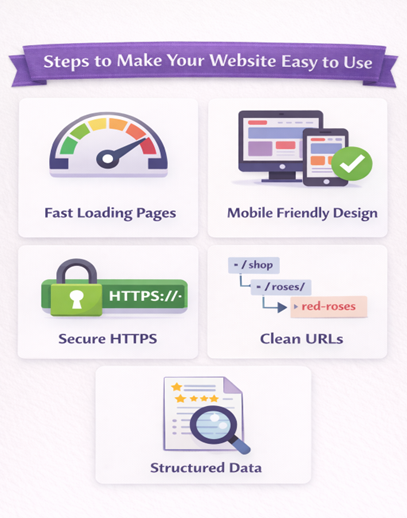
Technical SEO ensures your website works smoothly for users. It also helps search engines crawl and index your pages easily. Without a proper technical setup, content alone cannot rank well.
Important technical areas to optimize:
Slow websites lose customers quickly. Many visitors leave if pages load slowly.
Speed improvement steps:
Fast websites create better shopping experiences. They also receive ranking benefits from Google.
Most customers search for flowers using mobile phones. Your website must display correctly on small screens.
A mobile-friendly checklist includes:
Google uses the mobile version first for ranking. Poor mobile experience reduces both traffic and sales.
A secure website builds customer trust. Always use HTTPS encryption.
Security steps include:
Customers avoid websites that appear unsafe. Security also affects search engine trust signals.
Schema helps search engines understand your content better. It improves how your pages appear in search results.
Florists should use schema for:
This can improve click rates from search pages. It also increases content clarity for search engines.
Simple navigation helps both users and search engines.
Best practices include:
Good structure reduces confusion and bounce rates. It also supports higher indexing efficiency.
To know if your SEO efforts are paying off, you need to keep an eye on how your website is actually performing. Tools like Google Analytics and Google Search Console make this easy and show you what’s working and what needs improvement.
Some important things to track include:
Try to review these numbers every month to spot steady progress. And remember, SEO is a long-term game. Results build up gradually, but when they do, they bring consistent traffic and customers to your flower shop.
Many online flower businesses don’t succeed due to the small mistakes they commit. These wrongs obstruct results, waste funds, and build frustrations. What to do is as essential as what not to do.
These are the common SEO mistakes many florists make:
Ignoring their Google Business Profile Updates
Failing to update business hours, images, services, or methods of contacting will negatively impact local visibility and confuse customers.
Copying Content from Other Websites
Duplicate content works against your credibility in the eyes of search engines and stops your pages from ranking properly.
Neglecting Mobile Optimization
With most flower searches being conducted on mobile, a website lacking mobile friendliness may lose such customers in a split second.
Inserting Keywords Awkwardly Into the Text
Excessive repetition of the same phrases can affect readability and hurt your rankings.
Once in a while, purchasing backlinks of poor quality, that too, from uncertain sources!
They seem beneficial in the short term, but harm your site’s credibility and may trigger penalties soon thereafter.
There are slow and antiquated website designs. Slow-loading pages might compromise the experience and make the visitors leave since there was a low waiting time, meaning poor SEO performance.
Another grave error is to give up.
SEO is for the long haul. Some florists drop SEO after one or two months when nothing apparently happens; actual meaningful change often comes after three to six months of sustained effort.
For the most part, it is better to focus on small but steady victories, helping your customers through straightforward and honest information rather than seeking any shortcuts. Search engines reward those who build trust over time, and this approach can produce strong ranking positions and reliable sales over the long term.
Many florists prefer hiring SEO professionals for better results. Choosing the right partner protects your budget and business reputation. Good SEO agencies explain strategies in simple words. They avoid using confusing technical language without reason.
Look for these qualities when selecting an SEO service:
SEO success depends on competition, location, and website quality. No company can control search engines completely. A trustworthy partner focuses on growth, not shortcuts. They help build strong foundations for future online success.
Ready to turn your traffic into paying customers?
Try CausalFunnel’s AI-driven conversion platform and track your SEO performance with clarity and precision. Get measurable growth that aligns with real revenue goals.
This can vary a whole lot depending on what your business needs, and, in turn, how competitive the local market is. For example, while small neighborhood flower shops usually need far less work, a large florist will have to fight for business in an equally busy city.
Most flower shops begin with basic local SEO services. This focuses on strengthening your Google Business Profile, injecting local keywords, and making sure nobody ignores you in a local search. As you advance, you may also want to look into content marketing, technical SEO for your site, and ongoing optimization.
Common pricing is listed as follows:
Your final cost will depend on website size, number of locations, and the strength of competitors online. Florists in cities face a heavier load, taking more time to rank since many are vying for the same set of customers.
The good thing, however, is that SEO usually costs you less than paid advertising in the long run. Ads stop working the moment you stop paying, but SEO, however, it brings people over to your website month after month.
That is why many florists share a vision of SEO being a wise long-term investment which supports rolling growth, builds trust in the brand, and relieves pressure on them to pay for ads each and every day.
SEO connects your flower shop with customers at the exact moment they need flowers. It builds strong visibility, trust, and steady growth over many months and years.
Good SEO helps small florists compete with larger brands without huge advertising budgets. It creates long-term traffic that does not disappear when ads stop running. Focus on helping users with clear answers and smooth website experiences. Fast pages, helpful content, and local visibility work better than shortcuts or tricks.
Use content marketing, local SEO, and technical improvements as one connected strategy. Each part supports the other and strengthens your online presence. SEO success starts with people first and search engines second. Search engines reward businesses that truly help their visitors.
With steady effort, your website becomes a trusted source for local flower buyers. That trust turns into calls, orders, and repeat customers over time. Your flowers already bring joy to important moments in people’s lives. SEO simply helps more people find your shop when those moments arrive.
Want to do more with your SEO traffic? CausalFunnel’s AI platform helps you understand visitor behavior and turn organic searches into meaningful conversions, with practical insights and tools that make performance easy to track.
Usually, florists see results after a period of 3-6 months. Local SEO signals sometimes show changes sooner than the full rankings of the website.
SEO and social media serve entirely different business purposes. SEO brings in customers who want to go ahead and purchase flowers. Social media provides a chance to build brand awareness and relationships with customers. Both are at their most effective when done synergistically.
Yes, small shops benefit even more from SEO. Local search drives nearby customers directly to your store.
Basic SEO tasks are possible with learning and time. Advanced strategies require professional tools and experience. Many florists start alone and hire experts later. This approach reduces early costs and builds understanding.
Start with the homepage and service pages first. Then optimize product categories and location pages.
Start using our A/B test platform now and unlock the hidden potential of your website traffic. Your success begins with giving users the personalized experiences they want.
Start Your Free Trial

Empowering businesses to optimize their conversion funnels with AI-driven insights and automation. Turn traffic into sales with our advanced attribution platform.
Trusted by Customers


©CausalFunnel Inc. All rights reserved.