


Free Funnel Audit
Convert more customers today!

SEO
10 mins read

SEO
10 mins read

Most people do not pick an advisor after seeing one ad. They research, compare, read reviews, and check your website first. Your online presence often becomes your first conversation with them.
Financial advisor SEO is not about outranking every advisor in the country. It is about becoming the trusted choice for the exact person looking for your services. Getting more leads as a financial advisor starts with showing up when the right clients search for your help online. That is exactly what SEO for financial advisors helps you achieve.
This guide explains how SEO works, what matters most, and how to turn search traffic into real client inquiries.

SEO for financial advisors is not primarily about winning the keyword “financial advisor near me.” That ranking may help, but it is only one small piece.
Search engine optimization helps your website appear when potential clients search for financial advice, retirement planning, wealth management, tax strategies, or related services. It improves your website pages, content, reputation signals, and local visibility.
Think about how someone chooses an advisor today. A friend may recommend a name during dinner. What happens next? Most people still open Google and search that advisor before booking a call.
If your website looks outdated, lacks helpful information, or does not appear at all, trust drops quickly.
This is when a strong SEO strategy helps answer questions before someone contacts you. It creates confidence early. For financial services, that first impression matters because people are trusting you with major life decisions.
Google treats financial websites differently than many local businesses. A restaurant recommendation and retirement investment advice do not carry the same level of risk.
Money topics fall under Google’s “Your Money or Your Life” category. This means content that can impact someone’s finances is checked more carefully. Google wants to show pages created by people or brands that prove knowledge, trust, and credibility.
A financial advisor cannot simply publish generic articles and expect results. Content needs clear authorship, accurate information, helpful details, and signs of real expertise.
For example, an article about retirement planning should not feel like a copied finance textbook. It should explain real concerns clients have.
Questions like:
“Can I retire comfortably at 60?”
“How much should I save before leaving work?”
“Should I change my investment plan during market changes?”
These are real decision moments that people usually look for answers for. Strong financial content answers these questions in simple language. It does not hide behind complex terms but gives your audience clarity before they trust your advice.
This is also why professional SEO support matters. Agencies such as CausalFunnel help businesses improve organic visibility through services like SEO strategy, technical optimization, and conversion-focused website improvements. The goal is not only more traffic. The goal is better leads from people already searching for solutions.
SEO breaks into three main jobs, each one of which helps your website in a different way.
One part focuses on your website content. Another builds outside trust signals. The third keeps your website working properly behind the scenes.
A good strategy needs all three working together. This is because a great article cannot perform well if your website loads slowly. A fast website also will not help much if your content does not answer what clients search.
The three main areas are:
Each one plays a clear role in attracting qualified financial leads.
Good on-page SEO starts with being specific. Generic pages usually struggle because they do not clearly show who they help.
A page title like “Financial Advisor | Smith Wealth Management” gives very little information.
To make it better, a stronger title would be:
“Fee-Only Financial Advisor for Physicians in Denver | Smith Wealth Management.”
The second option instantly explains the audience, service, and location. This also helps the search engines and potential clients understand context better.
Remember, your website pages should match how people search. Someone planning retirement has different needs from someone selling a business.
Strong advisor pages usually include:
Content should feel like a helpful conversation and your website should answer those questions before the first call.
A backlink is a link from another website pointing to yours. Search engines use these links as signs of credibility. You can earn backlinks the same way advisors earn referrals. But the catch is trust comes from real relationships and quality matters more than quantity.
A link from a local CPA, business publication, or trusted organization can carry more value than dozens of weak directory links.
Also, think about the offline world. A referral from a respected accountant means more than a random business card. Online trust works in a similar way.
Useful backlink sources include:
Avoid shortcuts like buying hundreds of links. They rarely build lasting trust. Your reputation grows through real authority.
Technical SEO is the least exciting part. It can also quietly hurt everything else.
You may have helpful retirement guides and strong service pages. But if visitors leave because your site is slow, those pages never get a fair chance.
Imagine someone searching from their phone during lunch. They click your retirement planning page. It keeps loading, eventually they leave. That potential client may never return.
Your website should focus on:
Technical fixes create a better foundation, and help your best content perform.
More traffic is not the goal. Because if you get more traffic, and if the traffic is irrelevant, it can waste your time and bring visitors who never become clients.
Think about two different searches. One person searches for “retirement planning.” Another searches “best fiduciary financial advisor for business owners in Austin.” Which person sounds closer to booking a call?
The second search shows a clear need. That is why keyword research is a key part of SEO for financial advisors. Instead of chasing broad terms, focus on the exact questions your ideal clients ask before making a financial decision.
A business owner preparing to sell a company has different concerns than a young family planning investments. A physician looking for wealth management has different goals than someone close to retirement.
Your content should match those moments. Many advisors write about what they want to explain. But clients search based on problems they want solved.
Here are examples of how search intent changes:
| Keyword Example | Search Intent | Why It Matters |
| Retirement planning | Informational | Broad topic with lower buying intent |
| Financial advisor for doctors | Commercial | Targets a specific client group |
| Fee-only financial advisor in Chicago | Local | Shows someone is actively comparing options |
| How much money do I need to retire at 60? | Educational | Builds trust before a consultation |
| Wealth management for business owners | Commercial | Attracts a more qualified audience |
The strongest keywords usually connect to real life events.
Examples include:
These topics work because they answer questions people already have. It helps the right people find you when demand already exists.
Where do many advisors lose local visibility? The answer is their Google Business Profile, not their blog.
A complete profile often performs better for local searches because people want quick answers. They want to know your location, services, reviews, and whether you fit their needs.
Someone searching “financial advisor near me” is usually much closer to making a decision than someone reading a general finance article. Therefore, your local presence should prove you are active and trustworthy.
Important areas include:
Here, your location details matter, so make sure you fill them correctly. For example, an advisor serving Dallas, Plano, and Frisco should not rely on one generic Texas page. Each location has different search competition and client needs.
But what if you work remotely?
You still need a clear positioning strategy. Instead of only targeting cities, focus on your niche. A virtual advisor for startup founders can build visibility around that audience rather than one neighborhood.
Financial advisors cannot approach content the same way many other businesses do. Claims, testimonials, reviews, and performance statements require extra care.
For advisors regulated by the U.S. Securities and Exchange Commission, the SEC Marketing Rule 206(4)-1 governs many marketing practices. While SEO content can educate prospective clients, it should never replace compliance review.
The SEC Marketing Rule 206(4)-1 sets guidelines around how registered investment advisers advertise their services. This section is not legal advice, and your compliance team or attorney should always review your content.
Still, every advisor creating SEO content should understand the basics.
For example, saying:
“Our clients retire five years earlier”
Creates a different compliance concern than explaining:
“Our retirement planning process helps clients review savings, income needs, and long-term goals.”
One makes a claim while the other educates. Helpful financial content should focus on guidance, not guarantees.
Pay attention to:
Strong SEO and compliance can work together. The only goal is not to publish the loudest message. It is to publish the most helpful and trustworthy one.
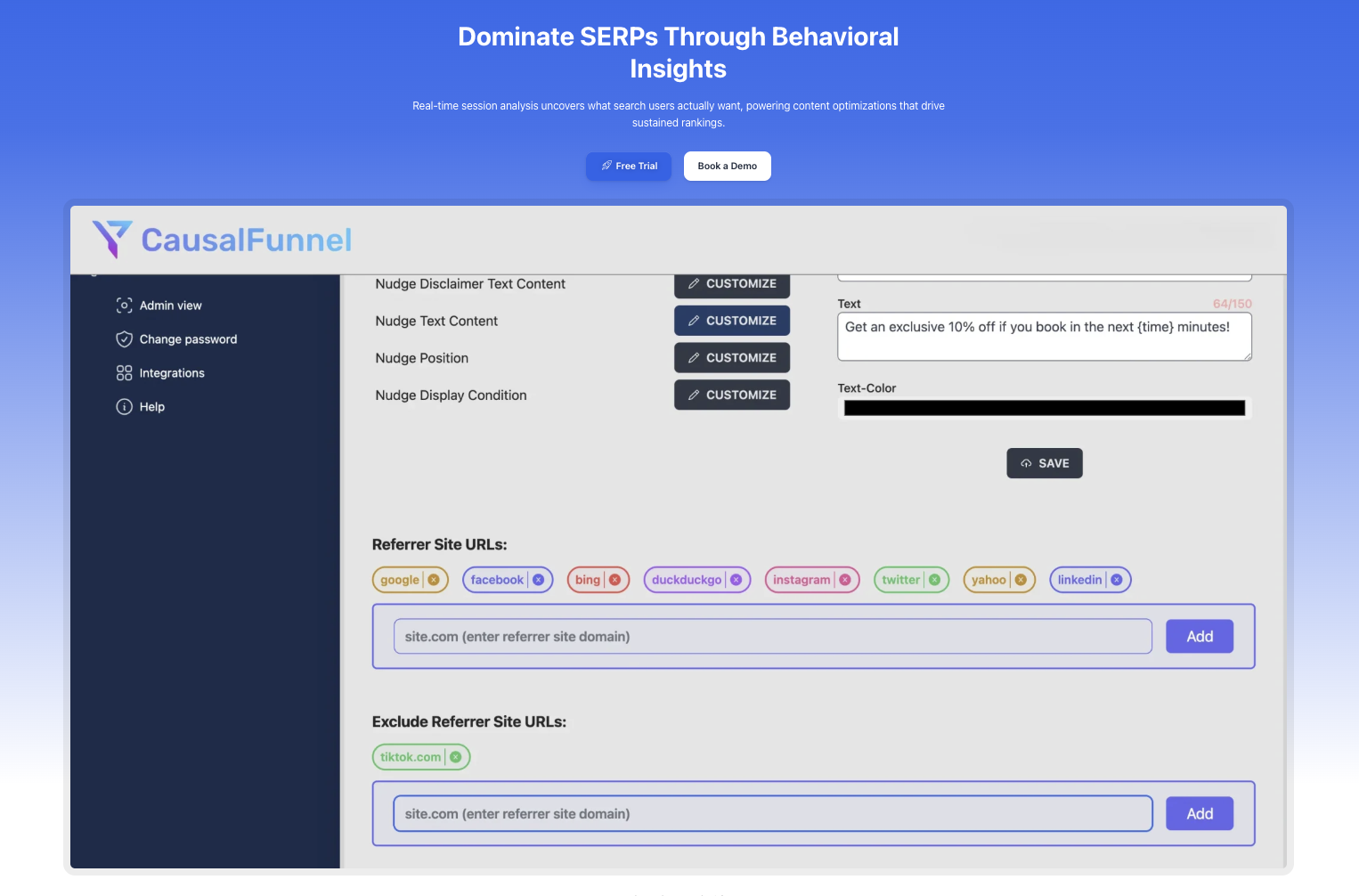
For financial firms that need a stronger online presence, CausalFunnel provides SEO services focused on improving visibility, website performance, and lead generation strategies. Their approach helps businesses build search strategies designed around measurable growth.
Search is changing quickly. People no longer find answers only by clicking websites. AI tools and search summaries now provide direct responses to many questions.
That does not mean SEO is disappearing. It means content needs to become clearer. The advisors gaining visibility are usually not publishing endless articles. They are improving the way existing content answers questions.
For example, if someone searches:
“How much money do I need before retirement?”
A helpful page should answer the question immediately. Then it can explain factors like age, lifestyle, savings, and income goals.
Make strategies to not hide the answer but to make it easy to find and this can be done by focusing on GEO strategies.
Improve AI search visibility by focusing on:
No company can guarantee placement inside AI results. But clear, trustworthy content gives search engines better information to understand.
The honest answer depends on your biggest limitation if it is time or budget. A newer advisor with extra time may start by writing helpful content, improving website pages, and updating local listings. However, a growing firm with packed calendars may need expert support.
Many small and mid-sized businesses invest around $1,500 to $5,000 per month for professional SEO support. But the final cost depends on competition, location, content needs, and website issues.
There is no single perfect number. There is only the option that fits your goals.
DIY SEO | Professional SEO Agency |
Lower upfront cost | Requires monthly investment |
Needs your personal time | Gives access to specialists |
Works for early-stage firms | Better for competitive markets |
Slower learning process | Includes strategy and execution |
Before hiring help, ask yourself a practical question.
Would your time create more value writing articles or meeting potential clients?
For many growing advisory firms, the answer becomes clear.
CausalFunnel offers SEO strategy, content optimization, technical SEO, and conversion-focused services to help businesses turn search visibility into stronger lead opportunities. The focus is not only attracting visitors but attracting the right visitors.
This is not a two-month strategy. Anyone promising instant results is usually overselling.
SEO builds visibility over time because search engines need signals before trusting your website. They look at your content quality, website health, authority, and how useful visitors find your pages.
Most financial advisors should think in months, not weeks. During the first few months, work usually focuses on fixing website issues, improving pages, researching keywords, and building stronger content.
After several months, you may start seeing improvements in search visibility, keyword positions, and website visits. Lead growth often follows after the right audience begins finding your pages.
But every market is different. A financial advisor in a small city may see movement faster than a firm competing in areas like New York, Los Angeles, or Chicago.
The biggest mistake is stopping too early. Many advisors quit before their website has enough time to gain trust. SEO works best when it becomes a consistent growth channel, not a short campaign.
Watch the quality of results, not only the numbers. More website traffic looks exciting. But thousands of visitors mean little if nobody schedules a consultation.
A financial advisor does not need everyone online. You need the right people. For example, a blog bringing 5,000 visitors looking for basic budgeting tips may generate fewer leads than a page attracting 200 business owners searching for wealth management advice.
Track metrics connected to business growth.
Important SEO measurements include:
Free tools like Google Analytics and Google Search Console can help track progress. But numbers need context. A ranking improvement means little without better conversations, calls, and client opportunities.
Small SEO mistakes can create big growth problems. Many advisors invest in a new website, publish a few blogs, and wait for leads. Then they assume SEO does not work when nothing happens.
The issue is often strategy. A good-looking website still needs the right structure, content, and trust signals.
Avoid these common mistakes:
Think of your website like a financial plan. Random actions rarely create strong results but a clear strategy definitely gives you the result you’ve been hoping for.
Some advisors can manage SEO on their own, but this can’t be done by everyone. The choice depends on time, skill, and business goals.
If you enjoy writing, learning digital marketing, and testing strategies, handling basic SEO can work. Updating pages, answering client questions through blogs, and improving local profiles are realistic starting points.
But SEO requires ongoing attention. Search trends change, you may see improvement in your competitors, and at times technical issues can also appear. A growing advisory firm may reach a point where managing everything internally becomes difficult.
Ask yourself:
“Would spending five hours improving website pages bring more value than spending five hours with potential clients?”
That answer usually guides the decision. The best option is the one that supports your growth.
Successful SEO starts with small improvements that actually matter. Update your most important service page, improve your Google Business Profile, and answer one client question better than your competitors.
You do not need hundreds of random articles. You need useful content, clear positioning, and a website people trust. The advisors who win search are usually the ones who understand their clients best. They know every search represents a person looking for confidence before making a major financial decision. That moment is where real growth begins.
SEO helps financial advisors appear when potential clients search for financial guidance online.
Instead of interrupting people with ads, SEO connects your services with people already looking for answers. Helpful content, strong local visibility, and a trustworthy website can turn searches into consultations.
Both can work, but they serve different goals. Paid ads can create faster visibility because you pay for placement. SEO usually takes longer but builds lasting organic visibility. Many firms use both together. While ads support short-term campaigns, SEO builds long-term search presence.
Start with pages closest to generating leads.
These usually include:
After the foundation is strong, create educational content around client questions.
Quality matters more than quantity. Publishing four useful articles per month is better than posting daily content that adds no value. Every page should have a purpose. It should answer a question, support trust, or help someone make a decision.
Yes, especially with a focused strategy. A small advisor may struggle for broad terms like “investment advice.” But they can compete for specific searches like “retirement advisor for teachers in Denver” or “financial planning for small business owners.”
Start using our A/B test platform now and unlock the hidden potential of your website traffic. Your success begins with giving users the personalized experiences they want.
Start Your Free Trial

Empowering businesses to optimize their conversion funnels with AI-driven insights and automation. Turn traffic into sales with our advanced attribution platform.
Trusted by Customers


©CausalFunnel Inc. All rights reserved.