



Free Funnel Audit
Convert more customers today!
SEO
10 mins read

SEO
10 mins read
Seasonal keywords help you match search trends at the right time. These keywords change in popularity throughout the year. They often cause traffic to rise significantly at specific times. If used correctly, they can boost your site traffic.
This guide will help you find and use them well. By the end, you will know what works and why. Want expert help with seasonal SEO planning?
Check out CausalFunnel for smart guidance. The platform offers smart insights to boost organic search traffic.
Seasonal keywords are search terms that vary with time. These keyword trends appear when demand rises at certain seasons. They are not used evenly all year long. Examples include terms tied to holidays or weather events. Search interest goes up and down each year. They mirror what users look for during specific months. This is why they matter in SEO strategy.
They are different from evergreen keywords that stay constant. Evergreen terms have steady search volume every month. Seasonal keywords peak and then dip again after the event. Good timing helps you catch the peak search interest.
Seasonal keywords help you get traffic at the right time. They can increase visibility when demand is highest. For many sites, they bring more clicks and sales. You can plan content to match users’ search moments. This helps you outrank competitors who post late.
Here are key reasons they matter:
Search engines like fresh content that matches user demand. If you time your keywords well, rankings improve fast. Seasonal SEO can be simpler to predict than evergreen trends.
When used poorly, seasonal keywords may hurt performance. That happens when you post too late or ignore planning.

Seasonal keywords come in several useful categories. Knowing each type helps you plan better content. This section gives clear examples and quick context.
These appear around annual holidays or fixed dates. People search for them every year at the same time. They are easy to predict and plan.
Good examples include:
These are highly valuable for e-commerce sites. Search traffic for these terms often spikes rapidly.
These depend on shifts in weather and climate changes. Search interest grows when seasons affect user needs.
Examples include:
Users search for these terms as the weather changes. They vary by location and climate patterns, too.
These spikes are around planned events and cultural trends. They may not happen every year, but they still show patterns.
Examples include:
These can create short but strong search demand. Good timing catches users during peak interest windows.
Providing a seasonal keywords list helps you start fast. Here is a short list by industry to inspire your content.
Retail & Ecommerce
Travel & Tourism
Education
Health & Fitness
This list shows real phrases people search for yearly. Use them to plan targeted articles and product pages.
Still unsure which seasonal terms fit your site? Visit CausalFunnel to get personalized guidance.
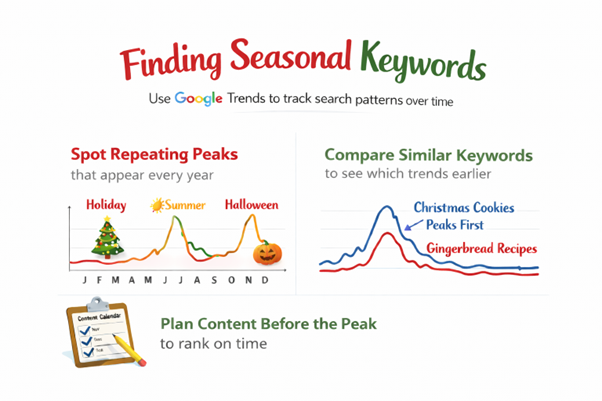
Finding seasonal keywords should be a regular task. You need tools that show search patterns over time. Start early so your content leads, not follows.
Google Trends shows how search interest shifts over time. This tool highlights peaks and dips each year. You can compare multiple keyword trends easily.
To use it well:
For example, “beach vacation ideas” may spike each July. “Christmas gifts” climbs from November to December. This helps you find exact months to publish content. Timing your posts can help you rank before peak interest.
Using seasonal keywords without a plan may waste your time. You must tie keywords to clear publishing dates. This aligns content with the peak search cycles of your users. Below are practical ways to use seasonal keywords well.
You need a schedule for your seasonal content. Start planning at least 6–8 weeks before key peaks. This gives search engines time to index your posts. It also gives you space to refine the copy.
To plan:
Good planning keeps you ahead of competitors every season. Search engines show fresh, relevant content before the trend peaks.
Your content page must use keywords naturally. Include them where users expect to see them.
Here is a simple guide:
Where to place seasonal keywords:
Do not force the keyword into every sentence. Quality and readability come first for both users and search engines.
Never discard seasonal posts after their main period passes. Instead, update them for next year’s cycle. This saves time, builds authority, and keeps traffic flowing.
To refresh old posts:
Updating old content shows search engines that your page stays relevant. You can get better rankings with less new content creation.
Good seasonal SEO goes beyond keywords alone. Here are strategic actions that deliver better results.
Internal links help search engines understand your site. They also guide users to related content.
To use internal linking:
This improves page authority and organic rankings over time.
Strong visuals help readers understand your content. They also increase engagement and time on page.
When adding images:
Images in seasonal content often make pages more shareable.
Structured data helps search engines understand your page content. It also increases your chances of rich results.
Examples of structured data you can add:
Implementing structured data may help you get featured snippets. It helps search engines highlight your content more effectively.
Even seasoned marketers make avoidable errors. Knowing these mistakes ahead of time will save effort.
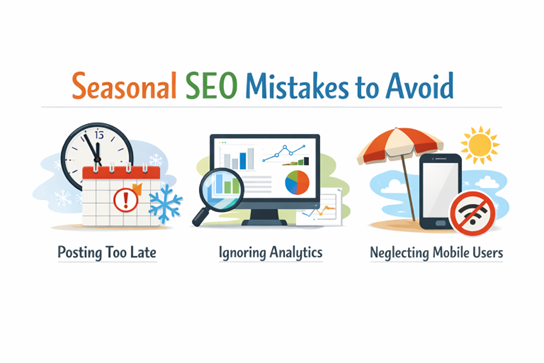
Timing is key for seasonal keywords. Posting late means users have already seen other results.
To avoid this:
If you post early, you lead trends instead of chasing them.
Some writers publish seasonal content without tracking results. This is a missed opportunity to improve over time.
Track these key metrics:
By analyzing data, you know what worked and what didn’t. You can refine your strategy for next season.
Most users search on phones today. If your seasonal content is hard to read on mobile, readers leave.
To improve mobile readability:
Mobile-first design helps both users and search engines.
Writing seasonal content is only half the battle. Promotion ensures your audience finds it when they need it.
Social platforms drive awareness and clicks. Share seasonal posts before key dates.
Tips for social sharing:
People share festive content more often than plain posts. This increases your reach without extra cost.
Email lists are powerful for seasonal traffic. Send emails with helpful tips tied to your new content.
Good email tips:
Emails sent before peak search times can boost early traffic.
The right tools help you make smarter choices. Here are tools that many SEO experts use.
Google Trends shows search interest over time. It highlights patterns and spikes each year.
Use Google Trends to:
This insight helps you time content perfectly.
Many SEO tools offer seasonal insights. These show estimated monthly searches and trend patterns.
Examples include:
You can combine this data with Google Trends. This balance gives a more complete view of seasonality.
Seasonal keyword strategies can feel complex sometimes. If you want clearer guidance and fast results, visit CausalFunnel. They help marketers plan seasonal SEO with clarity and precision.
Experts can help you:
Smart support makes your seasonal SEO more effective. Getting help early pays off when trends spike.
Seasonal keywords can change your site traffic. But you must use them with purpose and timing. Plan early, place keywords naturally, and track results. Always think of your audience first.
Promotion matters as much as writing. Use social media and email to boost visibility. Remember to watch performance for future improvement. Seasonal SEO is not a one-time task. You must refine, learn, and prepare for next year. This ongoing cycle leads to long-term gains.
Seasonal keywords become more powerful with deeper analysis. Advanced methods help you predict trends before they peak. This section focuses on smarter planning and long-term gains.
Understanding patterns helps you act early. Early action often leads to stronger rankings and higher returns.
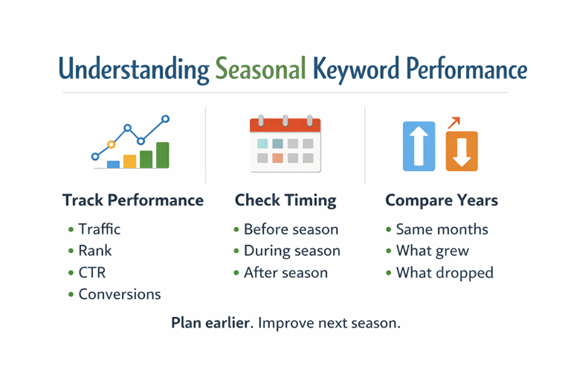
Tracking performance shows what truly works each season. It also helps avoid repeating weak strategies next year. You should review data before, during, and after peak periods.
Focus on metrics that reflect real user behavior. These numbers guide better decisions for future seasons.
Track these metrics regularly:
These metrics reveal what content performs best. They also highlight timing issues that need fixing.
Comparing years gives powerful insights. Seasonal keywords often follow repeat patterns annually.
When comparing data:
This method shows whether growth came from a better strategy. It also shows where updates are still needed.
Seasonal SEO works across many industries. Each industry uniquely uses seasonality. Understanding this helps tailor your content approach.
Retail benefits the most from seasonal keywords. Shoppers search heavily during holiday and sale periods.
Common retail uses include:
Timing matters more than volume here. Publishing early gives search engines time to rank pages.
Travel searches change with seasons and events. Users plan trips months before traveling.
Strong seasonal travel content includes:
These pages often perform well year after year. Updating them keeps rankings strong without rewriting content.
B2B also uses seasonal keywords successfully. Seasonality appears in budgeting and planning cycles.
Examples include:
B2B seasonality may be less obvious. But it still offers clear traffic opportunities.
A seasonal content calendar keeps efforts organized. It helps you publish content at the right time. This prevents rushed writing and missed opportunities.
Start with known seasonal events. Then map content topics around those dates.
Steps to follow:
This process builds consistency. It also reduces stress during busy periods.
A calendar should evolve. Review results after every season ends.
Ask questions like:
Use these insights to improve next year’s calendar. Small changes often create better results.
User intent matters more than keyword volume. Seasonal searches often show strong buying intent. Your content should match that intent clearly.
Some users want information. Others want to buy or compare products.
Match intent by:
Clear intent matching improves conversions. It also reduces bounce rates significantly.
Seasonal keywords create powerful traffic opportunities. But success depends on timing, planning, and clarity. Writing early gives search engines time to trust content. Updating yearly keeps pages strong and relevant.
Focus on user intent first. Search engines follow user satisfaction naturally. Use data to guide every seasonal decision.
If you want a smarter seasonal SEO approach, explore CausalFunnel today. The right strategy can turn short trends into long-term growth.
You should start at least six to eight weeks early. Search engines need time to index and rank pages.
Yes, when updated yearly, they deliver ongoing returns. Many seasonal pages rank stronger with age.
No, if the content remains useful and relevant. Avoid removing pages after the season ends.
Update content once per year before peak season. Minor updates may be added when trends change.
Yes, smaller sites can rank faster with good timing. Low competition windows create ranking opportunities.
Start using our A/B test platform now and unlock the hidden potential of your website traffic. Your success begins with giving users the personalized experiences they want.
Start Your Free Trial

Empowering businesses to optimize their conversion funnels with AI-driven insights and automation. Turn traffic into sales with our advanced attribution platform.
Trusted by Customers


©CausalFunnel Inc. All rights reserved.