



Free Funnel Audit
Convert more customers today!

SEO
10 mins read

SEO
10 mins read
Most content fails because it targets keywords, not real user search intent.
Search intent optimization helps you match content with what users really want. It focuses on understanding why someone searches for a specific keyword online. Many websites fail because they only target keywords without understanding intent. Google prioritizes ranking content that solves problems quickly and clearly.
This guide will help you understand how search intent works in SEO. You will also learn how to apply it for better rankings and traffic. We will break down Search intent types and show real examples. By the end, you will know how to create content that truly ranks.
Search intent optimization means creating content based on user needs and goals. It focuses on what users expect when they type a search query.
In simple terms, it answers this question clearly:
“What does the user want to see right now?”
For example, someone searching “best laptops under $1000” wants comparisons. They do not want a basic article about how laptops work. This is where search intent becomes very important for rankings.
Search intent optimization helps you:
Many people confuse keywords with intent, but they are not the same. Keywords show what users type, but intent shows what they need. Understanding search intent types helps you create better content faster and allows search engines to understand your content more clearly.

Search engines focus on giving users the best possible results quickly. That means your content must match user expectations perfectly. If your page does not match intent, users leave quickly. This sends negative signals to Google about your content quality.
Search intent optimization improves both rankings and user experience together.
Here’s why it matters so much:
Google also tracks user behavior signals very closely today.
These include:
This is often called user intent SEO in modern optimization strategies.
If users stay and interact, Google sees your content as valuable. If users leave quickly, rankings will drop over time.
This is why intent matters more than just backlinks or keywords now.
Understanding search intent types is key to better SEO results. Each type represents a different user goal during a search. Let’s break them down with simple examples and use cases:
Users with informational intent want to learn something new quickly. They search for guides, tips, or simple answers to questions.
Examples include:
Content that works best here includes:
Users with navigational intent want to visit a specific website or page. They already know where they want to go online.
Examples include:
These users rarely click on other results in search.
Users with commercial intent are comparing options before buying something. They want reviews, comparisons, or product recommendations.
Examples include:
Content that works best includes:
Users with transactional intent are ready to take action immediately. They want to buy, sign up, or download something quickly.
Examples include:
These users prefer product pages or landing pages over blog content.
Understanding these search intent types helps you plan content better. It ensures your page matches exactly what users expect to find.
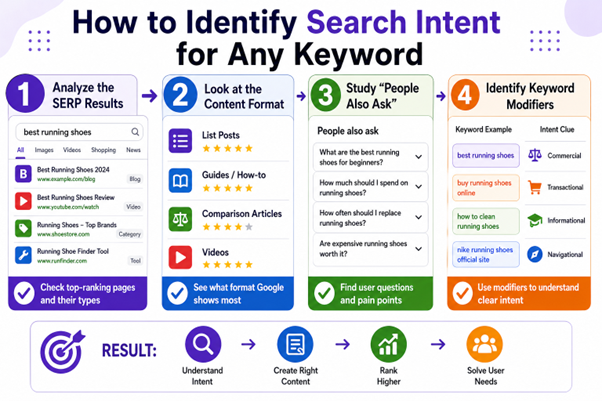
You cannot guess intent correctly without analyzing real search results first. The best way to understand intent is by studying the SERP carefully.
Follow these simple steps to identify intent correctly:
Search for your keyword and study the top-ranking pages carefully. Check if they are blogs, videos, product pages, or tools.
See whether results are lists, guides, or comparison articles. This shows what users prefer for that keyword.
These questions reveal common problems users want to solve. They help you understand deeper user needs easily.
Words like “best,” “buy,” or “how to” indicate clear intent. They guide your content direction and format.
This process is called SERP analysis SEO in modern strategies. It also helps with better keyword intent analysis for your content.
When you understand the search engine results page, you gain real insights. You stop guessing and start creating content that actually ranks.
Now that you understand intent, it’s time to apply it correctly. This step is where most websites make costly mistakes. Search intent optimization is not just theory; it requires execution.
Here’s how you can apply it effectively:
If results show list posts, create a better list post, but if they show tools, consider building a simple tool.
Beginners need simple explanations, not complex technical details. Experts prefer advanced strategies and deeper insights.
Do not mix multiple intents in a single article. This confuses both users and search engines.
Use headings, bullet points, and short paragraphs for clarity. Headings also improve readability and keep users engaged longer.
This is a core part of any strong content optimization strategy today. It also connects directly with SEO content writing tips used by experts. When done right, intent-based SEO becomes a powerful growth driver.
If you want to improve your search intent strategy faster, you can explore tools and insights from CausalFunnel. Our platform helps you understand user behavior and optimize content performance. It can support better decisions for search intent optimization at scale.
Many websites fail because they misunderstand user intent. This leads to weak rankings and low traffic. These mistakes are very common in SEO today. So, try to avoid them if you want stable growth.
Many pages miss the real user goal. They write blogs when users want product pages.
Top-ranking pages already show user expectations. Skipping SERP analysis leads to poor results.
One page should serve one clear purpose. Mixing intents confuses users and search engines.
Too many keywords reduce content quality. Focus on natural writing instead of stuffing to improve content mismatch SEO performance.
Google now rewards helpful human content. Always write for users first, not bots.
Old content often loses ranking over time. Refresh pages to match new search intent.
Fixing these issues improves user intent SEO quickly and boosts engagement and trust signals.
Basic SEO helps, but advanced strategies win rankings. These methods help you scale faster and smarter.
Some keywords have more than one goal. You must pick the strongest intent.
For example, “SEO audit” can mean tools or guides. Choose one direction and stick to it. This improves keyword intent analysis accuracy.
Users move through clear decision stages.
Match your content to each stage clearly. This strengthens buyer journey SEO results.
Search results show what users prefer.
This is a strong SERP analysis SEO practice.
Google tracks how users interact with pages.
Focus on:
These signals support advanced SEO techniques.

Real examples make SEO easier to understand. They show what actually works in practice.
A page targeted “best SEO tools” broadly, but users wanted clear comparisons instead.
After updates:
Result:
This is a strong SEO case study example.
A backlink guide targeted experts only, but most users were beginners.
After changes:
Result:
If you want better insights into user behavior, explore CausalFunnel. Our team of experts helps improve content performance using real user data. We also support smarter search intent optimization decisions.
Search intent works best with strong planning. A good strategy improves SEO results long-term.
Always focus on real user problems first. Do not start with keywords alone.
Group related content under one main topic. This builds stronger content relevance SEO signals.
Link pages based on the user journey flow. This improves navigation and engagement.
Search trends change over time. Keep content fresh and aligned with intent.
Search intent optimization works best when it becomes a system. You need repeatable steps for every new piece of content. This helps you rank faster and more consistently over time.
Before writing, always study the keyword carefully. Check what users really want from search results.
This is called keyword intent analysis in SEO, which prevents wasted effort and wrong content creation.
Look at:
Every intent needs a different content format.
This is a key part of the search intent types strategy.
Templates help you scale faster. They also keep content structure consistent.
A strong template includes:
This improves content optimization strategy results.
Never publish without checking search results first.
This step includes:
This is core SERP analysis SEO work.
Google tracks how users interact with your page.
Focus on improving:
These signals improve advanced SEO techniques performance.
Topic clusters help you dominate search results. They build strong authority in your niche.
They are groups of pages around one main topic. Each page targets a different search intent type. This improves content relevance SEO significantly.
Main topic: Search Intent Optimization
Supporting pages:
This creates strong topical authority signals.
Clusters help search engines understand your expertise. They also improve internal linking strength.
This leads to better organic visibility over time.

Once the basics are set, focus on advanced improvements.
Do not only match intent. Match the level of intent too.
Example:
This improves user intent SEO quality.
Modern SEO is not only about rankings. It is also about visibility.
Target:
This improves click-through rates significantly.
Google prefers updated content. Old pages lose rankings over time.
Update:
This keeps your SEO stable long term.
Internal links guide users and search engines.
Use links to:
This improves crawlability and engagement.
Here is a simple workflow you can follow to apply search intent optimization in a structured way. This process helps you build content that matches real user needs and improves rankings over time.
Start by understanding what users actually want when they search. Do not assume intent based only on the keyword. Use SERP analysis to study top-ranking pages carefully, and check whether they are blogs, tools, product pages, or comparison guides.
Also, review “People Also Ask” questions to find hidden user needs. This gives you a clearer picture of search intent types behind the keyword.
Once you understand intent, match it with the correct format.
For example:
Choosing the right format improves content relevance, SEO, and engagement. It also increases your chances of ranking higher in search results.
Now focus on writing content that is easy to read and scan. Use short sentences and clear language throughout the page. Break content into sections using headings and bullet points. Avoid complex terms unless they are necessary for clarity.
This improves readability and supports better SEO content writing tips, and helps users stay longer on your page.
After writing, optimize your content for search engines and users.
Focus on:
These steps strengthen your content optimization strategy. They also help search engines understand your page better.
SEO does not end after publishing content. You must track performance regularly to improve results.
Monitor:
Use this data to refine your keyword intent analysis over time, and update your content based on real user behavior and trends.
This continuous improvement leads to stronger advanced SEO techniques results.
Search intent optimization is the core of modern SEO success. Without it, even great content may fail to rank.
You must always understand what users want first, and then create content that matches their exact needs. When you align content with intent, rankings improve naturally. Traffic becomes more stable, and engagement increases over time.
Focus on search intent types, SERP signals, and user behavior. These three elements define long-term SEO success today.
Do not rely only on keywords or backlinks anymore. Intent is now the strongest ranking factor in SEO. If you apply the system from this guide consistently, you will build strong organic growth and authority.
Search engines reward clarity, relevance, and user satisfaction. That is the real goal of search intent optimization.
Search intent optimization means creating content that matches user search goals. It focuses on what users expect to see after searching for a keyword.
The main search intent types are informational, navigational, commercial, and transactional. Each type shows a different user goal in search behavior.
SEO usually takes 3 to 6 months to show early results. In competitive markets, it can take longer. The first few months focus on setup and content. Traffic and rankings improve slowly over time. Patience is important here. Once SEO starts working, it can bring steady traffic without ongoing ad spend.
Search intent affects rankings by improving user satisfaction signals. Pages that match intent get better engagement and higher rankings.
You can identify intent by analyzing search engine results pages. Check content format, top pages, and related questions.
Search intent helps create content that solves real user problems. It improves traffic, engagement, and conversion rates significantly.
Start using our A/B test platform now and unlock the hidden potential of your website traffic. Your success begins with giving users the personalized experiences they want.
Start Your Free Trial

Empowering businesses to optimize their conversion funnels with AI-driven insights and automation. Turn traffic into sales with our advanced attribution platform.
Trusted by Customers


©CausalFunnel Inc. All rights reserved.