



Free Funnel Audit
Convert more customers today!
SEO
10 mins read

SEO
10 mins read
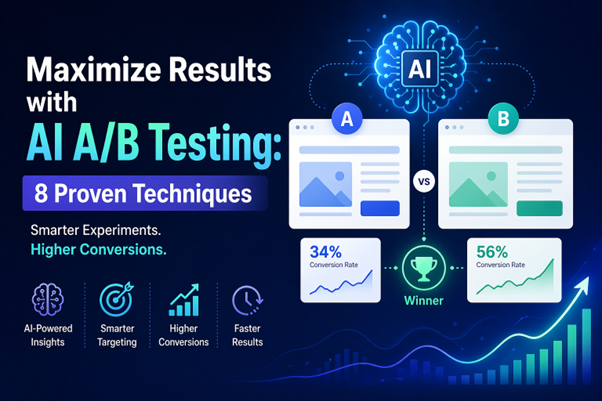
AI A/B testing uses smart tools to improve your experiments. It helps you test ideas faster with less manual work. Traditional testing needs time, tools, and skilled experts. AI reduces effort and speeds up your decisions.
In simple terms, AI helps you test smarter and faster. It studies user behavior and suggests better variations quickly. This increases your chances of finding winning ideas early.
Here are key benefits of using AI in A/B testing:
AI A/B testing matters because competition is growing very fast. Users expect better and smoother experiences on websites today. Basic testing methods are no longer enough to stay ahead.
AI gives you an edge with better speed and accuracy. It helps teams run more tests without large resources. This makes optimization easier for small and growing teams.
AI is changing how teams approach testing and optimization today. It is not just automation, but smarter decision making. Modern tools handle complex tasks with very little effort. One major change is automated variation creation. AI can create headlines, images, and layouts within seconds. This reduces the need for constant manual creative work.
Another key feature is predictive analysis. AI studies past data and predicts which tests may perform better. This helps teams focus on high-impact experiments first.
AI also improves personalization during testing. It shows different variations to different users automatically. This increases engagement and improves conversion rates.
Here are some key capabilities of modern AI testing tools:
These features help teams work faster and make better decisions. They also reduce guesswork in the testing process. However, AI is not perfect and still needs human guidance. Blind trust in AI can lead to poor decisions sometimes. The best results come when humans and AI work together.
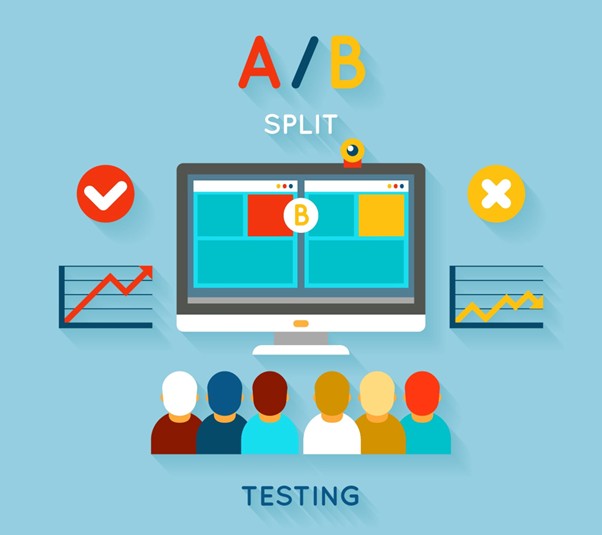
AI platforms and tools are built to make things easier for testing multiple aspects, but results depend on how you use them. Using the right techniques makes a big difference in outcomes. This section focuses on practical methods that actually work.
These techniques are based on real testing workflows and use cases. They help you move from basic testing to advanced optimization. Each technique is simple, actionable, and easy to apply.
Coming up with new test ideas can be difficult over time. AI helps remove this challenge by generating ideas instantly. It analyzes your page content and suggests useful improvements.
You can use AI to create variations like:
This saves time and keeps your testing pipeline active. It also helps teams avoid creative fatigue during testing cycles.
However, not all AI-generated ideas will perform well. Some ideas may feel generic or lack brand alignment. Always review and refine ideas before running a test. Use AI as a support tool, not a complete decision maker.
This approach helps you maintain quality while scaling your efforts.
Not all test ideas deliver the same level of impact. Some changes can improve conversions more than others. AI helps you identify which tests deserve priority. Predictive analytics uses past data to estimate future outcomes. It looks at similar experiments and predicts likely performance.
For example, AI may suggest testing pricing over button colors. This is because pricing changes often have a bigger impact.
Here is how predictive prioritization helps your workflow:
This approach is useful for teams with limited resources. It ensures every test contributes to business growth.
Still, predictions are not always accurate in every situation. Changes in user behavior can affect the final results. Use predictions as guidance, not as final decisions. Combine AI insights with your own strategy and experience.
Setting up an A/B test involves many small decisions. You need to choose metrics, define goals, and set durations. This process can take time, especially for new teams. AI simplifies this process through smart automation features. It can convert simple instructions into complete test setups.
For example, you can input a goal like increasing conversions. The system will suggest metrics and configure the experiment.
Here are tasks AI can automate during setup:
This reduces setup time and avoids common mistakes. It also helps beginners run tests with more confidence.
However, automated setups may not always match business goals. AI may choose metrics that are easy to measure, not meaningful. Always review setup details before launching any experiment. Make sure they align with your actual business objectives.
This ensures your tests deliver real value, not just data.
Personalization helps users feel understood and valued during their journey. AI makes personalization faster and easier to manage at scale. It uses data to show the right content to each user. Instead of one experience, users see content that fits their behavior. This increases engagement and improves conversion rates over time.
For example, new visitors may see simple and helpful product details. Returning users may see offers or recommendations based on past actions.
AI can personalize many elements during testing, such as:
This level of personalization improves user experience significantly. It also increases the chances of users taking desired actions. However, personalization depends on clean and reliable data sources. Poor data quality can lead to irrelevant or confusing experiences.
Managing many variations can also become complex over time. Too many personalized elements can reduce clarity in results.
Use personalization carefully and test its real impact regularly. Focus on meaningful segments instead of over-segmentation.
This helps maintain balance between precision and clarity in testing.
Traditional A/B testing splits traffic evenly between variations. This approach helps find a winner after collecting enough data. However, it may take longer to reach useful results. Multi-armed bandit algorithms work in a smarter way. They send more traffic to the better-performing variation early. This helps improve results while the test is still running.
Instead of waiting, you start gaining benefits during the experiment. This is useful when traffic volume is limited or time is critical.
Here is how bandit testing improves performance:
This method works well for short-term optimization goals. It is also useful for campaigns with limited timeframes.
However, bandit testing may not give deep learning insights. It focuses more on performance than understanding behavior.
It may also miss long-term trends or delayed outcomes. Traditional A/B testing is still useful for deeper analysis. Choose the right method based on your testing goals. Use bandits for speed and traditional testing for learning.
Understanding test results is often a complex process. It involves data analysis, pattern recognition, and reporting. AI makes this process faster and more efficient. AI tools can review large datasets in a short time. They highlight patterns that humans may easily miss. This helps teams make better decisions after each test.
Instead of raw data, AI provides clear summaries like:
These insights save time and reduce manual effort. They also help teams focus on strategy instead of analysis work. AI can also detect unusual patterns or anomalies in data. This helps identify errors or unexpected changes quickly.
However, AI-generated insights are not always perfect. Sometimes they may misinterpret data or miss important context.
External factors like seasonality or marketing campaigns may affect results.
AI may not always account for these real-world changes. Always review insights before making final decisions. Use AI as a guide, not the final authority.
This ensures your conclusions remain accurate and meaningful.
Testing should not stop after one successful experiment. Continuous testing helps maintain and improve performance over time. AI enables this process through automated testing loops. These loops run tests continuously within defined rules and limits. They learn from each test and apply improvements automatically.
For example, AI can keep testing new headlines regularly. It replaces weaker versions with better-performing alternatives.
This creates a cycle of constant improvement without manual effort.
Here are benefits of automated testing loops:
This approach works well for high-traffic websites and apps. It ensures optimization never stops at any stage.
However, full automation can create risks if not controlled properly. AI may optimize for short-term gains instead of long-term goals.
It may also ignore brand voice or messaging consistency.
Set clear rules and limits before enabling automated testing. Define what success means for your business clearly. Human oversight is still important in automated systems. This keeps optimization aligned with business strategy.
AI is powerful, but it is not a complete replacement for humans. It works best when combined with human thinking and creativity.
AI can process data and generate ideas quickly. However, it lacks context, judgment, and emotional understanding. Relying only on AI can lead to weak or generic results. It may also create content that does not match your brand.
Here are common risks of over-relying on AI:
Human input adds meaning and direction to testing efforts. It helps ensure tests align with broader business goals. Use AI for speed, automation, and data analysis tasks. Use human expertise for strategy, creativity, and decision making.
This balance leads to better and more sustainable results. It also helps build stronger and more meaningful user experiences.
Many teams make mistakes when adopting AI for testing. These mistakes can reduce the effectiveness of your efforts. Avoiding them can improve your results significantly.
Here are common mistakes you should watch out for:
Each mistake can reduce the value of your testing program. They can also lead to wrong conclusions and poor decisions. Always define clear goals before starting any test. Make sure your data sources are accurate and updated regularly.
Review AI suggestions and validate them with your strategy. Focus on quality tests instead of running too many experiments. Avoiding these mistakes will improve your testing outcomes. It will also help you build a more reliable optimization process.
AI A/B testing works best when you follow a clear and structured approach. Without best practices, even powerful tools can give weak results. A strong foundation helps you get consistent and meaningful outcomes.
Below are proven best practices that improve your testing performance:
Every test should start with a clear and measurable goal. Without a goal, results become hard to understand and apply. Your goal should connect directly to business outcomes. Focus on metrics that truly impact growth and revenue.
For example, track conversion rate instead of just clicks. This keeps your testing aligned with real business value.
A good hypothesis guides your entire testing process. It explains what you are testing and why it should work. Avoid random testing without a clear purpose or reasoning. Use data and insights to build your hypothesis carefully.
A simple hypothesis format works well for most tests. State the change, expected outcome, and reason behind it.
AI depends heavily on the quality of your data inputs. Poor data leads to poor decisions and misleading insights. Make sure your data sources are accurate and up to date. Remove duplicate or incomplete data before running tests.
Reliable data improves prediction accuracy and test performance. It also builds trust in your testing results over time.
Testing too many changes at once creates confusion. It becomes hard to identify what caused the result. Focus on one major change for each experiment. This helps you understand the real impact clearly. Simple tests often provide more reliable insights. They also make it easier to apply learnings later.
AI allows you to run tests faster than before. However, speed should not come at the cost of accuracy. Ending tests too early can lead to wrong conclusions. Let tests run long enough to collect meaningful data. Use AI to guide decisions, but validate results properly. This balance improves both speed and reliability.
AI can generate summaries and insights quickly. However, these insights still need human validation. Look beyond surface-level results and dig deeper. Check if results align with your expectations and goals.
Consider external factors that may affect performance. These may include seasonality, campaigns, or market trends.
Optimization is not a one-time activity. User behavior keeps changing over time. Continuous testing helps you stay relevant and competitive. It ensures your website keeps improving consistently.
AI makes it easier to maintain ongoing testing cycles. Use it to keep your experimentation process active.
AI A/B testing is evolving fast, with a clear shift toward automation and deeper insights. Future systems will run experiments with minimal manual effort, adjusting strategies in real time based on performance data. This will make testing faster, smarter, and more efficient.
Hyper-personalization will also grow. Users will see highly tailored experiences based on behavior and preferences, improving engagement and satisfaction. AI agents may further streamline workflows by managing experiments and suggesting optimizations continuously.
However, human input will still be essential. Strategy, creativity, and decision-making cannot be fully automated. The future lies in strong collaboration between AI and human expertise.
Platforms like CausalFunnel are already aligned with this direction. They offer AI-driven A/B testing, predictive analytics for test prioritization, and automated experiment setup to reduce manual effort.
Key functions include:
These capabilities help teams scale experimentation while maintaining strategic control.
AI A/B testing helps you improve results with less effort. It combines data, automation, and smart decision making. By using the right techniques, you can test more effectively. You can also improve conversions and user experience consistently.
Focus on strategy, not just tools or automation. Use AI to support your efforts, not replace your thinking. Start small and build your testing process step by step. Learn from each test and apply those insights wisely.
Over time, your results will improve in a measurable way. Consistent testing will help you stay ahead of competition. Now is the right time to start using AI in testing. Take action and begin optimizing your results today.
You now understand how AI can improve your testing process. The next step is to start applying these techniques step by step.
Begin with simple tests and build your confidence gradually. Use AI to support your work, not replace your strategy. Focus on learning from each test and improving over time. Small improvements can lead to strong long-term results.
Start A/B testing today and keep optimizing your results consistently. Book for free trial now
AI A/B testing uses smart tools to improve your experiments. It helps you test ideas faster and make better decisions.
AI automates tasks and uses data to guide decisions. Traditional testing needs more manual work and time.
Yes, many tools are simple and beginner friendly. They guide users through setup and testing steps.
No, AI improves chances but does not guarantee success. Good strategy and testing still matter a lot.
Common mistakes include poor data, unclear goals, and over-reliance on AI. Always review results and use human judgment.
Start using our A/B test platform now and unlock the hidden potential of your website traffic. Your success begins with giving users the personalized experiences they want.
Start Your Free Trial

Empowering businesses to optimize their conversion funnels with AI-driven insights and automation. Turn traffic into sales with our advanced attribution platform.
Trusted by Customers


©CausalFunnel Inc. All rights reserved.