



Free Funnel Audit
Convert more customers today!
SEO
10 mins read

SEO
10 mins read
Running a local business today means competing for attention in crowded search results. Many customers search online before visiting any nearby store or service provider. Local SEO helps your business appear when people search for nearby products or services.
A checklist makes this process easier and less stressful for busy business owners. It helps you track tasks, avoid mistakes, and follow proven ranking steps clearly. It also helps teams work faster without missing important setup or optimization steps.
This guide focuses on:
This local SEO checklist focuses on actions that create real ranking improvements. Each section explains what to do and why it actually helps your visibility. You do not need advanced technical knowledge to follow these steps correctly.
By the end of this guide, you will understand how to build strong local visibility. You will also know how to measure progress and fix problems early.
Local SEO helps search engines match businesses with nearby customers. Google uses location signals to decide which businesses appear in map results. It also evaluates business trust, relevance, and online strength carefully.
Google’s local rankings depend on three main factors working together properly:
Proximity
Proximity measures how close your business is to the searcher’s location. You cannot control user location, but accurate addresses still improve visibility.
Relevance
Relevance shows how closely your business matches the search request. Clear services, categories, and website content increase relevance signals.
Prominence
Prominence reflects how well-known and trusted your business appears online. Reviews, links, mentions, and strong websites increase this score over time.
These three factors work together to decide local search positions. Ignoring any one factor can weaken your overall ranking strength. A strong checklist helps you improve each factor step by step.
Before optimizing anything, your business details must be accurate and consistent everywhere. Wrong phone numbers or addresses confuse customers and damage trust signals. Search engines also lower rankings when business data appears unreliable.
Choose the correct setup type based on how your business operates daily.
A single-location business has one office, shop, or storefront. This setup is the simplest to manage and optimize correctly.
You should complete these steps early:
This setup builds strong consistency and improves trust quickly. It also helps customers reach your business without confusion.
Businesses with several locations need extra organization and a clear structure. Each location must be treated as its own local entity online.
Important setup steps include:
This approach prevents ranking conflicts between your own locations. It also improves relevance for customers searching specific neighborhoods or cities.
Service businesses often travel to customers instead of serving them at one location. Examples include plumbers, electricians, cleaners, and mobile repair services.
These businesses should:
Using false addresses can cause listing suspensions and ranking drops. Honest setup protects your visibility and long-term business stability.

Tracking your performance shows whether your SEO efforts actually work. It also helps you catch technical problems before rankings drop suddenly. Proper monitoring tools turn guessing into clear decision-making.
Every local business needs a functional website today. Customers trust businesses more when they can verify details online.
Your website should:
Google Search Console shows how your pages perform in search results. It helps you find indexing errors and missing pages early.
You can use it to:
This tool is free and simple to use. It provides direct feedback from Google itself.
Google Analytics tracks how visitors use your website. It shows which pages attract customers and which pages lose them.
You can monitor:
These insights help you improve user experience and conversions. They also guide future content decisions safely.
Not all customers use Google for searching local services. Some users prefer Bing or Microsoft-powered search engines.
Bing Webmaster Tools allows you to:
This small step increases reach without extra content creation. It also diversifies traffic sources safely.
While these tools track your business visibility, you also want to see which visitors take action. Platforms like CausalFunnel help monitor organic traffic and conversion paths so you can focus on what actually drives growth.
Local keyword research helps you understand how nearby customers search for services. It shows which words people use before calling or visiting a business location. Choosing the right keywords improves visibility and prevents wasted content efforts.
Start by thinking like a customer searching for your service today. Most people include service names and location words together naturally.
Good local keywords often include:
You should focus on keywords with clear buying or visiting intent. These keywords attract users who are ready to contact or book quickly.
Use keyword tools to check:
Avoid targeting very broad keywords without local meaning. These terms often bring traffic but few real customers. You can also study competitor websites to find keyword gaps. Look at their service pages and headings for useful ideas.
A local business SEO checklist should always include keyword research steps. It helps align your content with real customer language patterns.
Rank tracking shows where your business appears in local search results. It helps measure progress and identify problems early. Tracking also allows fair comparison with nearby competitors. This data can be used to guide future optimization efforts safely.
You should track rankings across:
Many businesses appear strong in one area but weak in others. Grid-based tracking reveals these gaps clearly.
Rank tracking tools help you:
Do not check rankings manually every day. Search personalization often shows misleading results to business owners.
Reliable tools provide neutral and accurate ranking data. This prevents emotional decisions based on incomplete information. Consistent tracking supports smarter long-term local SEO planning.

Google Business Profile is the foundation of local visibility. It controls how your business appears in maps and local search packs. Strong optimization here often produces faster results than website changes.
This section covers essential setup and ongoing improvement steps.
First, claim ownership of your business profile. This allows full control over displayed information. Verification confirms that your business location is real and active. Without verification, you cannot edit important details properly.
Prepare these items before verification:
Complete verification only once using accurate information. Incorrect data can delay approval or cause future listing problems.
Categories tell Google what your business actually offers customers. Your primary category is the most important ranking signal in this section.
Choose one category that best matches your main service. Add secondary categories only when they truly apply. Avoid selecting unrelated categories for extra exposure. This practice often lowers relevance instead of improving visibility.
Correct categories improve matching with real customer searches.
Your business description explains who you are and what you offer. It should be clear, honest, and helpful to potential customers.
Include:
Avoid sales pressure or exaggerated claims. Focus on simple explanations that build trust naturally. Use normal language instead of technical marketing terms.
Business hours help customers decide when to visit or call. Incorrect hours cause frustration and loss of trust quickly.
Always update hours for:
Search engines value consistent and reliable business information strongly.
Service and product sections help users understand your offerings quickly. They also provide extra relevance signals for specific searches.
Add:
Also, remove services that no longer exist. Outdated listings confuse customers and weaken credibility.
Visual content increases engagement and trust significantly. People prefer businesses they can see before visiting.
Upload photos showing:
Avoid low-quality or blurry images. Good visuals improve profile interaction rates consistently.
The questions section helps address common customer concerns early. Business owners should add and answer important questions themselves.
Examples include:
Clear answers reduce phone calls and improve user confidence.
Social profiles strengthen your business identity online. They also help search engines connect your brand across platforms. Add only profiles that you actively maintain. Inactive pages create poor impressions for customers.
Reviews strongly influence both rankings and customer decisions. Businesses with steady reviews often outperform silent competitors. Encourage honest feedback from satisfied customers politely.
Always respond to:
Professional replies show reliability and customer care. They also improve public trust significantly.
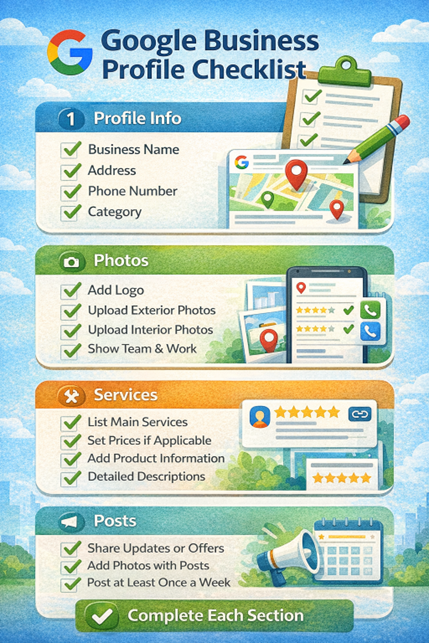
Google allows short updates through business profile posts. These posts highlight offers, events, or news updates. Post regularly but not excessively. One post each week is often enough.
Updates keep your profile fresh and active.
Profiles can change without your knowledge. Users or Google may suggest edits automatically.
Check regularly for:
Early detection prevents ranking damage and customer confusion.
Want to get more value from your local SEO traffic? Learn how to turn organic visitors into real customers with CausalFunnel’s SEO traffic solution.
Local SEO does not end after setup and basic optimization. You must track results and improve your strategy over time. This part explains advanced steps that improve trust, visibility, and long-term rankings.
You cannot improve what you do not measure properly. Tracking helps you understand what works and what needs fixing.
Focus on these main tracking areas:
Use simple tools that give clear data. Helpful tools include:
Check your numbers at least once every month. Weekly checks are helpful for competitive locations.
Watch for these signs of progress:
Slow growth is normal for local businesses. Strong trust builds over months, not days.
Reviews strongly influence local rankings and customer trust. Google favors businesses with steady and real customer feedback. Ask for reviews after successful service or completed sales. Keep your request polite and simple.
You can ask customers through:
Always respond to every review, including negative ones. Your replies show care and professionalism to new customers.
Good review practices include:
Fresh reviews help your profile stay active and trusted. Aim for steady growth instead of sudden large spikes.
Backlinks still matter for local SEO success. Local links help Google confirm your business location and relevance. Focus on links from real local sources.
Good local link ideas include:
Avoid buying cheap links from random websites. Low-quality links can harm your rankings. Always reach out politely and offer value first. You can share useful content or local resources. One strong local link beats many weak links, as quality always matters more than quantity.
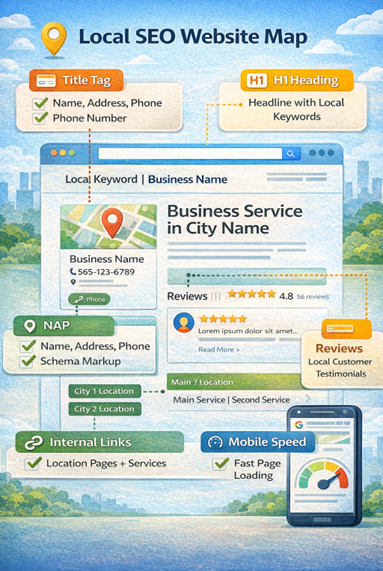
Schema markup helps search engines understand your business details clearly. It does not guarantee rankings, but it improves clarity and trust.
Add schema to show:
You can use free schema generators online. Ask your developer if technical help is needed. Correct schema reduces confusion for search engines. It also helps rich results appear in some searches.
Many users now search using voice assistants. Voice searches often include location-based questions.
Examples include:
To optimize for voice:
Mobile friendliness is also critical for local success. Most local searches come from smartphones today.
Check that your website:
Competitors provide useful learning opportunities. You can improve faster by studying what works for them.
Check their:
Do not copy blindly from competitors. Adapt good ideas to your own business style. Use the above information to improve your listings and pages. Small improvements often create big ranking changes locally.
Many businesses fail because of simple mistakes. Avoiding these saves time and money.
Common mistakes include:
These mistakes confuse search engines and customers. Fixing them often leads to fast ranking improvements.
Use this checklist every month to stay strong.
Business profile tasks:
Website tasks:
SEO tasks:
Consistency creates long-term success. Local SEO rewards steady effort more than quick shortcuts.
Local SEO does not need to feel confusing or technical anymore. It works best when you follow simple steps and stay consistent. Search engines watch how real people behave online every day. They notice which businesses help users clearly and honestly. Tricks may work briefly, but trust always wins in the long term.
Strong local SEO depends on three simple foundations:
When these pieces work together, rankings improve naturally over time. Trust grows slowly, but it stays strong once earned properly. Authority does not come from shortcuts or aggressive tactics. It comes from showing up consistently and serving customers well.
Use this checklist as a long-term growth guide, not a one-time task. Review it every few months as search habits and platforms change. Local visibility can transform how customers discover your business. It brings people who are ready to call, visit, and buy.
If you want to turn that traffic into real leads and sales, smart tracking matters too.
That is where conversion tools can multiply your SEO results. To measure what truly works and improve your customer journey, explore CausalFunnel. It helps you understand visitor behavior and convert more local traffic into revenue. Strong SEO brings attention, but smart funnels turn attention into growth.
Your future customers are already searching nearby. Make sure your business is the one they trust and choose!
Local SEO is a step-by-step guide to help your business appear in local searches. Google Business Profile, website setup, reviews, and local content are all covered under it. Arguably, it is the best way to enable your business to reach customers nearby.
Local SEO drives customers from the closest area to find you once they are determined to buy. It boosts visibility on results and in maps. It also extends the trust and authority you bring to your local area.
It is important to regularly update the profile with accurate info, photos, and posts. New content keeps your listing relevant and improves its position. Offers and details for customers must also be updated.
The first three are proximity, relevance, and prominence, while accurate business info, helpful content, and reviews make the difference. All improve visibility that attracts more local customers to the business.
Yes, you can! Google Analytics and Search Console are tools used to measure and view traffic and clicks. Platforms like CausalFunnel help measure organic traffic and conversions. You will know what is working and what must be improved.
Start using our A/B test platform now and unlock the hidden potential of your website traffic. Your success begins with giving users the personalized experiences they want.
Start Your Free Trial

Empowering businesses to optimize their conversion funnels with AI-driven insights and automation. Turn traffic into sales with our advanced attribution platform.
Trusted by Customers


©CausalFunnel Inc. All rights reserved.