



Free Funnel Audit
Convert more customers today!

SEO
10 mins read

SEO
10 mins read
Your content team is writing excellent content with sophisticated jargon and just the right information that is required, but still, the content is struggling to rank.
If you want content that ranks on Google and still convinces real people to take action, you need to focus on creating SEO rich content that serves humans first and algorithms second.
But, that is the short answer. The longer answer is what we are walking through together here, calmly and practically, the way you would explain it to a friend who is serious about growing traffic and turning that traffic into revenue.
Most people get stuck because they think ranking and converting are two different goals. They are not. The same content can do both when it is built the right way.
So, how to create rich SEO content? Keep reading to know that.

SEO-rich content is not about cramming keywords into every sentence. It is content that answers a real question fully, clearly, and in a way that search engines can understand.
Let’s say you’re writing a blog piece about “How to paint on a canvas”. Overusing words such as “paint” and “canvas” won’t make it the best written piece. There are many elements that need to be added in there.
When done right, rich SEO content does three things at once.
Search engines read patterns but humans read meaning. Your job is to connect the two using structure, clarity, and honest insight.
Think about the last time you Googled something important. Maybe you were comparing software, researching a service, or trying to fix a problem at work. You probably stayed on the page that felt clear, helpful, and human. That page likely had strong seo rich text, even if it did not feel optimized at all.
That is the goal.
Before we talk about how to write, let us talk about why this approach works.
Google rewards content that solves problems. On the other hand, users reward content that respects their time. When those two align, rankings and conversions follow naturally.
Here is what typically happens with well-written SEO rich content.
We have seen this firsthand. Our team at CausalFunnel rewrote pages to focus on clarity and intent and saw these pages outranking longer, more technical pages within weeks. This was not because they were smarter, but because they were easier to understand.
Ranking is not about sounding impressive. It is about being useful.
The biggest mistake people make is starting with keywords instead of intent.
Before you write a single sentence, ask one simple question. Why is someone searching for this?
Are they trying to learn?
Are they comparing options?
Are they ready to buy but unsure who to trust?
For example, someone searching for “SEO rich content” is usually not looking for a definition alone. They want guidance and examples. They want to know if this is worth their time.
Similarly, if someone searches “best running shoes,” Google knows they’re probably shopping. If they search “how to tie running shoes,” they want a tutorial. Your job is to match that intent perfectly.
Good SEO rich content aligns with that mental state.
There are three common intent types you should recognize.
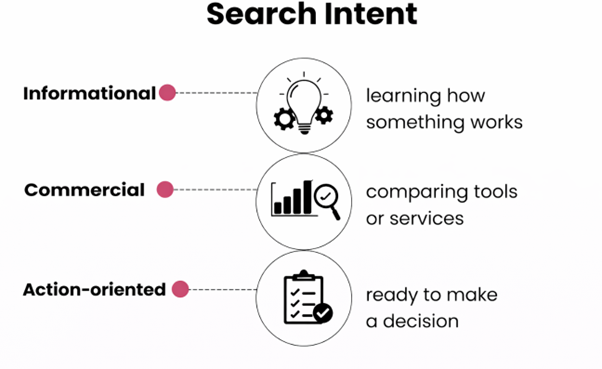
Your content can support all three, but it should lead with the dominant one.
Once you’ve figured out the search intent, it’s now time for keyword research. Even after getting a clear idea of what the audience wants, keyword research still matters.
You can’t create SEO-rich content without knowing which keywords to target. But keyword research isn’t about finding the most popular terms. It’s about finding the right terms, the ones your specific audience uses when they need what you offer.
The purpose of keywords is to help search engines understand what your content is about. The purpose of writing is to help people understand what they should do next.
When researching keywords for SEO rich content, focus on relevance over volume.
Here is a simple process that works.
If a keyword feels awkward when spoken out loud, it probably does not belong in your content.
This is where many people go wrong with SEO rich text. They force phrases that no human would ever say. Search engines are smart enough to spot that.
If you’re not sure how to do keyword research, you can use tools like Ahrefs, Semrush, Google Keyword Planner, Moz and Ubersuggest. These tools will give you the terms and phrases that people are actively looking for online.
Trying to rank for broad, popular keywords is like opening a coffee shop next to five Starbucks and hoping people notice your sign. You might do everything right and still get buried.
That is why the smartest SEO rich content does not chase everyone. It focuses on a specific group with a specific need.
When you narrow your niche, your content becomes more relevant by default. Instead of writing for “SEO content,” you might write for “SEO content for B2B SaaS founders” or “SEO content for ecommerce brands with long sales cycles.”
That shift alone changes how your content reads, what examples you use, and how clearly it connects with the reader. Search engines pick up on that relevance because users stay longer and engage more.
Here are a few ways niche targeting helps you stand out without forcing keywords.
If you ever feel stuck competing with massive sites, niche down before you write more.
Structure is where ranking and readability meet.
Search engines use headings to understand hierarchy. On the other hand, humans use them to scan and decide whether to keep reading.
Good structure feels invisible to the reader but obvious to the algorithm.
A strong structure usually includes.
Avoid walls of text. Even the best insight gets ignored when it feels heavy.
We often recommend reading your draft on a phone. If it feels tiring to scroll, your readers feel the same.

Your writing should sound like someone explaining something over coffee, not like a textbook or a pitch deck.
For example, instead of saying “This strategy can be leveraged to optimize outcomes,” say “This works because it makes the choice easier.”
The moment you start worrying about where to “place” keywords is usually the moment your writing starts to sound stiff. Good seo rich content works the other way around.
You focus on saying something useful first, then you make sure the right words are present where they belong. Search engines look for context, not repetition.
A simple way to keep seo rich text natural is to anchor keywords in meaningful sentences. Use them where a real person would expect them, such as in introductions, explanations, or examples.
Avoid dropping keywords into sentences that already work without them. That kind of insertion breaks flow and trust.
Here are a few practical guidelines that help keywords blend in smoothly.
Rich SEO content respects the reader’s attention. When keywords support the message rather than interrupt it, search engines and people both get what they want.
Your main content does the heavy lifting, but supporting elements matter too.
On-page SEO is where strong writing and smart optimization quietly work together. It is not about tricks or hidden tactics. It is about making sure your content is easy to understand, easy to navigate, and easy for search engines to interpret.
When done right, on-page SEO supports SEO rich content without changing how it feels to the reader.
These include.
On-page SEO also includes content formatting. Short paragraphs, consistent spacing, and occasional bullet points make reading easier, especially on mobile.
When users can move through the page without friction, they stay longer. That behavior sends positive signals without you having to optimize aggressively.
Latent semantic indexing sounds technical, but the idea behind it is simple.
Search engines try to understand meaning, not just match exact words. They look for patterns, context, and related ideas to decide what a page is really about. When your content reflects that natural context, it becomes stronger and more credible.
Think about how people speak in real life. If you are talking about content marketing, you naturally mention things like audience, messaging, conversions, and trust.
You do not repeat the same phrase over and over. Search engines work the same way. They expect seo rich content to include related terms that confirm the topic from different angles.
Here is how to apply this in practice without overthinking it.
Rich seo content benefits from variety. When you explain a concept clearly from multiple angles, you naturally use a broader vocabulary. That variety helps search engines confirm relevance while keeping the reader engaged.
The goal is not to insert related terms on purpose but to write so clearly and completely that those terms appear on their own.
You do not need to guess what works. You can test it. One of the smartest ways to improve SEO rich content is through controlled experimentation.

CausalFunnel’s A/B Test Platform focuses on looking at what’s working and what’s not. It tests messaging, layout, and calls to action while keeping content stable.
This matters because you do not want to rewrite ranking pages constantly. You want to refine them carefully.
Small changes often create big results.
These changes respect both SEO and user experience.
You could be writing using your best vocabulary and your writing skills. But, even good writers make these mistakes when they are writing an SEO rich content.
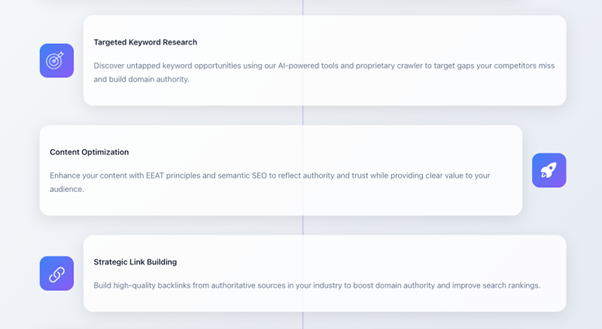
These mistakes are:
CausalFunnel can help you with these mistakes by finding the right keyword and optimizing your content for better performance.
If something feels awkward when you read it out loud, fix it. That instinct is usually right.
This is a fair question.
Writing this way takes more time than pumping out generic blog posts. It requires thinking, editing, and restraint. But the payoff compounds.
Well-built SEO rich content continues to bring traffic, trust, and conversions long after publication. It becomes an asset, not a cost.
We have seen pages written years ago still driving leads today because they were built on clarity, not trends.
If you remember one thing, remember this. The best SEO rich content does not try to impress search engines. It tries to help one real person make a better decision.
When you write like that, rankings tend to follow. So before you publish your next piece, ask yourself one quiet question. If I read this, would I feel guided or confused? Once you have an answer to this question, you’ll understand whether your content is rich or not.
SEO-rich content blends smart keywords with reader-friendly writing that Google loves and people trust. It ranks high because it matches search intent while guiding visitors toward action.
Regular posts ramble or sell too hard, leading to quick bounces. SEO-rich text hooks with value first with clear answers, stories, and subtle calls to buy. It converts because it feels like a chat with a professional.
Aim for 1,500+ words on big topics, but quality excels length. Short, punchy answers win for quick queries. Make sure to break it with bullets and subheadings so readers can easily scan on phones.
Refresh every 6 months with fresh statistics or 2026 trends. Google favors new over stale content.
Track organic traffic, time on page, and sales in Google Analytics. If you see a bounce under 50%, consider it as a good result.
Start using our A/B test platform now and unlock the hidden potential of your website traffic. Your success begins with giving users the personalized experiences they want.
Start Your Free Trial

Empowering businesses to optimize their conversion funnels with AI-driven insights and automation. Turn traffic into sales with our advanced attribution platform.
Trusted by Customers


©CausalFunnel Inc. All rights reserved.