



Free Funnel Audit
Convert more customers today!
SEO
10 mins read

SEO
10 mins read
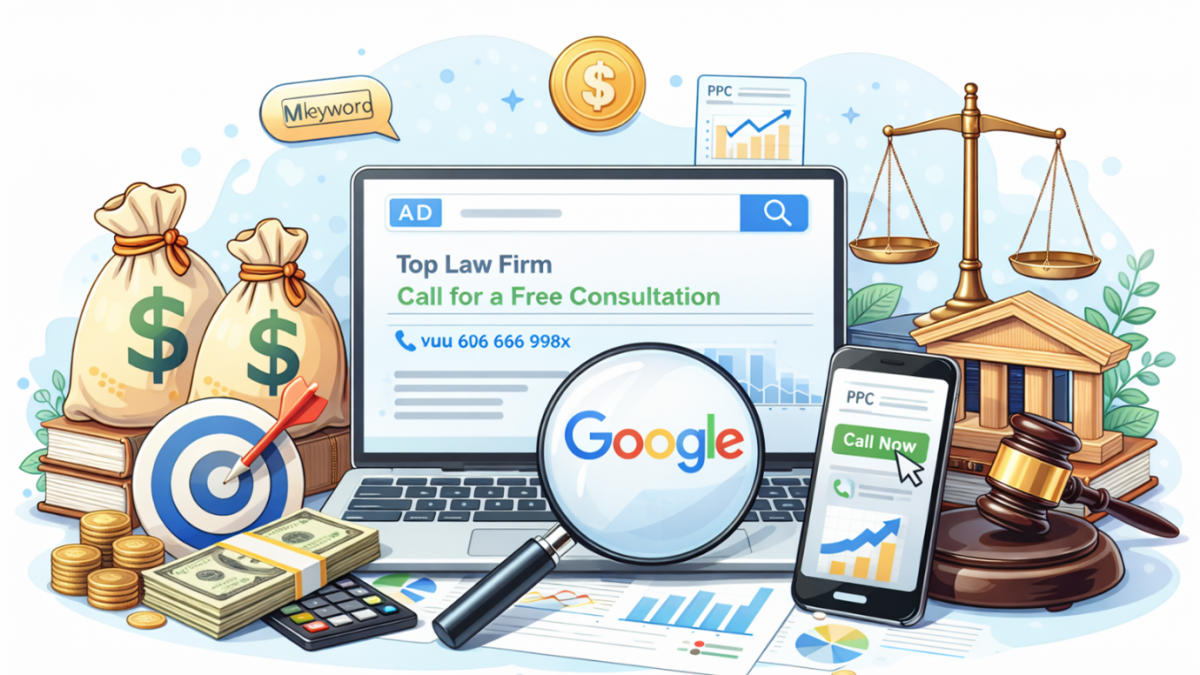
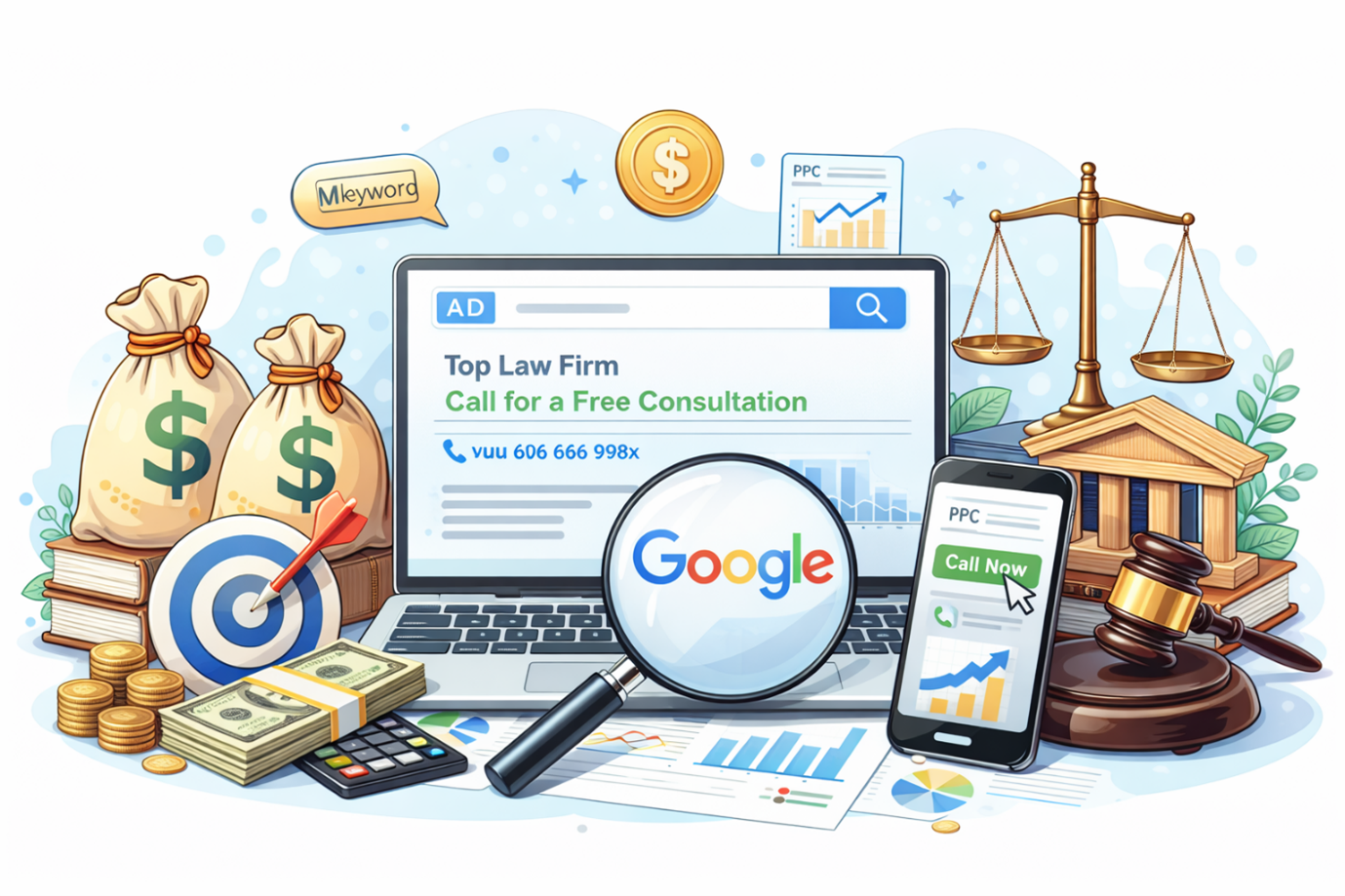
Google Ads for law firms can feel confusing, expensive, and risky at first. Many lawyers hear mixed opinions and do not know what to believe. This guide explains how Google Ads actually works for law firms. It also explains costs, structure, and realistic expectations from the start.
It is for solo lawyers, small firms, and growing practices. It focuses on clarity, not hype or sales promises. By the end, you will understand if Google Ads fits your firm.
Google Ads help law firms appear when people search for legal help. These searches often show strong intent and urgent needs. That intent is why many law firms invest in paid search. Google Ads work on a pay-per-click model. You only pay when someone clicks your ad. You do not pay when your ad only appears.
Ads show based on keywords, location, and bid strategy. Google also looks at ad quality and landing page relevance. This system rewards useful ads, not just high budgets.
Pay-per-click advertising means paying for each ad click. Law firms bid on keywords related to legal problems and services. Examples include practice areas and city-based searches.
When someone searches, Google runs a fast auction. The auction decides which ads appear and in what order. Price alone does not decide who wins.
Google considers three main factors during each auction:
This system protects users from poor-quality ads. It also protects advertisers from paying more than necessary.
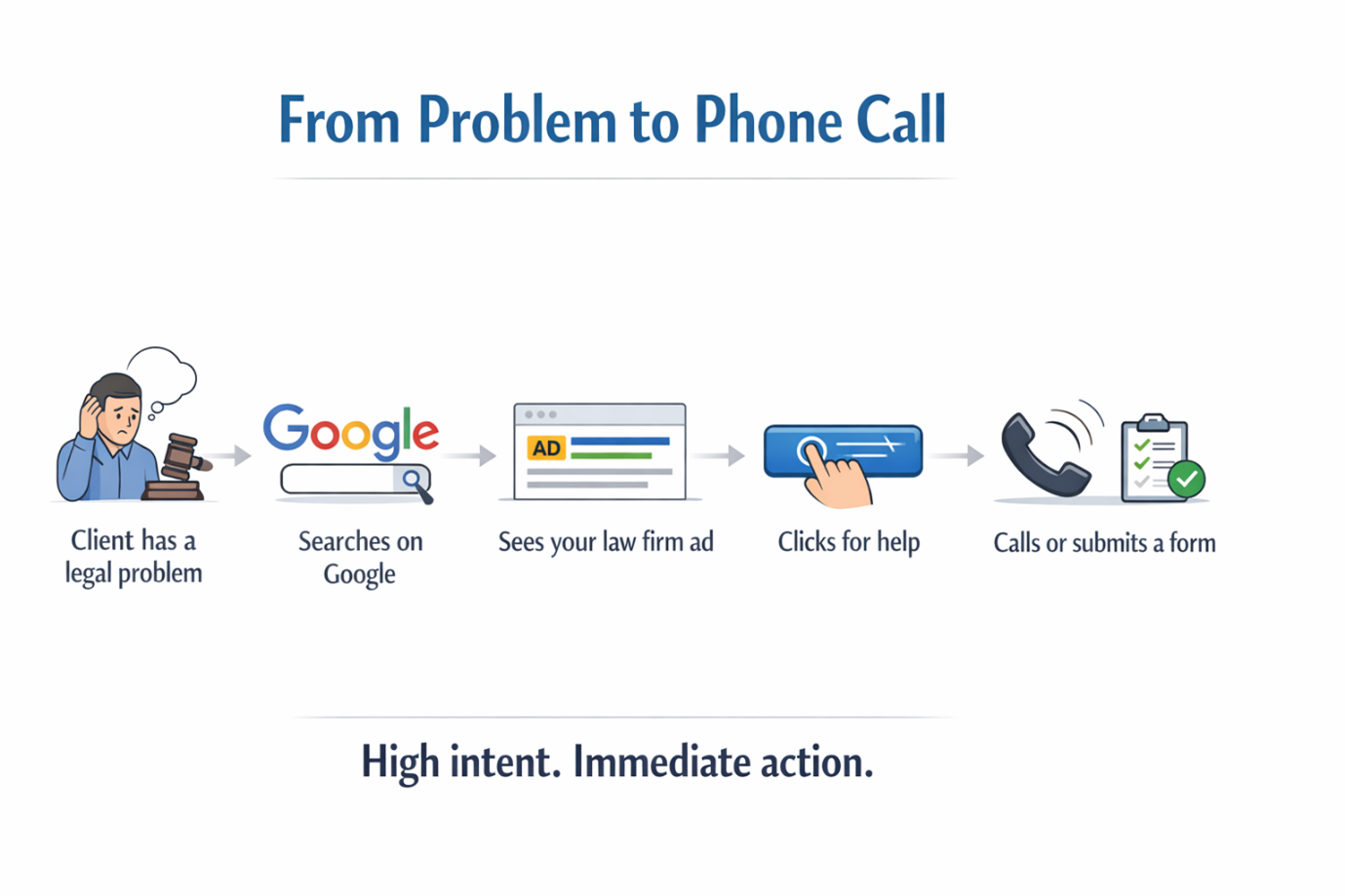
Legal searches usually happen during stressful moments. People often need help fast and want clear next steps. This makes search traffic very valuable for law firms.
Google Ads capture users at the decision stage. These users are not browsing or learning casually. They are actively looking for legal solutions. Compared to social ads, search ads show stronger intent. Search users already know what problem they face. Your ad simply connects them to the right firm.
This is why law firm PPC costs are high. High cost often signals strong competition and proven value.
Understanding intent does not end at the click. What users do after landing matters just as much. Many law firms focus only on keywords and bids. They miss how visitors behave on the page. This gap often explains weak conversion results.
Tools like CausalFunnel help you see post-click behavior clearly. It shows where users pause, drop off, or hesitate. This insight supports smarter Google Ads decisions.
Google Ads costs for law firms vary widely by practice area. Location, competition, and keyword intent affect pricing heavily. There is no single cost that applies to every firm.
Many firms fail because expectations are unrealistic. Understanding cost drivers helps you plan smarter campaigns. It also reduces frustration during early testing phases.
Cost per click depends on several important factors. Some are within your control, while others are market-driven.
Key cost drivers include:
Personal injury and criminal defence often cost more. Smaller cities usually cost less than large metro areas. High-intent keywords cost more than general legal terms.
Quality Score plays a major role in final pricing. Better ads and landing pages can lower your cost per click. This rewards firms that focus on user experience.
Many law firms start with budgets that are too small. Small budgets limit data and slow down learning. This often leads to early failure and wrong conclusions.
Here are realistic monthly budget ranges to consider:
These ranges depend on location and practice area. Lower budgets may work in less competitive regions. Higher budgets help faster optimization and better results.
Daily budgets matter as much as monthly totals. Very low spend on daily ads limits impressions and click volume. This prevents proper testing of keywords and ads.
The first month is usually a learning phase. Google collects data about clicks, searches, and behavior. Performance may feel unstable during this period.
During the first 30 days, expect:
Between 60 and 90 days, patterns become clearer. Poor keywords get removed or refined. Better ads receive more budget and impressions.
Strong results usually follow consistent optimization. Quick success is possible but not guaranteed. Patience improves long-term return on investment.
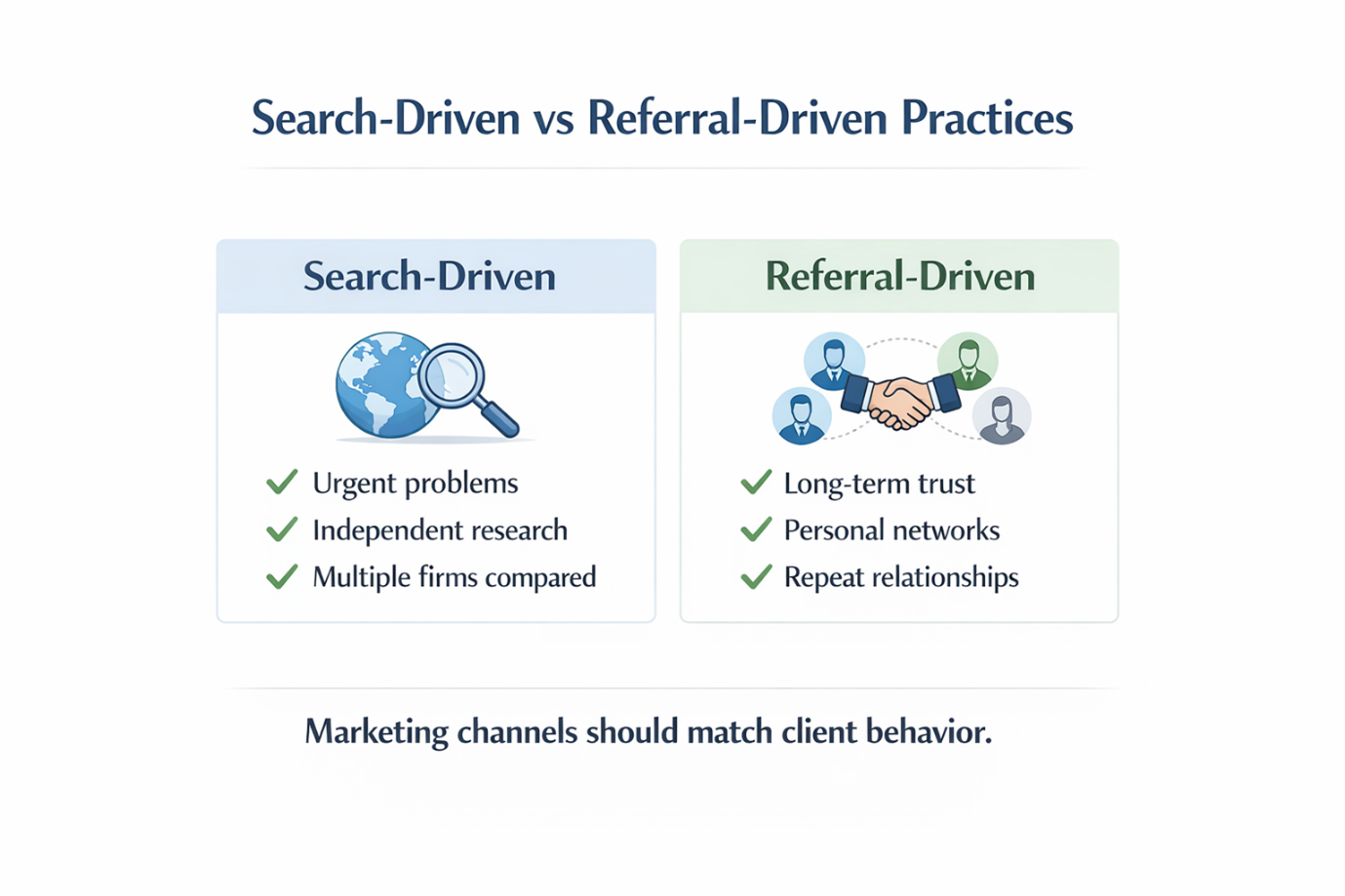
Google Ads are not right for every law firm. Some practice areas depend more on referrals. Others rely heavily on online search demand.
Understanding fit helps avoid wasted ad spend. It also helps you choose the right marketing mix.
Google Ads work best for urgent or private legal needs. These cases often start with online searches.
Common strong performing practice areas include:
Clients in these areas search independently. They often contact multiple firms before deciding. Paid search visibility matters during these moments.
Some legal services depend on trust and relationships. Referrals often outperform ads in these cases.
Examples include:
Google Ads may still support these practices. However, ads should not replace referrals completely. They should support visibility and brand presence instead.
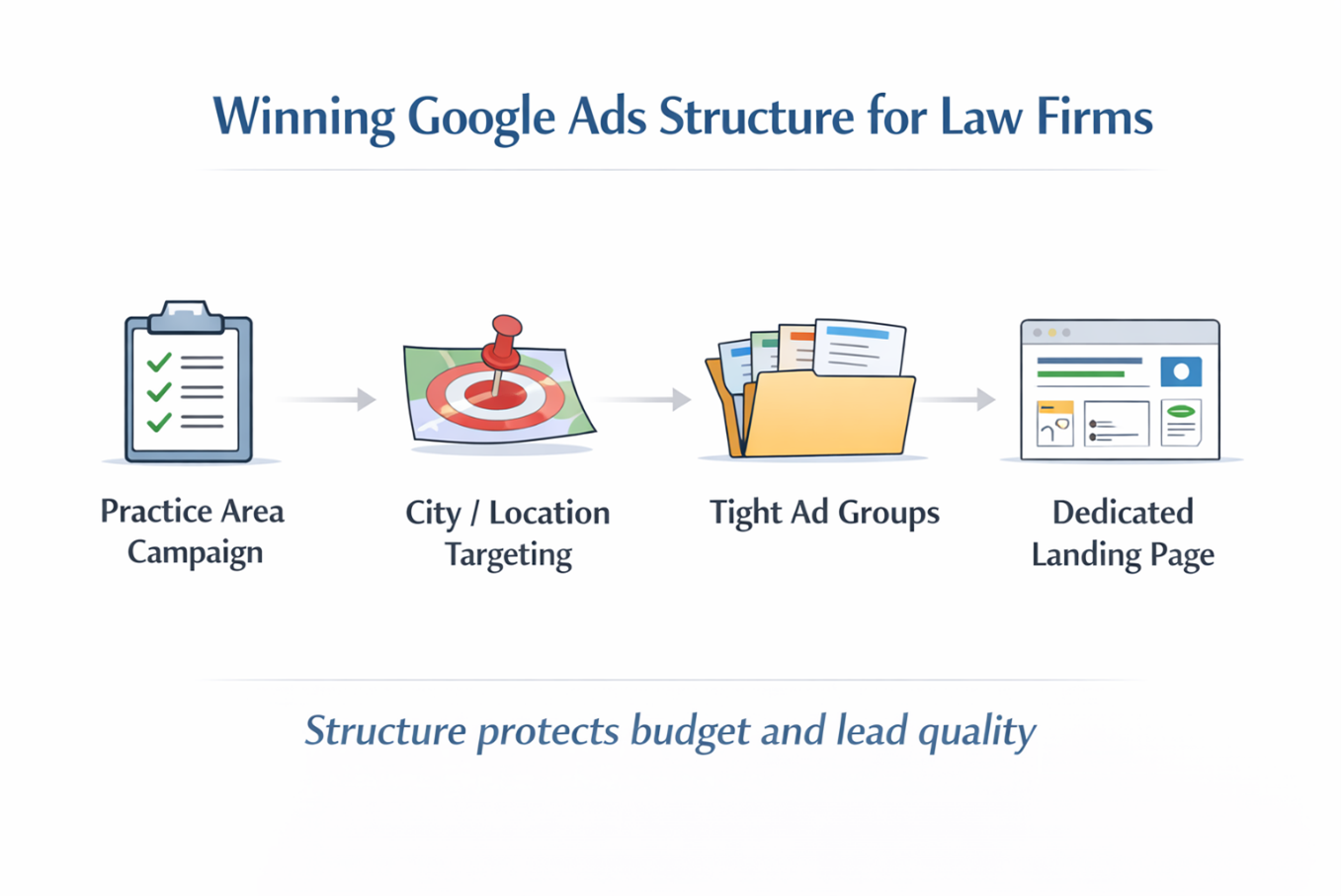
A clear campaign structure protects your budget and improves lead quality. Poor structure causes wasted clicks and confusing performance data. Strong structure helps Google understand your services and locations.
Google Ads for law firms should never feel messy or rushed. Each campaign should serve a clear and specific purpose. This approach improves control, reporting, and long-term optimisation.
Each law firm account should follow a simple hierarchy. This keeps data clean and decisions easier to manage.
A strong structure usually looks like this:
For example, personal injury and criminal defence need separate campaigns. Each campaign should control its own keywords and budget. This prevents one practice area from draining another budget.
Ad groups should stay small and focused. Each ad group should target closely related keyword themes. This improves ad relevance and Quality Score.
Understanding structure is only the first step. What happens after users click also matters greatly. Many firms lose leads due to unclear post-click behavior.
CausalFunnel helps you see how users move through landing pages. It highlights friction points and missed conversion chances. This insight supports better structural decisions.
Location targeting matters greatly for law firm PPC. Many firms lose money by targeting areas they cannot serve. You should target only cities or regions you actively serve. Avoid wide state targeting unless your firm truly covers that area. Distance matters when people choose legal representation.
Best location targeting practices include:
Always choose presence-based targeting instead of interest targeting. This ensures ads show only to users physically in your location. It reduces clicks from people who will never contact you.
Poor location targeting often hides inside analytics reports. Traditional tools may not show where users lose intent. This makes wasteful spending harder to spot early.
Sending traffic to your homepage often fails. Landing pages should match keyword intent closely. Relevance improves trust and conversion rates.
Each practice area should have its own landing page. That page should focus on one legal service only. Mixed messaging confuses and loses leads.
Strong law firm landing pages include:
Page speed also affects conversions. Slow pages increase bounce rates and wasted clicks. Mobile-friendly design is critical for legal searches.
Understanding how users behave on these pages matters. Small design issues can cause major lead loss. Behavior data helps identify these hidden problems.
Keywords decide who sees your ads and why. Choosing the wrong keywords leads to poor lead quality. Choosing the right keywords brings serious legal inquiries.
Law firm keyword strategy should focus on intent first. Volume matters less than relevance and readiness. Every keyword should signal a real legal need.
High intent keywords show clear hiring signals. These searches often include urgency or action words.
Examples of high intent keyword patterns include:
For example, “car accident lawyer Chicago” shows clear intent. In contrast, “what is personal injury law” shows research intent. Research intent keywords rarely convert into paying clients.
Keyword research should start with real client language. Think about how clients describe their problems. Use those phrases to guide keyword selection.
Match types decide how closely searches must match keywords. Understanding match types helps control cost and relevance.
The main match types include:
Exact match keywords offer the strongest control. They reduce wasted spend during early campaign stages. Phrase match allows variation while staying relevant.
Broad match carries a higher risk for law firms. It may trigger ads for unrelated or low-intent searches. Broad match works best only with strong negative keywords.
Negative keywords block unwanted searches. They protect your budget from irrelevant clicks. Every law firm campaign needs them from day one.
Common negative keyword themes include:
Negative keyword lists should grow over time. Search term reports reveal new exclusions weekly. Ongoing review improves efficiency and lead quality.
This step alone often saves hundreds of dollars monthly. Many firms skip this step and regret it later.
Ads must match search intent clearly. Confusing ads reduce Quality Score and lead quality. Simple language usually performs better than clever wording.
Google now favors responsive search ads. These ads test multiple headlines and descriptions automatically. Good inputs help Google learn faster.
Each responsive ad should include several clear headlines. Focus on services, locations, and next steps. Avoid exaggerated claims or guarantees.
Effective headline ideas include:
Descriptions should explain what happens next. Tell users what to expect after clicking. Clear expectations increase trust and response rates.
Avoid legal jargon where possible. Clients prefer plain language during stressful moments. Clarity beats complexity in legal advertising.
Extensions add extra information to your ads. They also increase ad size and visibility. This improves click-through rates.
Important extensions for law firms include:
Call extensions are especially valuable for legal ads. Many users prefer calling instead of filling out forms. Ensure calls reach trained intake staff.
Extensions also improve Quality Score indirectly. A higher Quality Score can lower the cost per click.
Campaign structure and keywords create the foundation. Tracking turns clicks into measurable outcomes. Without tracking, optimization becomes guesswork.
Before launching, confirm that calls and forms are tracked. Each conversion should reflect a real legal inquiry. Avoid tracking meaningless actions as conversions.
If you want clearer insight into post-click performance, CausalFunnel helps connect behavior with ad results. It shows where leads hesitate or drop off.
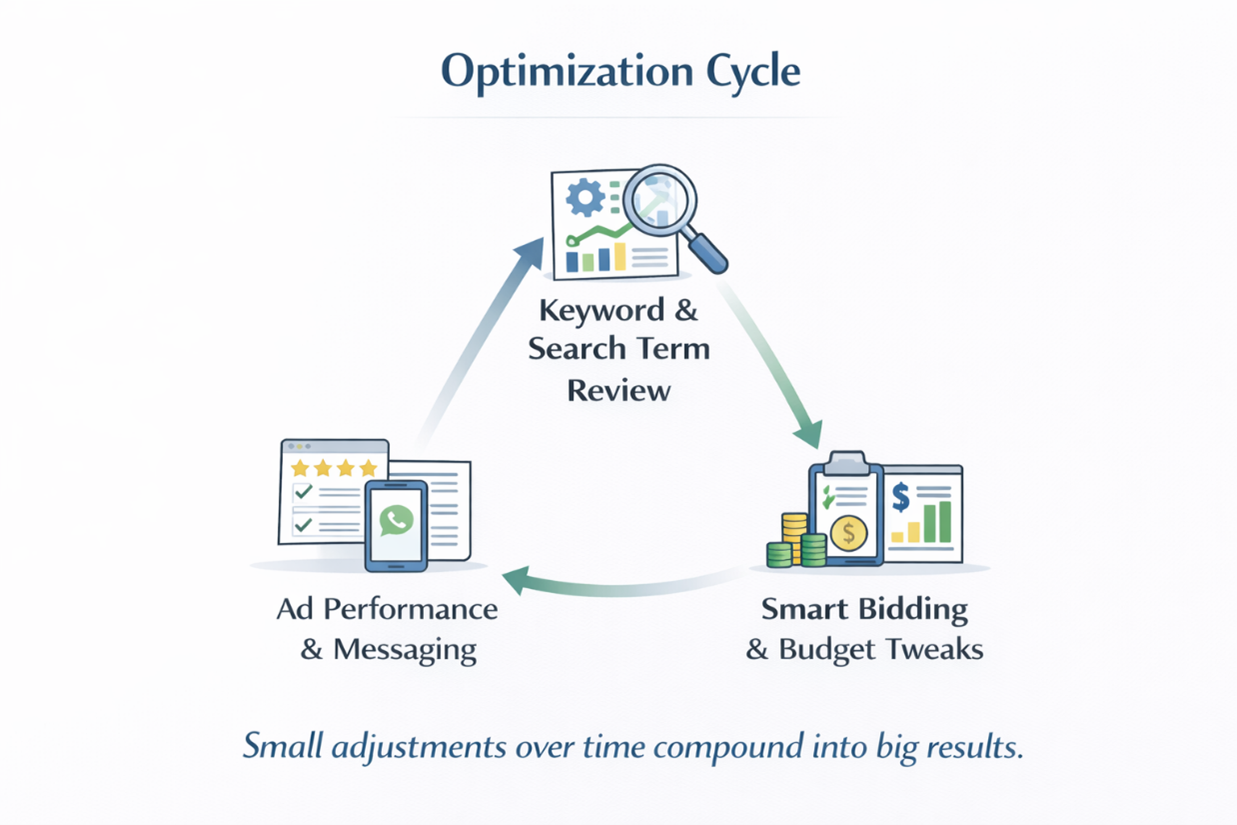
Google Ads for law firms work when approached as a complete system, not a quick tactic. Costs, structure, keywords, tracking, and optimization must work together. Firms that plan carefully, review data regularly, and stay patient see better outcomes. They avoid rushed decisions and focus on steady improvement over time.
To make that system stronger, firms need visibility beyond clicks and impressions. What users do after landing often explains lost leads and wasted spend. CausalFunnel helps law firms understand real visitor behavior after ads. This insight supports clearer decisions and long-term performance growth.
Think of content marketing KPIs as proof that your content works. They are numbers tied to real results. If content helps your business grow, the KPI shows it. If it doesn’t, you’ll see that too.
Content marketing KPI is important because posting content is not enough. You need to know what it’s doing. KPIs show what brings traffic and what turns readers into leads. That’s how you improve ROI over time.
Metrics are surface-level numbers that include page views, likes, and shares. They look nice, but don’t tell the full story.
Whereas, content marketing KPIs connect to business goals like leads, conversions, and revenue.
While choosing the right content marketing KPI, start with one simple question:
What do I want more of?
Traffic? Email subscribers? Or sales?
Now match one KPI to that goal and keep it focused. Too many KPIs create confusion.
If you are a beginner, keep it basic:
These content marketing KPIs show real growth.
Start using our A/B test platform now and unlock the hidden potential of your website traffic. Your success begins with giving users the personalized experiences they want.
Start Your Free Trial

Empowering businesses to optimize their conversion funnels with AI-driven insights and automation. Turn traffic into sales with our advanced attribution platform.


