



Free Funnel Audit
Convert more customers today!
SEO
10 mins read

SEO
10 mins read
Have you ever come across a situation where you have the perfect ad, but you still get poor results? If yes, then do you know the reason behind it? That usually happens when your audience is not the right fit.
In ads, location plays a very big role in marketing than most people expect. This is when geo targeted ads help you show ads to people based on their location.
Geo targeted ads help you show your ads only to people in specific locations, so you reach the right audience, cut wasted spend, and improve results faster. Instead of showing ads to everyone, you reach only the people who matter most. It has also been recorded that 76% of people who search for something nearby on their smartphone visit a related business within a day.
Think of it like opening a coffee shop. You wouldn’t advertise it to someone sitting 500 km away, right? You’d focus on people walking nearby. That’s exactly how geo targeted ads work in the digital world.
That means better clicks, better leads, and less wasted budget. This approach works well for both small and large businesses and helps you connect with users when location truly matters.
As we move ahead, you’ll learn how this strategy works step by step. You will also learn how to set it up and improve results.
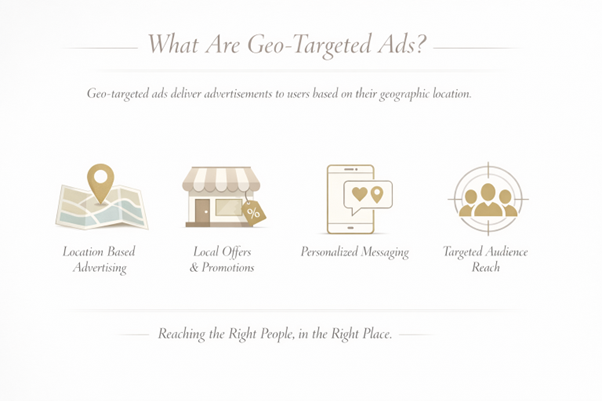
Geo targeted ads are ads shown to users based on their location. This location can be a country, city, ZIP code, or even a radius.
In simple terms, you choose where your ads should appear. Then, platforms show them only to users in those areas. This method is also called geo targeted advertising in marketing. It helps businesses focus on audiences that are easier to convert.
Picture this, you have a local fitness studio in San Francisco and want more people to come. You wouldn’t want people to click from people from all across the country. You’ll focus on targeting users within a few miles of your studio. This increases the chances of getting real visits and sign-ups.
Geo targeting works across many platforms, like Google Ads and social media. It is commonly used for local services, events, and multi-location businesses.
You’ll see this used in:
The key idea is simple and practical. You show your ads only where they make sense. This improves both user experience and campaign performance.
Geo targeted and geofencing are the two concepts that often confuse many marketers. And while they may be related to each other, they are not the same.
Geo targeting focuses on selecting locations with audience filters. In this, you can refine the ads by age, interests, or behavior. On the other hand, geofencing works by creating a virtual boundary. Ads trigger when users enter or leave that defined area.
Here is a simple breakdown:
Geo targeting covers broader and more flexible areas, while geofencing focuses on precise, real-time user movement.
For example, a brand targets an entire city. That is geo-targeting. A cafe targets users near a competitor’s store. That is geofencing.
Geotargeting lets you say, “Show my ads to people in San Francisco who are interested in fitness.” It combines location with other data.
Geofencing is more like, “Show ads to anyone who enters this mall right now.” It’s immediate and location-triggered.
When to use each:
Choosing the right method improves campaign performance quickly.
At first glance, it feels obvious. Of course, location matters, but the real impact goes deeper than that. Geo targeted ads work because they match user intent with location. It means the ads are directly targeted to the users who need the product or service in a particular location. This makes your message feel more relevant and timely.
This way, people respond better when ads match their immediate needs, because location plays a big role in many buying decisions.
People respond to what feels close to them. When your ad mentions their city or a nearby offer, it feels real. Let’s say, for example,
A generic ad says, “Join our gym.”
A local ad says, “Join the top gym on Vermont Street today.”
Which one feels more personal? That small shift increases attention and trust. It’s like hearing your name in a crowd, which you notice instantly.
One of the biggest frustrations in ads is wasted clicks. You pay for traffic that never converts.
Geo targeted ads reduce that waste. You stop showing ads in places where you don’t operate. This alone can improve ROI significantly. Because many businesses don’t need more traffic, they need better traffic.
Local targeting often leads to higher conversion rates. In fact, Google reported that 50% of smartphone users who perform a local search visit a store within a day.
People are more likely to act when services are nearby. This includes store visits, phone calls, or bookings. It also improves lead quality for service-based businesses.
When location matches user intent, decisions become easier, and that leads to faster actions and better campaign outcomes.
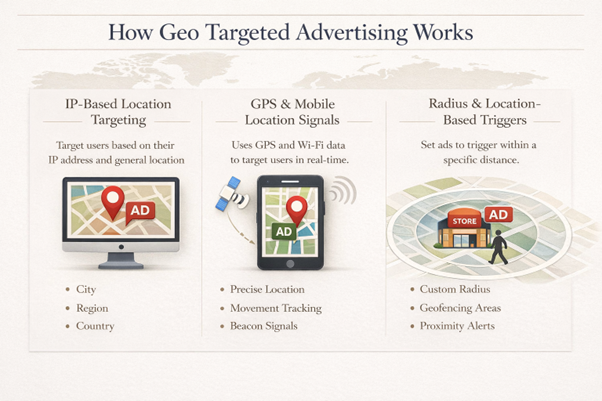
Geo targeted advertising uses location signals to show relevant ads. These signals help platforms understand where users are located. This is when different methods provide different levels of accuracy. Some are broad, while others are very precise.
Here’s how geo targeted advertising works:
This method uses a user’s IP address to estimate their location through their internet connection. It’s not super precise, but it works well for broader targeting like state or city-level targeting.
However, it is not always highly accurate for exact locations and is better suited for broader geographic campaigns.
For example, targeting a city or region. It’s reliable enough for most campaigns.
This is where things get more accurate. Mobile devices use GPS to pinpoint location.
It uses real-time data to detect a user’s exact location. This helps businesses target people near stores or events and is very useful for local and time-sensitive campaigns.
That’s how apps can show you nearby restaurants or stores. It’s precise and useful for local campaigns.
Here, you define a specific area. Like a 3 km radius around your shop. Anyone within that area can see your ads. This could be a store, office, or event location.
This method works well for local promotions and foot traffic campaigns, keeping your targeting focused and practical.
Geo targeting isn’t just one setting. You have multiple ways to approach it. Each strategy helps you reach a specific type of audience. Choosing the right one depends on your business needs.
This is best for businesses operating at a national level. You can adjust messaging based on regions. For example, pricing or language differences.
This targets users at a country or regional level and works well for global or national campaigns. Most of the brands use this to adjust messaging for different markets. This method helps manage campaigns across large geographic areas.
This focuses on specific cities or metro regions. It is ideal for businesses with urban or regional presence. You can tailor ads based on city-level demand or trends, as it improves relevance without being too narrow.
A campaign that works in San Francisco may not work in Los Angeles. So you tailor the ads accordingly.
This allows very precise local targeting, as it is useful for targeting specific neighborhoods. It is useful for service-area businesses and local promotions.
You can target high-value neighborhoods or key areas, which can help improve lead quality and conversion rates. Real estate businesses use this a lot.
Radius targeting focuses on a fixed distance around a location. It is one of the most practical strategies for local businesses. Here, you define a circle around a location.
For example, a clinic can target users within five miles. This ensures ads reach people who can easily visit.
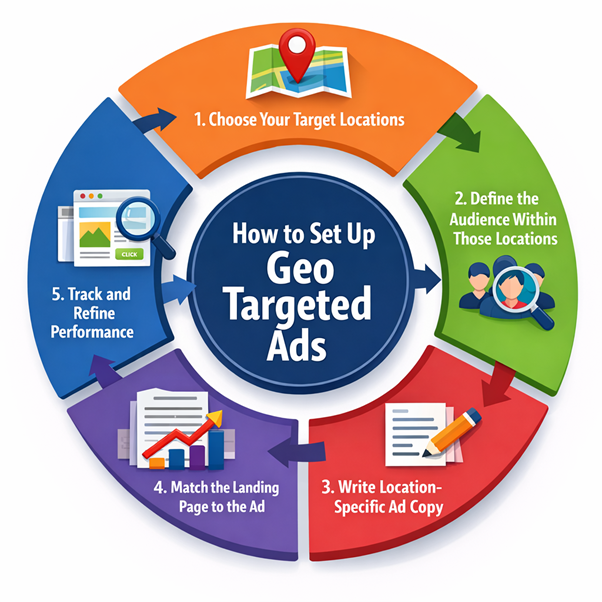
Setting up geo targeted ads is simple when you follow clear steps. Each step helps improve relevance and campaign performance.
Start with where your customers are. Not where you wish they were.
For this, select the locations that matter most. These could be cities, ZIP codes, or specific regions. Focus on areas where your customers are likely to be. Avoid targeting locations you cannot serve properly.
Next, refine your audience within those selected areas. You can use filters like age, interests, or behavior patterns. This helps you reach the right people, not just the right place. Ultimately, better targeting leads to better campaign results.
Your ad copy should reflect the chosen location clearly by mentioning city names, local offers, or nearby benefits. This makes your ads feel more relevant and personalized and improves engagement and click-through rates.
Your landing page should match the ad’s location message because users expect consistency when they click on your ad. For example, a city-specific ad should lead to a local page. This builds trust and improves conversion chances.
Always review how your ads perform in each location. Look at clicks, conversions, and cost per result. Always review results by location. Some areas will perform better, and some will not. Always remove weak areas and double down on what works.
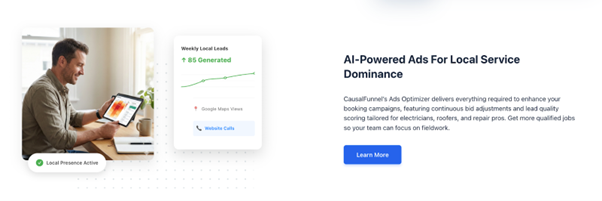
Advanced platforms like CausalFunnel can automate this optimization by identifying high-performing locations and reallocating budget intelligently.
Once your campaign is live, the real work begins. Geo targeting works best when you keep testing and refining your approach. Small changes can lead to big improvements over time.
Here are practical ways to improve your results:
These steps help you improve relevance and reduce wasted spend. They also make your campaigns more flexible and effective.
Let’s be honest. Most campaigns don’t fail because of bad strategies. They fail because of simple and avoidable mistakes. But fixing these early can save time and budget.
Here are common issues to watch for:
Avoiding these mistakes makes your campaigns more reliable. It also improves long-term performance and results.
Measuring results helps you understand what is working and what is not. It also helps you improve your campaigns over time.
Therefore, you must always review performance by location, not just overall. This gives better insights into strong and weak areas.
Here are key metrics to track:
You should compare results across cities, regions, or ZIP codes. This helps you find patterns and improve targeting decisions.
Over time, focus more on high-performing areas, and reduce spend in locations that do not deliver results. This creates a simple but effective improvement loop.
That’s where platforms like CausalFunnel stand out. They help you connect location data with actual business outcomes, not just clicks.
If you want to reach people who are ready to act, geo targeted ads can help you and your business. These help in making your campaigns more focused, relevant, and efficient. Just by targeting the right locations, you are reducing wasted spend. At the same time, you also improve engagement, conversions, and overall performance.
If you had to choose between reaching 10,000 random people or 1,000 people who can actually buy from you, what would you pick?
No, they are different. Geo targeted ads use location along with other filters. Geofencing focuses on real-time targeting within a defined boundary.
Yes, especially for small businesses. In fact, they benefit the most because they usually serve limited areas.
It depends on your business. A restaurant might use 3–5 km. A service business might go wider. Test and adjust.
Yes. Matching the landing page to the location improves trust and conversions. Even small changes help.
Start using our A/B test platform now and unlock the hidden potential of your website traffic. Your success begins with giving users the personalized experiences they want.
Start Your Free Trial

Empowering businesses to optimize their conversion funnels with AI-driven insights and automation. Turn traffic into sales with our advanced attribution platform.
Trusted by Customers


©CausalFunnel Inc. All rights reserved.