



Free Funnel Audit
Convert more customers today!
SEO
10 mins read

SEO
10 mins read
Cybersecurity SEO is not the same as normal SEO used in other industries. Security buyers think carefully before trusting any brand online.
They research deeply before talking to sales teams. They compare vendors, read documentation, and look for proof everywhere. Most security buyers fear making the wrong choice. That fear shapes how they search and what content they trust.
This guide explains how cybersecurity SEO works in real conditions. It focuses on trust, clarity, and qualified lead generation.
It also explains how traffic becomes a real pipeline. That step is where most security websites fail. If your SEO traffic never turns into serious conversations, this guide will help.
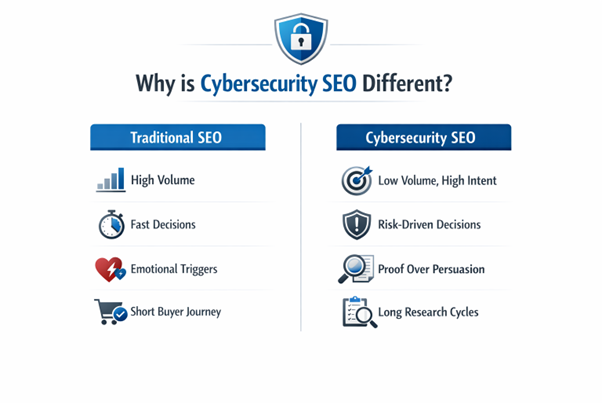
Cybersecurity SEO serves a careful and skeptical audience. Most buyers are engineers, CISOs, or compliance leaders.
They do not click fast or decide emotionally. They research, compare, and verify every claim. Traditional SEO often focuses on volume and speed. Security SEO focuses on accuracy, depth, and trust.
Security buyers look for answers like these:
If your content avoids these questions, rankings will not hold. Another key difference involves the buying timeline. Security purchases take weeks or even months. A buyer may read ten pages before contacting anyone. Your content must support that long research journey.
This is why SEO for cybersecurity companies cannot rely on blogs alone. You need structured content across awareness, evaluation, and decision stages.
Many brands fail because they publish random articles. Those articles never connect into a clear journey. When SEO content lacks structure, trust breaks quickly.
Most SEO strategies begin with keyword lists. That approach fails badly in cybersecurity markets. Security searches reflect intent, not curiosity. Each query signals a different decision stage.
Intent mapping helps you understand what buyers want next. It prevents wasted content and vanity traffic. Strong cybersecurity SEO always begins with intent mapping.
Security searches fall into four clear intent categories. Each category needs a different content type.
Awareness intent
Buyers want education and clarity at this stage.
Examples include:
These users want explanations, not product pitches.
Solution intent
Buyers now want practical guidance.
Examples include:
They want implementation details and clear processes.
Evaluation intent
Buyers compare tools, vendors, and approaches here.
Examples include:
These pages must be honest and detailed.
Commercial intent
Buyers want pricing clarity and next steps.
Examples include:
These pages should reduce uncertainty, not pressure buyers.
Intent mapping helps you serve all four stages clearly. Without it, content feels random and confusing.
Each intent requires a specific page type. This mapping improves rankings and user satisfaction.
Mixing intent types on one page creates confusion. Clear mapping helps Google and buyers understand relevance. This approach also improves cybersecurity content marketing results. Content becomes purposeful instead of scattered.
Many security websites start with blog content. That usually creates traffic but no pipeline. High-impact pages should come first.
Start with pages closest to buying decisions:
These pages attract fewer visitors but higher-quality leads. After that, expand into awareness content. Awareness content should link to decision pages.
This internal flow supports cybersecurity lead generation. It also strengthens topical authority for search engines.
If you want to understand how users move across these pages, analytics matters.
Platforms like CausalFunnel help reveal real user journeys across intent stages.
Publishing more content does not guarantee better rankings. Structure and clarity matter far more in security markets. Buyers want answers without marketing noise. Search engines reward content that satisfies users fully.
An intent-driven structure keeps users engaged longer. That engagement strengthens rankings over time. When pages connect logically, trust grows naturally. Trust is the real currency in cybersecurity SEO.
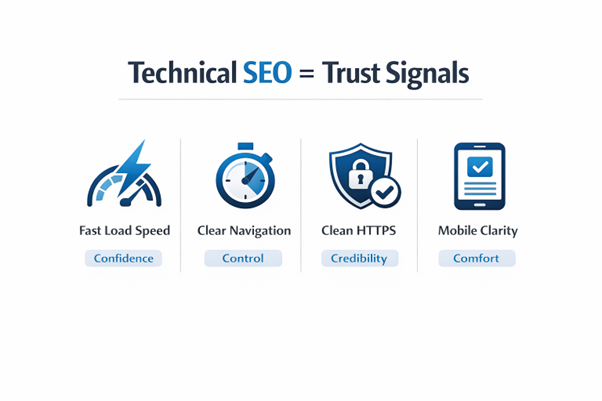
Strong content cannot rank without a strong technical foundation. In security markets, technical issues damage trust very quickly. Slow pages create doubt before the content is even read. Broken navigation makes buyers question operational maturity.
This is why technical SEO matters deeply in cybersecurity SEO. It supports rankings, trust, and long buyer journeys. Security websites must feel stable, clear, and professional. Anything less creates friction and silent exits.
Security buyers notice technical flaws faster than other audiences. They work daily with systems, dashboards, and performance metrics.
If a page loads slowly, confidence drops instantly. If navigation feels messy, credibility feels weak. Google behaves the same way. Search engines reward pages that deliver smooth experiences.
Technical SEO helps in three critical areas:
Without these, rankings rarely stay stable.
Several technical factors matter more for security brands. These areas appear consistently across top-ranking pages.
Page speed strongly affects trust and rankings. Security pages often include heavy scripts and animations. Those elements slow pages without adding value.
For Core Web Vitals, aim for these benchmarks:
Heavy dashboards and tracking scripts often cause delays. Optimizing images and scripts improves performance quickly.
Fast pages reduce bounce rates and increase engagement. That behavior supports cybersecurity SEO stability.
Information architecture shapes how users explore your site. It also controls how search engines crawl pages. Security sites often hide important pages too deeply. Buyers struggle to find pricing, use cases, or integrations. Clear structure improves both trust and discoverability.
Strong architecture includes:
Each service page should connect logically to others. This flow supports both users and crawlers.
Not every page deserves search engine attention. Security websites often generate low-value pages accidentally.
Common examples include:
These pages waste crawl budgets and weaken focus. Indexation control helps Google prioritize valuable pages. It also improves ranking stability for important topics. Strong cybersecurity SEO always includes index discipline.
Security buyers research across devices. Mobile usability still matters, even for technical audiences. Dense paragraphs reduce mobile readability. Tiny links cause frustration during research sessions.
Mobile-friendly design should include:
Mobile clarity improves time on page. That behavior strengthens organic performance.
Technical SEO feels overwhelming for many teams. A simple checklist keeps work focused and efficient.
Day 1: Review top impression pages
Start with pages already showing search visibility.
Day 2: Improve page speed basics
Compress images and remove unused scripts.
Day 3: Fix navigation clarity
Make pricing, services, and use cases easy to find.
Day 4: Control indexation
No index thin pages and duplicate URLs.
Day 5: Optimize internal linking
Connect awareness pages to decision pages clearly.
Day 6: Improve mobile readability
Break long paragraphs and improve spacing.
Day 7: Review security signals
Check HTTPS, mixed content warnings, and outdated assets.
This checklist creates visible improvement quickly. It supports rankings and user confidence together.
Security buyers judge competence silently. They notice small details others ignore.
Slow loading creates doubt about operational discipline. Broken links signal neglect and risk. Clean technical execution signals professionalism. That perception supports conversions later.
This is why technical SEO connects directly to trust. It is not just a ranking factor.

Technical changes should improve real behavior. Rankings alone do not tell the full story. Behavioral analytics reveal how users actually move. They show where users hesitate or abandon pages. This insight helps teams fix real problems faster.
Platforms like CausalFunnel help teams see:
Behavior-driven decisions improve cybersecurity SEO outcomes.
They also improve lead quality over time.
Many security websites repeat the same errors. Avoiding these mistakes saves months of effort.
Common issues include:
Fixing basics often creates immediate improvements.
Security buyers return multiple times before contacting vendors. Each visit should feel faster and clearer.
Technical SEO supports that experience quietly. It removes friction across repeat visits. When pages feel reliable, trust builds naturally. That trust helps future content perform better.
Strong foundations allow content to shine. Weak foundations undermine even great writing.
Security buyers trust evidence, not promises. Credible content decides whether rankings convert into conversations. Cybersecurity SEO succeeds when content answers hard questions clearly. Buyers want proof, limits, and real-world detail.
This section explains how to build credibility at scale. It focuses on trust, clarity, and honest expectations.
Creative language does not win security deals. Clear explanations and proof win confidence.
Buyers test claims mentally as they read. They look for gaps, risks, and vague language. If the content feels promotional, they leave quietly. That behavior weakens engagement and rankings.
Strong cybersecurity SEO avoids fluff completely. It replaces hype with helpful detail.
Every high-ranking security page follows a pattern. That pattern answers buyer doubts before they arise.
Use this checklist on every major page:
These elements reduce uncertainty. They also improve time on page and trust.
Content that avoids limits feels suspicious. Content that explains tradeoffs feels honest. That honesty supports cybersecurity SEO stability.
Security buyers look for quiet proof signals. They do not expect flashy testimonials.
Effective proof elements include:
Even small proof blocks increase credibility. They help buyers visualize real usage. Avoid exaggerated claims without evidence. Those claims reduce trust quickly.
E-E-A-T matters strongly in security markets. Experience and expertise must feel real.
Experience appears through practical detail. Expertise appears through clarity and structure.
Strong signals include:
Do not overstate credentials. Accuracy builds more trust than exaggeration.
Security buyers verify credibility silently. They check details before trusting content.
Important trust signals include:
These signals reduce friction during research. They also support cybersecurity SEO performance.
Generic messaging feels weak in security markets. Industry-specific content performs far better. Buyers want to see their environment reflected. Healthcare security differs from SaaS security needs.
Industry pages should address:
This approach improves relevance and trust. It also captures long-tail search demand.
Traffic alone does not create revenue. Conversion design matters just as much. Security buyers avoid aggressive sales prompts. They prefer low-pressure next steps.
CTAs should align with research intent.
Effective CTA progression includes:
Each CTA should explain what happens next. That clarity reduces fear and hesitation. This approach improves cybersecurity lead generation quality.
Small details influence conversion success. Security buyers notice clarity immediately.
Strong conversion elements include:
Avoid forcing demos too early. Respect the buyer’s research process.
Conversion improvements need validation. Rankings alone do not explain behavior. Behavioral data shows real user movement. It reveals confusion and friction clearly.
Tools like CausalFunnel help teams understand:
Behavior data strengthens cybersecurity SEO strategies. It replaces assumptions with evidence.
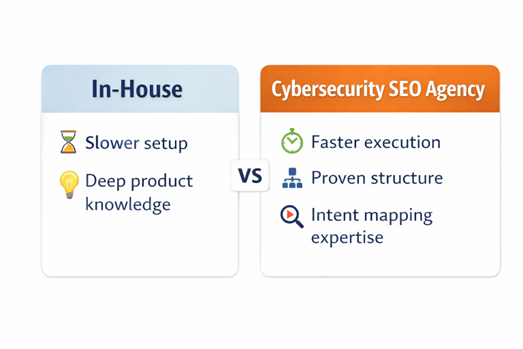
Some teams manage SEO internally. Others partner with specialists.
In-house teams succeed when:
This model works for mature organizations.
Agencies help when speed and structure matter. They bring tested systems and execution capacity.
A good agency should provide:
Ask agencies for proof, not promises. Evidence matters more than credentials.
Not all services deliver equal value. Evaluation should focus on outcomes.
Strong cybersecurity SEO services include:
Avoid services that focus only on traffic volume. Traffic without trust rarely converts.
SEO results take time in the security markets. Patience and consistency matter.
Typical progress looks like this:
Results vary by competition and execution quality. Clear expectations reduce frustration.
Cybersecurity SEO works when structure, trust, and clarity come together. It is not about publishing more content or chasing every keyword. Security buyers need answers that reduce risk and uncertainty. They look for proof, transparency, and clear next steps.
Strong results come from intent-based content planning. They also depend on solid technical foundations and credible messaging. When pages load fast and feel reliable, trust forms naturally. When content explains real use cases, buyers stay longer.
Conversion happens when CTAs match the buyer’s research stage. Pushing demos too early often breaks that trust. The most successful teams treat SEO as a system. That system connects content, behavior, and decision signals.
To improve this system, you need visibility into real user actions. Assumptions are never enough in security markets. This is where behavioral data becomes critical. Understanding how users navigate and hesitate changes everything.
If you want clearer insight into user journeys and conversion friction, explore CausalFunnel. We help teams turn traffic into qualified opportunities using real behavior data.
Cybersecurity SEO is about helping security companies show up in search results. It focuses on topics people actually research, like threats, compliance, and protection. The goal is to reach serious buyers, not casual readers.
Most buyers start with research before talking to a vendor. If your site doesn’t appear early, you’re out of the conversation. SEO helps build trust before sales ever get involved.
Yes, RFQ-focused pages perform better. They reduce buyer hesitation and increase engagement. Search engines reward pages that prepare buyers to act.
Keywords tied to real problems perform better than broad terms. Searches around audits, breaches, and managed security convert well. Longer queries usually bring fewer clicks but better leads.
Security content has to be accurate and clear. Search engines favor proven expertise in this industry. Generic pages rarely earn trust or rankings.
Start using our A/B test platform now and unlock the hidden potential of your website traffic. Your success begins with giving users the personalized experiences they want.
Start Your Free Trial

Empowering businesses to optimize their conversion funnels with AI-driven insights and automation. Turn traffic into sales with our advanced attribution platform.
Trusted by Customers


©CausalFunnel Inc. All rights reserved.