



Free Funnel Audit
Convert more customers today!
SEO
10 mins read

SEO
10 mins read
You don’t fix conversions by guessing you fix them by testing what actually works. To get more people to buy, you need to do split testing on your landing page. A lot of marketers assume and fail. A/B testing takes away the guessing and provides you with the factual answers.
This blog shows you how to use 11 effective A/B tests to make your landing pages better. You will learn useful methods and tips that you may use right away.
You can compare two or more versions of a landing page with split testing (A/B testing). By showing different variations—like headlines, images, or CTAs you can see which one drives more purchases or signups.
This helps you make decisions based on real data, not guesswork. Without testing, marketers rely on assumptions, which often leads to missed sales and wasted traffic.
Benefits of split testing:
Many top-performing websites use split testing to stay ahead. It creates trust and optimizes user experience.
A strategic approach ensures tests deliver meaningful results. Random changes rarely improve performance. Follow these steps for better testing results.
Step 1: Define Your Goals
Step 2: Identify Key Metrics
Step 3: Choose Variables to Test
Step 4: Segment Your Audience
Step 5: Decide on Test Duration
Step 6: Analyze Results
Strategic testing prevents wasted time and ensures actionable insights.
This guide covers 11 A/B tests that drive results. Each test includes practical examples and tips. You will learn:
Following these tests systematically removes guesswork. You can make data-driven decisions confidently.
Testing certain parts of a landing page can help you figure out what really makes people convert. Small changes often lead to significant improvements in user behavior and results.
Here are 11 useful A/B tests that take the uncertainty out of things and boost performance. Every test comes with useful advice to help you make adjustments that work.
The first thing people see when they arrive is the headlines. They make a big difference in how people feel about your site and whether they remain or go. Trying out several forms of headlines might help you figure out which ones get people’s attention the fastest. Try headlines that focus on benefits and make it apparent how they will help the user.
Tips for headline testing:
Why it works:
Strong headlines improve engagement and guide users deeper into the page.
CTA buttons let people do what you want them to do on your page. Even modest adjustments to the text or design might have a big effect on conversions. Testing several versions of your CTA might help make things clearer and less confusing.
Best practices:
Why it works:
Clear and visible CTAs increase clicks and make decisions easier.
Hero visuals create a strong first impression within seconds. They communicate your message faster than text alone can achieve. Testing different visual styles helps improve engagement and trust.
Testing ideas:
Why it works:
Relevant visuals build trust and help users understand your offer quickly.
Forms are important for getting user information and making leads. But extensive forms can make people less likely to finish the procedure. Testing different forms helps find a balance between collecting data and making things easy for users.
Testing tips:
Why it works:
Optimized forms reduce friction and increase completion rates effectively.
Social proof builds trust and influences user decisions quickly. Visitors often rely on others’ experiences
Testing ideas:
Why it works:
People trust real experiences, which increases confidence and conversions.
Trust indicators reduce hesitation and make users feel more secure. They are especially important for transactions or form submissions. Testing helps identify the most effective trust signals for your audience.
Tips for testing:
Why it works:
Trust signals reassure visitors and reduce bounce rates significantly.
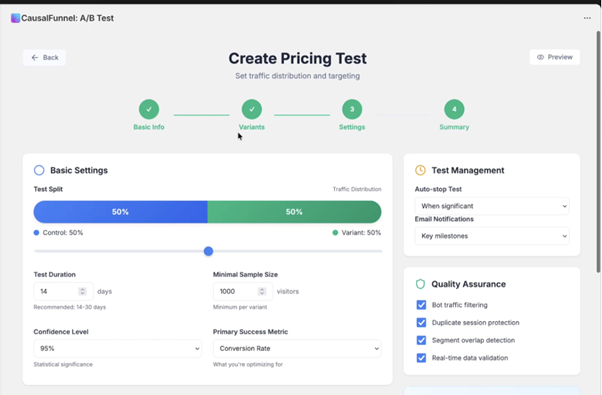
Alt text: CausalFunnel A/b Testing for pricing page
Pricing presentation strongly influences user purchase decisions. Clear and simple pricing reduces confusion and hesitation. Testing different formats helps identify what drives more conversions.
Testing suggestions:
Why it works:
Clear and attractive pricing improves decision-making and increases sales.
Page layout affects how users read and interact with content. A structured layout improves visual and cognitive flow how easily a user’s eyes move across the page and how quickly they understand what to do next. It guides users step by step, usually from headline → key benefits → supporting details → call-to-action.
Good flow reduces confusion, keeps attention focused, and makes the decision process feel natural. Without it, users may feel lost, miss important information, or leave without taking action.keeps users engaged longer. Testing layout variations helps improve readability and conversions.
Testing ideas:
Why it works:
A clean layout guides users smoothly and reduces confusion.
Too many options can distract users from taking action. Reducing distractions helps users focus on the main goal. Testing navigation changes can significantly impact conversion rates.
Testing tips:
Why it works:
Focused pages keep users on track and increase conversions.
Videos can engage users more effectively than static content. However, they may impact page speed if not optimized properly. Testing both formats helps identify what works best for your audience.
Testing ideas:
Why it works:
Videos improve understanding and increase user engagement levels.
Exit-intent popups target users before they leave your page. They help capture leads that would otherwise be lost. Testing different popup strategies improves effectiveness over time.
Testing tips:
Why it works:
Exit popups recover abandoning visitors and increase lead generation.
The right tools simplify testing and provide actionable insights for marketers.
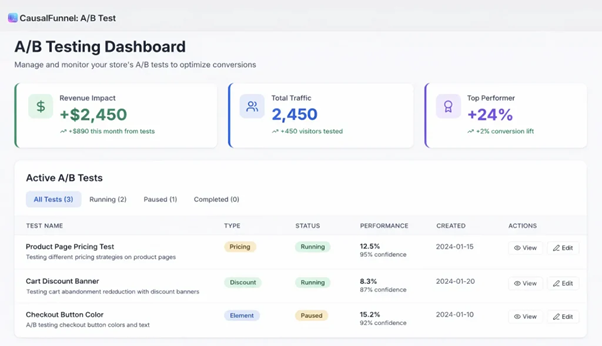
CausalFunnel is an AI-powered, code-free platform for A/B testing. It works across Shopify, WordPress, and other e-commerce platforms.
Marketers can test elements like CTA buttons, product descriptions, and layouts. AI automatically identifies and deploys the highest-converting variations.
Key Features:
Key Features:
Key Features:
Key Features:
Why these tools work: They save time, provide accuracy, and give marketers clear insights to improve conversions.
Even experienced marketers sometimes make mistakes that reduce A/B test effectiveness. Avoiding these errors ensures more accurate results and higher conversions.
Testing Too Many Variables at Once
Focus on testing one element at a time for clarity. Changing multiple elements together can confuse results and mislead decisions. Keep variations simple to understand which change truly impacts conversions.
Not Running Tests Long Enough
Tests must run until statistical significance is achieved for accuracy. Short tests often provide unreliable or misleading results. Patience ensures data reflects real user behavior, not random fluctuations.
Ignoring Mobile Users
Always test your landing pages on mobile devices as well. Many visitors browse primarily on smartphones or tablets. Mobile responsiveness directly affects user engagement and conversion rates.
Neglecting Audience Segmentation
Segment traffic by behavior, source, or demographic for accurate insights. Segmentation ensures results reflect real audience preferences and patterns. Without it, you may optimize for the wrong visitor group.
Relying on Guesswork
Decisions should always be data-driven, not based on assumptions. Guessing wastes traffic and can reduce overall conversion rates. Use insights from tests to make informed, profitable improvements.
Landing page split testing removes guesswork from your decisions. It replaces assumptions with clear and measurable insights. Each test reveals something useful about user behavior. Over time, these insights improve your overall performance.
Many marketers now use AI powered Platforms with their testing processes that help you accelerate growth in the market. These tools analyze patterns faster and find hidden opportunities. They suggest improvements based on real user behavior. This makes testing faster and more efficient.
AI does not replace strategy or human decision-making. You still need clear goals and a structured testing plan. Data and AI together create a strong optimization system.
Start with simple tests and scale as you learn. Focus on clarity and user experience in every variation. Small changes often lead to meaningful conversion improvements.
Consistent testing supports long-term growth and better conversions. Keep testing regularly and learn from each result. Let data guide your strategy and future decisions.
A/B tests should continue until results reach statistical significance. Typically, 2–4 weeks is enough to gather reliable data for most pages.
Test one element at a time for the most accurate results. Multivariate testing is possible but requires more traffic and longer duration.
Yes, you can test multiple versions if traffic is sufficient. More variations need extended testing periods to ensure result accuracy.
Segment traffic to understand different user behaviors and preferences. Paid, organic, and social visitors often interact differently with pages.
Conversion rate is the primary metric to measure landing page success. Secondary metrics include engagement, clicks, and bounce rate for deeper insights.
Start using our A/B test platform now and unlock the hidden potential of your website traffic. Your success begins with giving users the personalized experiences they want.
Start Your Free Trial

Empowering businesses to optimize their conversion funnels with AI-driven insights and automation. Turn traffic into sales with our advanced attribution platform.
Trusted by Customers


©CausalFunnel Inc. All rights reserved.