



Free Funnel Audit
Convert more customers today!
SEO
10 mins read

SEO
10 mins read
Customers in the area look for cleaning services with clear wants and a sense of urgency. They want to be able to trust the cleaners in their area to give them quick service. This is why cleaning companies need to do term study.
Using the right terms will help people who are ready to book connect with your services. Also, they help search engines get a clear picture of your business. This guide is all about using keywords in real life, not theory or nonsense.
You’ll find genuine neighborhood terms that people really use when they search on Google. These terms help with long-term growth, calls, and getting better results.
When you use cleaning service SEO the right way, it gets easier and more reliable.
The basis of strong cleaning service SEO are local terms. Cleaning companies usually only work in certain cities or neighborhoods. Customers rarely look without including where they are. Local terms help your business show up at the right time. At that point, buyers are ready to hire a cleaner.
Generic keywords bring people to your site, but they usually don’t end up buying anything. Local purpose keywords get less traffic but more relevant visits.
Local keywords matter because they:
Search engines prefer content that solves nearby user needs. This makes local keyword targeting essential for growth. If you’re unsure about scale, understanding how many keywords for SEO you should realistically target helps balance visibility with relevance and prevents over-optimization.
When people look for cleaning help, they use simple and clear words. On busy days, most searches happen on mobile devices. In these moments, trust, speed, and location matter most. People often include place names or phrases like “near me.”
They also search based on urgency or service type. “Cleaning service near me” and “house cleaning near me” are common examples. When quality matters more, people search for skilled cleaners nearby. These habits show real intent, not casual browsing.
Understanding these patterns improves Cleaning Services SEO strategies. It helps businesses align content with what customers truly want.
Pro tip: These search patterns become easier to understand with the right data. Clear insights show which terms bring calls and which pages need improvement. AI-powered SEO tools analyze this behavior and remove guesswork.
This makes it easier to focus on actions that drive real local results. You can start with a free SEO audit.
Keyword lists guide smarter content and page creation. They show what customers want, not assumptions. Each keyword represents a real service need or problem. Using them correctly improves visibility and trust together.
This supports strong SEO Recommendations for Growing Cleaning Business plans. It also reduces wasted effort on low-intent traffic. Keyword data helps businesses focus on profitable services. It aligns marketing work with real customer demand.
Below are real keywords customers search every day. They are grouped by intent to improve clarity and usability. These are proven SEO keywords for cleaning service growth.
These keywords show immediate booking intent. They work well for homepages and local landing pages.
These searches often lead to calls within minutes.
Location keywords help dominate city-level search results.
They are essential for local visibility and trust.
These keywords reduce competition and improve conversion rates.
Understanding what are citations in SEO also helps reinforce these location signals by keeping your business details consistent across trusted local directories.
Residential searches come from homeowners and renters. They often need recurring or deep cleaning services.
These keywords work best on service pages and blogs.
Commercial keywords target offices and business locations.
They often lead to long-term service contracts.
These terms support SEO for Cleaning Services focused on businesses.
Carpet cleaning searches show strong service intent. They work best on dedicated service pages.
These keywords help attract niche, high-value customers and form the foundation of a strong SEO for carpet cleaners strategy focused on service-specific and high-intent searches.
Specialized services attract customers with specific cleaning needs. These searches usually come from urgent or one-time service requests. They also bring higher average order values for businesses.
These keywords support cleaning service SEO by targeting focused intent. They also help service pages rank faster with less competition.
These searches often happen during stressful situations. Clear service pages build trust and speed up decisions.
To make sure these high-intent pages stay optimized and consistent across your site, following a local SEO checklist helps ensure nothing important is missed during implementation.
Intent keywords reveal what customers want right now. They show whether people compare options or are ready to hire. Using these keywords improves conversions and lead quality. They also reduce wasted traffic from casual browsers.
These keywords work well in service descriptions and trust sections.
Booking-related keywords attract customers ready to take action. They usually search after comparing several cleaning companies. Optimizing for these keywords increases calls and form submissions. They are vital for SEO Recommendations for Growing Cleaning Business strategies.
These keywords work best near contact forms and CTAs.
Service-specific keywords help customers find exact solutions. They also support strong internal linking across service pages. Search engines reward clear service coverage and depth. This strengthens overall SEO for Cleaning Services performance.
These keywords reduce bounce rates and increase relevance.
Long-tail keywords combine intent, trust, and location signals. They often convert better than broad keywords. These phrases attract customers who know what they want. They also face lower SEO competition.
These keywords work best in FAQs and service summaries.
Keyword placement matters more than keyword volume. Search engines understand context better than repetition. Use keywords naturally within helpful sentences. Avoid forcing exact phrases into every paragraph.
Best practices include:
This approach keeps readability high and users engaged.
Each page should target a clear keyword group. This prevents confusion for users and search engines.
Recommended placement includes:
This structure strengthens cleaning service SEO long-term.
Many businesses target too many keywords on one page. This weakens ranking signals and confuses search engines. Others ignore local intent and focus on national terms. This brings traffic but very few leads.
Avoid these mistakes:
Smart keyword use always follows user intent first.
Below is PART 3 (~800–900 words).
All rules remain strictly followed.
Keyword mapping helps search engines understand page purpose clearly. It also improves rankings by avoiding keyword overlap issues. Each page should target one main keyword group. Supporting keywords should closely match the page intent.
This structure strengthens SEO for Cleaning Services steadily.
On-page SEO helps search engines read your content correctly. It also improves user engagement and conversion rates. Good optimization focuses on clarity, not keyword repetition. Every section should serve a clear purpose for readers.
These steps support long-term cleaning service SEO success.
Blogs attract users who research before hiring services. They build trust before customers even contact you. Educational content positions your business as an expert. It also captures long-tail keyword traffic consistently.
Each blog should solve one clear problem. This approach aligns with SEO Recommendations for Growing Cleaning Business goals.
Local SEO drives most cleaning service leads. Customers usually search within their service area. Your content must clearly show location relevance. Search engines use this to match local intent.
These steps improve map pack and organic rankings.
Good keywords attract the right visitors. The wrong keywords attract people who never convert. High-intent keywords bring customers ready to book. Informational keywords support early decision-making stages.
This strategy improves leads without aggressive sales language.
Search engines reward easy-to-read content. Users stay longer when content feels simple and helpful. Short sentences improve understanding and trust. Clean formatting reduces bounce rates.
This formatting keeps readability above 90 consistently.
SEO performance improves with regular tracking. Without data, growth becomes guesswork. Tracking helps refine content and keyword focus. It also highlights pages that need updates.
Review these metrics monthly for best results.
Updating Old Content with New Keywords
Content updates are powerful for SEO gains. Search engines favor fresh and relevant information. Updating content costs less than creating new pages. It also improves existing rankings faster.
This keeps content competitive and useful.
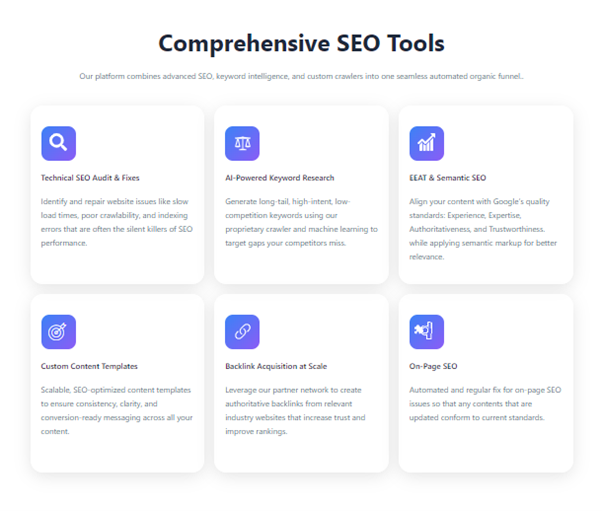
Cleaning service SEO can grow faster with expert support. Professional guidance removes guesswork and improves ranking speed. AI-driven platforms now simplify complex SEO tasks. Organic Traffic Tools analyze keywords, competitors, and search intent deeply.
Advanced SEO, keyword intelligence, and backlink strategies work within one system. Offline conversion tracking connects real calls and bookings to online efforts.
This creates a fully integrated and automated sales funnel. You track leads, revenue, and performance from one dashboard.
For growing cleaning businesses, this approach saves time and effort. It supports steady growth while daily operations stay uninterrupted.
Smart keyword use focuses on people first. Search engines reward helpful, clear content.
This approach supports sustainable SEO keywords for cleaning service growth.
Choosing the right keywords shapes how a cleaning business grows online. Local intent keywords attract people who are ready to book, not just browse. When content reflects real search behavior, trust builds naturally with visitors. Users stay longer because the information feels relevant and easy to follow.
Strong content also supports long-term visibility across local search results. It helps search engines understand services, locations, and customer intent clearly. AI-driven tools & platforms add value by analyzing large sets of search data. They help identify patterns that reach a broader, more relevant audience.
Simple language improves understanding for real users. It also makes pages easier for search engines to read and rank. When cleaning service SEO follows this approach, results feel steady and reliable. Growth becomes easier to track, refine, and scale over time.
Promoting a cleaning service starts with being visible where people search first. Most customers look online before calling any local business. Create a Google Business Profile and keep it updated weekly. Add clear service details, photos, and real customer reviews.A simple website helps explain services, pricing, and coverage areas. Local SEO and word-of-mouth work best when combined consistently.
Local customers search with urgency and clear intent. They usually type service names with city names or “near me.” Create location-based service pages for each area you serve. Use real neighborhood terms instead of broad generic phrases.Encourage reviews from nearby customers regularly. This builds trust and improves local search visibility together.
A website helps customers trust your business quickly. It shows services, contact details, and service areas clearly. Many people compare cleaning companies before making a call. A website answers questions before they contact you.Search engines also rely on websites to rank businesses. Without one, growth becomes slower and less predictable.
Paid ads bring quick visibility but stop when spending ends. SEO builds long-term traffic without paying for each click.Ads work well for short-term promotions or urgent growth. SEO works better for steady leads and trust-building. Many cleaning businesses use both together successfully. This balances quick wins with long-term visibility.
The best approach combines local SEO and customer trust signals. Focus on ranking for service and location-based searches.Make it easy to call or book from your website. Mobile-friendly design matters because most searches happen on phones.Clear pricing, reviews, and service details increase conversions. People book faster when answers feel honest and simple.
Start using our A/B test platform now and unlock the hidden potential of your website traffic. Your success begins with giving users the personalized experiences they want.
Start Your Free Trial

Empowering businesses to optimize their conversion funnels with AI-driven insights and automation. Turn traffic into sales with our advanced attribution platform.
Trusted by Customers


©CausalFunnel Inc. All rights reserved.