


Free Funnel Audit
Convert more customers today!
SEO
10 mins read

SEO
10 mins read
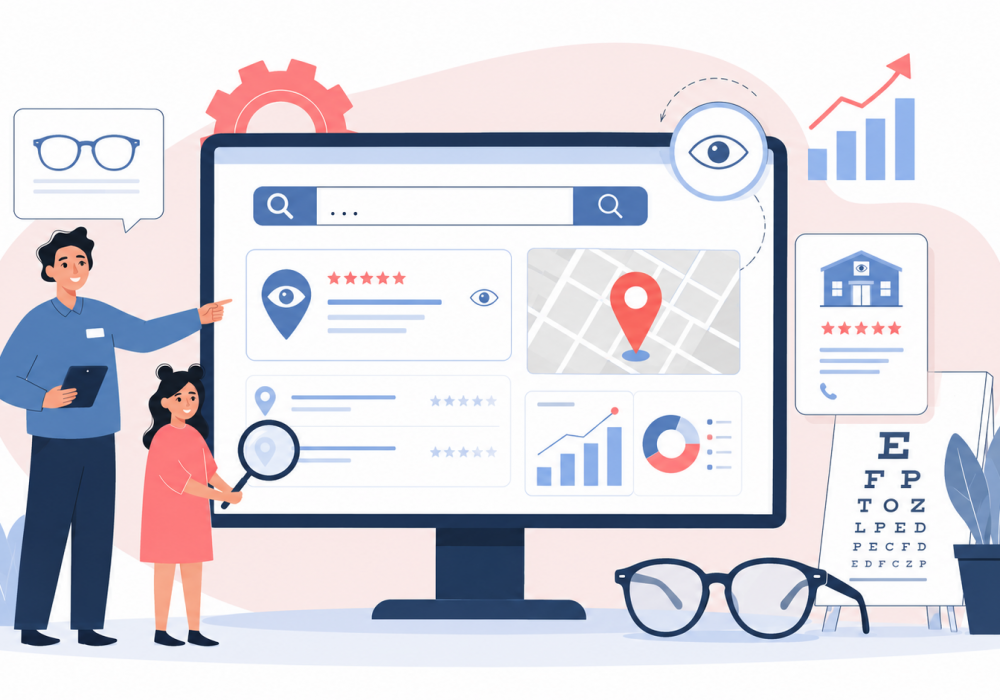
Your next patient is probably searching on Google right now.
They may need an eye exam, new glasses, contact lenses, or help with dry eyes. They may type an optometrist near me, eye doctor near me, or eye exam near me and choose from the first few results.
That is why SEO for optometrists matters. It helps your practice appear when local patients are ready to book, not just browse.
A strong optometrist SEO strategy makes your website easier to find, easier to trust, and easier to act on. It connects patients with the right service page, clear reviews, doctor details, and simple booking options. Ready to make your practice easier to find online? Visit CausalFunnel to create a smarter SEO plan built for visibility, patient leads, and appointment growth.
SEO means search engine optimization. It is the process of improving your website and online presence so people can find you through search engines.
For optometrists, SEO includes much more than blog writing. It includes your website pages, Google Business Profile, online reviews, local listings, technical setup, and patient-focused content.
When someone searches for SEO for eye doctors, they usually want to know how an eye care practice can rank higher online. They may also want more calls, more appointments, and better local visibility.
A good SEO plan helps your practice appear for searches like:
These searches matter because they often show patient intent. Many people using these terms are close to choosing a provider. But ranking alone is not enough. Your page must also answer questions, reduce doubt, and make booking easy. That is what turns search visibility into real patient growth.
Optometry is a local service. Most patients want an eye doctor near their home, office, or child’s school. They also want a clinic that looks active, trusted, and easy to contact.
If your practice does not appear in local search results, patients may never know you exist. Even if you provide excellent care, poor visibility can hold your practice back.
SEO helps fix that problem.
It can help your practice show up when patients need care. It can also support services that bring strong value to your clinic, such as contact lens exams, dry eye care, eyewear, myopia management, and routine eye exams.
A good optometry SEO strategy can help you:
Paid ads can bring quick traffic. But once the budget stops, the traffic stops too. SEO takes longer, but it can build lasting value over time.
That is why many practices use SEO as a long-term growth channel.
Patients search in different ways. Some know exactly what they need. Others only know they have a problem.
For example, a person searching for an eye exam near me is likely ready to book. A person searching “why are my eyes dry every morning” may still be learning. Both people can become patients. But they need different pages. This is called search intent. It means the reason behind a search.
Your website should match each search with the right page. A service page works best for someone ready to book. A blog post works better for someone asking a question.
Here is a simple example:
| Patient Search | What They Want | Best Page |
| Optometrist near me | Find a local clinic | Homepage or location page |
| Eye exam near me | Book an exam | Eye exam service page |
| Contact lens exam near me | Schedule contact care | Contact lens page |
| Dry eye treatment in city | Find treatment nearby | Dry eye service page |
| Why are my eyes dry | Learn about symptoms | Blog post |
| Child eye exam age | Learn about child care | Pediatric eye care article |
This structure makes your website more useful. It also helps search engines understand which page should rank for each search. Your homepage cannot do everything. It should explain your practice and guide visitors to the right pages. Your service pages should answer specific patient needs in more detail.
Keyword research helps you understand how patients search. This matters because doctors and patients often use different words.
A doctor may think in clinical terms. A patient usually searches with simple words. For example, patients may not search for “ocular surface disease.” They may search for “dry eyes,” “burning eyes,” or “dry eye treatment near me.” Good keyword research helps you meet patients where they are.
For optometry websites, useful keyword groups include:
| Keyword Type | Examples | Best Use |
| Local keywords | optometrist near me, eye doctor in city | Homepage and location pages |
| Service keywords | eye exam, contact lens exam | Service pages |
| Treatment keywords | dry eye treatment, myopia management | Treatment pages |
| Product keywords | prescription glasses, optical services | Optical pages |
| Blog keywords | how often to get eye exams | Educational articles |
| Brand keywords | practice name, doctor name | Homepage and bio pages |
Use your primary keyword naturally. SEO for optometrists can fit in the title, intro, and conclusion. Optometrist SEO can appear where you discuss strategy. Related keywords like optometry SEO services, eye doctor SEO, and local SEO for optometrists can help too. But they should never feel forced.
The best content sounds like it was written for people first. Keywords should support the message, not control it.
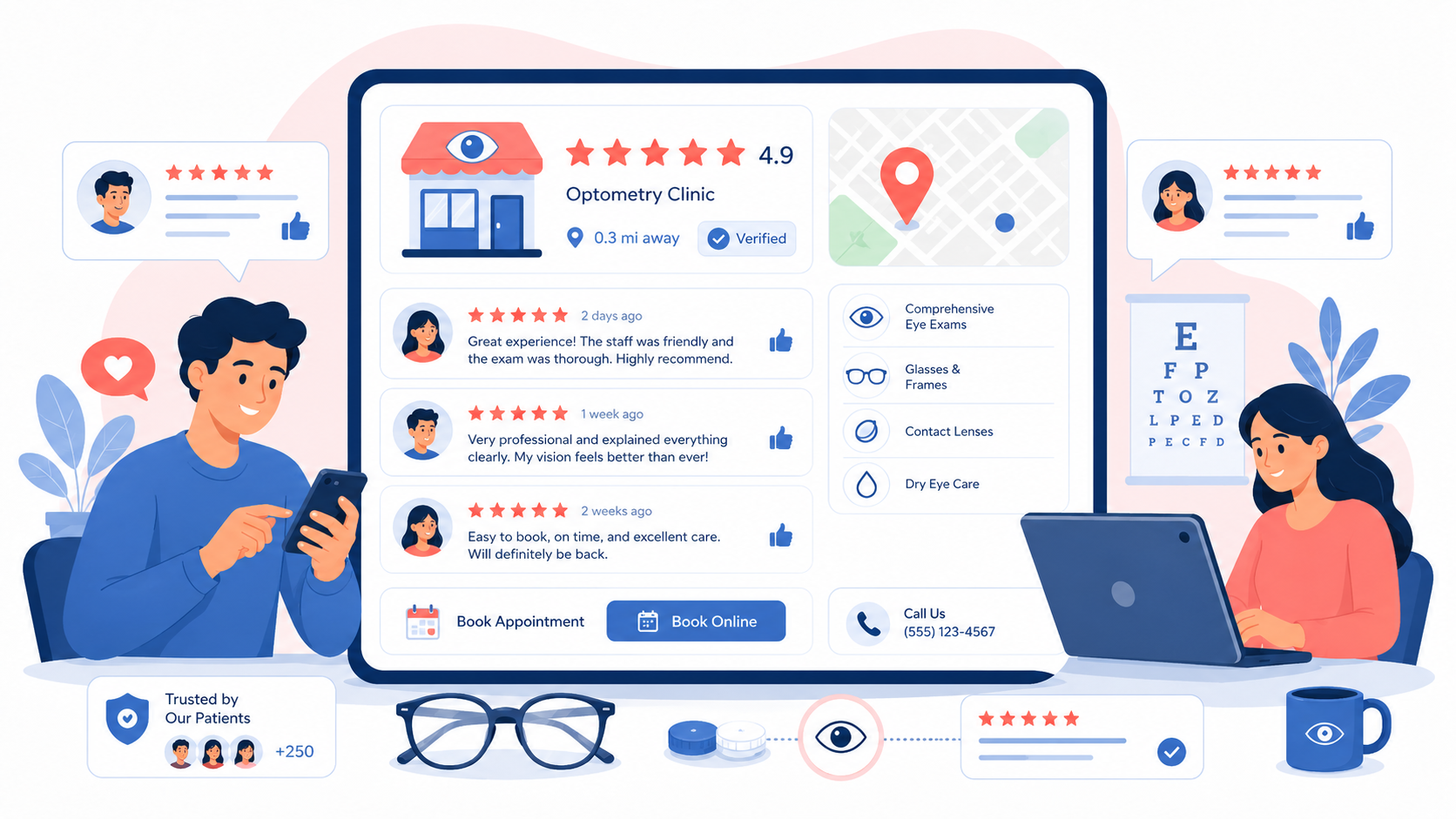
Local SEO is one of the most important parts of optometry marketing. Most patients choose a clinic nearby, so your local presence must be strong. Your Google Business Profile is a key part of this. It often appears in map results before a patient visits your website.
Your profile should be complete and accurate. Add your practice name, address, phone number, website, hours, services, and appointment link. If your hours change during holidays, update them early.
Photos also matter. Add real images of your clinic, exam rooms, eyewear area, front desk, and team. These photos help patients feel more comfortable before they visit.
Your profile should also include services like:
Reviews play a major role in local trust. A practice with recent reviews often feels more active and reliable. Responding to reviews also shows that your team listens.
You should also keep your business details consistent across the web. This is called NAP consistency. NAP means name, address, and phone number. Wrong details can confuse patients. They may call an old number or visit an old address. Clean local listings make your practice easier to trust.
If you have more than one location, create a separate page for each clinic. Each page should include unique details, not copied text. Add the doctor names, services, address, phone number, parking details, and nearby landmarks. This helps patients choose the right office faster.
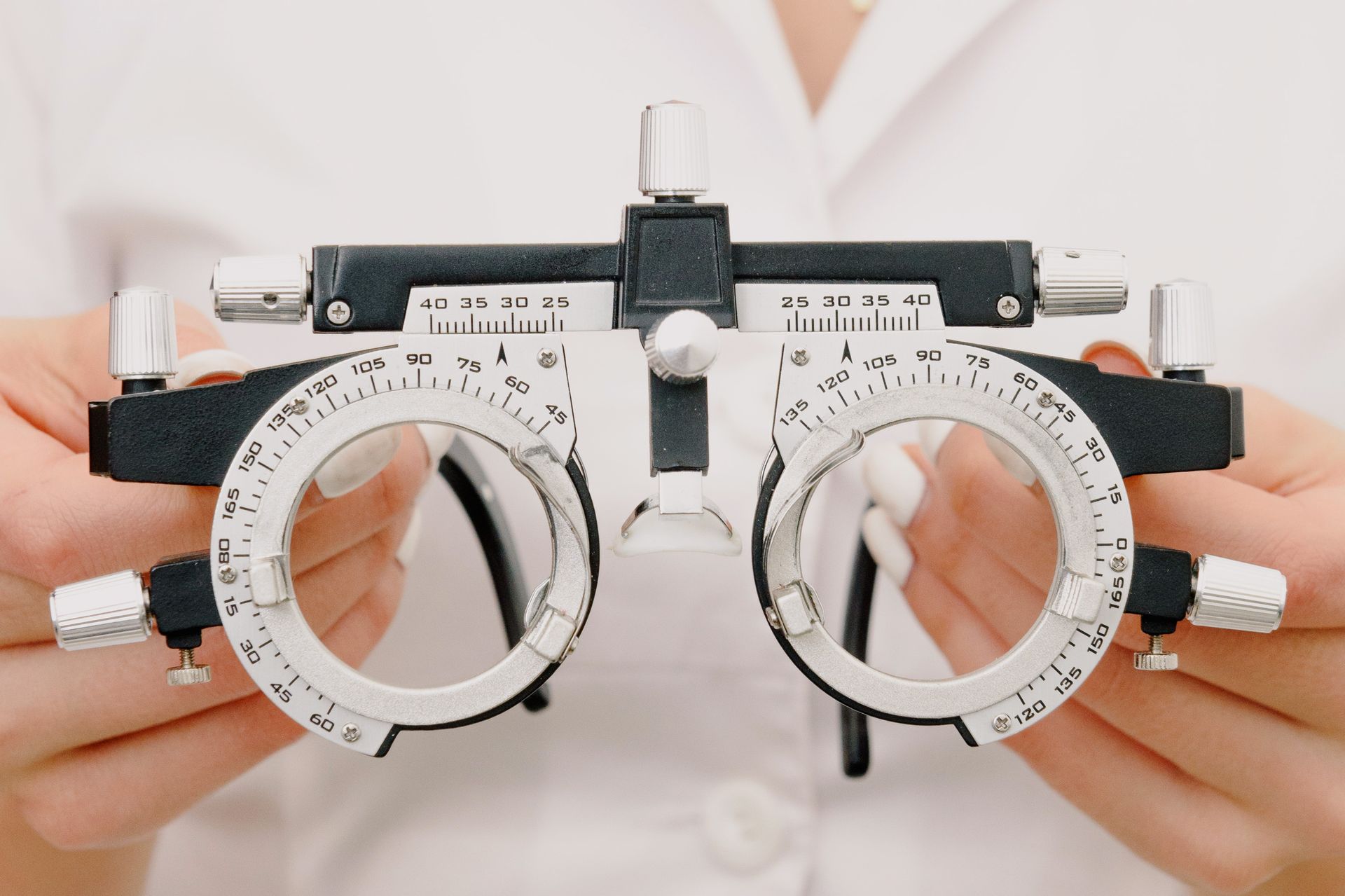
On-page SEO means improving each page on your website. It helps both patients and search engines understand your content. Each important service should have its own page. Do not place every service on one long general page.
A strong optometry website may include pages for:
Each page should answer simple patient questions. What is the service? Who needs it? What happens during the visit? How can someone book?
Clear answers reduce doubt. They also help patients feel more ready to schedule. Your title tags and headings should also be clear. Avoid clever titles that hide the meaning. A simple heading like “Contact Lens Exams in Austin” is often stronger than something vague.
Good on-page SEO includes:
Your page should never make patients guess. They should understand the service and know what to do next.
Technical SEO helps your website work well behind the scenes. It affects speed, mobile use, security, site structure, and crawlability.
Patients may not know what technical SEO is. But they notice when your website is slow, broken, or hard to use.
Many local searches happen on phones. A patient may be searching during lunch, after work, or between errands. Your website must load fast and work well on mobile.
Focus on practical improvements first:
| Technical Area | What to Improve | Why It Helps |
| Speed | Compress images and reduce heavy files | Pages load faster |
| Mobile use | Make buttons easy to tap | Booking gets easier |
| Security | Use HTTPS | Builds trust |
| Menus | Keep navigation simple | Patients find services faster |
| Broken links | Fix dead pages | Improves user experience |
| Schema | Add business data | Gives clearer search context |
| Forms | Keep forms short | Reduces lost leads |
Schema markup can help search engines understand your practice details. It can describe your location, services, hours, and reviews. Internal links also help your site structure. A dry eye blog can link to your dry eye service page. An eye exam page can link to contact lens exams.
These links help patients move through your website naturally.
Helpful content can bring patients to your website before they are ready to book. Many people search because they have a question, symptom, or concern. Your content should answer those questions in plain language. It should not sound like a textbook. It should feel like useful guidance from a trusted eye care team.
Good blog topics may include:
Each post should focus on one clear question. Do not try to cover too many topics at once. Good content also builds trust. Add doctor bios, reviewer names, update dates, and real practice photos when possible. Avoid making big claims. Patients want honest guidance, not pressure.
Reviews help patients decide if they can trust your practice. Many people read them before calling or booking.
A simple review process can make a big difference. Ask happy patients after a positive visit. Send a short review link by text or email. Keep the request polite and easy. Do not offer rewards or pressure patients. Respond to reviews in a professional tone. Thank patients for positive feedback. For negative reviews, stay calm and invite the person to contact your office. Never share private patient details in a public reply.
A steady review system can improve trust and support local visibility. It also shows that your practice is active and engaged.
Backlinks are links from other websites to your site. They can help search engines understand your authority. For optometrists, quality matters more than quantity. A few trusted local links can be more useful than many weak links.
Good backlink sources may include:
Do not buy random bulk links. They often look spammy and may hurt trust. Internal links also matter. Link from blog posts to service pages when it helps the reader. This improves navigation and supports stronger page structure.
Ranking is helpful, but appointments are the real goal. Your website should make action simple. Every main page should show a clear next step. Patients should quickly see how to call, book, or ask a question.
Strong conversion features include:
Small changes can improve patient response. A better button can increase bookings. A shorter form can reduce lost leads. SEO should not stop at traffic. It should help patients move from search to care.
SEO should be measured with numbers that connect to growth. Traffic alone is not enough.
Track the actions that matter most to your practice.
Metric | What It Shows |
Organic traffic | Visitors from search |
Local rankings | Visibility in nearby searches |
Phone calls | Patients calling from search |
Form leads | Appointment requests |
Online bookings | Scheduled visits |
Direction requests | Patients planning a visit |
Review growth | Trust growth over time |
Top pages | Pages bringing useful traffic |
Review these numbers each month. Look for patterns, not daily changes. If a page gets visits but no calls, improve the CTA. If a service page gets no visits, improve its content and links. Tracking helps your practice improve with facts, not guesses.
Many optometry practices lose visibility because of simple mistakes. The good news is that most are fixable.
Avoid these issues:
Good SEO removes friction. It helps patients find answers and take action faster.
SEO for optometrists works best when it helps patients first. Your website should make eye care easier to understand. Your local listings should make your practice easier to find. Strong optometry SEO is not built from tricks. It grows through clear pages, accurate details, helpful content, reviews, and trust.
When these parts work together, patients can find you faster. They can also feel more confident before booking. Better rankings are only part of the goal. The bigger goal is steady patient growth. That means more calls, more appointments, and stronger local trust.
If your practice wants a smarter way to grow online, CausalFunnel can help. Visit CausalFunnel to build a stronger SEO growth system.
SEO for optometrists helps eye care practices appear in search results. It improves your website, local listings, reviews, content, and technical setup. The goal is to help more local patients find and contact your practice.
Optometrist SEO often takes several months to show clear results. The timeline depends on your market, website quality, competition, and current local visibility.
Optometrists can get more patients online through local SEO, service pages, reviews, helpful content, and clear booking paths. Each part should help patients find answers and take action.
Reviews can support local trust and patient confidence. They show that your practice is active and valued by patients. A steady review process can also improve local visibility.
SEO and Google Ads serve different goals. SEO builds long-term visibility and trust. Google Ads can bring faster traffic when managed well. Many practices use both together.
Start using our A/B test platform now and unlock the hidden potential of your website traffic. Your success begins with giving users the personalized experiences they want.
Start Your Free Trial

Empowering businesses to optimize their conversion funnels with AI-driven insights and automation. Turn traffic into sales with our advanced attribution platform.
Trusted by Customers


©CausalFunnel Inc. All rights reserved.