



Free Funnel Audit
Convert more customers today!
SEO
10 mins read

SEO
10 mins read
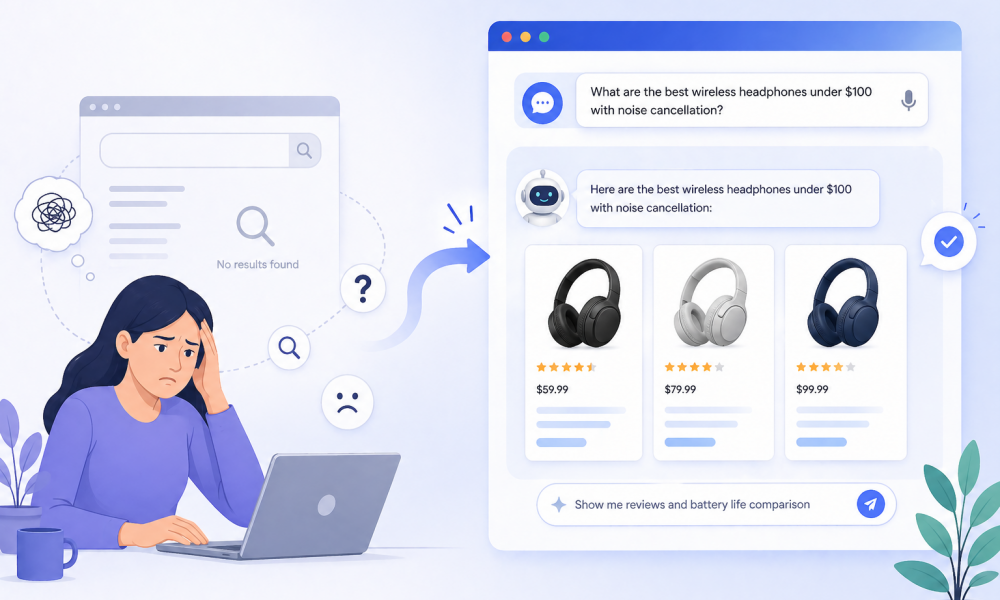
Most website searches fail when users need fast, clear answers and don’t find what they need. They type a question but get confusing or irrelevant results. This creates frustration and makes users leave your site quickly.
You may already see signs like high bounce rates and low engagement. People expect smart search experiences, similar to chat-based tools today. Traditional keyword search often cannot match this growing expectation.
Your website search feels broken because it cannot understand how people actually ask questions, and the fastest fix is learning how to add conversational search to a website using simple, practical steps.
Think about the last time you searched on a site and saw “no results found.” Sounds frustrating, right? Users today expect Google-like answers at just one glance. When your search fails, they leave, and rarely come back.
The good news is this problem is fixable. You do not need a full rebuild, just a smarter way to understand user intent. That is exactly where conversational search comes in.
In this guide, you will learn how to add conversational search to websites easily. Each step is simple, practical, and focused on real results.
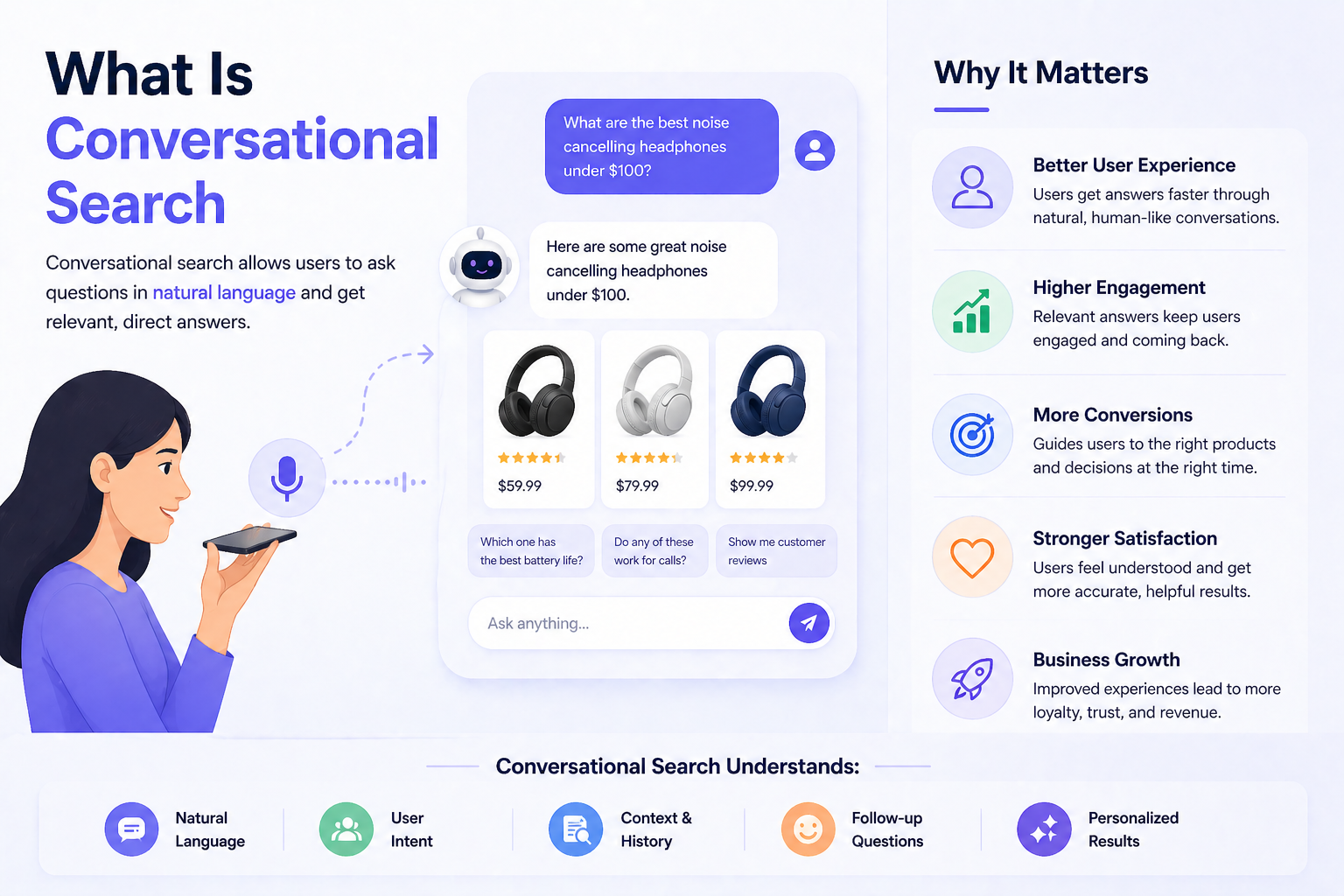
Conversational search is a smarter way of finding information. It lets users interact with your website using natural language. Instead of typing short keywords, users ask full questions due to which the system understands intent, not just words.
For example, instead of typing “refund policy,” users might ask, “Can I return a product after 30 days?”
Traditional search struggles here, but conversational systems do not. This is because the conversational system uses AI and language understanding to connect user intent with the most relevant content on your site. This makes the search experience feel faster, smoother, and more helpful.
Here are other reasons for what makes conversational search different:
This matters because user behavior has changed therefore, the shift is not just about technology, but about user expectations today. People now expect websites to understand them, not just respond mechanically.
People now talk to search, not just type, and if your website cannot keep up, users feel lost. Once users feel lost, they leave.
Most website search tools fail for one simple reason and that is they were built for keywords, not conversations. They expect users to guess the exact words your system understands which creates friction right at the moment users need quick help.
Let’s think about a situation where you might have typed something on your own website and got weird results. That is very common with most of the websites.
These failures mostly happen across ecommerce, SaaS, and content-heavy websites. For example, a shopper searches for “running shoes for flat feet.” The system may only match “shoes,” ignoring the real intent completely. But a conversational system will show running shoes for flat feet with recommendations.
Here are the most common reasons your search is not working well:
These issues create a frustrating experience that users remember. They stop trusting your site and look for answers elsewhere. Fixing this problem starts with understanding how users actually search today.
Conversational search solves these issues by thinking more like a human. Instead of matching words, it understands meaning, and that changes everything.
Here is how it improves the experience:
This is just like upgrading from a basic calculator to a smart assistant. Same purpose, but a completely different experience.
Adding conversational search may seem complex, but the process is manageable. The process is not expensive, you don’t need a developer and adding a conversation search to your website won’t break your site. You just need a clear approach and the right tools in place.
Just follow these steps to implement it effectively on your website.
Start by selecting a reliable conversational AI platform for your website. The tool should understand natural language and deliver accurate responses. Look for platforms that offer strong integration with your current systems.
Look for tools that offer:
Choosing the right tool sets the foundation for long-term success. Some tools focus only on chat, while others combine search, AI, and analytics.
Platforms like CausalFunnel go a step further. They do not just answer queries, they analyze user behavior and improve conversions using AI-driven insights.
That matters if your goal is not just search, but growth.
This step is often skipped, and that is a mistake. Even the best AI cannot work with messy content.
Therefore, your content must be structured clearly for AI to understand it well. Unorganized content often leads to poor search performance. Clean structure helps conversational search deliver better answers.
Make sure your content includes:
Preparing your content for AI search is just like cleaning your room before inviting guests. If things are scattered, even a smart system struggles.
This is the reason why well-prepared content improves both SEO and user experience significantly.
Now comes the technical part, but it is not as scary as it sounds.
Connect the conversational search tool with your website systems. This includes your CMS, knowledge base, and other content sources. When your website system is properly integrated with the conversation search tool, it ensures the AI can access all relevant information further giving accurate results to the users.
Most tools offer simple integration options:
You may also need to include different content formats like:
This step ensures complete coverage across your entire website.
The goal of this step is simple and that is to give the AI access to all your content. If your content lives in different places, connect them because that is how the system gives complete answers.
This is where conversational search becomes powerful. You need to train the system using real user intent.
The goal is to help it understand different ways users ask questions. This improves accuracy and reduces irrelevant search results over time.
Training should include:
This step makes your search smarter and more responsive.
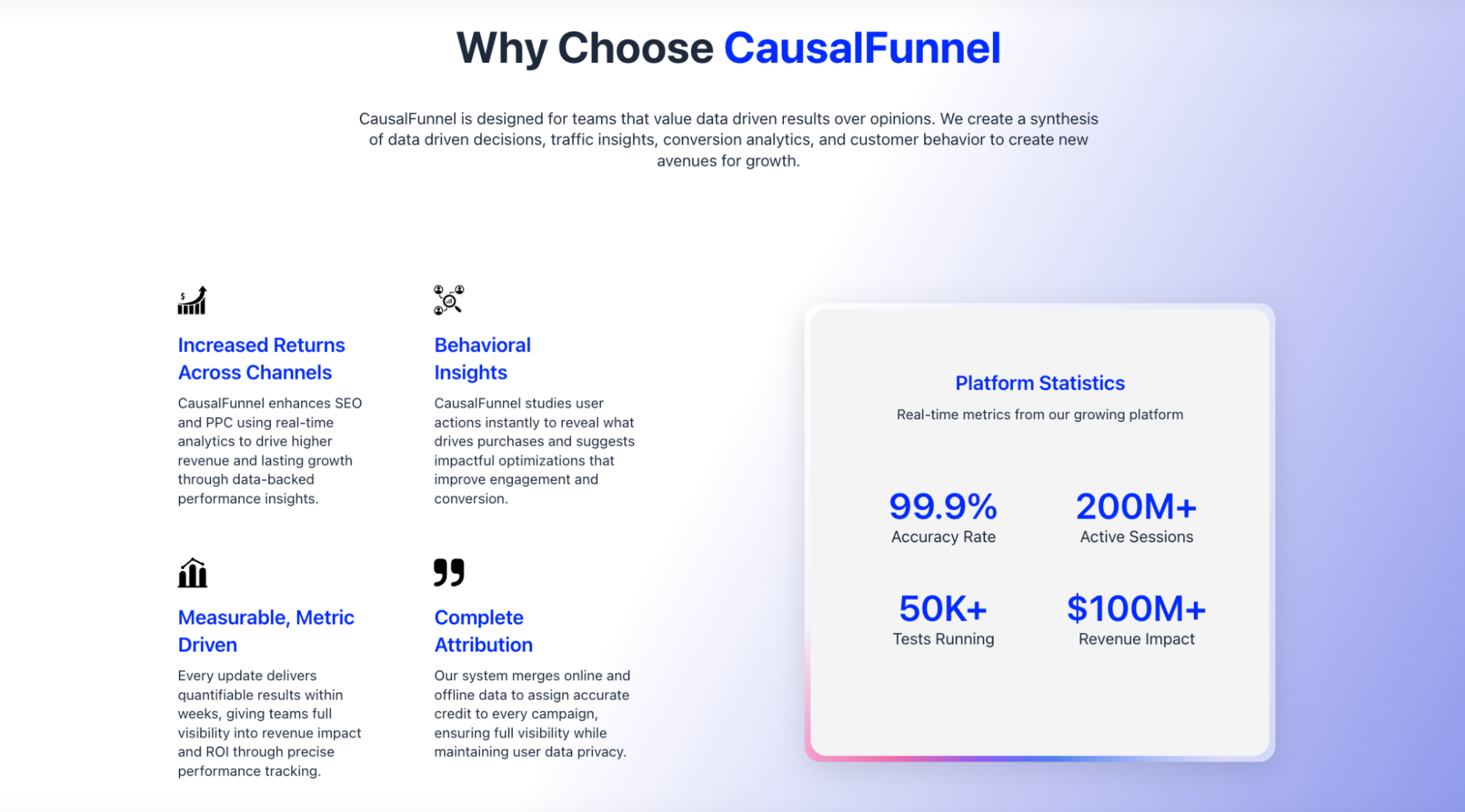
Good platforms like CausalFunnel use behavioral analysis to map user intent automatically. They identify drop-offs and suggest improvements. That saves time and improves accuracy faster.
Before launch, test everything.
Testing is critical before you fully launch conversational search. You need to identify weak areas and improve them quickly. This ensures a smooth experience for real users later.
Focus your testing on:
Check what fails, and fix those gaps. Fixing these gaps early improves overall performance significantly. This step feels tedious, but it makes a huge difference showing you if your efforts are actually working.
Once testing is complete, you can launch conversational search live. However, the work does not stop after launch. Continuous monitoring is necessary for long-term success.
Track important metrics like:
Use this data to improve the system over time consistently.
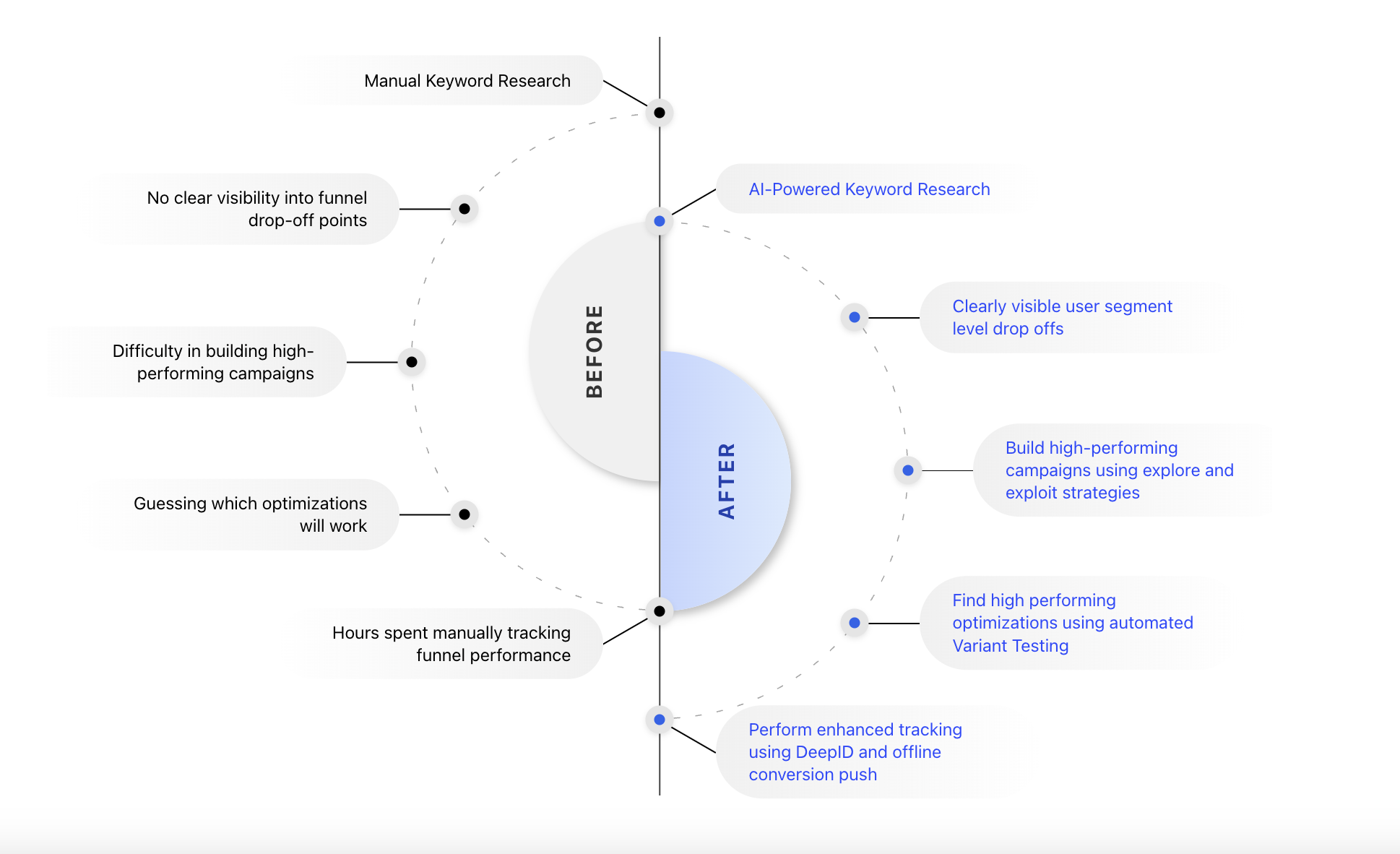
This is where smart platforms shine. Platforms like CausalFunnel help you track user journeys, optimize search results, and improve conversions using real-time insights.
So you are not guessing your progress, but you are improving based on data.
Not all conversational search tools offer the same features. You need features that support both user experience and business goals. Choosing the right features helps you get better long-term results.
Here are features you should never compromise on:
These features ensure your conversational search remains reliable and effective. If a tool lacks these, it will feel like a downgrade, not an upgrade.
Many websites fail because they skip important steps during implementation. Avoiding these mistakes can save time, effort, and resources. It also ensures a smoother experience for your users.
Here are the most common mistakes:
Each mistake can reduce the impact of your conversational search system. Fixing these early improves trust and long-term results.
Once your system is live, optimization becomes the focus. Optimization is where you unlock the full value of conversational search. Basic implementation is not enough for long-term success. You need continuous adjustments and improvement based on real user behavior.
Here is how to improve results over time:
These small nudges can improve conversions significantly.
Conversational search is not a trend, it’s the new standard. Therefore, it will continue to evolve with better AI capabilities. Websites will become more interactive and responsive to user needs, and search will feel less like a tool and more like a real assistant.
Here is where things are heading:
Soon, users will expect websites to talk back intelligently because the future clearly points toward smarter and more intuitive search experiences.
Conversational search helps users find answers faster and more easily. It reduces frustration and keeps visitors engaged for longer sessions. This leads to better outcomes for both users and your business.
But here is something most people overlook. Better search does not just improve experience but also improves revenue. When users find answers faster, they trust your brand more that leads to action.
Platforms like CausalFunnel connect conversational search with conversion optimization. When combined with conversational search, it creates a powerful system. You not only answer questions but also guide users toward meaningful actions. This is how modern websites turn search into a growth engine.
So instead of guessing what users want, you actually know, and that is where real growth begins.
Conversational search allows users to ask questions naturally on your website. It works like chatting with an assistant instead of typing keywords. The system understands intent and delivers clear, relevant answers quickly.
Traditional search depends on exact keyword matches and rigid logic. Conversational search understands meaning, context, and user intent better.
Not fully, but conversational search enhances traditional search. Both can work together.
Yes, it can improve conversions by guiding users more effectively. Users find answers faster and take action with less confusion. This reduces drop-offs and increases engagement across your website.
Yes. Even small sites benefit from better user experience and faster navigation.
The timeline depends on your website size and complexity. Simple setups can take a few days with the right tools. Larger websites may need more time for integration and testing.
Start using our A/B test platform now and unlock the hidden potential of your website traffic. Your success begins with giving users the personalized experiences they want.
Start Your Free Trial

Empowering businesses to optimize their conversion funnels with AI-driven insights and automation. Turn traffic into sales with our advanced attribution platform.
Trusted by Customers


©CausalFunnel Inc. All rights reserved.