



Free Funnel Audit
Convert more customers today!
SEO
10 mins read

SEO
10 mins read
A customer may say price matters most. Then they buy the product with faster shipping instead. That gap changes everything. Good research now tracks behavior, not just opinions, and AI helps you read those signals before your competitors do.
AI market research helps you spot customer patterns faster, test ideas earlier, and predict buying behavior before sales drop. Most brands still rely on slow surveys and instinct-based decisions. Those methods often miss how people actually behave online every day.
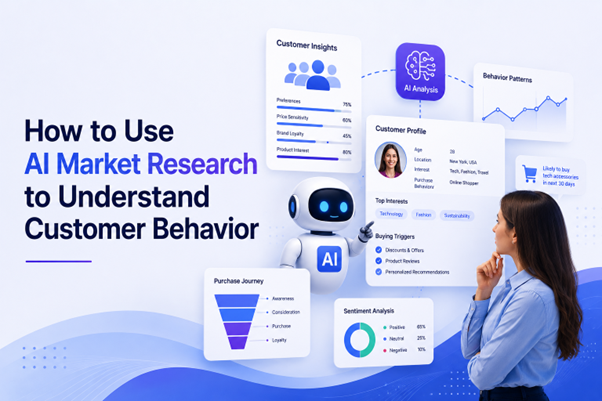
The role of AI in market research has shifted from a niche capability to a common part of modern research teams. AI market research is not a new data source. It is a new way to read the data you already have. That includes reviews, surveys, support chats, social posts, click paths, and purchase history.
Traditional research usually ends after collecting responses, but AI takes the analysis much further. It scans huge sets of customer data and finds patterns humans miss. A person may read 300 reviews in a day but AI can scan 30,000 in minutes and group repeated complaints fast. That changes the speed of decision-making.
This does not mean surveys or interviews are dead, they still matter, but AI acts like a second layer on top of them. It helps you connect scattered signals into one clear picture. Let’s say a fashion brand may combine TikTok comments, return rates, and cart data to spot why one product line suddenly slowed down. That is where the real value starts.
Better survey questions do not fix the core problem because people often say one thing and do another. Someone may claim they love eco-friendly packaging and then they buy the cheaper option every time. Sounds familiar right? It’s because it happens constantly.
Old research methods struggle because they depend too much on stated intent. Their focus groups are small, surveys rely on memory, and people rarely explain their own habits clearly. A customer might abandon a cart because shipping looked slow, but in a survey later, they may say the price felt high instead. Human memory bends details and that is the real problem.
Behavioral data tells a cleaner story though. Search history, click patterns, watch time, repeat visits, and refund behavior reveal what customers actually care about. AI helps connect those dots.
A food delivery app, for example, may notice users stop ordering after one late delivery. That pattern may stay hidden in standard reports and AI catches that detail clearly.
This is also why many brands waste money on bad assumptions. They think people want more choices, but in reality, customers actually want fewer confusing options. AI helps expose those gaps before they hurt revenue.
AI can reveal three big things about customer behavior: what happened, why it happened, and what may happen next. Those are very different insights. But most teams only reach the first layer, and stop too early.
The first layer is descriptive insight that explains what customers did. AI may show that people aged 25 to 34 stopped opening emails after week three. That’s useful, but limited.
The second layer is diagnostic insight that explains why something changed. It maybe those emails became too sales-heavy, or maybe subject lines lost urgency. AI can compare sentiment, timing, and engagement together to find the reason.
The third layer matters most. Predictive insight estimates future behavior before it happens. A subscription app may notice users who skip onboarding videos often cancel within 45 days. AI spots that trend early and flags risky accounts before churn grows that gives you time to act.
Customer segmentation also gets sharper with AI. Old segmentation grouped people by age or income. Now, AI groups them by behavior instead.
Let’s say, two customers may both be 30 years old. One buys only during discounts, while the other pays full price every month. They should never receive the same campaign. Yet many brands still market to them the same way that costs money.
Here is how these AI outputs usually work in practice:
Platforms like CausalFunnel also help businesses improve audience targeting through AI-based behavior analysis. Instead of pushing broad ads everywhere, brands can focus on people showing stronger purchase signals, that reduces wasted spend.
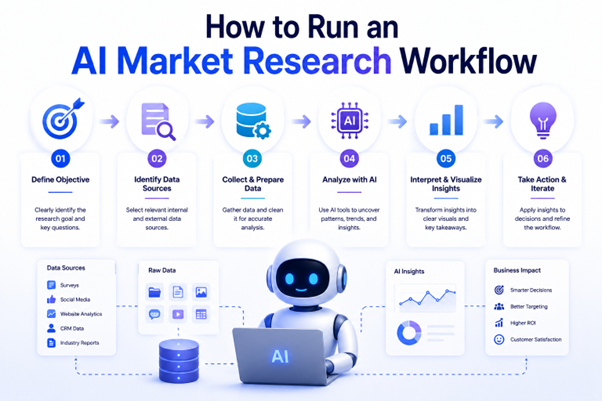
Start with the question, not the tool, but most teams do the opposite. They buy software first, then search for a problem later.
A good workflow begins with one behavior question. Maybe customers stop buying after month two or maybe mobile users bounce faster than desktop users. Make sure to pick one clear problem first, and then choose the data source that best explains that behavior.
Now, most mid-size marketing teams have access to AI research tools that cost less than a single traditional focus group. But cheap access creates another problem. Too many teams feed messy data into AI systems and trust whatever comes out which is risky. AI sounds confident even when the input data is weak.
For example, a skincare brand’s team noticed repeat sales dropping on one moisturizer. Surveys looked fine, star ratings stayed high, but AI analysis of review text showed repeated phrases like “too greasy in summer.” Customers liked the product in winter but avoided it during hot months. That insight changed seasonal marketing and inventory planning, and one hidden phrase changed the whole strategy.
Here is a clean workflow that works for most businesses:
AI works best when paired with clean first-party data. Customer support chats are gold here, and so are return reasons and abandoned carts. Most brands ignore those signals because the data looks messy. AI handles messy data far better than humans do.
Most teams pick their AI research tool the wrong way. They choose the one with the flashiest demo or loudest LinkedIn ads, but that rarely works long term.
The right tool depends on the behavior signal you need. If your goal is churn reduction, you need behavior tracking and sentiment analysis. If you want future sales forecasts, predictive analytics matters more. A social listening platform will not solve retention problems alone. Different tools answer different questions.
Another mistake appears during setup. Businesses buy enterprise-level platforms before fixing their own tracking systems. That creates expensive confusion fast. AI cannot fix missing customer data. It only reads what exists already.
Research Goal | Best Data Type | Tool Category |
Understand customer frustration | Reviews, support chats, comments | Sentiment analysis tools |
Predict churn or repeat purchases | CRM and usage behavior | Predictive analytics platforms |
Improve audience targeting | Click behavior and conversion data | Behavioral segmentation tools |
A small ecommerce store often does not need ten dashboards. One good sentiment tool plus clear CRM tracking may reveal enough patterns already.
This is also why many growth teams now use platforms like CausalFunnel to improve audience segmentation and ad quality signals. AI models can detect higher-intent visitors based on browsing and engagement patterns. That helps brands focus on people more likely to convert.
Predicting what customers will do next is not a guessing game. It depends on patterns hidden inside past behavior. AI simply reads those patterns faster than people can.
A predictive model studies signals tied to future actions. That may include login frequency, support tickets, repeat purchases, refund requests, or even email open rates. The system compares past behavior against known outcomes. Then it estimates what current customers may do next. That could mean churn, upgrades, or repeat buying.
Now, predictive behavioral models are standard in platforms like Brandwatch, Pecan, and Attest. They are no longer limited to giant companies.
A small subscription fitness app can predict cancellation risk using workout frequency alone. A local coffee brand can estimate repeat purchase timing from loyalty card data. The entry barrier dropped fast.
But prediction quality depends on data quality and that’s the part that gets ignored online. A model trained on six months of outdated data will miss current buying shifts. A retailer using only holiday season data may predict demand badly during spring months.
Reliable prediction also needs enough volume as a churn model based on 40 customers is weak. This is when a model trained on 4,000 behavior records becomes far more useful. This does not mean that it’s perfect, but it means that it’s directionally reliable.
Even though AI is simplifying things, you need to understand that predictive AI does not replace human judgment. It simply gives earlier warnings. Smart teams still review the patterns before making large decisions.
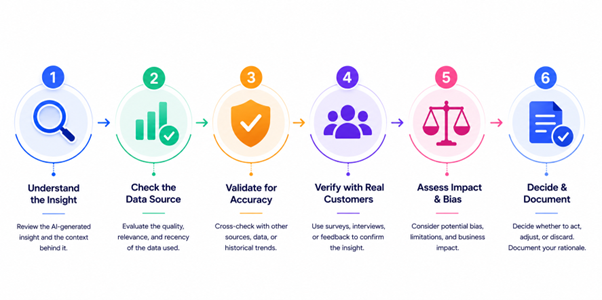
AI does not flag its own mistakes, rather you have to do it.
A sentiment report built from 200 reviews on one product tells a very narrow story. Yet many teams treat that output like a full market truth which eventually creates bad decisions. This is where AI can organize weak data.
Validation starts with common sense checks. If AI claims younger users hate your app update, compare that result against app store reviews, support tickets, and usage data. Do all signals point the same way? Or does only one source show the problem? Ask that first.
Sample size matters too, and so does recency. A travel brand studying customer behavior from 2023 may miss huge changes in 2026 booking habits. This is because consumer behavior shifts quickly now especially after viral trends or platform changes. TikTok alone changes buying cycles faster than many brands expect.
Use this quick validation checklist before acting on AI insights:
That final step matters most, so cross-check everything.
AI is genuinely bad at one thing: understanding context. It spots patterns well, but it often misses the emotional nuance behind them.
A review saying “this product is sick” may sound negative to some systems. Younger buyers may actually mean the product looks amazing. However, slang and cultural tone shifts fast online. AI still struggles with sarcasm, humor, and mixed emotion. Therefore, human review still matters there.
AI also cannot explain business reality alone. It may show customers spend less after shipping delays. But it cannot tell you whether the delay came from warehouse issues, weather, or supplier problems without more context. A human still needs to connect those dots.
Also, AI cannot replace customer empathy. Data may show people abandon carts after seeing shipping costs. But speaking directly with customers may reveal frustration, confusion, or trust issues hiding underneath.
The smartest teams use AI as a guide, not a final judge.
Start with one customer behavior question first, and not ten. That single choice shapes every tool, dataset, and decision after it.
The brands getting real value from AI market research are not chasing shiny software. They are asking sharper questions about customer habits, frustration points, and buying triggers. Then they test those insights against real behavior before acting. That discipline matters more than the tool itself.
Because the companies winning customer attention in 2026 are rarely the loudest brands. They are usually the ones listening better.
Yes. Small businesses can use AI tools to study reviews, customer feedback, and buying habits faster. Many affordable tools now offer features once limited to large companies.
AI can be highly accurate when the input data is clean and recent. Poor data creates weak insights, even with advanced tools.
No. AI improves research analysis, but human feedback still matters. Surveys and interviews add emotional context that raw behavior data may miss. Both work better together.
Speed is the biggest advantage. AI can analyze thousands of customer interactions in minutes and uncover patterns people may overlook manually. That saves time fast.
AI studies past customer actions like purchases, clicks, and engagement patterns. Then it identifies trends that often appear before churn, repeat buying, or upgrades happen.
Start using our A/B test platform now and unlock the hidden potential of your website traffic. Your success begins with giving users the personalized experiences they want.
Start Your Free Trial

Empowering businesses to optimize their conversion funnels with AI-driven insights and automation. Turn traffic into sales with our advanced attribution platform.
Trusted by Customers


©CausalFunnel Inc. All rights reserved.