



Free Funnel Audit
Convert more customers today!
SEO
10 mins read

SEO
10 mins read
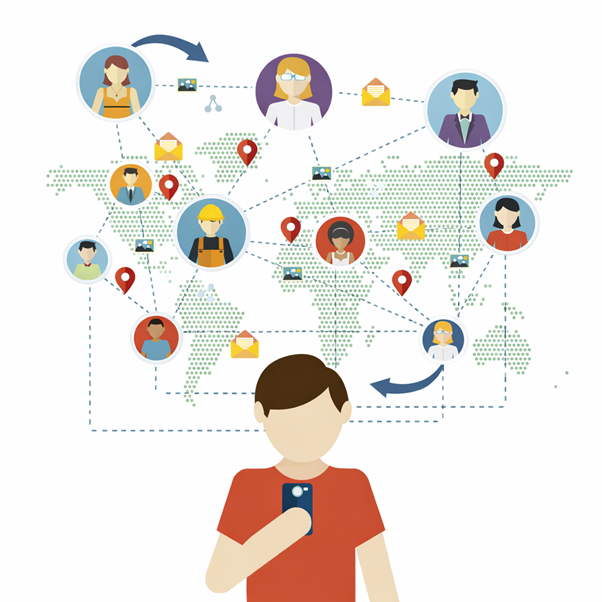
What if your ads reached only people in a specific location? Not random users or irrelevant regions, but only the audience your business actually serves.
That is what geo-targeting does.
Geo-targeting is a simple way to reach people based on their location. It helps businesses show ads in specific areas to make marketing more useful and more relevant.
Today, people expect content that fits their daily life, and ignore ads that feel random or out of place. That is why location-based advertising works so well.
With geo-targeting, you speak to the right people. You show the right message in the right place for better engagement and more conversions.
For example, a coffee shop can target nearby people in the morning. That message feels timely and helpful. Businesses using geo marketing often see faster results because their ads feel personal, not forced.
If you want better results, start with location. Focus on where your audience is and what they need right now.
Geo-targeting is no longer just an option; it is now a key part of modern digital marketing.
Geo-targeting is a method of showing content based on the user’s location. This location can be a country, city, or even a small radius. It works by using data like IP addresses or GPS signals. This data helps platforms understand where the user is located.
Once the location is known, businesses can create better messages that match local needs, weather, or even events.
For example, a food delivery app may promote hot meals on cold days to make the ad feel helpful and timely for users. This is why geo-targeting improves user experience significantly. People see ads that actually matter to their daily lives.
It is also a key part of geo-marketing strategies today. Brands use it to connect with local audiences more effectively.
Here is what makes geo-targeting so useful:
Businesses using location-based advertising often outperform competitors. They focus on quality targeting instead of broad messaging.
This approach helps both small and large businesses grow faster.
Understanding how geo-targeting works makes it easier to use. The process is simple but only effective when done correctly.
Let’s break it down into clear steps:
The first step is collecting location data from users. This data comes from multiple sources and technologies.
Common data sources include:
This process is often called geo-tagging. It attaches location details to user activity online.
For example, when someone opens an app, their location is detected, which allows businesses to understand where users are located.
Geo-tagging helps create accurate and useful audience segments. Without it, geo-targeting would not work properly.
Once data is collected, users are grouped by location. This process is called audience segmentation.
Businesses can segment users in different ways:
This helps brands focus only on relevant audiences and avoid wasting resources on the wrong users.
For example, a local gym can target people within five kilometers to increase the chance of attracting nearby customers.
Audience segmentation also works well with behavior data. You can combine location with interests and buying patterns.
After segmentation, ads are delivered to the right users. These ads are shown on platforms like Google and social media. This is where Geo ads come into action. They are designed specifically for targeted locations.
For example, a clothing store may promote winter wear in cold cities. At the same time, it promotes summer clothing in warm regions to ensure that ads always match the local environment.
Popular platforms for geo-targeting include:
Each platform offers tools to manage location-based campaigns easily.
If you want advanced targeting and better campaign results, explore platforms like CausalFunnel. Our team of experts helps businesses optimize campaigns using smart data insights to improve targeting accuracy and marketing performance.
Marketing is no longer about reaching everyone at once. It is now about reaching the right people at the right time. Geo-targeting helps businesses do exactly that.
Here is why it is becoming essential today:
Businesses that ignore geo-targeting risk falling behind competitors. They may spend more money but see weaker results. On the other hand, businesses using geo-targeting gain a strong advantage. They connect better with customers and build lasting relationships.
Let’s make this practical now.
How do you actually use geo-targeting in real campaigns?
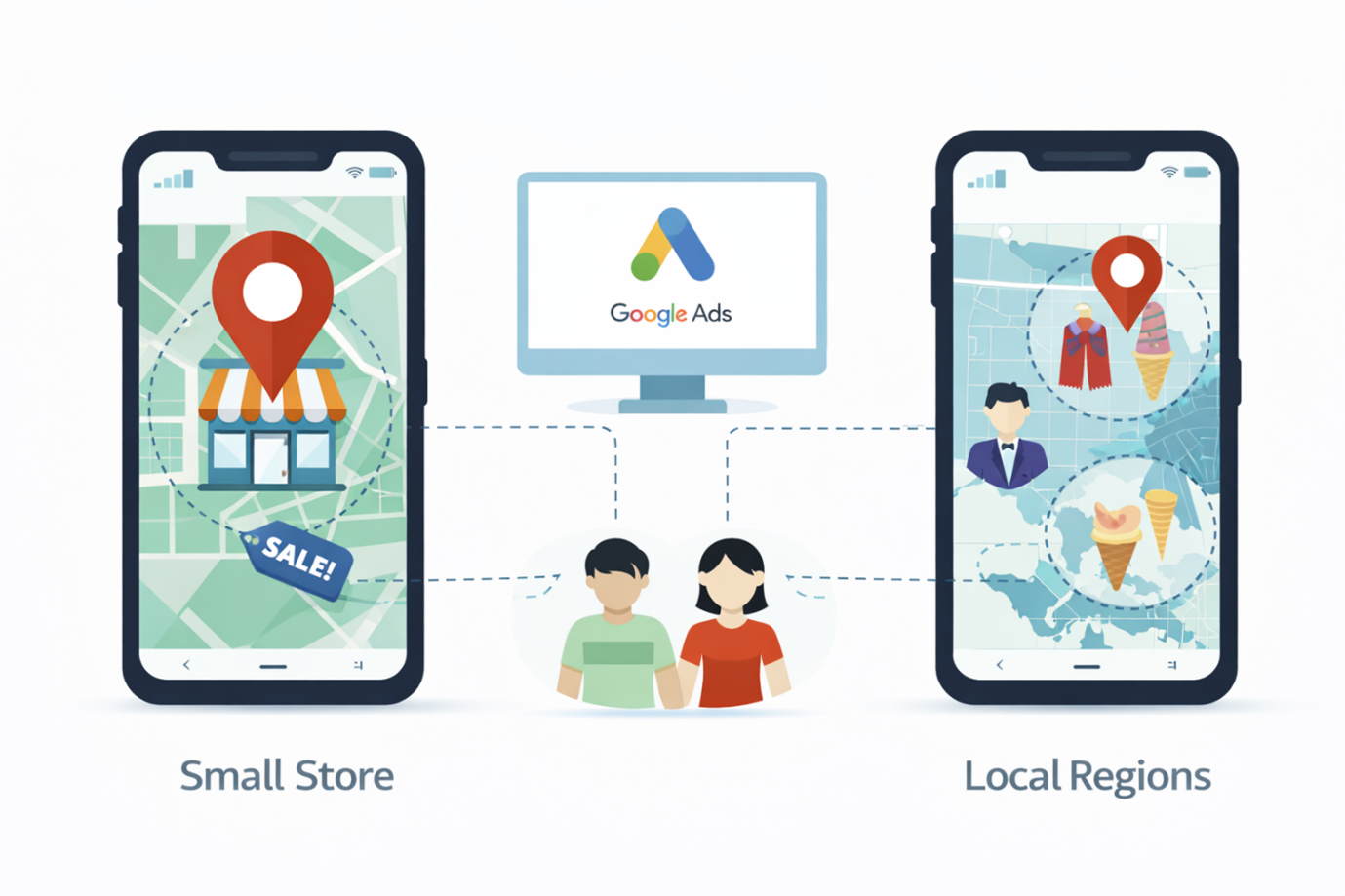
Google Ads makes this process simple and very flexible. You can decide exactly where your ads should appear. That means no more wasting money on the wrong audience.
With geo-targeting in Google Ads, you choose your locations first. Then you shape your message based on those locations.
A small store can focus only on nearby users. A large brand can target different regions with different ads. Both approaches work, but the strategy changes slightly.
So, how does Google know where users are located?
It looks at a few key signals behind the scenes. These include IP address, device location, and search intent.
For example, someone searching “coffee near me” sends a strong signal. Google uses that signal to show nearby business ads.
You can control this targeting in a few simple ways:
Radius targeting is especially useful for local businesses. It focuses only on people close enough to take action. Think about a salon or a restaurant. They only need customers from nearby areas.
This is where geo-targeting becomes very practical.
Now, setting the location is only the first step. The real results come from how you use it.
Here are a few simple ways to improve performance:
Let’s make this easier to understand.
If you target New York and Los Angeles, your ads should not sound the same in both places. Local language, tone, and needs can be very different. Adding the city name in your ad can make your message feel personal and real.
This is how strong geo ads are built.
If you want to go beyond basic targeting, tools like CausalFunnel can help refine your campaigns by using smarter data signals to improve targeting accuracy. That often leads to better results without increasing your budget.
Geo-targeting and geofencing sound very similar, but they are not the same thing. Both fall under location-based advertising, but they work in slightly different ways.
Let’s simplify this clearly.
Feature | Geo-Targeting | Geofencing |
Audience | Narrow and specific | Broad and general |
Data used | Location plus behavior | Location only |
Precision | High | Medium |
Personalization | Strong | Limited |
Here’s the key difference.
Geo-targeting does not stop at location. It also looks at user behavior and interests. That means your ads reach the right type of people, and not just people who happen to be nearby.
Imagine this situation. A sports store targets people interested in fitness. At the same time, it limits ads to one city. Now the audience is both local and relevant. This way, the store avoids wasting money on people who are not likely to buy, but focuses only on customers who are both nearby and interested. This makes the ads more effective and increases the chance of real store visits.
That is why geo-targeting often performs better.
That said, geofencing still has its purpose.
It works well when you want quick local visibility. You simply draw a boundary around a location. Anyone inside that area can see your ads.
For example, a store near a mall can use geofencing to attract people already shopping in that area. This works well for promotions and awareness campaigns. But there is one limitation.
Geofencing does not filter users by interest or behavior. So, some impressions may not convert well. That is why many brands prefer geo-targeting today.
Now let’s step back for a moment.
Why does all this really matter for businesses?
Because better targeting leads to better results. Geo-targeting plays a big role in modern geo-marketing. It helps brands connect with people in a more meaningful way. Instead of broad messaging, you deliver something relevant.
People notice ads that feel useful and ignore the ones that feel random or generic.
Geo-targeting helps you stay relevant. Think about a food app promoting dinner during evening hours. That message feels natural and timely. This is the power of location-based advertising. It blends into the user’s daily life more smoothly.
Relevance leads to action. That is a simple rule in marketing.
When users see something that fits their situation, they are more likely to click and convert. A nearby offer feels easy to act on, as there is less effort and less hesitation involved.
This is where hyperlocal marketing becomes very powerful.
No business wants to waste its budget on the wrong audience. Geo-targeting solves this problem clearly. You only focus on users who matter.
That means fewer useless impressions and better efficiency. Over time, this improves your return on investment.
People trust brands that understand their needs. When your ads match local context, your brand feels more aware and reliable. This builds trust slowly but strongly, and trust leads to repeat customers over time.
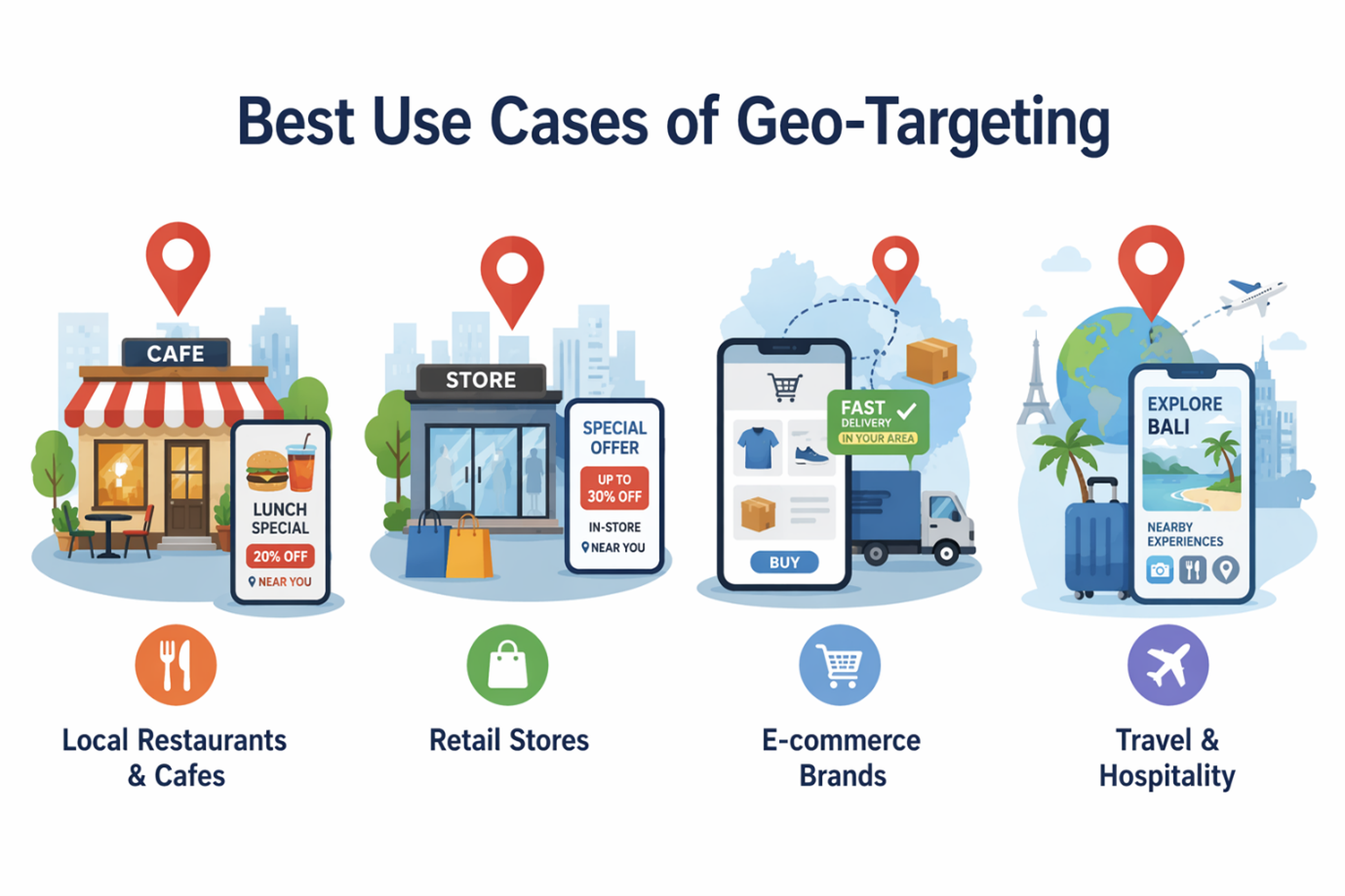
By now, you may be wondering where this works best. The answer is simple – it works almost everywhere, but especially for local intent.
Let’s look at a few clear examples.
Restaurants depend heavily on nearby customers. They can target people during lunch or dinner hours to promote offers based on local demand. This drives quick decisions and more walk-ins.
Retail stores use geo ads to highlight local deals. Customers see offers available in nearby outlets. This creates urgency and increases store visits.
Even online stores benefit from geo-targeting. They can adjust offers based on region and demand to promote faster delivery in certain areas. This improves customer experience and boosts conversions.
Travel brands use location data in smart ways. They promote destinations based on user interest and location. They also suggest nearby experiences to travelers to create a more personalized journey for users.
A strong geo-marketing strategy is not complex. It is clear, focused, and easy to manage. Let’s break it down step by step:
Start with one simple decision – Where are your customers?
Do not guess here. Look at your data if you have it. If not, start small and test.
Focus on:
If you target too many places, results drop, but if you stay focused, results improve fast. Simple works better here.
Location is just one part. You also need to know your audience. Think about what they need right now.
You can narrow your audience using:
For example, a food brand can target hungry users nearby. That message feels natural and useful. This is how location-based advertising becomes powerful.
Not all platforms work the same way. Some are better for intent, while others are better for awareness.
Here is a simple view:
Geo-targeting in Google Ads is great for quick conversions, and social platforms help you stay visible longer. Using both gives better results in most cases.
Most campaigns fail when they sound too general. People do not connect with generic ads. They respond to things that feel close and real.
So keep your message simple and local:
Example:
“Best pizza in Chicago” works better than “Best pizza available now.”
See the difference? One feels real, and the other feels generic. That is how strong geo ads are built.
No campaign is perfect from day one. You need to improve as you go.
Watch simple metrics like:
Check which locations perform best, and put more budget there.
Even simple strategies can fail if mistakes are repeated. Let’s look at a few common issues businesses face:
Trying to reach everyone often reduces effectiveness. Broad targeting leads to lower relevance and weaker results. So, keep your targeting focused and specific whenever possible.
Every location has different needs and habits. Ignoring these differences can hurt your campaign performance. Always adapt your messaging to local audiences.
Markets change, and user behavior also shifts over time. If you do not update campaigns, performance will drop. Regular updates help keep your ads relevant and effective.
One-size-fits-all ads rarely work in geo marketing. Different regions require slightly different messaging. Even small changes can improve results significantly.
So, what does all this really mean for your business?
It means you can stop guessing. You no longer have to show ads to everyone and hope something works. With geo-targeting, you focus only on the people who matter. People who are in the right place are more likely to take action.
That changes everything.
Your message becomes clearer, your ads feel more useful, and your results become more predictable. Instead of broad marketing, you move to precise targeting. Instead of noise, you create relevance.
When used the right way, geo-targeting can:
But the real advantage is simple – relevance at the right moment.
When your message matches a user’s situation, they are far more likely to respond. That is what drives real growth. If your goal is better performance without wasting budget, then geo marketing is no longer optional.
And if you want to go beyond basic targeting, this is where tools like CausalFunnel can help. We help you understand what is actually driving conversions by removing guesswork.
So you are not just targeting better. You are growing smarter. In today’s market, the brands that win are not louder; they are simply more relevant.
Geo-targeting in digital marketing means showing ads or content to users based on their geographic location. It helps businesses reach the right audience in specific cities, regions, or areas for better results.
Geo-targeting in Google Ads uses signals like IP address, device location, and search intent. Advertisers can target users by country, city, or radius to show more relevant ads and improve conversions.
Geo-targeting focuses on location plus user behavior, interests, and intent. Geofencing only targets users within a fixed area. Geo-targeting is more precise and usually delivers better results.
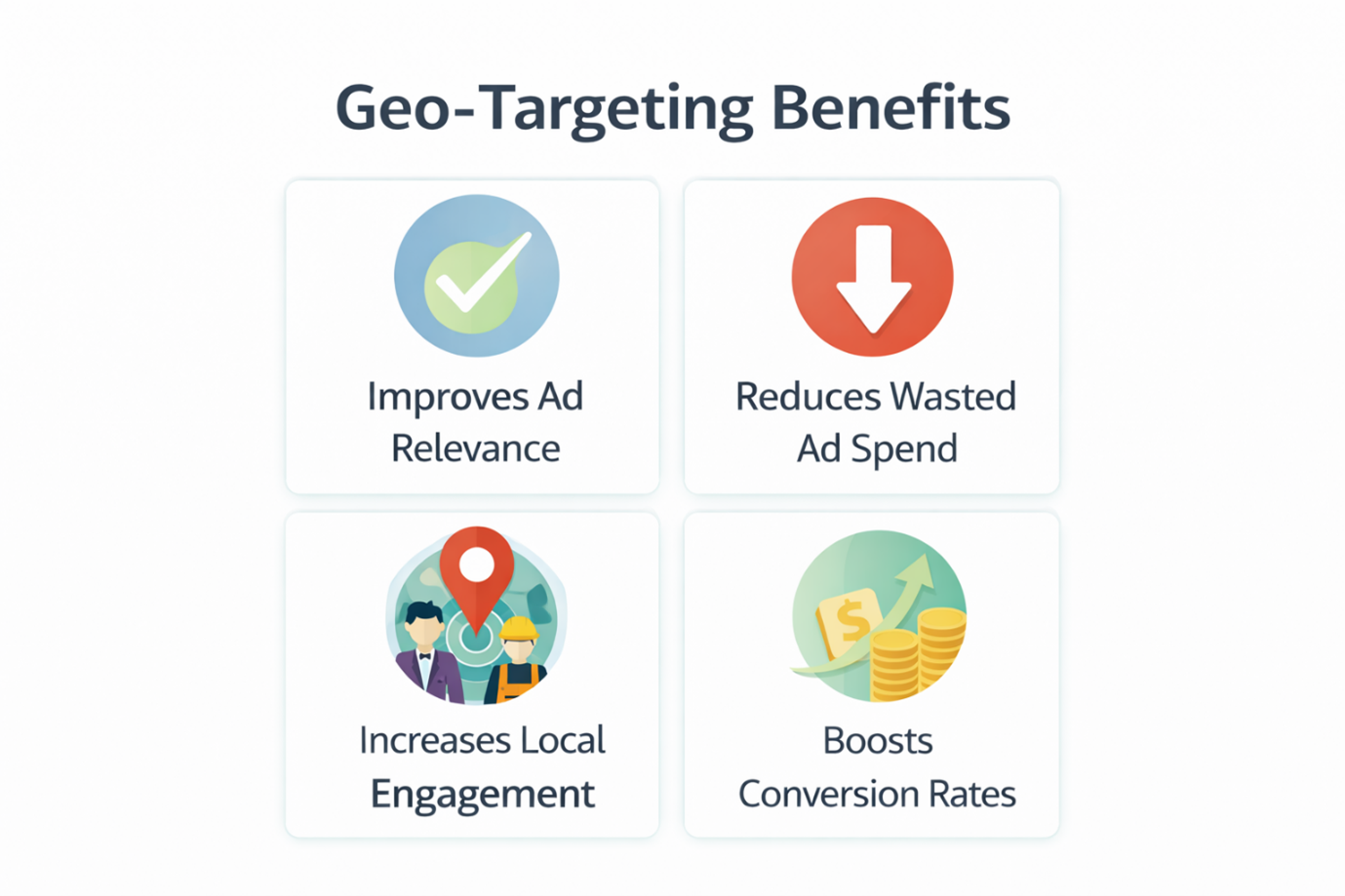
Geo-targeting helps businesses improve ad relevance, increase conversion rates, reduce wasted spend, and connect more effectively with local audiences through personalised marketing.
Geo-targeting improves local SEO and advertising by helping businesses appear in location-based searches. It increases visibility among nearby users who are more likely to take action.
Start using our A/B test platform now and unlock the hidden potential of your website traffic. Your success begins with giving users the personalized experiences they want.
Start Your Free Trial

Empowering businesses to optimize their conversion funnels with AI-driven insights and automation. Turn traffic into sales with our advanced attribution platform.
Trusted by Customers


©CausalFunnel Inc. All rights reserved.