



Free Funnel Audit
Convert more customers today!
SEO
10 mins read

SEO
10 mins read
If your website feels cluttered or hard to scale, the structure might be holding you back. Subdomain SEO helps you grow different parts of your website. It lets you organize content without mixing everything together. Many websites use subdomains for blogs, tools, or regional pages.
But subdomains work differently from your main website structure. Search engines treat them like separate websites in most cases. This means you must plan your SEO strategy very carefully.
In this guide, you will learn simple tips that actually work. You will also understand when subdomains help your rankings. Let’s start with the basics and build from there.
Subdomain SEO is the process of optimizing a subdomain for search engines. A subdomain is a part of your main domain. It appears before your main website name in the URL.
For example:
Search engines often treat subdomains as separate websites. This means they have their own authority and ranking signals. They do not fully share the same SEO strength as the main domain.
This is why subdomain SEO needs its own strategy. You cannot rely only on your main website’s performance. You must build content, links, and structure for each subdomain.
Subdomains are useful when you want to separate content clearly. Many companies use them for blogs, help centers, or product tools. This keeps the main site clean and focused.
Here is what makes subdomain SEO different:
Understanding this concept is very important before moving ahead. Without this clarity, many SEO strategies fail quickly.
This is one of the most common SEO questions today. Many website owners struggle to choose the right structure. The answer depends on your goals and content type.
Let’s break this down in a simple way.
Factor | Subdomain | Subdirectory |
URL Structure | blog.example.com | example.com/blog |
Authority Sharing | Limited | Strong |
SEO Effort | Separate | Shared |
Use Case | Different functions | Same topic expansion |
Subdirectories usually perform better for SEO in most cases. They share authority with the main domain. This helps pages rank faster and easier.
Subdomains work better for separate purposes or audiences. They are useful when content is very different from the main site. For example, a SaaS tool or support portal.
Here is when each option makes sense:
Choosing the wrong structure can slow your growth. So always match your decision with your business goals.
Are Subdomains Good for SEO? Pros and Cons Explained
Subdomains can be helpful, but they are not always the best choice. You must understand both sides before using them.
Subdomains are not bad for SEO when used correctly. Problems happen when they are used without a clear plan and proper SEO structure and tools. Many websites create subdomains without strong content or purpose.
This leads to weak rankings and wasted effort over time.
The key is to use subdomains only when they make sense. If your content fits your main site, use a subdirectory instead. This often gives better and faster results.
Subdomains work best when you need clear separation in your website. They are useful for specific situations and goals. Let’s look at common real-world use cases.
Subdomains should always have a clear purpose and strategy. Avoid creating them just for convenience or structure.
If your content overlaps with the main site, avoid using subdomains. This can lead to confusion and weak SEO performance.

Now let’s move to the most important section of this guide. These tips will help you improve your subdomain SEO performance.
Each tip is simple, practical, and easy to follow. You can apply them step by step for better results.
Many people make a common mistake with subdomains. They assume it will rank like the main website automatically. This is not how search engines work.
A subdomain needs its own SEO foundation. You must build content, authority, and structure independently.
Think of your subdomain as a new website. Plan everything from the beginning with clear goals.
Focus on:
This approach helps you avoid weak performance later. It also improves your chances of ranking faster.
Duplicate content is a major issue in subdomain SEO. Many websites repeat similar content across domains. This confuses search engines and reduces rankings.
Always create fresh and unique content for your subdomain.
Avoid copying:
Instead, focus on new topics with fresh content and user’s needs.
Here are some quick tips:
Unique content helps your subdomain stand out clearly. It also improves indexing and visibility in search results.

Keyword strategy plays a major role in subdomain SEO success. You should never target the same keywords as your main site. This creates keyword cannibalization and ranking conflicts.
When both sections target the same keywords, search engines get confused. They struggle to decide which page should rank higher. This often weakens both pages instead of helping one perform better.
Content optimization becomes very important at this stage. Each subdomain should have a clear keyword focus and intent. Your content must match what users expect from that specific section.
Instead of competing, your goal should be to expand your keyword reach. This helps you capture more traffic across different search intents.
Here is how to do it:
For example, your main site may target “SEO tools.”
Your subdomain can target “SEO tutorials for beginners.”
You can also optimize content by:
This separation helps both sections grow without competition. It also improves overall website visibility in search results.
Backlinks play a major role in search rankings today. Subdomains need their own backlinks to build authority. You cannot rely on your main domain’s link profile.
Search engines treat subdomains as separate properties. This means links must point directly to your subdomain pages.
Focus on building high-quality backlinks over time.
Here are some practical ways to start:
Avoid spammy links or low-quality sources. These can harm your rankings over time.
A strong backlink strategy builds trust and visibility. It also helps your subdomain compete in search results.
Internal linking is often overlooked in subdomain SEO. But it plays a very important role in performance.
Linking your main domain and subdomain creates a strong connection. It helps users move easily between both sections.
It also helps search engines understand your website structure better.
Here are some best practices:
This improves both user experience and SEO performance.
Good internal linking can pass some authority signals. It also improves crawlability across your website.
Technical SEO ensures your subdomain works properly for search engines. Without it, even good content may not rank well.
Each subdomain needs its own technical setup. You cannot rely on the main domain configuration alone. Search engines treat them as separate properties in many cases.
Here are the key elements you must optimize:
Make sure search engines can crawl and index your pages easily. If bots cannot access your content, rankings will suffer.
Also, check for broken links and indexing errors regularly. Fix issues quickly to avoid long-term SEO problems.
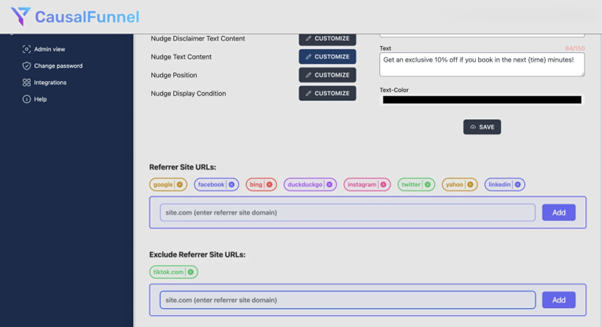
You can simplify this process using smart SEO tools. For example, CausalFunnel helps automate many technical SEO tasks.
It can help by:
Its AI-powered system scans multiple subdomains efficiently with customizable nudges . This makes it easier to manage large or complex website structures.
Technical SEO may seem complex at first, but tools can simplify the work. A strong technical foundation supports all your SEO efforts.
Duplicate content can confuse search engines easily. This is common when content exists on both domain and subdomain.
Search engines may not know which page to rank. This leads to lower visibility for both pages.
Canonical tags help solve this issue.
They tell search engines which version is the main page.
Use canonical tags when:
Always point to the preferred version of the page.
This helps maintain clarity and ranking signals.
Avoid ignoring duplicate content issues for too long. They can reduce your SEO performance significantly.
Tracking performance helps you understand what is working well. It also shows where improvements are needed.
Subdomains should be tracked separately from your main website.
This gives you clearer insights and better data.
Here are key tools you can use:
Make sure your tracking setup is correct.
Focus on:
Regular tracking helps you make better decisions. It also helps you adjust your strategy when needed.
Subdomains should support your long-term growth strategy. They are not just for quick fixes or convenience.
Many websites create subdomains without a clear purpose. This leads to weak results and wasted effort.
Always think about scalability before creating a subdomain.
Ask yourself:
If the answer is yes, a subdomain can be useful.
If not, a subdirectory may be a better choice.
Strategic planning helps you avoid mistakes early. It also ensures your efforts bring real results.
Mistakes in subdomain SEO can slow your growth significantly. Many of these issues are easy to avoid with proper planning.
Here are some common mistakes you should watch out for:
Each of these mistakes can affect your rankings negatively.
The best approach is to plan everything in advance. Treat your subdomain like a complete SEO project.
Avoid shortcuts and focus on quality instead.
Tracking your results helps you improve your strategy over time. Without data, you are only guessing what works.
Follow these simple steps to track performance properly:
Tracking helps you see real progress over time. It also helps you fix problems before they grow bigger.
SEO experts can save time and reduce costly mistakes. They bring experience and proven strategies to your workflow.
Here is how they can help:
Working with experts helps you grow faster and smarter. It also ensures your subdomain SEO stays on the right track.
Subdomains do not hurt SEO when used correctly and strategically. Problems only happen when they are poorly planned or managed.
If your subdomain has weak content, it may struggle to rank well. If it copies content from the main site, rankings may drop.
The key is to treat your subdomain as a separate website. Build content, links, and structure properly from the start.
When done right, subdomains can perform very well in search results.
This depends on your content goals and website structure.
Subdirectories are better for most SEO cases. They share authority with the main domain and rank faster.
Subdomains are useful when content serves a different purpose. They work well for tools, apps, or separate services.
If your content supports your main topic, use a subdirectory. If it is different, consider using a subdomain.
Yes, subdomains can rank independently in search results.
Search engines treat them as separate entities in most cases. This means they need their own SEO efforts.
They can rank well if they have strong content and backlinks. But they do not inherit full authority from the main domain.
This is why building a proper strategy is very important.
Subdomains may share some signals, but not fully.
They do not automatically get the same authority as the main domain. Most ranking strength must be built separately.
Internal linking can help create a connection between both sections. But it will not replace a strong backlink profile.
Always plan your SEO strategy with this in mind.
Ranking time depends on several factors like content quality and competition. A new subdomain may take longer to rank than a subdirectory. This is because it starts with little or no authority.
With consistent effort, results usually improve over time.
Focus on:
These factors help speed up the ranking process.
Start using our A/B test platform now and unlock the hidden potential of your website traffic. Your success begins with giving users the personalized experiences they want.
Start Your Free Trial

Empowering businesses to optimize their conversion funnels with AI-driven insights and automation. Turn traffic into sales with our advanced attribution platform.
Trusted by Customers


©CausalFunnel Inc. All rights reserved.