



Free Funnel Audit
Convert more customers today!
SEO
10 mins read

SEO
10 mins read
Every website wants more clicks, leads, and sales from visitors. That is where CRO testing becomes very important for growth.
CRO testing means improving your website using real user data. You test changes and see what actually works better. Instead of guessing, you make decisions based on real results. This helps you improve conversion rate without increasing traffic costs.
Many businesses lose sales due to poor user experience issues. Small tweaks like optimizing CTAs, reducing form friction, and adding trust signals can often deliver surprisingly strong conversion gains.
In this guide, you will learn how CRO testing really works. You will also understand different testing types and their uses.
If you want faster and smarter growth, start using CRO testing today. You can also explore advanced solutions with a trusted platform like CausalFunnel.

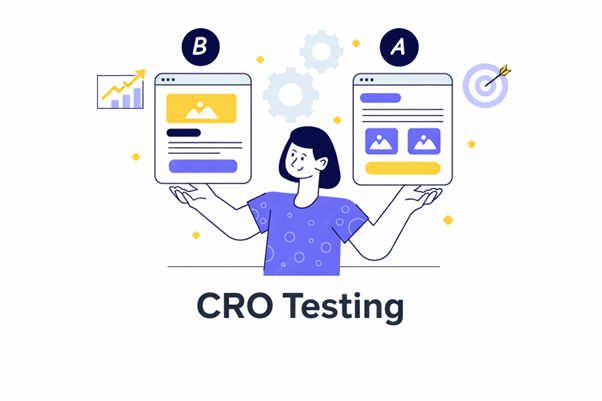
CRO testing stands for conversion rate optimization testing. It helps you improve how users interact with your website.
You test different versions of a page to find better results. The goal is simple: increase conversions without adding more traffic. A conversion can be anything based on your business goals. It may include signups, purchases, clicks, or form submissions.
CRO testing follows a simple and clear process:
This process is often called A/B testing or split testing. It is one of the most common methods in CRO strategy.
Many people think both terms mean the same thing.
But there is a small difference you should understand.
So, A/B testing is a part of conversion rate optimization.
CRO testing gives you clear benefits that impact business growth:
Without testing, you rely only on assumptions and opinions. That often leads to poor decisions and lost opportunities. CRO testing ensures every change has a purpose and a clear result. It works towards making your website smarter and more user-focused over time. Testing is important because you collect data that you can analyze.
Not all tests work the same way in CRO testing. Each testing type has a specific purpose and use case. Understanding these types helps you choose the right approach.
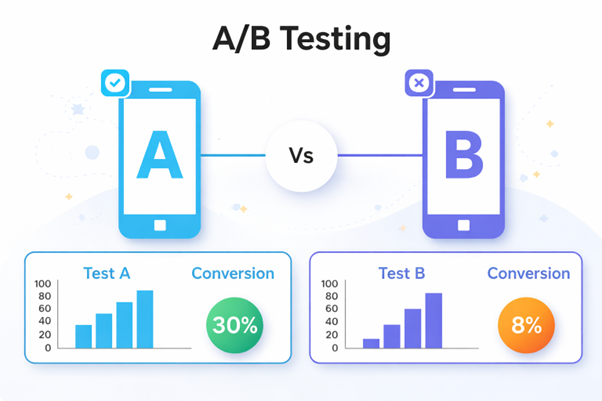
A/B testing is the most popular CRO testing method today, which compares two versions of the same page or element.
You show version A to one group of users. Then you show version B to another group. After that, you compare which version performs better.
You test two button colors on a landing page:
You measure which one gets more clicks or conversions.
Use A/B testing in these common situations:
A/B testing works best when you test one change at a time. This keeps results clear and easy to understand. It is also known as split testing in many cases.
Multivariate testing allows you to test multiple elements together. It helps you understand how different changes interact with each other. Instead of testing one change, you test combinations of changes.
You test multiple elements on a landing page:
Each combination creates a different version for testing.
Use this method only when you have high website traffic. It needs a large sample size to produce accurate results.
Multivariate testing is useful when:
This method supports complex conversion rate optimization goals. However, beginners should start with A/B testing first.
A/A testing is less common but very important in CRO testing. It compares the same version of a page against itself.
Both versions are identical, with no changes at all.
This test helps you check if your setup is working correctly. If results show a big difference, something is wrong. Your tracking or testing tool may have issues.
Use A/A testing before starting your first real test to ensure your data is accurate and reliable. This step builds confidence in your testing process.
Always focus on solving real user problems first. Testing random ideas rarely brings strong results. Using data, behavior insights, and clear goals before testing makes your CRO testing strategy more effective.
If you want faster results with less trial and error, seek expert guidance from CausalFunnel.
How to Run a CRO Test (Step-by-Step Process)
Running a CRO testing process needs clear steps and careful planning. You should follow a structured approach to get accurate results.
This process helps you avoid mistakes and improve decision-making speed. Overall, it also supports a strong and reliable CRO strategy.
Start by finding where users face issues on your website. Focus on pages with high traffic but low conversions. Use tools and data to understand user behavior clearly.
Look at these key areas:
You can also use heatmaps and session recordings for deeper insights. These methods are part of smart website optimization techniques.
Once you find the problem, create a clear hypothesis. A hypothesis explains what you will change and why. It should be simple, direct, and based on data.
Example hypothesis:
Changing the CTA button color will increase user clicks.
A strong hypothesis improves your testing accuracy and results. It also makes your conversion rate optimization process more effective.
Now decide which testing method fits your goal. This depends on your traffic and testing complexity.
Here is a simple comparison to guide your decision:
Test Type | Best For | Traffic Needed |
A/B Testing | Single changes like CTA or text | Low to Medium |
Multivariate Testing | Multiple changes together | High |
A/A Testing | Checking setup accuracy | Any level |
Choosing the right method ensures better and faster results. It also reduces confusion during analysis.
Now launch your test using a reliable testing tool. Make sure only one change is tested in A/B testing. Avoid running multiple tests at the same time to keep your data clean and easy to understand.
Important tips while running tests:
This step is critical for successful split testing results.
After the test ends, review the results carefully. Focus on data, not assumptions or opinions. Check which version performed better based on key metrics.
Important metrics to analyze:
Also, check if the results are statistically significant to ensure reliability and trustworthiness. A proper analysis helps you improve the conversion rate effectively.
If your test shows a clear winner, implement the change. Apply it across your website where relevant. CRO testing is not a one-time process. You should keep testing and improving continuously. This cycle helps build a strong and scalable CRO strategy.

Following best practices improves your testing success rate. These strategies are used by top experts in CRO testing:
Always test one change in a single experiment. This makes it easy to identify what caused the result. Testing multiple variables together creates confusion in understanding which change worked best.
This is one of the most important A/B testing best practices.
Many people stop tests when they see early results. This often leads to wrong conclusions and poor decisions.
User behavior changes over time, especially with new designs. This is known as the novelty effect in CRO testing. Users may react differently when they see something new. So, let the test run long enough for stable results.
Not all pages give the same results in CRO testing. You should focus on pages that impact conversions the most.
High-impact pages include:
Improving these pages gives faster and better returns.
Never rely on guesses when making testing decisions. Always use real data and user behavior insights. Data helps you understand what users actually need and improves your conversion rate optimization efforts.
Small sample sizes can lead to misleading results. Therefore, you need enough data to make reliable decisions. Wait until your test reaches statistical significance to ensure that your results are accurate and valid.
CRO testing is not a one-time activity. It should be part of your ongoing growth strategy. Continuous testing helps you stay ahead of competitors. It also improves your long-term website optimization techniques.
Best Practice | Why It Matters |
Test one variable | Clear and accurate results |
Avoid early stopping | Prevent wrong conclusions |
Focus on key pages | Higher impact on conversions |
Use real data | Better decision-making |
Ensure enough sample size | Reliable and trustworthy results |
Test continuously | Long-term growth and improvement |
Using the right CRO testing tools makes testing easy. They show how visitors act and improve conversions.
Tool Name | Key Feature | Best Use Case |
A/B testing, funnel tracking, and heatmaps | Track conversions and improve ROI | |
Google Optimize | A/B and multivariate testing | Run simple experiments |
Split testing and reporting | Advanced CRO strategies | |
Full-stack experimentation | High-traffic complex websites | |
Heatmaps and feedback polls | Understand visitor behavior |
Measuring results shows if your tests work.
Key metrics:
Visual reports help spot trends fast. This keeps your conversion funnel running well. It is also important to compare results against a baseline before the test begins. This helps you clearly understand whether the change improved performance or not.
Always ensure your sample size is large enough so results are statistically reliable. Small data sets can lead to misleading conclusions.
Regular tracking over time helps identify patterns and ensures long-term optimization, not just short-term wins.
CRO testing helps turn visitors into customers by showing you what people actually do on your website, not what you assume they do. To get the best results, it’s important to follow a clear step-by-step CRO process.
Try to avoid common mistakes like testing too many changes at once. Instead, focus on one idea at a time, supported by data, a solid sample size, and a clear hypothesis. Even small tweaks—like improving a CTA—can make a real difference in conversions.
The key is to measure results carefully and understand what’s actually driving performance. Over time, this creates a system where your website keeps improving on its own.
If you want better results and faster growth, try CausalFunnel’s A/B testing platform today!
What is CRO testing, and why is it important?
CRO testing helps improve how visitors interact with your website. It focuses on increasing actions like signups, purchases, and other conversions. Instead of guessing what works, you use real user data to make smarter decisions that support growth.
Start by identifying problem areas on your site where users drop off or don’t convert. Then test one change at a time so you can clearly see what works. You can use CRO tools like CausalFunnel to run and track your tests easily.
A CRO test should run until you have enough data for reliable results. Stopping too early can lead to incorrect conclusions. The right duration ensures your results are stable and trustworthy.
Avoid running too many tests at the same time, as it can confuse results. Don’t rely on small sample sizes or weak hypotheses. Always base your changes on real user behavior and data.
Start using our A/B test platform now and unlock the hidden potential of your website traffic. Your success begins with giving users the personalized experiences they want.
Start Your Free Trial

Empowering businesses to optimize their conversion funnels with AI-driven insights and automation. Turn traffic into sales with our advanced attribution platform.
Trusted by Customers


©CausalFunnel Inc. All rights reserved.