



Free Funnel Audit
Convert more customers today!
SEO
10 mins read

SEO
10 mins read
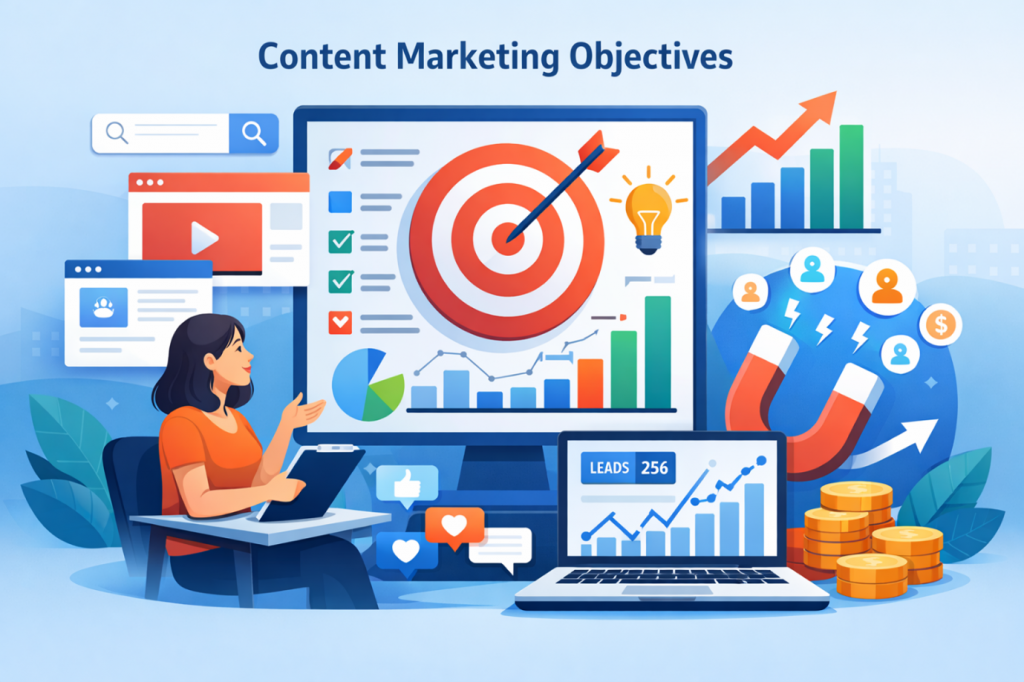
Have you ever wondered, you’re publishing quality content but they are still not improving your brand’s revenue? Before you say yes, first think about what you wanted from that content. Did you know what that blog was supposed to achieve?
This is exactly where most teams fail. Teams just look at the content and wonder why they aren’t performing. But they don’t realize that they’ve not decided what it was supposed to achieve in the first place.
Many teams publish blog posts, guides, and social media content consistently, hoping that traffic, leads, or brand visibility will follow. And honestly, sometimes it does, but more often, the results remain unclear. This happens because the content was never tied to specific content marketing objectives.
When you have clear objectives, it gives a clear direction to the content. Instead of chasing random metrics like pageviews or impressions, you can focus on outcomes that actually matter such as generating qualified leads, improving search visibility, building authority, or supporting sales conversations.
So, let’s learn more about content marketing objectives examples, how it helps and what are the objectives you can implement.
Before we discuss anything about content marketing objectives, we should first know what exactly these objectives mean.
Content marketing objectives are the specific goals that define what your content should achieve for your business. So, instead of publishing content randomly, these objectives give every blog post, guide, or video a clear purpose.
These objectives help marketers focus on meaningful outcomes such as increasing brand awareness, generating leads, improving search visibility, or educating customers. When content has a defined objective, it becomes easier to plan topics, choose the right formats, and measure real results.
The first rule of effective content strategy is simple which means content must support a real business goal.
Publishing articles just to increase pageviews rarely creates lasting value. Instead, strong content marketing objectives connect content to outcomes like revenue growth, customer education, or brand authority.
Think of content as a bridge between marketing and business results. Every piece should answer one question: What result should this create?
A simple framework helps keep this alignment clear.
Content Objective Mapping Framework
This structure prevents content from drifting away from the company’s priorities.
Example mappings
When content is mapped like this, it becomes easier to measure success.
If you want to know how content interactions influence conversions and revenue, you can use analytics platforms like CausalFunnel. They connect behavioral data to content performance helping teams to see which objectives actually drive business outcomes.
One of the biggest mistakes in content strategy is trying to achieve everything at once.
A blog post cannot simultaneously build awareness, generate leads, close deals, educate users, and improve retention. When teams stack too many goals on one piece of content, the message becomes diluted.
Instead, choose a small set of priorities.
Most successful content programs focus on one primary objective and two supporting objectives at any time.
Quick decision guide
A clear strategy helps avoid unnecessary work and makes success easier to define. Thinking about what you want to improve most this quarter usually reveals the primary objective.
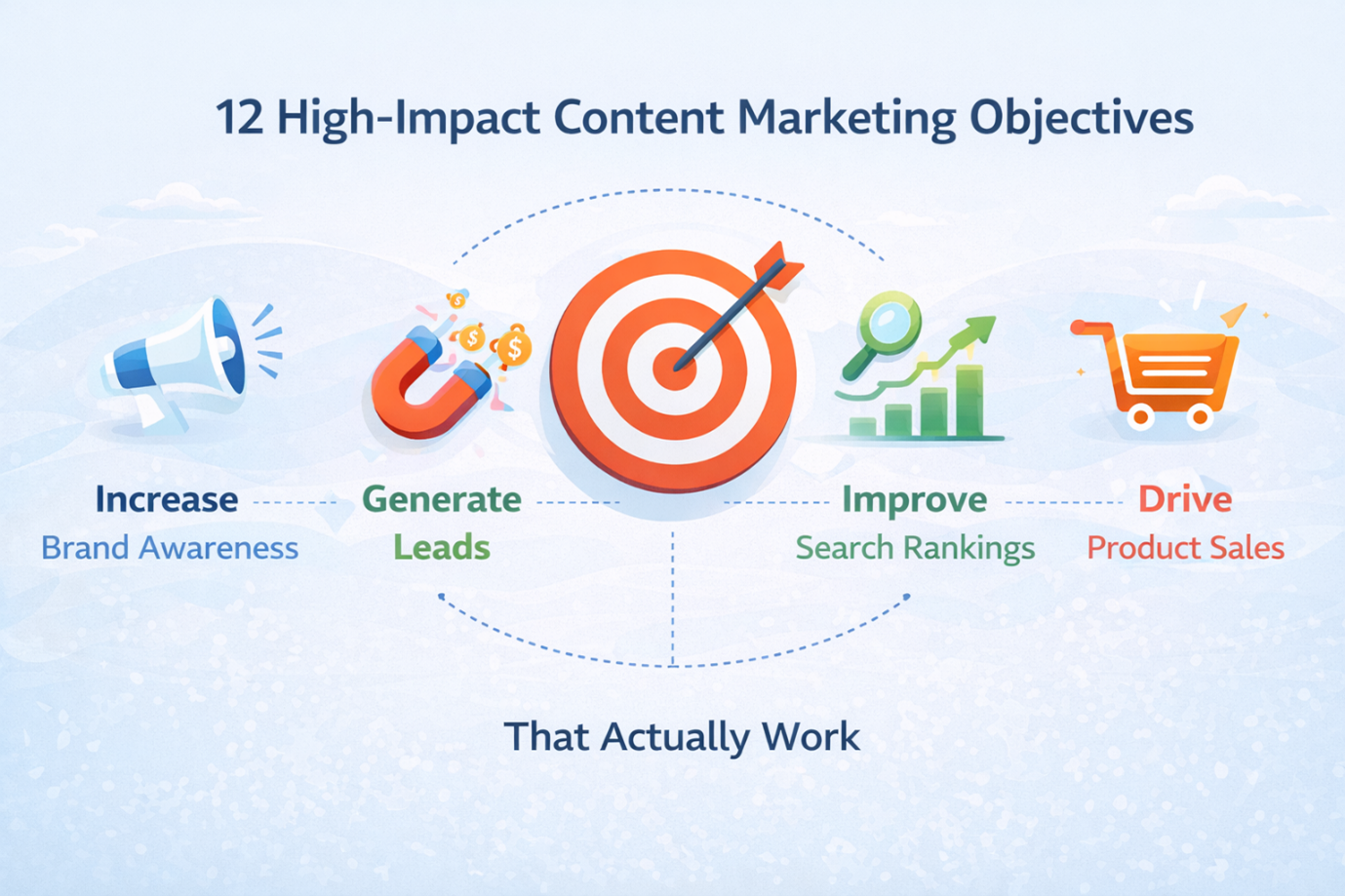
These objectives represent the most common ways content creates measurable value. But yes, you must know that not every strategy needs all twelve, but most successful programs rely on several of them working together.
Building brand awareness isn’t just about getting more reach. It is about using strategies through which people can recognize you and remember you.
When people repeatedly come across helpful content from your brand, your brand gains more trust. Later, when they need a product or service, your brand appears familiar.
Awareness content usually focuses on educational or perspective-driven topics rather than direct product promotion.
How to execute:
KPIs to track:
Example:
A cybersecurity company publishes a weekly blog explaining common digital threats. Over time, searches for the brand name rise as readers begin associating the company with reliable information.
Trust is the currency of modern marketing. Customers rarely buy from companies they don’t believe in.
Authority-building content demonstrates expertise through insight, research, and thoughtful analysis. Instead of repeating common knowledge, it adds perspective.
Teams often gather input from internal experts, industry leaders, or real customer experiences.
How to execute:
KPIs to track:
Example:
A marketing agency releases a yearly industry report based on client campaign data. Other publications reference the findings, strengthening the agency’s authority.
Search traffic remains one of the most powerful drivers of consistent content performance.
But successful SEO content focuses on intent rather than keywords alone. The goal is to answer the exact questions potential customers ask when they are actively researching solutions.
This objective typically uses topic clusters, internal linking, and in-depth guides.
How to execute:
KPIs to track:
Example:
A project management software company builds a cluster around “remote team productivity.” Several guides link together, improving search visibility across dozens of related queries.
Traffic means nothing if it does not match your audience. Also, traffic alone is not a success metric, but qualified traffic is.
Many marketers chase viral topics that attract readers who will never become customers. A better approach focuses on attracting the right audience.
Content should align with problems your ideal customer genuinely cares about. Clickbait might bring numbers, but it rarely brings buyers. In the end, you want readers who fit your ICP.
How to execute:
KPIs to track:
Example:
A logistics software company writes about supply chain optimization instead of general business productivity. Traffic grows slower, but leads become far more relevant.
Lead generation content provides something useful in exchange for contact information. The key here is the value you get.
So, if you ask for an email, give something worth it like templates, calculators, deep reports, or workshops. When readers receive helpful resources, they are more willing to share their email address.
How to execute:
KPIs to track:
Example:
A financial planning firm offers a retirement savings calculator. Visitors enter their email to receive a personalized report.
At this stage, readers already know your brand. The goal shifts from education to decision support.
Conversion content addresses specific questions buyers ask before purchasing. It helps them compare options and feel confident about their choice.
How to execute:
KPIs to track:
Many companies use behavioral analytics platforms like the services offered by CausalFunnel to identify which content interactions lead to high-value opportunities.
Example:
A SaaS company builds a detailed comparison page between its platform and major competitors. Prospects reading this page often schedule demos.
Even interested prospects often hesitate before purchasing. But content can remove those doubts by addressing concerns directly. These questions could be, “Is this worth the money?” “Will this integrate with our stack?” “What if it fails?”
This is just like extending the sales conversation into your content library.
How to execute:
KPIs to track:
Example:
A cloud hosting provider publishes a guide explaining migration challenges. By addressing fears openly, prospects feel more comfortable switching platforms.
Once someone becomes a customer, content still plays a critical role. When customers understand your product, they stay longer, complain less, and support tickets drop.
Educational resources help customers use products effectively. This reduces confusion and lowers the volume of support requests.
How to execute:
KPIs to track:
Example:
A software platform builds a learning hub filled with short tutorials. New users can quickly understand how to use advanced features.
Retention content keeps your brand top of mind after purchase. It reminds customers why they chose you, and shows ongoing value.
Retention content focuses on keeping customers engaged over time. It encourages continued interaction with the brand through newsletters, communities, or ongoing education.
How to execute:
KPIs to track:
Example:
A design tool publishes weekly creative inspiration for users. The newsletter keeps customers engaged with the product ecosystem.
Loyal customers often become powerful promoters. They share stories and refer peers, which in turn reduces acquisition cost.
Content that celebrates customers or highlights their success builds emotional connections with the brand.
How to execute:
KPIs to track:
Example:
A fitness brand features real customers who achieved health milestones using its training programs.
Social media thrives on stories rather than information alone. Social engagement is not just about posting links but also about sharing stories that spark emotion because those emotions drive interaction.
Content designed for engagement uses narrative, emotion, and personality to connect with audiences.
How to execute:
KPIs to track:
Example:
A travel company shares short stories from customer adventures. Followers comment and share their own experiences.
Many teams struggle with consistency. Scaling content does not mean pumping out junk. Scaling content output requires systems.
Editorial calendars, repurposing strategies, and clear quality standards help maintain both quantity and quality.
How to execute:
KPIs to track:
Many marketing teams also rely on AI-driven analytics, such as CausalFunnel, to identify which content topics deserve scaling and which ones should be retired.
Example:
A marketing team turns a long research report into blog posts, social threads, webinars, and email newsletters.
Sometimes you simply need a quick reference. Below is a compact mapping of common objectives, formats, and metrics.
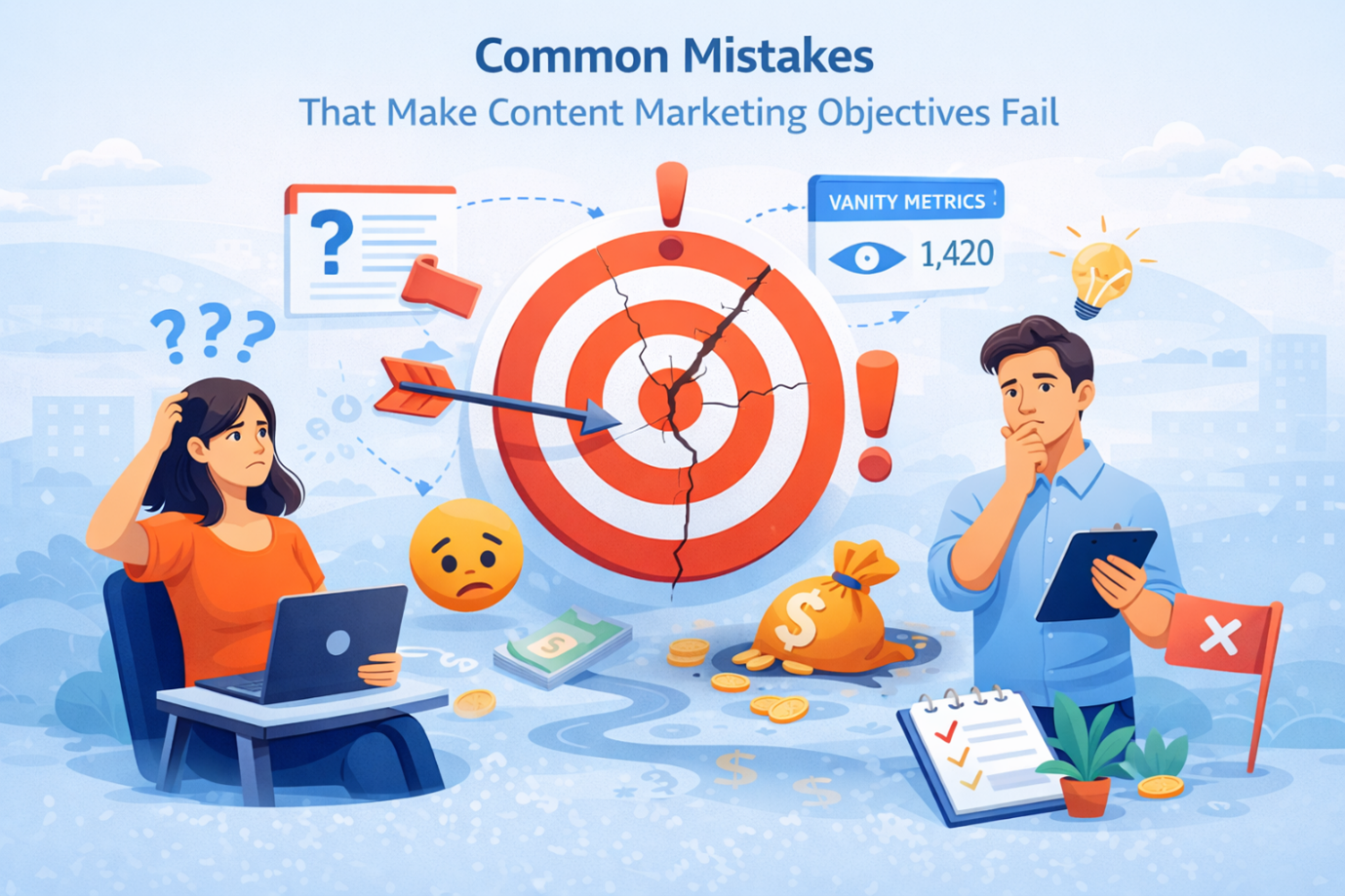
Even strong strategies can collapse when execution falters. Most failures come from a handful of predictable mistakes.
First, teams often choose too many goals. When every article attempts to accomplish everything, none of the objectives are measured properly.
Second, many marketers focus only on traffic. Pageviews feel exciting, but they rarely translate directly into business outcomes.
Another common issue is weak content distribution. Publishing content without promoting it is like opening a store in the desert. No matter how valuable the content is, it won’t reach the audience that is searching for it.
Frequent mistakes:
Avoiding these mistakes dramatically improves the impact of your strategy.
Knowing the objectives is helpful, but implementing them consistently is where results appear. A simple workflow can guide the process.
Step-by-step implementation:
For example, imagine a B2B analytics startup.
The team selects SEO visibility as the primary objective and lead generation as a supporting goal. They publish detailed guides about analytics strategy and offer downloadable templates within those guides.
Using attribution platforms like CausalFunnel, they track which articles generate leads and influence deals. Over time, the strategy evolves based on real data rather than assumptions.
Content works best when it has a clear purpose. The most effective strategies rarely chase every possible outcome. Instead, they focus on one primary objective supported by a few complementary goals.
Choose the objective that matters most for your business right now. Then, build content around that goal, measure the right KPIs, and keep refining the strategy as real data emerges.
The real question isn’t whether content marketing works. It’s whether your content knows exactly what job it’s supposed to do.
Goals describe broad outcomes, such as growing brand awareness or increasing revenue. On the other hand, objectives are more specific and measurable. For example, a goal might be increasing brand authority, while the objective could be earning fifty new backlinks through research-based content.
Most small teams succeed by focusing on three or fewer objectives at once. One primary objective keeps the strategy focused, while two supporting objectives allow content to serve multiple purposes without losing clarity.
B2B strategies often prioritize authority building, lead generation, and sales enablement because buying cycles are longer. B2C brands frequently emphasize awareness, engagement, and loyalty since emotional connection and brand recall play a larger role.
Results depend on the objective. SEO visibility and authority building can take several months, whereas lead generation campaigns may produce faster outcomes, especially when promoted through email or paid channels.
The most meaningful metrics connect to business results. Examples include lead conversions, pipeline influence, customer retention, and revenue attribution. Traffic alone rarely tells the full story.
Start using our A/B test platform now and unlock the hidden potential of your website traffic. Your success begins with giving users the personalized experiences they want.
Start Your Free Trial

Empowering businesses to optimize their conversion funnels with AI-driven insights and automation. Turn traffic into sales with our advanced attribution platform.
Trusted by Customers


©CausalFunnel Inc. All rights reserved.