



Free Funnel Audit
Convert more customers today!
SEO
10 mins read

SEO
10 mins read
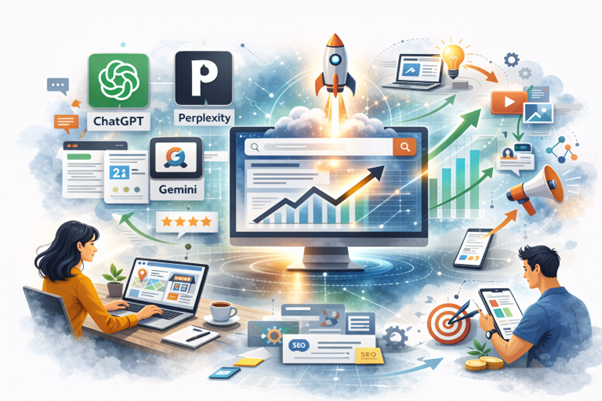
Search is changing faster than most content teams realize. One day, you are fighting for page one on Google. The next day, your audience is asking an AI tool for a summary and never clicking a link.
If your content is not structured for that shift, you quietly disappear from the conversation. The real question is not whether AI will influence discovery, because it already does. The real question is, “When AI engines generate answers in your industry, will they use your content or someone else’s?”
People still type into Google, but they also ask ChatGPT, Gemini, and Perplexity for answers. They want summaries, comparisons, and clear steps.
GEO, or Generative Engine Optimization, is not a hyped up concept. It is about helping AI engines understand and reuse your content correctly. That means structure, clarity, entities, proof, and freshness.
This guide is practical and built for content teams who publish blogs, landing pages, guides, and comparison posts every week. It explains the why first, and then it walks through the how. By the end, you will leave with steps you can apply tomorrow.
If your content already ranks but is never cited by AI tools, this is for you.
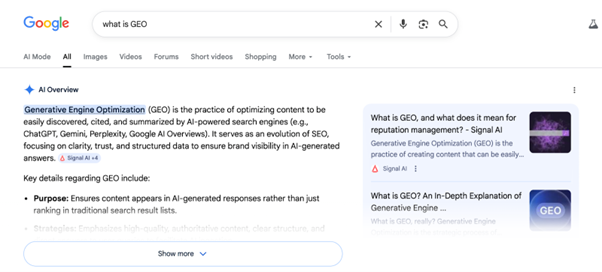
Understanding GEO starts with one simple shift. SEO focuses on ranking in search results, but GEO focuses on being extracted and cited by AI systems.
In traditional SEO, you fight for position one. In GEO, you fight to be the source that an AI model trusts enough to summarize or reference. Therefore, both things are completely different.
Search engines crawl and index pages, whereas generative engines analyze concepts, relationships, and authority. They do not just look at keywords. They look at completeness, structure, and consistency.
Here is how AI engines consume content differently:
Even if you are implementing GEO strategies, ranking, and traffic matters, but extraction is what matters more now.
For content marketing teams, this changes the writing brief. It is no longer enough to persuade readers. You must also make your ideas machine-readable and citation-friendly.
GEO and SEO share the same foundation, but they focus on different results. SEO is about helping your pages rank higher in search engine results so users click through to your site. GEO is about helping your content appear inside AI-generated answers, even when users never click a link.
With SEO, success often means reaching position one on Google. You optimize keywords, improve backlinks, enhance page speed, and refine on-page structure. The goal is visibility in search listings.
With GEO, success means your content is interpreted correctly and cited by generative engines. AI systems analyse meaning, structure, entity relationships, and authority signals before summarising information. They do not just scan for keywords. They assess clarity and completeness.
Here is a simple breakdown:
SEO focuses on:
GEO focuses on:
Another key difference lies in intent. SEO competes for clicks, whereas GEO competes for trust and interpretation. In SEO, users visit your page to read the full article. In GEO, an AI system may summarize your insight directly, sometimes without a visible click.
That does not make SEO obsolete. In fact, strong SEO foundations support GEO. Fast sites, clean structure, and well-organised content help both systems interpret your work effectively.
Think of SEO as the gateway and GEO as the amplifier. SEO gets you discovered in search results, and GEO ensures your expertise travels further inside AI-driven conversations.
So, what are best practice geo for content marketing? It is no longer enough to rank on a results page. Your content needs to be clear enough for AI systems to interpret, structured enough to extract, and credible enough to cite. The goal is simple in theory but powerful in impact: create content that both humans and machines can understand without confusion.
In simple terms, GEO rewards clarity over creativity. It rewards depth over density, and authority over volume. The goal is not to manipulate AI tools, but to become a reliable and structured source of any information.
Best practice GEO for content marketing means:
In short, GEO blends clarity, depth, and authority. It is not about using AI tools, but about becoming a reliable source.
Most marketing copy aims to persuade, but GEO content must also inform clearly.
Persuasive content matters in GEO, but retrieval matters more. AI engines prefer declarative statements and clearly defined sections, as they scan for structured information that can be extracted and summarised accurately.
Start by writing clear declarative sentences. Define terms in simple language, and use question-based headings when helpful.
Execution steps:
For example, instead of saying a tool “transforms marketing intelligence,” explain what it actually does, state the function, describe the process, and clarify the outcome. Clarity increases extraction likelihood. Ultimately, AI engines favor content that reads like an explanation.
This is one reason platforms like CausalFunnel gain visibility. Their content explains processes plainly and ties claims to measurable outcomes, which increases trust signals for AI systems.
Keyword density once dominated SEO strategies. Today, when a concept is complete, it carries more weight. AI systems map relationships between ideas and assess whether a topic is fully explored.
Before publishing, consider whether your page answers likely follow-up questions. If it does not, expand the scope. Comprehensive content increases trust signals and makes your material more useful to both readers and AI engines.
If you publish content about customer journey analytics, you should naturally cover related concepts such as:
Do not try forcing them into the content, but do not ignore them either. Content that covers related entities deeply stands a better chance of being cited because it feels complete.
AI engines process content in segments. Therefore, the best way to create extractable content blocks is by breaking information into digestible sections.
When content is organized into logical chunks, AI systems can identify and reproduce those chunks more reliably. This improves citation potential and visibility inside generated responses.
AI engines favour summary sections, step lists, and comparison tables. When the content is long, with uninterrupted text, it is harder to parse.
Practical ways to improve extractability:
For example, when explaining how a journey analytics tool works, include a step sequence:
Clear steps increase the chance that an AI engine lifts that exact list.
AI systems evaluate credibility by analyzing signals of authority. Unsupported claims weaken extraction confidence, but data and proof strengthen it.
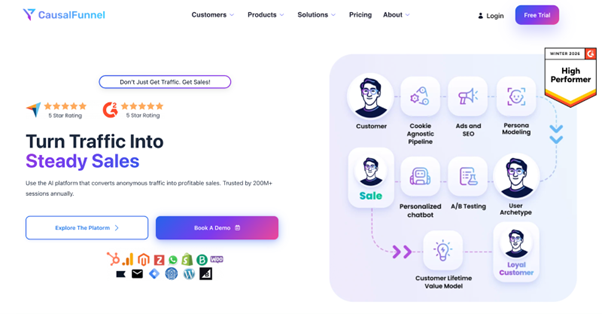
For example, platforms like CausalFunnel often present detailed analytics insights tied to measurable outcomes. When content references specific performance improvements or explains methodology clearly, it becomes more credible, and credibility increases citation probability.
AI tools do not just summarize opinions. They look for evidence.
Proof builds citation confidence. That includes:
If you claim a tactic improves conversion rates, add something to back the information. For instance, state that structured journey analysis can reduce acquisition waste by identifying redundant paid channels.
Proof is the bridge between content marketing and authority.
Comparison intent is strong in AI queries. Users often ask which platform is better, what the differences are, or which solution fits a specific use case.
Publishing balanced comparison pages increases the chance of appearing in AI-generated summaries. Present differences clearly, use structured matrices, and outline strengths and limitations objectively.
Avoid making any exaggerated claims as AI systems value neutrality and clarity. When your content objectively explains distinctions between tools or approaches, it becomes a stronger reference point.
Comparison intent is strong in both SEO and GEO.
AI tools frequently answer questions like “Which platform is better?” or “How does A compare to B?” If your site does not provide balanced comparisons, someone else will.
Build comparison pages that:
When a page explains the differences between journey analytics tools clearly, it becomes reference-worthy. Balanced analysis increases trust signals.
Users move through stages which are awareness, evaluation, and decision. Your content ecosystem should reflect this progression.
Educational guides introduce concepts. Comparison pages support evaluation. Case studies reinforce decisions. Interlinking these assets strengthens semantic clusters and reinforces topical authority.
AI engines recognize patterns across content ecosystems. When multiple pages support a single topic deeply, authority increases. A connected structure signals expertise rather than isolated content pieces.
Users do not jump from awareness to purchase instantly. They move through stages. Therefore, your content should mirror that journey:
Link these pieces together through proper internal linking. Internal linking strengthens semantic clusters and shows AI engines that your site covers the topic deeply. It also improves human navigation. When content forms a connected ecosystem, the authority multiplies, which is eventually good for your website and business.
Entity consistency plays a critical role in GEO. AI systems connect brands, products, and concepts through repeated structured associations.
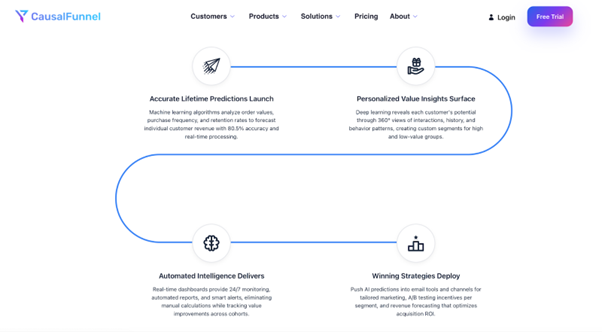
For instance, CausalFunnel is consistently positioned as a journey analytics platform. Repeating this structured association strengthens entity recognition. Inconsistent naming can dilute authority signals.
Practical tips:
Small naming inconsistencies can dilute recognition; therefore, fix them early.
Technical structure supports content clarity. Schema markup helps search engines interpret page types, FAQs, and relationships.
While markup alone does not guarantee AI extraction, it improves interpretability. Clean technical foundations support both SEO and GEO performance.
To ensure breadcrumb navigation is logical, here is the execution checklist:
Structured markup does not guarantee that your content will be extracted or cited by an AI system. There is no single technical switch that forces visibility. However, proper schema and clean semantic structure significantly improve how machines interpret your page.
Generic content rarely earns citations. On the other hand, when content has depth, it signals expertise.
Instead of stating that a tactic improves performance, explain how it works. Break down methodology, provide process steps, and describe measurable indicators of success.
Technical specificity reduces ambiguity and differentiates your content from competitors who rely on surface-level advice. AI systems gravitate toward sources that provide detailed explanations rather than broad statements.
AI engines often favour technically detailed explanations. That includes process breakdowns and frameworks.
Instead of saying “Optimize your funnel,” explain:
When platforms publish detailed breakdowns of journey tracking models, they differentiate themselves from surface-level content.
Freshness strengthens trust, after which industries evolve quickly, especially in analytics and AI.
Content does not stay accurate forever. Tools change, data shifts, and best practices evolve. If your page still reflects advice from two years ago, AI systems may treat it as outdated, even if it once ranked well.
Strategic freshness is not about tweaking a date, but about reviewing content with intent and updating it when the landscape changes.
When you maintain relevance deliberately, you strengthen trust, authority, and long-term visibility. It is right to update content when:
Schedule quarterly reviews for key pages. Scheduled reviews ensure your content remains accurate. AI systems favour current, reliable sources. Strategic updates maintain credibility over time.
Add new examples, remove outdated claims, and expand sections where behaviour shifts. Content that reflects current realities builds stronger trust signals for both search engines and generative engines.
Different AI engines interpret content differently. This is when testing visibility across platforms reveals gaps.
Testing provides feedback and highlights weaknesses in clarity or completeness. Regular evaluation ensures your GEO strategy adapts to evolving AI behaviours.
Ask key queries in multiple tools like ChatGPT, Gemini, and Perplexity, and observe:
Track visibility trends over time, and if your brand never appears in AI responses, something is missing.
If your content is difficult to crawl or navigate, AI systems may struggle to interpret it effectively. This is when technical stability remains foundational to visibility.
GEO does not replace SEO. It extends it. Core fundamentals still matter:
If search engines struggle to crawl your site, AI engines will struggle too. Technical performance underpins visibility everywhere.
Traffic alone does not reflect GEO’s success. Consider alternative metrics.
For example, when a detailed analytics guide increases brand queries or improves assisted conversion rates, it signals authority growth. Platforms such as Causalfunnel often see indirect performance gains through strengthened visibility and credibility.
Traffic is not the only metric anymore. Consider tracking:
GEO impact is often indirect at first. Measurement must adapt.
Even strong content teams slip when they first adopt GEO. The rush to “optimize for AI” often leads to surface fixes instead of structural improvements. Some teams add buzzwords, while others overuse automation. And many forget that clarity, depth, and consistency still drive trust.
Before improving your strategy, it’s better to pause and see what you actually want. Whether you’re going for building authority or just want visibility.
The most common GEO mistakes usually come from good intentions, but they quietly weaken extractability and citation potential over time.
Common mistakes include:
Another mistake is chasing trends blindly. Some teams stuff “AI” into every headline without adding substance. But teams must understand that real expertise takes work. AI engines detect patterns across sources.
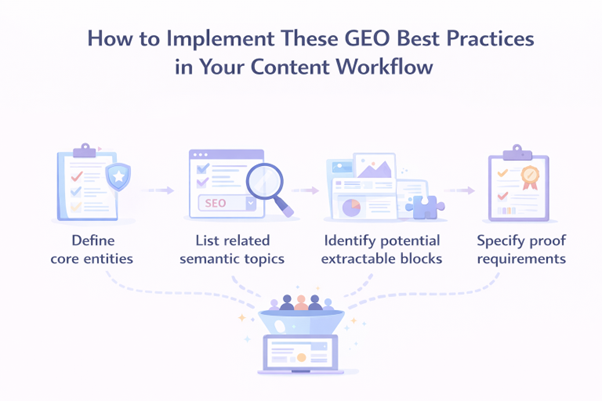
Knowing the theory is one thing, but building it into your daily workflow is another.
GEO only works when it becomes part of how you brief, write, edit, and update content. If it lives as a separate checklist no one follows, it fades fast.
So, how do you turn these best practices into repeatable steps your team can apply every week without slowing production? Implementation is where strategy turns into results, and small process shifts can make a measurable difference over time.
Start with your briefing process, and add GEO checkpoints. Brief template additions you can check are:
During writing:
Before publishing:
Post-publication SOP:
This operational layer separates theory from results. When teams treat GEO as part of the workflow, not an afterthought, visibility compounds over time.
GEO is not a replacement for SEO. It is its next chapter. When marketers ask what the best practice GEO for content marketing is, the real answer is simple: write clearly, cover topics deeply, prove your claims, stay consistent, and update often.
The brands that win will not be the loudest. They will be the clearest.
And when AI systems summarise your industry tomorrow, will your content be the source they trust?
No. GEO builds on SEO, not replaces it. Technical performance, internal linking, and keyword research still matter. The difference is that GEO focuses on how AI systems interpret and extract your content, not just how search engines rank it. Think of SEO as visibility in search results and GEO as visibility inside AI-generated answers.
SEO aims to improve rankings and organic traffic. GEO aims to improve extractability, citation, and semantic clarity within generative AI tools. SEO focuses on position, but GEO focuses on interpretation and trust. Both work best together.
Not necessarily. Start with high-impact pages such as cornerstone guides, comparison pages, and high-converting blog posts. Review them for clarity, entity consistency, structured sections, and proof. Often, improving structure and depth is enough. A full rewrite is rarely required unless the content is outdated or shallow.
No. Schema improves clarity and helps search engines understand content structure, but it does not guarantee extraction or citation. Clear writing, conceptual completeness, and authority signals are more influential. Markup supports GEO, but it is not a shortcut.
It can, but only if it is edited carefully. Generic, repetitive drafts weaken authority. Human editing adds nuance, context, and depth. AI tools can help speed up drafting, but subject matter expertise and structured refinement are still essential for credibility.
No. Smaller brands may benefit even more because AI systems evaluate clarity and depth, not just domain size. A well-structured, comprehensive guide from a smaller site can outperform a large brand’s shallow article if it provides clearer, more complete information.
Focus first on strategic content. Educational guides, comparison pages, technical breakdowns, and high-intent decision content benefit most. Transactional landing pages still matter, but informational assets are more likely to be cited or summarised by AI systems.
The biggest mistake is chasing AI visibility without improving content quality. Adding buzzwords or forcing structure without depth does not work. GEO succeeds when clarity, completeness, authority, and consistency come together naturally.
Start using our A/B test platform now and unlock the hidden potential of your website traffic. Your success begins with giving users the personalized experiences they want.
Start Your Free Trial

Empowering businesses to optimize their conversion funnels with AI-driven insights and automation. Turn traffic into sales with our advanced attribution platform.
Trusted by Customers


©CausalFunnel Inc. All rights reserved.