



Free Funnel Audit
Convert more customers today!
SEO
10 mins read

SEO
10 mins read
Every year, it becomes harder to track conversions accurately in Google Ads. Privacy laws and browser updates now limit many traditional tracking methods. Third-party cookies no longer capture every action after an ad click. Because of this, many advertisers struggle to trust their campaign data.
This is where an advanced ads optimization system becomes valuable. It helps analyze signals, improve tracking accuracy, and guide better campaign decisions.
Google Ads addresses this challenge through enhanced conversions. The feature improves measurement using secure first-party customer data. This approach strengthens conversion tracking in Google Ads while still respecting privacy rules. Many advertisers enable the feature but never fully optimize it.
This guide shares ten practical tips to optimize enhanced conversions and improve campaign performance. You will learn how to increase tracking accuracy and strengthen attribution signals. These tips go beyond basic setup and focus on real optimization. The goal is simple. Help advertisers make smarter decisions using cleaner data and clearer insights.
Enhanced conversions in Google Ads help advertisers measure conversions more accurately. The system uses secure customer data collected directly from your website. This data helps Google connect ad clicks with real conversions.
Traditional tracking often misses conversions when cookies expire or browsers block them. Google Ads enhanced conversions solve this issue using first-party data tracking. The data usually comes from information users provide during forms or purchases.
Before sending this information to Google, the system applies a secure hashing process. Google uses the SHA256 hashing method, a cryptographic algorithm that converts personal data into a fixed-length string of encrypted characters. This process transforms readable information, such as an email or phone number, into a secure code called a hash.
The original data cannot be reversed from this hash, which helps protect user privacy. The same input always creates the same hash, allowing systems to match data securely without revealing the actual personal information.
The hashed data then helps improve conversion attribution in advertising reports.
Common customer data used in enhanced conversions includes:
This privacy-focused approach improves measurement without exposing personal details. Advertisers gain stronger conversion insights while still respecting user privacy expectations.
Enabling enhanced conversions improves measurement. However, optimization determines how valuable the data becomes.
Google’s bidding systems depend on reliable conversion signals. Weak signals reduce the algorithm’s ability to learn.
Poor data quality can lead to several issues:
Strong conversion signals help machine learning systems understand valuable user actions.
When enhanced conversions send better data, bidding systems adjust faster. Campaigns learn which audiences drive real business outcomes.
Better signals also improve performance metrics like:
Optimizing enhanced conversions therefore improves both measurement and optimization.
Before applying optimization strategies, ensure your setup meets several requirements.
These conditions help avoid common tracking issues.
Important prerequisites include:
When these conditions exist, optimization becomes much easier.
Without proper setup, improvements may not work correctly.
Data quality strongly affects enhanced conversion match rates. Poor data often blocks successful conversion matching.
Email addresses usually provide the strongest identifier signal. Phone numbers also improve matching accuracy in many cases.
Your forms should collect customer data in a clear way. Avoid optional fields that reduce useful identifiers.
Follow these best practices when collecting customer data:
Incomplete identifiers reduce successful conversion matching. Missing email addresses often lower conversion match rates.
Example: A user submits a lead form with an incorrect email format. Google cannot match the conversion to the ad click.
Clean and accurate customer data improves attribution accuracy in Google Ads.

Google Tag Manager provides strong flexibility for enhanced conversion implementation.
Many marketers prefer GTM because it simplifies tracking management.
Tag Manager helps teams deploy changes without editing website code.
Key advantages include:
GTM also supports custom JavaScript variables. These variables extract customer data from confirmation pages.
Preview mode helps verify variables before publishing tags. This testing step prevents tracking errors.
Using GTM also improves long-term tracking maintenance.

Enhanced conversions rely heavily on customer identifiers. Email addresses usually deliver the strongest match signals.
Your tracking setup must pass this data correctly to Google Ads.
Incorrect variables often prevent the system from receiving identifiers.
Common mistakes include:
Always verify that identifiers populate correctly inside GTM preview mode.
Look for variables capturing email or phone data correctly.
If values appear empty, the system cannot match conversions.
Correct data flow greatly improves match rate performance.
Conversion tracking depends on correct trigger timing. Tags must fire after customer data becomes available.
Many websites trigger conversion tags too early. This often causes missing or incomplete conversion data.
For example, a form submission may trigger a tag. However, the user email may load slightly later. When this happens, Google cannot capture the identifier.
That missing data reduces the chance of successful conversion matching.
Common trigger events include:
Each trigger should fire only after user data appears in the data layer. This ensures identifiers pass correctly with the conversion event.
Example: A lead form triggers conversion tracking immediately after clicking submit. The email loads later, so the identifier is missing.
Always test trigger timing during implementation and updates. Use preview mode to confirm events fire at the correct moment.
Correct trigger alignment improves match rates and tracking accuracy. It also strengthens conversion data used by Google Ads bidding systems.
Testing prevents tracking errors before publishing tags.
Google Tag Manager preview mode helps verify variable behavior.
Begin testing by performing a sample conversion on your website.
Common testing steps include:
Look for your conversion tracking tag inside the preview panel.
Then verify the variables captured during the event.
Check that identifiers such as email appear correctly.
If values appear blank, troubleshooting becomes necessary.
Testing ensures enhanced conversions send usable data.
Match rate measures how often Google connects identifiers to users.
Higher match rates improve conversion attribution accuracy.
Collecting multiple identifiers often increases match success.
Useful identifiers include:
Multiple identifiers increase the probability of successful matching.
Ensure consistent formatting across your website forms.
Avoid storing customer data in different formats across pages.
Standardized data improves matching consistency.
Higher match rates produce stronger optimization signals.
Google Ads provides diagnostic tools for enhanced conversions.
These diagnostics help identify tracking problems early.
Navigate to your conversion action inside Google Ads.
You can review match rate signals and tracking health.
Common diagnostic messages include:
These alerts help advertisers detect problems quickly.
Regularly reviewing diagnostics prevents long-term tracking gaps.
Fixing issues early improves campaign optimization performance.
Smart Bidding systems rely heavily on conversion signals.
Enhanced conversions strengthen those signals.
Better signals help machine learning understand valuable user behavior.
Improved conversion signals help Smart Bidding:
Smart Bidding strategies include:
Better conversion data helps these systems learn faster.
This learning improves campaign efficiency.
Privacy compliance remains critical when using enhanced conversions.
Advertisers must collect customer data responsibly.
Google requires clear disclosure when using first-party data.
Your privacy policy should explain how data supports advertising measurement.
Important privacy practices include:
Hashing protects user information during data transfer.
This process prevents readable personal data from leaving your website.
Responsible data practices help maintain user trust.
Conversion tracking requires ongoing monitoring.
Websites frequently change pages, forms, and tracking scripts.
These changes sometimes break conversion tracking.
Regular audits help detect issues quickly.
Key optimization actions include:
Consistent testing helps maintain strong tracking performance.
Reliable conversion signals improve campaign optimization.
Some tools help advertisers go beyond basic tracking optimization. These tools provide deeper insights into user behavior and conversion funnels. They help connect ad performance with real on-site activity.
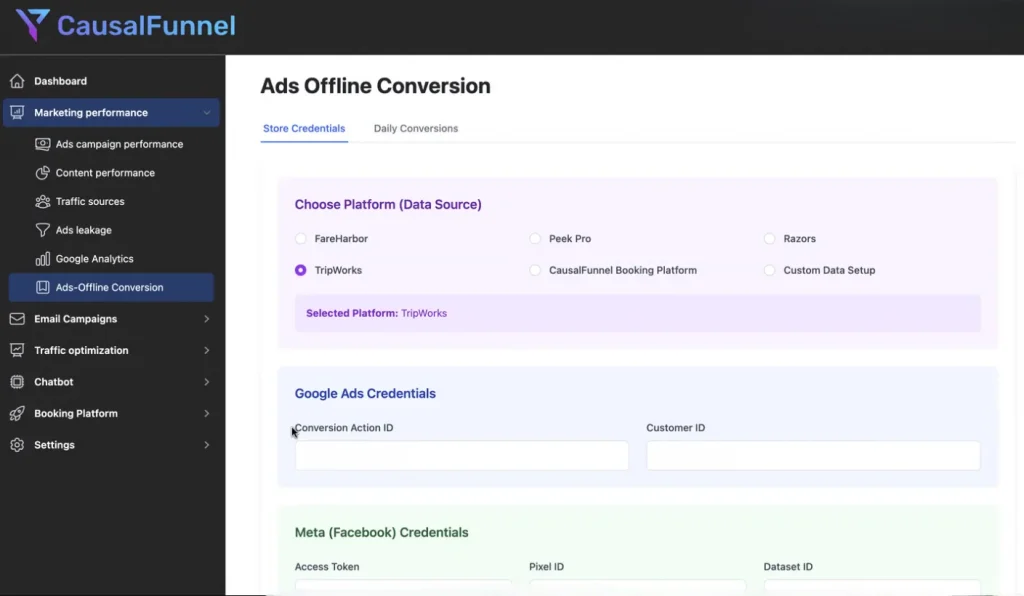
Optimization tools help marketers understand what happens after ad clicks. CausalFunnel Ads Optimizer connects ad performance with website behavior. This tool shows how users interact after arriving from Google Ads campaigns.
For example, the system may reveal that many users leave before checkout. Advertisers can then adjust landing pages or campaign targeting. Better behavioral insights improve bidding decisions and attribution analysis.
Many visitors hesitate before completing conversion actions. AI-powered persona nudges help encourage users to continue. CausalFunnel analyzes user behavior patterns in real time.
The system can display personalized messages or offers.
Examples include:
These nudges help reduce funnel leakage and improve conversion rates. Higher conversion rates also strengthen campaign data signals.
User journey mapping visualizes how visitors move through the website. CausalFunnel provides visual insights into user behavior across pages. These maps help identify points where visitors leave the funnel.
For example, many users may abandon checkout pages. Advertisers can then investigate usability problems or page speed issues.
Improving these pages increases the chance of successful conversions. Better user journeys produce stronger conversion signals.
Several platforms simplify enhanced conversion implementation. These integrations help marketers manage tracking more efficiently.
Google Tag Manager helps deploy conversion tags quickly. Marketers can manage tags without editing website code. GTM also supports testing through preview and debugging tools. These features simplify enhanced conversion implementation.
Google Analytics 4 helps analyze user behavior across sessions. GA4 event tracking reveals how users interact with conversion pages. This insight helps marketers understand which actions lead to conversions. Combining GA4 data with enhanced conversions improves measurement accuracy.
Enhanced conversions make it easier for advertisers to see how well their campaigns are doing. But the feature works best when it is carefully optimized. High-quality customer data makes it much easier to match conversions. Google can better match conversions to ad interactions when identifiers are clean.
Testing on a regular basis is also an important part of keeping track of accuracy. Tags should only go off after identifiers show up in the data layer. Smart Bidding systems learn faster when they get better conversion signals. This lets campaigns use better data to make better bids.
Advertisers who improve enhanced conversions get more information about their campaigns. These insights help teams figure out what really makes people convert. Better information helps you make better marketing decisions and get better results from your campaigns. Over time, optimized tracking can make ads work a lot better.
Yes! Turning on enhanced conversions helps track your ads more accurately. It uses first-party customer data to match conversions reliably. This gives you clearer insights and smarter decisions for your campaigns.
Enhanced conversions match clicks to real conversions using hashed customer data. This reduces missed conversions and improves campaign attribution. Better signals also help Smart Bidding optimize your ad performance faster.
Yes. They rely entirely on first-party data like emails, phone numbers, and names.This ensures your tracking stays compliant with privacy laws. Accurate and complete data helps Google match conversions correctly every time.
Use Google Tag Manager preview mode or Google Ads diagnostics tools. Make sure tags fire only after identifiers appear in the data layer. Testing helps prevent missing conversions and ensures reliable campaign data.
Incomplete data, missing emails, or early tag firing often reduce match rates. Skipping regular testing can cause conversion data gaps. Clean forms, proper triggers, and validation ensure accurate tracking every time.
Start using our A/B test platform now and unlock the hidden potential of your website traffic. Your success begins with giving users the personalized experiences they want.
Start Your Free Trial

Empowering businesses to optimize their conversion funnels with AI-driven insights and automation. Turn traffic into sales with our advanced attribution platform.
Trusted by Customers


©CausalFunnel Inc. All rights reserved.