



Free Funnel Audit
Convert more customers today!
SEO
10 mins read

SEO
10 mins read
Choosing the right content marketing tools feels harder than ever. New platforms launch every month promising faster traffic, more leads, and higher revenue, yet very few actually deliver real growth.
You do not need dozens of random tools. You need the right system for your goals. The best content marketing tools support your full strategy. They help you plan, create, publish, and measure content. They also help you turn visitors into paying customers.
This guide breaks everything down in simple steps.
By the end, you will know which content marketing tools fit your business best.
Content marketing tools are platforms that help you manage content work. They support planning, research, writing, publishing, and tracking results. Some tools focus on traffic growth and SEO, while others focus on engagement and conversions.
Most content marketing platforms fall into these categories:
Each category plays a different role. Together, they build a strong content system.
For example:
When combined correctly, these tools create steady growth. That is why choosing the best content marketing tools matters.

Not every tool fits every business type. Your choice depends on size, goals, and budget. The best content marketing tools align with your growth stage.
You need simple and affordable tools. So, choose platforms that handle multiple tasks together, and avoid complex systems that slow you down.
Focus on:
Keep your setup lean and efficient.
You likely need better automation and reporting. Team collaboration becomes more important at this stage. Choose tools that allow shared access and tracking.
Look for:
Large teams need advanced coordination tools. Security and data control become critical here, along with scalability.
Enterprise businesses often require:
Your main objective should guide tool selection.
Focus on SEO tools and keyword research platforms. They help you find topics with real demand.
Email marketing tools and landing page tools matter most. You must capture and nurture visitors consistently.
Social media marketing tools help you reach wider audiences. They make distribution easier and more organized.
Analytics tools and testing platforms are essential. They show where users drop off.
Clear goals prevent wasted money and confusion.
Your budget determines your tool stack depth.
You can start with free content marketing tools. Many platforms offer limited free plans. This works well during early growth stages.
Paid plans offer better automation and insights. Mid-range tools suit growing teams well.
High-end tools provide advanced data and control. These platforms support complex marketing campaigns.
Spending more does not guarantee better results. Smart strategy always matters more than the price of the tool.
Now, let us explore the most useful tools by category. Each section explains what the tool does. You will also see who benefits most.
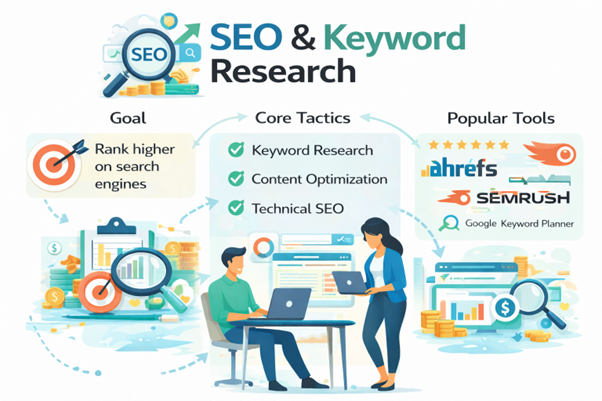
SEO tools help you discover search demand. They show what your audience is already searching for. This reduces guesswork in content planning.
Ahrefs is a powerful SEO research platform. It helps you analyze competitors and backlinks. You can track keyword rankings easily.
Best for: SEO professionals and growth teams.
Key strengths:
Semrush is another leading SEO tool. It offers keyword research and site audits. It also supports content planning workflows.
Best for: Teams needing all-in-one SEO support.
Key strengths:
Google Search Console is a free analytics platform. It shows how your site performs in search. You can also monitor clicks and impressions.
Best for: All website owners.
Key strengths:
Content creation tools help improve writing quality. They also improve clarity and structure.
Grammarly checks grammar and tone issues. It helps improve clarity and readability.
Best for: Writers and marketers.
Key strengths:
Surfer SEO helps optimize articles for search engines. It compares your content with top results.
Best for: SEO-focused content teams.
Key strengths:
CausalFunnel is a conversion-focused platform. It uses AI to personalize website experiences, which helps increase leads and engagement.
Best for: Businesses aiming to improve conversions.
Key strengths:

Social media plays a big role in content growth. You can create great content and still not get the attention or clicks you want. Distribution matters as much as creation. That is where social media marketing tools help.
These tools help you schedule and track posts, improve engagement and team coordination. Strong distribution increases visibility and brand recall.
Buffer is a simple scheduling platform that allows you to plan posts. You can manage multiple social accounts together.
Best for: Small teams and beginners.
Key strengths:
Buffer works well for steady posting schedules.
Hootsuite supports larger social media teams. It offers deeper tracking and analytics features. You can monitor conversations across platforms through it.
Best for: Growing and enterprise teams.
Key strengths:
Choose the best social media marketing tool based on team size and needs.
Email remains one of the highest ROI channels. It helps convert readers into paying customers. Email marketing tools manage subscribers and campaigns.
These platforms also automate follow-up sequences. Automation saves time and improves consistency.
Mailchimp is a popular email platform supporting campaigns and automation workflows. It also provides templates for beginners.
Best for: Small to mid-sized businesses.
Key strengths:
ConvertKit focuses on creators and bloggers. It offers simple automation rules and tagging, as well as works well for digital product sellers.
Best for: Creators and course sellers.
Key strengths:
Automation improves customer experience. It sends the right message at the right time and reduces manual work for your team.
Strong marketing automation tools improve lead nurturing. They also increase long-term customer value. If you already drive traffic, optimize conversions next. That is where personalization becomes powerful.
CausalFunnel helps personalize visitor experiences in real time. Our team helps studies behavior and adapts your messaging instantly to increase engagement and conversion rates naturally.
Tracking results is critical for growth. Without data, you are guessing blindly. Analytics tools show what works and what fails. They help improve decisions with real insights.
Google Analytics tracks website performance in detail. It shows traffic sources and user behavior. You can measure conversions and engagement easily.
Best for: All website owners.
Key strengths:
Hotjar focuses on behavior insights. It shows heatmaps and session recordings. You can see where users click most.
Best for: Conversion optimization teams.
Key strengths:
Analytics connects effort to results. It shows which content drives real value. You can improve weak pages quickly.
Good content marketing tools always include tracking platforms. Data guides smarter and faster growth decisions. When analytics show traffic but low conversions, take action. Personalization tools can fix that gap effectively.
To improve conversion performance, check out CausalFunnel. It helps turn visitors into qualified leads automatically.

Planning keeps your content consistent, as random posting rarely creates steady long-term growth, while workflow tools organize ideas, manage deadlines, and improve team communication.
Trello uses boards and cards for tasks. It makes content planning visual and simple.
Best for: Small teams and startups.
Key strengths:
Asana supports structured project workflows and works well for larger teams. You can assign tasks and track deadlines.
Best for: Mid-sized and enterprise teams.
Key strengths:
Notion combines notes and task management. It supports content calendars and documentation.
Best for: Flexible planning systems.
Key strengths:
The best content marketing tools work as a system.
When these tools connect smoothly, growth becomes predictable. However, you do not need every tool available. You need tools that support your strategy clearly.
If conversion remains your weak point, fix it early. Personalization and behavioral targeting can improve outcomes quickly.
That is why many businesses add CausalFunnel to their stack. We assist in covering the gap between traffic and revenue.
Choosing tools becomes easier with clear examples. A tool stack is your complete working system. It combines different content marketing tools into one workflow. The right stack depends on your business stage.
Below are simple stack examples for clarity.
This setup works for new businesses. It keeps costs low and tools simple by focusing on traffic and early lead capture.
Recommended stack:
Why this works:
This setup supports steady early growth.
This setup suits growing businesses where traffic is increasing, and leads matter more. This is where automation and optimization become essential.
Recommended stack:
Why this works:
Large teams require structured systems, where data accuracy and scalability become critical.
Recommended stack:
Why this works:
Enterprise stacks focus on efficiency and measurable ROI.
Also Read: How CausalFunnel Helps You Optimise Landing Pages for Better Ad Performance
A quick comparison helps simplify decisions. Below is a structured overview for clarity:
Tool | Category | Best For | Free Plan | Core Strength |
SEO tools | Growth teams | No | Deep keyword research | |
SEO tools | Enterprises | Limited | All-in-one SEO suite | |
Content creation tools | Writers | Yes | Grammar improvement | |
Email marketing tools | Small businesses | Yes | Email campaigns | |
Analytics tools | All websites | Yes | Traffic tracking | |
Personalization tool | Conversion growth | No | AI visitor targeting |
This table highlights core strengths clearly and helps you match needs with solutions quickly.
The right content marketing tools depend on your goals.
The best content marketing tools support your entire funnel. They connect research, creation, distribution, and measurement. They also help convert attention into real revenue.
Start simple and grow gradually. Do not chase every new platform. Choose tools that align with your strategy clearly.
If conversion remains your biggest challenge, act quickly. Traffic alone does not guarantee growth. Personalized experiences often drive better results.
Visit CausalFunnel to explore smarter targeting solutions and elevate your content marketing tools strategy significantly.
This completes Part 3 and the full guide.
Content marketing tools support content planning and growth. They help with research, creation, publishing, and analysis. Together, they build a complete marketing system.
The best content marketing tools for beginners are simple and affordable. Choose platforms that combine multiple features. Free SEO and email tools work well initially.
Most businesses start with three to five tools. Too many tools create confusion and waste spending. Focus on quality instead of quantity.
SEO tools focus on keyword research and rankings. Content creation tools improve writing and structure. Both support a strong content strategy together.
Start using our A/B test platform now and unlock the hidden potential of your website traffic. Your success begins with giving users the personalized experiences they want.
Start Your Free Trial

Empowering businesses to optimize their conversion funnels with AI-driven insights and automation. Turn traffic into sales with our advanced attribution platform.
Trusted by Customers


©CausalFunnel Inc. All rights reserved.