



Free Funnel Audit
Convert more customers today!
SEO
10 mins read

SEO
10 mins read
Content marketing for small businesses is no longer optional today. Customers search online before making any buying decision. If they cannot find you, they choose someone else.
Many owners think content marketing feels complex or expensive. In reality, it does not need a big team or a large budget. It needs clarity, consistency, and simple planning.
This guide will show you how to start smart. You will learn what works and what does not in content marketing. You will also see how to avoid common mistakes.
If you want expert help building your strategy, visit CausalFunnel. We help small brands grow with data-driven marketing systems.
Let us start with the basics.
Content marketing for small businesses means sharing helpful information online. This information attracts, educates, and builds trust with customers.
Instead of pushing ads, you offer value first. That value earns attention and long-term loyalty.
Content can take many different forms:
Content marketing for local businesses often focuses on community needs. For example, a local bakery can post seasonal recipes. A plumbing service can share home care tips. This approach builds authority in your area. It also improves your visibility in local search results.
A strong small business content strategy always starts with clarity. You must know who you want to help and what problems they face daily. When done right, content becomes your best salesperson.

Small businesses compete with big brands every day. Large companies have large ad budgets, but small brands must compete in a smarter way. Content marketing helps level the playing field. It helps you show expertise without spending much.
Content marketing for small businesses offers clear benefits:
Trust grows before the first call or visit, and visibility grows with each helpful article. Eventually, leads come without constant ad costs.
Local customers search when they are ready to buy. They look for services near their home or office. Helpful blog posts improve your local search presence. Search engines reward useful and relevant content.
Content marketing for local businesses helps you appear at the right time. It connects you with people who need your service now.
The best content marketing for small businesses solves real problems without pushing sales too early. It answers questions in a clear and simple way.
When you help first, people trust you more. Trust leads to action.
You can measure content marketing ROI over time.
Track:
This makes your effort practical and data-driven. You can improve results month after month. When you invest in helpful content, results grow steadily, and each article becomes a long-term digital asset.
If you want a proven system for growth, explore CausalFunnel. The right strategy can turn content into predictable revenue.
Starting feels hard when there is no plan. A clear content marketing plan for a small business removes confusion. Follow these simple steps to build momentum:
You cannot serve everyone at once. Therefore, you must choose a clear audience focus.
Ask yourself these simple questions:
For local business content marketing, location matters greatly. Include city names and community topics naturally. This supports a strong local content marketing strategy.
When you know your audience clearly, ideas become easier. Your content will feel more focused and useful.
Goals give direction to your effort. Without goals, content becomes random and unfocused.
Use simple SMART goals:
For example, increase website visits by twenty percent. Another example is gaining fifty email subscribers monthly.
To measure content marketing ROI, track these metrics:
Clear goals keep your strategy grounded. They also help you improve over time.
A content marketing plan for a small business must stay practical. It should match your time and team capacity. Start by choosing two core content types. Blog posts and email newsletters work very well.
Your small business content strategy should include:
Avoid trying every platform at once, and focus on quality over quantity always. The best content marketing for small businesses stays consistent. Even one strong article per week builds authority steadily.

A content calendar for a small business prevents last-minute stress. It helps you plan topics ahead of time. Start with one month of ideas, and choose four clear topics that answer common questions.
For example:
A simple spreadsheet works perfectly. You do not need complex software tools initially. Planning improves consistency and quality. Consistency builds trust with both readers and search engines.
Content marketing ideas for small businesses should solve real problems. They should also reflect your unique expertise.
Try these practical idea formats:
Content marketing for local businesses can include local guides. You can write about events or neighborhood highlights that strengthen your local content marketing strategy further.
Strong ideas connect directly to customer pain points; they do not chase trends without purpose.
Also Read: What Are the Stages of Sales? 6 Key Steps to Improve Conversions
Now that your foundation is ready, execution begins. Execution turns your ideas into real growth results.
The best content marketing for small businesses focuses on action and steady improvement over time. You do not need complex campaigns initially, practical systems that stay manageable weekly.
Below are proven strategies that work consistently:
Blogging remains one of the strongest growth channels. It supports organic traffic and builds brand authority. Content marketing for small businesses depends heavily on search visibility. People search daily for answers to specific problems. When your blog answers those questions clearly, traffic grows.
Focus on writing posts that:
Content marketing examples that include tutorials perform especially well. Step-by-step guides improve time on page significantly.
In the case of content marketing for local businesses, it must include city-specific keywords naturally. Write about local concerns and seasonal trends. This improves your local search rankings steadily.
Email marketing strengthens your relationship with readers. It keeps your audience engaged beyond one blog visit. A simple weekly newsletter works very well. Share useful tips, updates, and insights consistently.
The best content marketing for small businesses uses email to build loyalty.
It does not use email only for promotions.
Include helpful content such as:
Email helps you measure content marketing ROI clearly. You can track open rates and click performance easily. Over time, email subscribers become your warmest leads.
Social media supports visibility and engagement. However, random posting rarely delivers strong results. Content marketing for small businesses must stay intentional. Each post should connect to your broader strategy.
Use social platforms to:
For local business content marketing, highlight community stories. Tag local partners and events naturally to increase local engagement and visibility.
Avoid chasing every trending platform. Rather, focus on one or two strong channels. Consistency matters more than volume always.
Content marketing for local businesses requires a local focus. Search engines prioritize relevance and proximity signals.
Your local content marketing strategy should include:
For example, a fitness studio can write seasonal wellness tips. A landscaping company can post regional planting guides.
These topics attract local traffic with buying intent and improve your visibility in map results. Content marketing examples that include community insights perform better locally. They feel personal and trustworthy to readers. Strong local content builds a reputation steadily.
Video increases trust and emotional connection. It also improves the time spent on your website. You do not need professional studio equipment. Smartphone videos work perfectly for small brands.
Create simple video formats such as:
The best content marketing for small businesses often blends formats. Blog posts can include short supporting videos. Videos can also link back to written guides. This multi-format approach strengthens user experience.
Repurposing saves time and increases reach. It allows one idea to work across multiple channels.
For example:
Content marketing for small businesses benefits from efficiency. You should maximize each piece of work fully. Repurposing also reinforces your core message consistently. Consistency improves recognition and trust levels.
Local businesses must stay relevant. National plans do not always work at the local level. Therefore, content marketing for local businesses should clearly mention the location. They can talk about neighborhoods or mention nearby landmarks naturally.
Your local content marketing strategy should include:
This approach boosts visibility and builds trust. Customers trust businesses that understand local needs. When you talk about real local issues and experiences, your content feels genuine, which makes people more confident about choosing your business.
Also Read: SEO Roadmap for Small Businesses
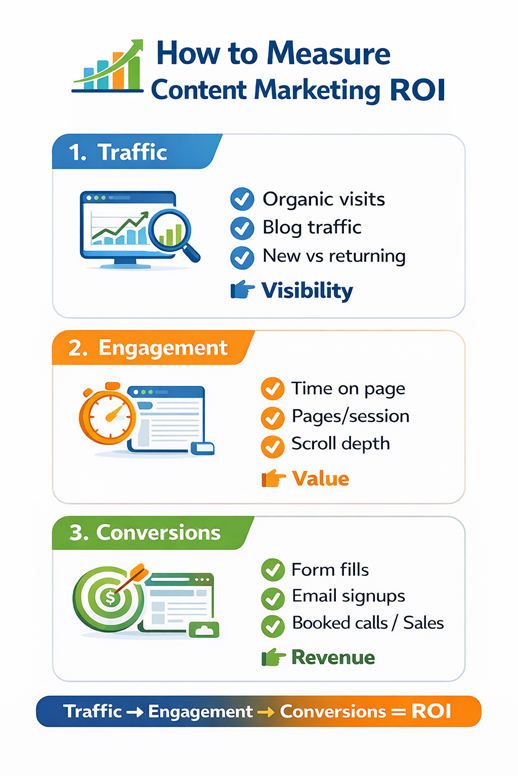
Content marketing for small businesses must produce measurable results.
Without measurement, effort turns into guesswork quickly.
Let us focus on turning content into revenue:
Traffic shows how many people visit your site. Organic traffic matters most for long-term growth.
Track these simple numbers:
If traffic grows steadily, your strategy works.
Traffic alone does not guarantee conversions. You must measure how visitors interact.
Look at these indicators:
Strong engagement shows your content provides value. It also signals quality to search engines.
Conversions show real business impact. This is where ROI becomes visible.
Track actions such as:
Content marketing for small businesses must drive action. If visitors do not convert, adjust your messaging. The best content marketing for small businesses aligns content with buyer intent. Educational content builds awareness first, and conversion pages close the deal later.
If you want help setting up advanced tracking systems, visit CausalFunnel. We build analytics frameworks that connect content directly to revenue.
You do not need expensive content marketing tools; you just need the ones that save time and make work easier. Here are the main tool types you should use:
SEO tools help people find your website. They show which words people search for, and how your site performs.
Look for tools that help with:
SEO helps your business grow over time.
Planning tools keep your work organized and help you stay consistent.
Use simple tools for:
A content calendar helps you post on time and keeps your schedule steady.
Analytics tools show what works. They help you measure results.
Track these numbers often:
If you run a local business, check where visitors live, and see which cities bring the most traffic. This helps you focus your efforts.
Images and videos grab attention. They also build trust.
Use tools that let you:
Text plus visuals works best. It makes your content easier to read and improves user experience.
Also Read: Content Marketing and SEO: How They Work Together
Real examples make ideas clear. Here are three simple content marketing examples you can use:
A home repair company started a blog. They posted one article each week that answered one common question.
For example, how to fix a leak. Or how to stop roof damage. Every article ended with a clear call to action.
After six months:
This shows that content marketing works for local businesses. Helpful answers bring real leads.
A small fitness studio made free workout guides. People downloaded the guides and shared their email addresses first.
The studio sent one helpful email each week. Most emails gave tips, while only a few promoted classes.
Over time:
In this case, value came first, and sales came later. This is a smart way to build trust.
A small skincare brand started an education blog. They wrote about skin problems by explaining product ingredients in simple terms.
They linked each post to related products and tracked results every month.
After one year:
When people understand what they buy, they feel safe. When they feel safe, they buy more.
Content marketing for small businesses is a long-term asset that builds trust, traffic, and revenue steadily. The strategy works best when structured properly. It works even better when measured carefully.
Content marketing for local businesses becomes powerful with consistency. Local trust often converts faster than national visibility. The best content marketing for small businesses focuses on real problems. It speaks clearly and solves urgent needs.
You now have a complete roadmap for success. So, start small but stay consistent every week.
If you want expert guidance and proven growth systems, visit CausalFunnel. Our team helps small businesses build scalable marketing engines with a data-backed strategy.
Your competitors are already publishing helpful content. The question is whether you will lead or follow. Therefore, start building your growth engine today.
Yes, it builds long-term traffic and authority. It reduces dependency on paid advertising channels. Results grow steadily with consistent effort.
Most businesses see early traffic growth within three months. Strong lead generation often appears after six months. Consistency remains the key success factor.
Investment depends on goals and competition level. Start with manageable monthly resources. Scale investment after measuring early results clearly.
Clarity, consistency, and user-focused value matter most. Avoid complicated strategies early on, and focus on solving real customer problems.
Start using our A/B test platform now and unlock the hidden potential of your website traffic. Your success begins with giving users the personalized experiences they want.
Start Your Free Trial

Empowering businesses to optimize their conversion funnels with AI-driven insights and automation. Turn traffic into sales with our advanced attribution platform.
Trusted by Customers


©CausalFunnel Inc. All rights reserved.