



Free Funnel Audit
Convert more customers today!
SEO
10 mins read

SEO
10 mins read
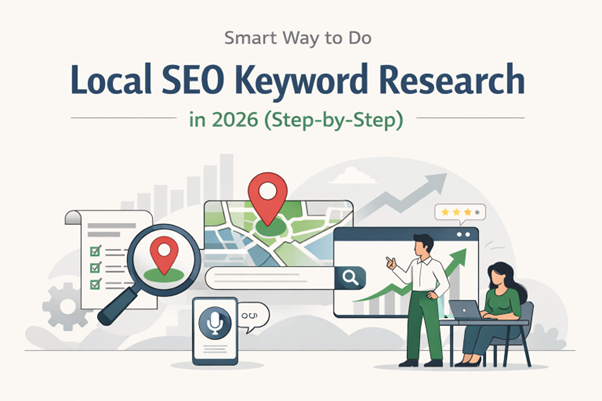
Local SEO keyword research helps businesses appear when nearby customers actively search for services.
In 2026, search behavior is more local, mobile-focused, and voice-driven than ever before.
People now expect results that match their exact location and immediate needs.
This guide explains how to do local SEO keyword research step by step. Each step focuses on real user intent and practical actions that drive local results. You can apply this process to any local business or service area easily.
Local SEO keyword research is the process of finding search terms people use in specific locations.These keywords clearly show local intent and often lead to calls or store visits.Unlike general keyword research, location plays a critical role here.
Search engines use location signals to match searches with nearby businesses.This process helps businesses appear consistently in local search results.
Local SEO keyword research focuses on relevance, intent, and geographic accuracy.It helps search engines connect your business with nearby users quickly.This approach improves visibility where buying decisions usually happen.

Local SEO keywords include a service combined with a location reference.They usually show strong action intent from users.These keywords help businesses reach nearby customers faster and more efficiently.
Local SEO keywords often fall into different keyword length types.Each type serves a different role in the local search journey.
Short-Tail Keywords | Medium-Tail Keywords | Long-Tail Keywords | “Near Me” Keywords |
plumber Calicut | emergency plumber Calicut | best emergency plumber in Calicut | plumber near me |
dental clinic Chicago | family dentist Chicago | affordable family dentist in Chicago | dentist near me |
car repair Dallas | car repair shop Dallas | reliable car repair shop in Dallas | car repair near me |
beauty salon Miami | hair salon Miami | best hair salon in Miami | beauty salon near me |
digital marketing course Calicut | digital marketing institute Calicut | best digital marketing course in Calicut | marketing course near me |
These keyword types serve different stages of the local search journey. Short-tail keywords build broad local relevance and visibility.Medium-tail keywords show clearer service intent and moderate competition.Long-tail keywords attract highly motivated users ready to act.“Near me” keywords capture urgent and location-sensitive searches.
Using a balanced mix improves rankings and conversion potential together.This approach keeps local SEO keyword research practical and user-focused.
Search behavior continues to shift toward mobile and location-based queries. Users now expect instant results that match their exact location. Local SEO keyword research helps businesses meet these expectations.
Search engines rely on intent and relevance more than keyword repetition. Local keywords help connect businesses with ready-to-convert users. They also improve visibility on Google Business Profile and maps.
Businesses that ignore local keyword research lose qualified traffic. Those who do it well gain more calls, visits, and leads.
This framework is designed for clarity, accuracy, and long-term growth. It avoids shortcuts that create temporary wins but long-term ranking problems. Each step builds logically on the previous one. Nothing here feels disconnected or random.
This process works for service businesses, multi-location brands, and local stores. You can apply it to plumbers, clinics, law firms, or retail businesses. You can also repeat it for new locations as your business expands. That repeatability makes this framework reliable and scalable.
The goal is simple. Find keywords real people use when they are ready to take action.
Local search intent explains why someone searched in the first place. People do not search randomly. They search because they want answers, directions, or help nearby. If you ignore intent, even high-volume keywords will fail.
Understanding intent helps you predict user behavior. It also helps you create pages that match expectations. That match increases clicks, engagement, and conversions.
Most local searches fall into three main intent categories.
These intent types include:
Local SEO keyword research begins by identifying these intent signals clearly. Each keyword should reflect what the user wants right now. This alignment tells search engines your page deserves visibility. It also improves map pack rankings and local organic results.
Seed keywords are the core terms related to your service. They describe what you do in the simplest possible way. Examples include words like plumber, dentist, electrician, or repair service. These keywords form the foundation of your entire research process.
Location signals turn these general terms into local keywords. They tell search engines where your service is relevant. They also help match your business with nearby searchers.
You can expand seed keywords using:
This step keeps your keyword list targeted and realistic. It prevents wasting effort on keywords that cannot rank locally. It also helps avoid traffic that never converts into leads.
Strong seed keywords make the next research steps faster and cleaner. They reduce confusion and keep your strategy focused on results.
Keyword tools help turn ideas into data-backed decisions. They show how people actually search in real locations. Without tools, keyword research becomes guesswork. With tools, you see demand, trends, and realistic ranking potential.
Each tool serves a different purpose. Using only one tool can hide important signals. Using several tools creates a clearer and more reliable picture.
Useful tools include:
Focus on insights, not just keyword volume numbers. High volume does not always mean high value. Many low-volume local keywords convert extremely well.
Choose keywords that match user intent and business goals. Tools support smart decisions but never replace human judgment. Always ask if a keyword fits what your customer truly needs.

Competitor analysis shows what already works in your market. It helps you avoid repeating mistakes others have made. Local competitors often target keywords you can rank for too. This makes analysis both efficient and practical.
Start by searching your main services locally. Review the businesses ranking in the top local results. Look beyond surface-level content and study their structure.
When analyzing competitors, look for:
This step reveals content gaps you can fill. It also shows where competitors fail to explain things clearly. Your advantage comes from better clarity, not imitation.
Avoid copying layouts or wording directly. Instead, focus on answering questions more directly and completely. Better value builds stronger rankings and user trust over time.
Voice search keeps growing across mobile phones and smart devices. People now speak to search engines like real conversations. These searches sound natural and often feel more personal. They usually include full questions instead of short phrases.
Voice-based searches often show strong local intent. Users expect quick answers and nearby business options. This makes voice keywords highly valuable for local SEO.
Common voice and long-tail keyword patterns include:
Long-tail keywords are easier to rank for in local results. They usually face lower competition than short keywords. These terms attract users closer to taking action.
SEO professionals understand search behavior and algorithm changes. They know how to group keywords by intent and service type. This helps create a clear and scalable content structure.
Professionals also map keywords to the right pages. This prevents overlap and internal keyword competition. A proper structure improves rankings, user flow, and conversions. Expert guidance saves time and avoids costly mistakes. It ensures your local SEO strategy remains effective in 2026.
High search volume does not always equal high business value. Some keywords bring traffic but generate no calls or visits. Prioritization ensures effort leads to measurable outcomes. This step protects time, budget, and resources.
Focus on keywords that support real business goals. Local SEO success depends on quality, not sheer traffic size.
When prioritizing keywords, consider:
Low competition keywords often perform better in local searches. They offer faster visibility and more stable rankings. These keywords also attract users with clearer intent.
This approach supports long-term and sustainable local SEO growth. It builds consistent results instead of short-term spikes.
Keyword grouping helps organize content and avoid overlap. Each group should match a specific page purpose.This improves clarity for users and search engines.
Common keyword groups include:
Proper grouping prevents keyword confusion. It also improves internal structure and navigation. Search engines reward clear topical organization.
Tracking helps confirm whether your keyword strategy delivers real results. It shows which keywords attract local customers consistently. Without tracking, improvements become difficult to measure or repeat. Measurement should focus on outcomes, not vanity metrics.
Local SEO success connects rankings with real business actions. Clicks alone do not show true performance. Calls, visits, and conversions matter more for local businesses.
Important metrics to monitor include:
Review performance on a regular schedule. Monthly reviews work well for most local businesses. Compare progress across locations and service areas.
Adjust keywords based on actual performance trends. Remove keywords that attract traffic but no engagement. Strengthen pages that show steady growth and conversions.
Local SEO improves over time with consistent optimization. Small improvements compound into strong long-term visibility.
SEO professionals track data with better tools and experience. They understand how to separate noise from meaningful signals. This leads to faster and more accurate optimization decisions.
Professionals set up proper tracking systems from the start. They connect keywords with calls, forms, and local actions. This creates clear visibility into what truly drives revenue.
Expert teams also identify trends before rankings drop. They adjust strategies based on algorithm updates and user behavior. This proactive approach protects long-term local search growth.
Partnering with professionals saves time and reduces costly errors. It ensures your local keyword strategy stays effective in 2026.
Many businesses make common mistakes during local SEO keyword research. These errors reduce visibility and waste time and effort. Avoiding them leads to stronger rankings and better local results.
One major mistake is targeting broad keywords without location signals. Generic keywords face high competition and attract non-local users. Local SEO requires clear geographic relevance to perform well.
Another mistake is ignoring search intent completely. Some keywords attract visitors who never plan to take action. Understanding intent ensures keywords match real user needs.
Common intent-related mistakes include:
Using the same keyword across multiple pages is also harmful. This creates internal competition between your own pages. Search engines then struggle to decide which page should rank.
Overusing keywords unnaturally is another frequent issue. Forced repetition damages readability and user trust. Search engines can easily detect keyword stuffing.
Keyword usage mistakes often include:
A focused, user-first approach works better than aggressive optimization. Quality content always matters more than keyword quantity.
Local SEO keyword research works best when strategy meets real user needs. Success comes from understanding intent, location, and search behavior together. In 2026, local searches rely more on mobile, voice, and real-time context.
A structured keyword process helps businesses attract nearby customers consistently. It improves visibility, trust, and conversions over time. Keyword research is not a one-time task but an ongoing improvement cycle.
Focus on relevance instead of chasing high search volume. Choose keywords that bring calls, visits, and real inquiries. When done correctly, local SEO supports long-term business growth.
Staying consistent, measuring performance, and refining strategy leads to steady results. Local visibility improves when content serves users first and search engines second.
Yes, free tools can support basic local keyword research.Google Autocomplete and Keyword Planner provide useful insights.Manual competitor analysis also works well for local markets.
Each page should focus on one primary keyword theme.Supporting keywords should align closely with that intent.This keeps content clear and avoids confusion.
Yes, but usage should remain natural and relevant.Google Business Profile keywords should match real services.Over-optimization can reduce trust and effectiveness.
Local keywords include location signals and action intent.They target nearby users instead of broad audiences.This makes them more conversion-focused and practical.
Start using our A/B test platform now and unlock the hidden potential of your website traffic. Your success begins with giving users the personalized experiences they want.
Start Your Free Trial

Empowering businesses to optimize their conversion funnels with AI-driven insights and automation. Turn traffic into sales with our advanced attribution platform.
Trusted by Customers


©CausalFunnel Inc. All rights reserved.