



Free Funnel Audit
Convert more customers today!
SEO
10 mins read

SEO
10 mins read
Lead generation for architects is not about chasing random inquiries or quick wins. It is about building trust, visibility, and steady demand for your architectural services. Many architecture firms struggle because their marketing lacks structure and clarity.
This guide explains how architects can generate consistent leads using practical methods that actually work. You will learn how modern clients discover architects and what makes them reach out. The focus stays on systems, not hacks or short-term tricks.
Lead generation for architects means attracting people who genuinely need architectural services. These people usually plan serious projects with long decision cycles.
Architecture is not an impulse purchase like software or online products. Clients need confidence, proof, and a clear understanding before contacting an architect. That is why architect client acquisition works best when education comes before selling. Clients want to understand your process, values, and design thinking.
Strong lead generation for architects focuses on three core ideas:
Architecture business development takes time, patience, and consistency. When done correctly, it creates higher-quality leads with better project alignment.
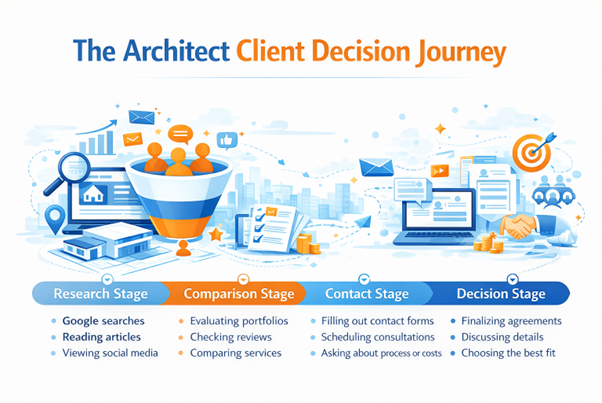
Most clients do not wake up and hire an architect instantly. They follow a discovery path that often spans weeks or months. Today, lead generation for architects online plays a major role in this journey. However, offline influence still matters for many firms.
Clients commonly find architects through these channels:
Each channel serves a different purpose in the decision process. Search shows intent, while referrals provide trust and reassurance.
Good digital marketing for architects connects these channels into one experience. The goal is simple and consistent visibility across multiple touchpoints.
Your website is the center of your lead generation system. Every other channel eventually sends people there. If your website does not guide visitors clearly, leads get lost. Traffic alone does not create business growth.
Architecture firm marketing works best when websites do these things well:
Many firms rely only on visuals and forget clarity. Beautiful design without guidance often reduces conversions.
A strong website supports lead generation services for architects by doing the following:
This foundation makes all other marketing methods more effective.
Certain website elements directly influence whether visitors become leads. These elements should support both trust and action.
Key elements every architecture website should include:
Avoid vague language that focuses only on awards or design philosophy. Clients want to understand how you will help their project succeed. Strong websites also connect content with conversion paths. Helpful articles should lead naturally to contact options.
Content marketing remains one of the strongest tools for architect marketing strategies. It helps potential clients understand your thinking before contacting you. Good content does not sell aggressively or push services. It educates, reassures, and positions your firm as a reliable choice.
For architecture firm marketing, content works because:
Content marketing also supports lead generation for architects online. It helps your firm appear during early research stages.
Effective content types for architects include:
This content attracts readers who already show interest. Those readers often become high-quality leads later.
Also Read: The Ultimate Guide to Content Marketing for Architects and Contractors
Not all content generates the same type of leads. Some topics attract browsers, while others attract serious planners.
High intent content topics usually focus on real client concerns. These topics often answer questions clients hesitate to ask directly.
Examples of high intent architecture content include:
These topics filter casual readers from serious prospects. They also reduce unqualified inquiries later. Writers should use simple language and real examples. Avoid academic tone or overly technical explanations.
Content marketing does not just increase traffic numbers. It improves the quality of leads your firm receives. Educated leads ask better questions and respect your process. They understand timelines, costs, and collaboration requirements.
This reduces friction during early conversations. It also shortens the time needed to qualify serious prospects. When content supports the architecture business development properly, it creates a smoother path from interest to inquiry.
If your firm wants to track which content truly drives conversions, tools like CausalFunnel help visualize real user journeys and drop-offs.
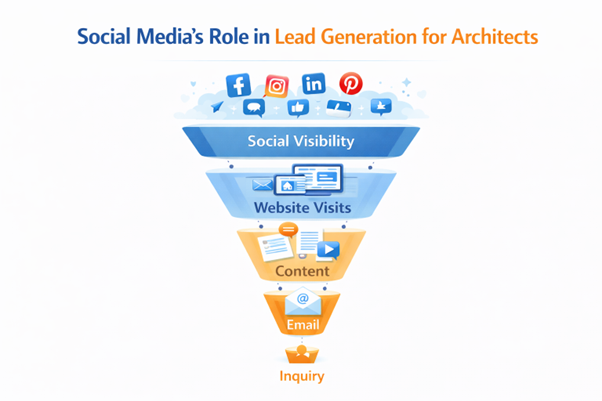
Lead generation for architects online works best when social media supports trust.
Social platforms help clients see your thinking, not just finished buildings. Most clients do not contact architects after one post. They follow quietly and observe consistency over time.
Digital marketing for architects should focus on showing progress and clarity. Social content should answer questions before clients ask them directly.
Social platforms support architecture firm marketing in these ways:
Social media works best when it supports your website and content strategy. It should guide interested people toward deeper learning.
Not every platform suits every architecture firm equally. Each platform attracts users with different intent levels.
The most effective platforms for architects include:
Instagram works well for residential and design-focused practices. LinkedIn suits commercial, institutional, and consulting-focused firms. Pinterest often attracts people still researching ideas and inspiration. YouTube builds strong trust when architects explain decisions clearly.
Choose platforms based on your ideal client profile. Avoid spreading effort too thin across every channel.
Many firms post images without context or explanation. This limits the lead generation potential significantly.
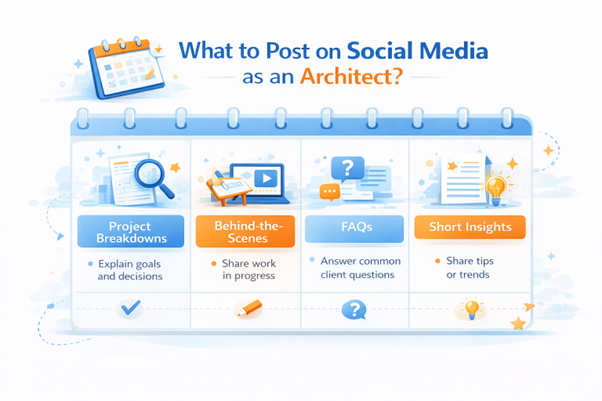
High-performing social content usually includes explanation and insight. Clients want to understand why design decisions matter. Effective content ideas include:
Each post should guide users toward deeper content. That content usually lives on your website or blog.
Social media rarely converts directly into signed projects. Its role is awareness, trust, and early relationship building.
Lead generation services for architects work better with social support. Social channels warm leads before they reach contact forms.
Social media helps by:
When leads finally reach your website, they feel familiar. This increases form submissions and inquiry quality.
If your firm tracks social impact poorly, insights get lost. Tools like CausalFunnel show how social traffic converts later.
Email marketing supports architecture business development over time. It keeps your firm visible without aggressive selling.
Many architecture leads are not ready immediately. Email helps you stay relevant until the timing is right. Lead generation for architects improves when emails educate gently. The goal is a helpful presence, not constant promotion.
Email marketing works best when it follows a clear system.
Email lists should grow from genuine interest, not forced signups. Quality matters more than list size.
Effective list-building methods include:
Once people join, content should remain consistent and useful. Avoid sending emails only when selling services.
Good email content ideas include:
Email segmentation improves relevance and engagement. Different clients need different information at different stages.
Architects often avoid tracking email results due to complexity. Basic tracking already provides useful insights.
Key metrics to monitor include:
Tracking helps you improve future emails gradually. You do not need advanced tools initially.
Email marketing filters out casual interest automatically. Only engaged readers continue opening and clicking. This creates better-qualified leads over time. These leads already trust your thinking and approach.
Email also supports referral-driven growth. Subscribers often forward helpful content to others. When combined with content marketing and social visibility, email becomes a strong pillar for lead generation for architects.
Offline lead generation still matters strongly for architecture firms. Many high-value projects begin through personal relationships and trust.
Networking helps architects stay visible within professional circles. It also supports referrals that digital channels cannot replace.
Effective offline lead generation for architects focuses on intention. Random events rarely create meaningful opportunities.
The most valuable offline channels include:
Offline efforts work best when combined with online visibility. People often research your firm digitally after meeting you in person.
Many architects attend events without clear goals. This often leads to missed opportunities. Successful networking requires preparation and follow-through. Every interaction should feel helpful, not promotional.
Before attending events, architects should:
During events, focus on listening more than speaking. Ask about challenges instead of pushing services. After events, follow up with helpful information. This keeps conversations moving naturally.
Referrals remain one of the strongest lead sources. However, many architects hesitate to ask directly. Referral systems should feel natural and respectful. They should focus on appreciation, not pressure.
Effective referral practices include:
Clear communication improves referral success rates. People recommend firms they understand clearly.
Referrals combined with a strong online presence perform best. Clients often check your website before recommending you.
Not every strategy suits every firm equally. Choices depend on size, focus, and growth goals. Lead generation for architects works best with alignment. Strategy should match your resources and ideal clients.
Small firms often benefit from content and referrals first. Larger firms may add social campaigns and partnerships.
When choosing strategies, consider:
Avoid copying competitors without context. Your firm’s strengths should guide strategy selection.
Both online and offline methods serve different roles. Neither approach works well in isolation. Online methods support visibility and early research. Offline methods support trust and deeper relationships.
A balanced system usually includes:
Tracking performance across channels improves clarity. Understanding what converts helps refine efforts.
To understand conversion paths better, check out the visual journey analysis tools of CausalFunnel.
Many firms struggle due to avoidable mistakes. These mistakes reduce both lead quality and volume.
Common issues include:
Fixing these issues improves results quickly. Most problems relate to structure, not effort. Small improvements across systems compound over time. Consistency matters more than perfection.
Lead generation for architects works best when every effort connects clearly. Your website, content, social platforms, email, and networking should support each other. No single channel can deliver steady results on its own.
Strong systems focus on clarity and consistency. Helpful communication builds trust long before clients reach out. Over time, this approach attracts better inquiries and stronger project fit.
When you understand how people move between channels, decisions become easier. Seeing what actually leads to conversations helps you improve results steadily. Tools like CausalFunnel can reveal real user paths across your marketing efforts.
Lead generation for architects means helping the right people discover your firm. These people already have a real need for architectural services. The goal is to build trust early so the first conversation feels comfortable.
Yes, online lead generation works when it supports how clients research. Most people look online before they contact an architect. Helpful content and a clear website guide them during that early stage.
Lead generation rarely works overnight in architecture. Clients often take time to plan, budget, and compare options. With consistency, better inquiries usually appear within a few months.
Small firms benefit from simple and focused efforts. Clear messaging, helpful content, and referrals often work well together. These approaches build visibility without requiring large marketing budgets.
Start using our A/B test platform now and unlock the hidden potential of your website traffic. Your success begins with giving users the personalized experiences they want.
Start Your Free Trial

Empowering businesses to optimize their conversion funnels with AI-driven insights and automation. Turn traffic into sales with our advanced attribution platform.
Trusted by Customers


©CausalFunnel Inc. All rights reserved.