



Free Funnel Audit
Convert more customers today!
SEO
10 mins read

SEO
10 mins read
Security is a major concern for many online users today. People want safe sites that protect their data and respect their privacy. Site owners understand this need and want to offer strong trust signals for their visitors. Two common trust elements are security badges and SSL certificates. Both are easy to recognize and help users feel safe on a site.
Many site owners also want to know one thing. They want to understand if these trust elements can improve their rankings. They wonder how search engines view trust signs and secure site features. They also want to know if badges and SSL can change how users behave online.
This article explains these topics in simple and clear terms. It explores how security badges work and how users react to them. It also explains how SSL helps protect user data on every secure page. You will learn how these elements affect trust, behavior, and search visibility. The article follows a practical and evidence-based approach.
Search engines care deeply about user experience and safety. Google wants users to feel safe on every site they visit. Sites that show strong signs of security can help users stay longer and feel more confident. These signals can shape behavior, and behavior often affects search results. This makes trust elements important for any site today.
Users expect safe browsing on every platform they use. They trust sites that offer secure forms, safe checkout pages, and visible security signals. These signs help people feel safe enough to take action.
You will now see how security badges and SSL fit into modern SEO. You will learn what matters, what does not matter, and how to use both effectively.

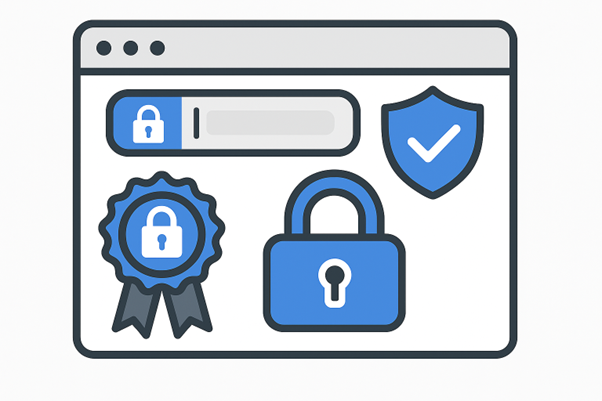
Security badges are small icons that show safety or trust on a site. These symbols appear on checkout pages, product pages, landing pages, and sign-up forms. They help users feel comfortable when sharing personal information or completing purchases. These badges carry meaning because they reduce fear and build confidence.
Some people assume these badges directly improve rankings. This idea is common, but it is not correct. They do not work as direct ranking factors. Their impact on SEO is more indirect. They affect how users behave, and user behavior affects performance. This is where their influence becomes important.
These badges also help clarify a site’s trust level. They show that a site uses secure systems or follows trusted standards. They also help visitors recognize safe areas on a site.
Security badges differ from compliance seals or payment icons. Compliance seals show third-party approval for standards or audits. Payment icons show accepted payment brands. Security badges highlight safety for users and their data. They all help trust, but each type carries a different meaning.
SSL helps protect data between a user and a website. It keeps the information safe from unwanted access or harmful attacks. When a site uses SSL, browsers display a lock icon near the URL. This lock helps users know that the site is secure.
SSL works with HTTPS. HTTPS replaces old HTTP and adds a strong security layer. HTTPS ensures that any data sent through the site stays safe from outside threats. This includes login details, payment information, and private messages. Sites that collect personal information need HTTPS to keep users safe.
Google has supported HTTPS for many years. They announced it as a ranking factor to promote safer browsing online. The ranking boost is light, but it still matters for every site today. Google wants users to trust the sites they visit and engage with. SSL helps build that trust and supports overall website health.
SSL protects many kinds of sensitive data. It protects passwords, credit card numbers, saved addresses, and contact forms. It also protects files sent through secure paths. These protections improve trust and help users feel safe with the site.
Feature | HTTP | HTTPS |
Security | No encryption used | Strong encryption used |
User Trust | Low trust from users | High trust from users |
SEO Impact | No ranking support | Light confirmed ranking boost |
Browser Warnings | Marked “Not Secure” | Marked as secure |
Data Safety | Easy to intercept | Very hard to intercept |
This table shows the difference in a clear and simple way. HTTPS offers strong security and better trust. It also offers a more user-friendly experience on every device. This combination supports better performance for any active site today.

Security badges help users feel safe, but they do not act as direct ranking factors. Google does not use them in any ranking system. They do not give any technical boost on their own. Many owners assume badges affect rankings, but this is not true. Their true impact appears through user behavior instead.
Badges influence trust. Trust affects how long people stay on a page. Trust also affects how comfortable users feel while shopping or submitting forms. These changes influence key behavior metrics. These metrics do matter for SEO results.
Search engines have not listed security badges as ranking elements. They do not scan badges for ranking signals. They do not treat badge images or icons as trust markers within their systems. There is no evidence showing direct ranking improvements from badges. Search engines rely on technical data, speed, content, and user actions.
Badges only help when they support user behavior. Improved behavior can support stronger performance. This is where they influence SEO indirectly. This role matters because user behavior can shape how a page performs over time.
Security badges can create several useful behavior benefits. These behavior gains can support stronger SEO results.
Badges may help improve:
These signs help search engines understand user satisfaction. When users stay longer and trust the page, search engines often respond well. This is how badges affect SEO through indirect pathways. They support comfort, trust, and confidence. These outcomes matter in many search systems today.
SSL plays a direct role in many ranking systems. Google confirmed HTTPS as a ranking factor years ago. The effect is small, but it applies across every page. Sites with SSL have better conditions for crawling and indexing. Browsers also display secure signs that help users feel safe online.
Google shared a public statement showing that HTTPS helps rankings. The ranking support is light, but the benefit is consistent. SSL gives stability to crawling because encrypted pages load in stable ways. This stability helps search engines read your content without safety issues.
HTTPS also helps search engines index pages without warnings. Pages without SSL often trigger browser alerts. These alerts stop users from entering the site. High exit rates hurt behavior metrics, and these metrics matter for long-term results.
SSL aligns with Page Experience standards. These standards include safe browsing, good loading times, and stable content flow. SSL helps protect users from unsafe activity. Safe browsing helps users trust your site more.
Search engines want safe paths for every user. SSL helps show that your site is safe for all visitors. This improves trust and user satisfaction. Both factors help your site perform better online.
Chrome marks sites without SSL as “Not Secure.” This warning makes users leave the page fast. Quick exits increase bounce rates. High bounce rates can hurt performance in many ranking systems. This creates a clear problem for sites without SSL.
Imagine a user sees a “Not Secure” label on a checkout page. They will likely leave the page and avoid the purchase. They may also avoid the site in the future. These actions send bad signals to search engines. SSL prevents these issues by removing warnings and building trust.
Security plays a major role in shaping user behavior. Users stay longer on sites they trust. They read more pages and explore more products. They also feel safer sharing their details on secure websites. These actions influence many behavior metrics that matter in SEO.
Security badges help build trust at important decision points. When users see clear trust symbols, they hesitate less. They interact more with the site and complete more steps. These actions support better performance in many ranking systems today.
SSL also supports user trust on every page. Users feel safer when they see the lock icon in their browser. This trust helps reduce fast exits and encourages deeper engagement. These behaviors matter for SEO because they help show user satisfaction.
Security badges may help improve several important signals:
These signals show strong user satisfaction. Search engines track these patterns to understand experience quality. Better user experience often leads to stronger performance. Security helps support this experience across many parts of a site.
This connection shows why trust matters. Security badges offer comfort that helps users stay longer and take action. SSL offers a stable layer of protection that improves confidence on every page. Together, these trust signals support behavior that matters in SEO today.
Security badges help trust, but they must be added correctly. Poor placement or heavy images can slow a page. Slow pages can hurt performance and reduce user trust. Good technical setup ensures badges support the site without causing problems.
Badge images should be light and optimized. Heavy images can slow loading times. Slow pages create bad experiences and can harm performance. Optimized images help keep pages fast and responsive.
Good optimization steps include:
Mobile users need clear trust signs. Badges must fit well on small screens. Poor placement can overlap with important buttons or text. This creates confusion on key pages.
Mobile-friendly steps:
Fake badges can harm your site. Users lose trust when they see false symbols. Search engines may also treat false claims as misleading content. Real badges build trust while false ones damage credibility.
Use only verified badges from trusted sources. Make sure they match real certifications or secure systems. This helps protect users and maintain strong trust.
Schema helps search engines understand site content. Schema does not show badge details directly. However, it supports trust through clear structure and data. Accurate schema can help improve your site’s clarity.
Use schema to enhance trust indirectly. Add correct markup for products, reviews, and business details. This helps search engines understand your pages better.
SSL must be installed correctly to avoid security issues and ranking problems. A full move from HTTP to HTTPS has several important steps. Each step helps maintain site health and protect user data. A clear checklist helps complete the transition safely and smoothly.
Here is a simple and complete SSL setup list. These steps help keep your site secure and ready for search engines.
This checklist supports strong site security and smooth SEO performance. A clean HTTPS setup helps users trust your site and stay engaged longer.
Case studies help show how trust signals affect real results. These examples show common situations many sites experience. The details are fictional but follow realistic patterns. They help show how security changes improve user behavior and performance.
A small store added trusted security badges to its checkout pages. Users felt safer entering payment details. The store saw fewer abandoned carts after adding the badges. Time on the checkout page increased as users felt more comfortable completing purchases. Stronger trust helped support healthier behavior patterns.
A blog moved from HTTP to HTTPS. The old pages showed security warnings that scared new users. After installing SSL, the warnings disappeared. Bounce rates dropped because users no longer felt unsafe. More users stayed on the site and explored additional pages. The increased engagement helped improve long-term performance.
A membership site secured its login and sign-up pages. Users felt safer sharing personal details. The site added clear trust icons near the form fields. Users completed more sign-ups after seeing these signs. Clear trust made the process easier and more comfortable.
These examples show how small security changes create strong user improvements. Better behavior often supports stronger performance in many ranking systems. Trust encourages users to stay longer, act more, and return more often.
Many people misunderstand the role of security badges and SSL. These myths lead to confusion and wrong expectations. Clearing these myths helps site owners make better decisions. It also helps them understand where real SEO value comes from.
Myth 1: Security badges guarantee higher rankings
Badges do not act as ranking factors. They help users feel safe but do not directly change rankings.
Myth 2: SSL creates huge ranking boosts instantly
SSL helps rankings, but the effect is light and steady. It does not create sudden or large jumps.
Myth 3: Any badge is helpful for trust
Fake or confusing badges harm trust. Only real and clear badges help users feel safe.
Myth 4: Security does not affect user behavior
Users leave sites that feel unsafe. Comfort shapes behavior, and behavior shapes performance.
Myth 5: Only checkout pages need trust signs
Trust helps across many pages, including forms, product pages, and login pages.
Myth 6: SSL is optional for small sites
All sites need SSL today. Browsers warn users when sites lack proper security.
Myth 7: Secure sites never lose trust
Sites must maintain valid SSL certificates. Expired certificates cause warnings and user fear.
These myths show why site owners must understand real security roles. Clear information helps avoid mistakes and build stronger trust.
Implementing security badges and SSL is most effective when part of a clear SEO strategy. Follow these best practices to ensure user trust, technical correctness, and search engine performance.
These best practices ensure trust signals help both users and search engines. Correct implementation supports stronger performance, better conversions, and improved user experience.
Security badges and SSL serve different but complementary purposes. Security badges improve user trust, reduce abandonment, and encourage engagement. These behavioral improvements indirectly support SEO performance.
SSL, on the other hand, is a direct ranking factor. HTTPS ensures secure browsing, protects sensitive data, and signals trustworthiness to search engines. Together, they form a strong foundation for a modern SEO strategy.
Implement badges strategically on checkout, product, login, and form pages. Ensure SSL is installed correctly with proper redirects and no mixed content issues. Combine both elements for optimal user experience and search performance.
Remember, security is not just a technical requirement. It shapes user perception and drives behavior that can indirectly influence rankings. Following the practices in this article ensures your site stays secure, trustworthy, and optimized for SEO.
Ultimately, integrating security badges and SSL creates a safer, more credible experience for users while supporting your SEO goals.
Security badges improve user trust and engagement. Indirectly, this can influence SEO signals.
Yes, SSL is a lightweight ranking factor. HTTPS improves trust and site performance.
Google prefers HTTPS. Sites without it may face lower trust and higher bounce rates.
Place them near checkout, forms, and login pages for maximum user reassurance.
Browsers show warnings, users may leave, and SEO performance could decline.
No, only authentic, recognizable badges improve trust. Fake or outdated ones can reduce confidence.
No, badges help perception, but SSL provides actual security and ranking benefits.
Start using our A/B test platform now and unlock the hidden potential of your website traffic. Your success begins with giving users the personalized experiences they want.
Start Your Free Trial

Empowering businesses to optimize their conversion funnels with AI-driven insights and automation. Turn traffic into sales with our advanced attribution platform.
Trusted by Customers


©CausalFunnel Inc. All rights reserved.