




Events Main View
Events Detail 1
Events Detail 2
Events Detail 3

Transform Local Search Traffic Into New Patients

Use AI insights automation and optimization to enhance every touchpoint along your patient journey from a single platform.

Boost Your Local and Organic Reach

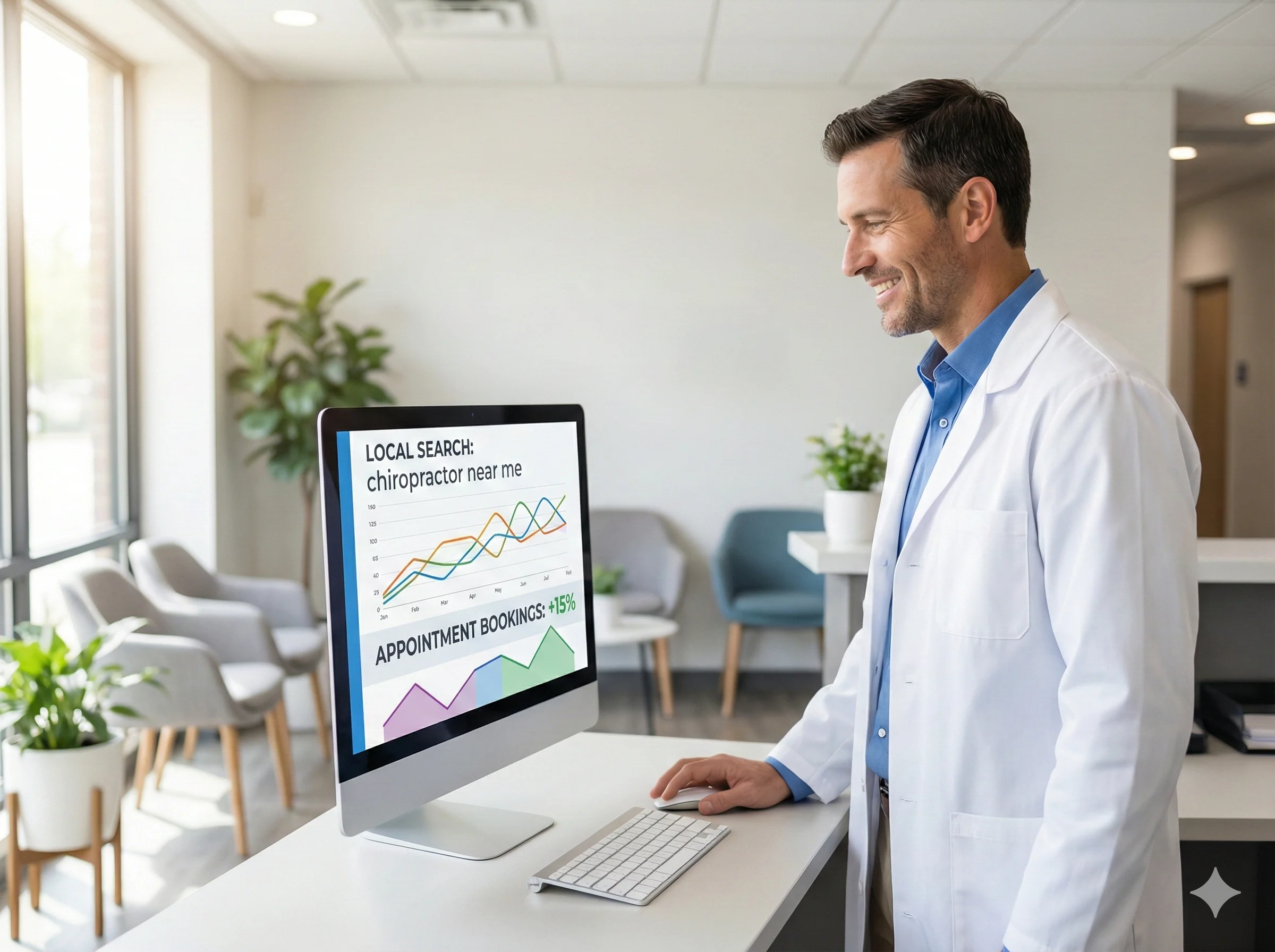
Increase your visibility on search engines for terms like β€œchiropractor near me” and optimize ad spend for higher quality patient leads.

Drive More Appointments

Recovery tools and personalized incentives help turn anonymous website visitors into booked appointments and loyal patients.

Optimize for Practice Growth

Measure and enhance the direct revenue impact of your campaigns with precise attribution, ensuring you capture market share from competitors.

One Platform to Power Your Chiropractic Business

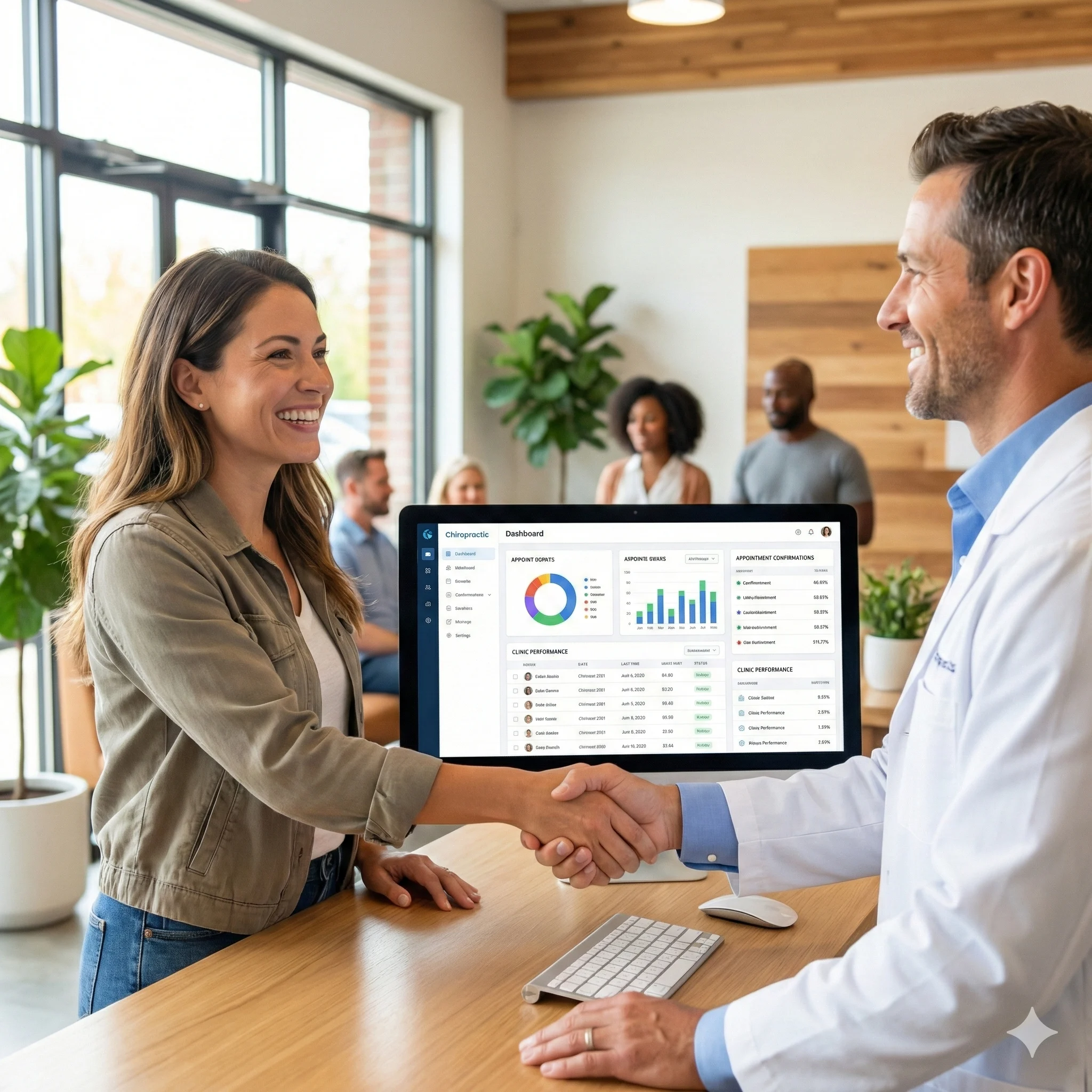
From patient acquisition to repeat visits, handle all aspects of growth from a single, intuitive dashboard.

Boost Your Local and Organic Reach

Increase your visibility on search engines for terms like β€œchiropractor near me” and optimize ad spend for higher quality patient leads.

Drive More Appointments

Recovery tools and personalized incentives help turn anonymous website visitors into booked appointments and loyal patients.

Optimize for Practice Growth

Measure and enhance the direct revenue impact of your campaigns with precise attribution, ensuring you capture market share from competitors.

One Platform to Power Your Chiropractic Business

From patient acquisition to repeat visits, handle all aspects of growth from a single, intuitive dashboard.
Events Main View
Events Detail 1
Events Detail 2
Events Detail 3

10 Ways Content Marketing for Plastic Surgeons Can Skyrocket Patient Leads

How many people who might need plastic surgery are looking for it right now, but your practice isn’t showing up online? You should be worried about the answer. Studies show that 77% of people who need to see a doctor use search engines first. They’re looking into different procedures, comparing surgeons, reading reviews, and watching videos of people who have had the surgery. Anyone who searches for “rhinoplasty recovery timeline” or “breast augmentation cost” is actively thinking about getting the procedure. Plastic surgeons need to do content marketing to get these patients who are very interested in their services. If your practice isn’t making useful content that answers patient questions and builds trust, you’re losing consultations to competitors who are. This article lists ten tried-and-true methods that successful practices are using right now to get patients and turn them into customers through strategic content creation. These research-based methods will help your practice get noticed by the millions of people looking for doctors online.

#1 Define Your Target Audience and Patient Personas

Effective content marketing for plastic surgeons begins with knowing who their ideal patient is and the motivating factors that sway their decision-making. The majority of patients fall into the 18–54 age range with motivations from cosmetic enhancement, post-pregnancy restoration, and rebuilding career confidence in a particular subject. Each cohort experiences its own unique concerns, pain points, and emotional triggers in its choices. To start, develop in-depth patient personas based on the type of procedure:
  • Facial rejuvenation patients are often seeking subtle, age-defying results.
  • Body contouring patients may be concerned around changes post-weight loss or post-partum.
  • Breast augmentation patients are usually looking for (somewhat) enhanced proportion and self-assurance.
  • Non-surgical: those people are generally looking for enhancements with low time.
Each content piece should align with these distinct needs, whether it’s a blog article, e-book content, or video messaging. When your content speaks to the lead’s intent, it builds trust and amplifies the likelihood of conversion.

#2 SEO-Optimized Blog Content Strategy

As a plastic surgeon, your content marketing strategy ultimately begins and ends with a strong blog strategy. Your blog is going to be the best source of organic traffic from search engines, but you can’t just write about whatever comes to your mind. It all begins with strategic keyword research. The first step is to identify three categories of keywords:
  • Procedure-based keywords: “tummy tuck,” “facelift,” “liposuction”
  • Location-based keywords: “Miami rhinoplasty,” “breast augmentation Los Angeles”
  • Question-based keywords: “what does a mommy makeover cost,” “how is the recovery after blepharoplasty?”
Question keyword-based keywords are some of the most powerful. These keywords identify patients who are searching actively and who are simply looking for information while they are in the research phase of their search.
SEO Keyword Strategy
Tools such as CausalFunnel’s AI-powered keyword research with custom crawlers can efficiently discover procedure-based, location-based, and question-based keywords, streamlining your SEO efforts and ensuring content targets high-intent searches for plastic surgery queries. Topics that answer these questions will generate high-intent traffic on your blog each time:
  • “How Much Does Breast Augmentation Cost? An In-Depth Breakdown”
  • “Non-Surgical Facelift Alternatives: Beyond Facelifts”
  • “How to Prepare for Your Mommy Makeover Surgery: A Week-by-Week Guide”
  • “Rhinoplasty Timeline and Recovery: A Week-by-Week Guide”
The formatting of your blog will make a significant difference in improved SEO performance and reader engagement. All blog posts should include:
  • H2 and H3 subheadings that are clear and contain links
  • Bullet points that can be easily scannable
  • FAQ sections that identify featured snippet opportunities
  • Internal links to relative pages
  • Meta description and title tag improvements
Publishing frequency matters more than most practices realize. Search engines favor websites that consistently publish fresh content. Aim for two to three blog posts per week. This consistent output signals to Google that your site is active and authoritative. It also gives you more opportunities to rank for different keyword variations and attract diverse patient segments.

#3 Video Marketing: Building Trust Through Visual Storytelling

Video Marketing for Plastic Surgeons
Plastic surgery is a visual industry. Patients want to see results before agreeing to undergo the procedure, want to know what happens in surgery, and want to learn more about your personality and style as a surgeon. Video does all of these things in ways that text can’t. Video is so critical to plastic surgery marketing because it builds trust in a way that no other content type can. When potential patients can see a surgeon explain the procedure, witness their bedside manner, and see real patients transform, they are eased of most of the anxiety associated with plastic surgery. Here are the types of video content to create:
  • Procedure overviews – short educational videos about what to expect during surgery, the usual result, and recovery.
  • Patient testimonials – real patients who have supplied testimony, so that you have their full permission
  • Behind-the-scenes videos – shows of your clinic, staff, and technology
  • Live Q&As – answering questions that patients often want to know, live, in front of patients
  • Day-in-the-life videos – following a patient during their consultation, through surgery, and recovery
Various platforms fulfill different roles. YouTube is best for long-format educational material. An entire breast augmentation procedure, summarized in a 10-15 minute video, is best for YouTube sharing. Instagram Reels and TikTok are effective short engaging clips where other format styles can be impactful. For instance, a short 30-second before-and-after reveal or a rapid myth-buster transformation video can achieve the same impressions on TikTok. Being authentic is incredibly important when marketing through video. Patients can easily tell when something feels overdone or scripted. Present real-life accounts of the patients’ journey, which might include real talks about recovery issues, realistic timelines, and more appropriate expectation outlines. That gives both you and the patient credibility and further interest in the process moving forward.

#4 Before-and-After Photo Galleries: Visual Proof of Expertise

Nothing builds trust faster than visual results. High-quality before-and-after photos are the cornerstone of content marketing for plastic surgeons because they show real patient outcomes and demonstrate your skill. These galleries serve as undeniable proof of expertise and help potential patients envision their own results. Follow best practices to ensure professionalism and compliance:
  • Use consistent backgrounds, angles, and lighting for accuracy
  • Always obtain patient consent and follow HIPAA guidelines
  • Avoid heavy filters or edits that may appear misleading
Optimize every image for SEO by adding descriptive alt text, procedure-specific titles, and relevant keywords. Create dedicated landing pages for major procedures and include galleries on your website, social media, and educational blogs. When presented clearly and ethically, photo galleries can turn casual website visitors into confident consultation bookings.

#5 Social Media Content Strategy

Social media has changed how plastic surgeons (PSs) interact with potential patients. The social media platforms will require different types of content and engagement. It is important to be aware of these differences when doing content marketing to maximize the return on investment on social media for plastic surgeons. Instagram and TikTok are the platforms best suited for visual transformations and brief educational content. These platforms usually appeal to younger demographic groups and patients who are just beginning the research process. Posts should be made on Instagram and TikTok daily, including:
  • Reveal before/after results (with great music and transitions).
  • Myth-busting videos, “Does Botox really ‘freeze’ your face?”
  • Quick educational or procedural explanations (30-60 seconds).
  • Staff introductions or clinic culture.
  • HIPAA-compliant patient success stories.
Facebook attracts a slightly older demographic and is advantageous for near-community building. Content on Facebook should include longer-form content, education on procedures, and engagement strategies (Facebook Groups, ads). Facebook Groups allow PSs to build a community around a procedure or to help find post-op support. YouTube is best suited for long-form education content. Longer videos (10- 20 minutes) educate PS patients about possible procedures, recovery processes, and share ‘patient journeys’ as a form of review or education. YouTube is also valuable from an SEO perspective, as videos often rank in search engine results. Engagement strategies matter as much as content quality. Respond to every comment within 24 hours. Host monthly live Q&A sessions where you answer common questions. Use polls and questions in Instagram Stories to encourage interaction. Share relatable content that humanizes your practice. HIPAA compliance is non-negotiable. Obtain written patient consent before sharing any content featuring their image or story. Use de-identified data when discussing cases. Never share patient information without explicit authorization. One compliance violation can destroy years of reputation-building.

#6 Patient Testimonials and Reviews Management

Patient Testimonials
Patient testimonials provide social proof that affects decision-making more than any marketing message you could construct. All of your potential patients will trust the experience of other patients over any advertising materials you produce, even if it is first-hand testimonials. You should be showcasing real testimonials on your website, sharing a variety of testimonials on your social media pages, and putting them in your marketing materials. Written testimonials are good, and video testimonials create a deeper emotional connection. This video may last about three minutes, but if you have a patient share their story, talk about their results, and give you a heartfelt thank you, it will do more for you than all of your marketing efforts combined. Getting satisfied patients to leave reviews requires a process:
  • Send follow-up emails 2-4 weeks post-procedure, asking for feedback.
  • Make the process easy by providing direct links to review platforms.
  • Focus on Google Business Profile, RealSelf, and social media reviews.
  • Thank patients who leave positive reviews.
  • Never incentivize reviews with discounts or gifts (against most platform policies).
Managing reviews consists of responding to both positive and negative reviews. For positive reviews, thank patients for taking the time to write them, and express gratitude for the confidence they placed in your practice. For negative reviews, be very careful, take an empathetic approach, and show a degree of professionalism in your response. Be direct when addressing specific concerns. Give the option to discuss the problem privately, and show potential patients that you take their feedback seriously. Video testimonials are a great way to show the emotional journeys of patients, in a way that written reviews can’t. You should shoot short interviews (with consent) of patients describing their motivation, experience, and the results. Video testimonials become effective marketing tools that can be found through multiple outlets.

#7 Email Marketing Campaigns for Patient Engagement

Email Marketing Campaigns
Email marketing has the highest ROI of any digital marketing channel. Research shows that email generates $36 for every $1 spent. Email is a direct communication line for plastic surgery practices, facilitating relationships with potential and existing patients. Different types of email communication will serve different purposes in your marketing funnel:
  • Welcome series: Automated emails that go out when someone schedules a consult. It introduces your practice, surgeon, and procedures.
  • Educational newsletters: Typical monthly or bi-weekly newsletters that include clinician spotlight, post-op tips, wellness tips, and new techniques.
  • Before-and-after spotlights: Showcasing a recent transformational procedure without sharing identifiable information (with patient consent, of course).
  • Promotional seasonal offers: Limited-time offers with discounts on various procedures or complimentary treatments.
Segmentation greatly increases the success of email. Don’t send the same email to everyone on your list. Segmentation could include:
  • Demographics (age, gender, area)
  • Procedure interests (someone who asked about rhinoplasty shouldn’t receive information about tummy tucks)
  • Stage in the patient journey (have they scheduled a consult, or are they in post-operative care)
  • Engagement (are they an active subscriber or a cold lead)
Personalization is another tactic that can help emails feel less like marketing and more like personal communication. Use the patient’s name in the subject line, greeting, and email body. Send a birthday email with a special offer. Reference the procedure they expressed interest in. Send links to articles or share other relevant content that is aligned with their demonstrated interests. These small acts greatly improve open rates and ultimately conversions.

#8 Local SEO and Google Business Profile Optimization

Local SEO Optimization
Local SEO determines whether your practice appears when potential patients search for “plastic surgeon near me” or “breast augmentation in [city].” This type of search intent represents extremely high-value traffic because these patients are actively looking for a local provider. Google Business Profile optimization should be your first priority. Claim and fully optimize your profile with:
  • Accurate business hours (update for holidays)
  • High-quality photos of your facility, staff, and results (with consent)
  • Regular posts featuring updates, offers, and educational content
  • Active review generation and responses
  • Detailed business description with relevant keywords
Local keyword integration requires creating location-specific content. Build individual pages for each major procedure, combined with your city or neighborhood. “Rhinoplasty in La Jolla” targets patients in that specific area. Blog posts about local topics (“Preparing for Breast Augmentation in San Diego Summers”) combine procedure keywords with location terms. Building local backlinks strengthens your local SEO authority. Partner with:
  • Local wellness influencers for content collaborations
  • Med spas offering complementary services
  • Lifestyle magazines for expert quotes and features
  • Community events through sponsorships
Technical SEO factors impact how search engines evaluate your site. Mobile optimization is critical since most searches happen on smartphones. Fast loading speeds keep visitors engaged and satisfy Google’s ranking factors. Core Web Vitals (loading performance, interactivity, visual stability) directly influence your search rankings.

#9 AI-Powered Personalization and Data Analytics

Modern marketing demands more than a one-size-fits-all approach. Artificial intelligence now enables a level of personalization previously impossible in plastic surgery marketing. This transforms how practices connect with potential patients by delivering the right message to the right person at the right time. For sophisticated content marketing for plastic surgeons, leveraging AI and data is a decisive advantage. AI tools can dynamically personalize your website content based on visitor behavior. A user who repeatedly views pages about rhinoplasty can be automatically shown before-and-after galleries and blog posts related to nasal surgery. Another visitor exploring non-surgical treatments might see content highlighting Botox and filler results. This creates a unique, relevant experience for each site visitor, dramatically increasing engagement. Beyond the website, AI drives the content strategy itself.
  • Content Suggestions: AI algorithms can analyze search trends and competitor data to suggest high-potential blog topics and effective email subject lines.
  • Performance Analytics: Data analytics move beyond simple page views. They track which content pieces directly lead to appointment request form submissions, identifying your most valuable marketing assets.
  • ROI Tracking: By monitoring user journeys, you can pinpoint which campaigns and content themes actually bring in new patients, allowing for optimized ad spend and resource allocation.
  • Advanced Segmentation: Machine learning can identify subtle patterns in user behavior to segment high-intent patients automatically, enabling hyper-personalized follow-up messaging.
This data-driven approach ensures your marketing efforts are not based on guesswork but on concrete evidence of what drives patient conversions.

#10 Influencer Marketing and Strategic Partnerships

Influencer marketing in plastic surgery walks a fine line between effective promotion and ethical concerns. When done correctly with transparency and authenticity, influencer partnerships can dramatically increase visibility and patient bookings. The rise of influencer marketing in aesthetic medicine reflects changing patient behaviors. Younger demographics trust influencers they follow and often discover procedures through social media content. However, this strategy requires careful attention to transparency, authenticity, and professional standards. Micro-influencer strategy often delivers better ROI than partnering with mega-influencers. Focus on influencers with 10,000-50,000 highly engaged followers in beauty and wellness niches. These partnerships feel more authentic and reach audiences already interested in aesthetic procedures. Collaboration formats include:
  • Sponsored educational posts explaining procedures
  • Before-and-after transformations (always with proper consent and disclosure)
  • Educational content series about specific treatments
  • Contest giveaways for consultations or non-invasive procedures
Disclosure requirements are non-negotiable. All sponsored content must clearly identify the paid partnership. Professional medical standards require honest representation of results, realistic expectations, and proper informed consent processes. Case study insights show that successful influencer collaborations share common elements. They prioritize education over promotion, maintain transparency about sponsorships, showcase realistic results, and comply with all medical advertising regulations. These partnerships increased visibility by 300-500% for practices that implemented them strategically.

#11 Reputation Management and Online Reviews

A strong online reputation is crucial in content marketing for plastic surgeons because over 75 percent of patients check reviews before booking a consultation. Positive feedback builds trust, while poorly managed reviews can deter potential patients. Implement proactive review strategies such as post-procedure follow-ups, automated review requests, and gentle incentives for feedback. Respond to every review promptly, thanking patients for positive comments and addressing concerns in negative reviews with empathy and actionable solutions. Monitor your reputation across platforms, including Google, RealSelf, Yelp, and social media. Consistently managing reviews not only reinforces credibility but also improves search visibility, encouraging more high-intent patients to choose your practice.

Conclusion

For a modern plastic surgery practice, a strategic approach to content marketing for plastic surgeons is indispensable. It moves beyond simple advertising to build genuine trust through education, transparency, and visual proof. The key to success lies in consistency, authenticity, and a relentless focus on the patient’s journey. Your next steps are clear: audit your existing online content, select 3-5 strategies from this guide to implement first, and commit to tracking your performance. By doing so, you will build a marketing engine that consistently attracts and converts high-intent patients, ensuring the long-term growth of your practice. For advanced optimization, consider AI platforms like CausalFunnel, which integrate seamlessly to boost SEO, ads, conversions, and personalization, turning content-generated traffic into steady patient leads with over 200M+ sessions served and up to 300% improvements in captures.

Related Articles From Our Blogs

Chiropractor PPC Guide
Chiropractor PPC: A Complete Guide to Ads, Costs, and Patient Growth

Chiropractor PPC: A Complete Guide to Ads, Costs, and Patient Growth

Chiropractor PPC helps clinics show ads to people actively searching for care nearby. It allows practices to appear at the top of search results quickly.

Read More
Local SEO for Chiropractors
Step-by-Step Local SEO for Chiropractors: What Actually Works

Step-by-Step Local SEO for Chiropractors: What Actually Works

Imagine you are dealing with neck pain and are in need of immediate help. While searching for a chiropractor, you will certainly want someone closer to home.

Read More
Chiropractor Marketing Ideas
Chiropractor Marketing Ideas That Attract Local Patients

Chiropractor Marketing Ideas That Attract Local Patients

Local growth matters more than wide reach for chiropractic clinics. Most patients search nearby. They want care they can trust. They also want fast answers and clear choices.

Read More
Google Ads for Chiropractors
Google Ads for Chiropractors: Targeting Local Searches

Google Ads for Chiropractors: Targeting Local Searches

Google Ads helps chiropractors reach people who need care right now. Most patients search for help close to home. Local searches drive real appointments, not just website visits.

Read More
SEO for Chiropractors Guide
SEO for Chiropractors: Complete Guide to Growing Your Practice

SEO for Chiropractors: Complete Guide to Growing Your Practice

Is your chiropractic business struggling to attract new patients? If after being online present your competitors getting more bookings? If that’s the case, you have reached the right place.

Read More
Local SEO Strategies for Physiotherapists
Top 10 Local SEO Strategies for Physiotherapists in 2026

Top 10 Local SEO Strategies for Physiotherapists in 2026

Providing excellent patient care alone is no longer sufficient for physiotherapy clinics. Today, most patients research healthcare providers online before scheduling their first appointment.

Read More

Explore New Ways To Turn Your Traffic Into Measurable Revenue With Smart AI Solutions.

Plus, get a free trial. No credit card required.