



Free Funnel Audit
Convert more customers today!
SEO
10 mins read

SEO
10 mins read
Google Ads for plumbers still bring the fastest phone calls in 2026, especially from people searching “plumbers near me” during real emergencies.
When pipes burst at midnight or a water heater dies on a cold morning, homeowners do not scroll social media. They open Google and call the first trusted name they see.
That is why this guide exists. It answers the big question first. Then it walks through every decision, calmly and clearly, from setup to results. No fluff. No hype. Just what works in the real world.
Plumbing is a business that deals with urgency situations. Most customers do not plan ahead. They react. Google Ads show up at the exact moment someone needs help.
That timing matters more than anything else.
Organic SEO is great, but it takes months. Social ads create awareness, but they rarely catch emergencies. Google Ads for plumbers sit right at the moment of pain. That is why they still drive calls in 2026.
There is another reason. Google keeps improving local intent. Searches like “plumbers near me” now show ads that feel almost personal. Distance, reviews, and call speed all play a role.
The result is simple. When ads are done right, the phone rings. When they are done wrong, money disappears fast.
Before touching settings or budgets, it helps to understand the basics.
Google Ads let plumbing businesses pay to appear at the top of search results. These ads show above organic listings. They also show on maps and mobile screens.
Here is the key idea. Payment happens per click, not per job. That is why structure and targeting matter so much.
For plumbers, most ads trigger from searches like:
These searches signal strong intent. People are not browsing. They want help now.
That urgency is the fuel behind the best Google Ads for plumbers.
Not every ad type fits plumbing. Some make money. Others burn cash. Choosing the right mix matters.
Search ads are the core of any plumbing campaign.
These ads show as text at the top of Google results. They appear when someone types a service-related query.
Why they work:
Search ads should always come first. Everything else builds on them.
Google Local Service Ads (LSAs) appear above regular Google search ads. They show a badge, the phone number, and sometimes a Google Guarantee or Google Screened badge. These badges instantly signal trust to potential customers.
The Google Guarantee badge means Google backs the service. If a customer isn’t satisfied, Google may refund them. The Google Screened badge shows a business passed background checks and licensing verification. Both badges improve click-through rates. Studies show that plumbers with these badges can see up to a 20% increase in leads compared to standard ads.
To get a badge, Google checks business licenses, insurance, and criminal backgrounds of owners or key staff. This process takes a few days to a couple of weeks. Only fully licensed and insured plumbing companies can pass. This ensures homeowners trust the ads they click.
Unlike standard search ads, LSAs usually charge per lead, not per click.
This math shows why LSAs can be cheaper when the lead quality is high.
LSAs are best for plumbing companies that:
Companies with these traits often see steady call growth, sometimes 20% higher than using search ads alone.
LSAs can backfire if:
If any of these issues exist, standard search ads might produce better ROI.
Sometimes leads are invalid, such as duplicate requests or wrong locations. Google allows disputes for bad leads. Each dispute is reviewed and may result in a credit. Plumbers should track lead quality carefully to avoid wasting money.
Google ranks LSAs using:
The faster and more reviewed a company is, the higher it appears.
Linking LSAs to a Google Business Profile ensures consistent business info. Hours, address, and service areas should match. Proper integration improves visibility and trust with potential customers.
These ads show banners or mixed placements across Google properties.
For most plumbers, these are not beginner tools.
They work later, after search campaigns perform well. Starting here often leads to wasted ad spend.
This is where many plumbers feel stuck. The process sounds technical, but it becomes simple when broken down.
Each service deserves its own campaign.
Emergency plumbing should not share a campaign with faucet repair. Intent and value differ too much.
A clean structure looks like this:
This setup improves quality scores and lowers costs over time.
Location mistakes drain budgets quietly.
Target service areas, not entire states. Radius targeting often works better than city lists. It reflects real driving zones.
Also exclude areas that never convert. This step alone can save thousands over a year.
Smart bidding has improved, but it still needs guidance.
Many plumbers start with manual bidding to learn costs. Once conversion data builds, automated strategies work better.
The key is not chasing cheap clicks. One good job pays more than ten bad leads.
Keywords are the foundation of any plumbing Google Ads campaign. The wrong ones waste money. The right ones bring real calls. Choosing and organizing them carefully can make or break a campaign.
High-intent keywords show that the customer already decided to call. These are urgent searches or service-specific queries. Examples include:
These keywords convert well because people aren’t browsing—they need service immediately.
Understanding match types controls which searches trigger ads:
Long-tail keywords are more specific and often convert better. They usually have lower competition. Examples plumbers can use:
Long-tail keywords target urgent, local searches. They help capture the customer at the moment they decide to call.
Organize keywords by the service offered. This improves campaign structure and ad relevance. Examples:
Water Heater Repair: water heater repair, hot water repair, tankless water heater service
Drain Cleaning: drain cleaning, clogged drain service, slow drain repair
Sewer Lines: sewer line repair, sewer inspection, sewer cleaning service
Emergency Plumbing: emergency plumber, 24-hour plumber, same-day plumbing service
Divide keywords by urgency. Emergency searches usually convert faster and justify higher bids:
Emergency: burst pipe repair, emergency plumber, gas line leak
Non-Emergency: faucet installation, toilet replacement, water softener service
This allows better bidding and ad prioritization.
Plumbing is local. Adding locations improves relevancy. Include:
Mix these with long-tail and service-specific keywords to capture local high-intent traffic.
Start with tools to find volume and competition:
Look for keywords with:
Negative keywords prevent wasted clicks. Add terms that don’t convert:
Review regularly. Every wasted click costs money.
Proper structure improves quality scores and lowers costs:
This keeps ads highly relevant and improves conversion rates.
Plumbers can capitalize on seasonal trends:
Planning seasonal campaigns boosts calls when demand spikes.
Always balance volume with competition:
Combine search volume, intent, and local targeting to prioritize keywords.
Ad copy should sound human. Not salesy. Not robotic.
Good plumbing ads do three things.
They show urgency.
They show location.
They show trust.
Short lines work best. Clear offers beat clever slogans.
Examples that perform well often mention:
Testing matters here. Small changes in wording can double call rates.
Sending Google Ads traffic to a homepage rarely works. People want answers fast. They are ready to call. If they land on a generic page, they often bounce. A dedicated landing page increases calls, bookings, and ROI.
Each landing page should focus on a single service. This keeps the message clear and relevant. For example:
Matching the ad message to the landing page headline improves conversions. People feel they found exactly what they searched for.
Most plumbing searches happen on phones, around 76% of local searches are mobile. Mobile design isn’t optional; it’s essential.
Key mobile design tips:
Slow pages or small buttons cost calls. Mobile users bounce quickly if it feels hard to act.
The top section of the page should immediately show:
These elements make it clear what action to take without scrolling.
Plumbers need to build trust fast. Place trust elements strategically:
Order matters. Reviews first, then licensing, then guarantees. People respond to social proof before company promises.
Forms should be short and simple.
Too many fields reduce submissions. Simple forms convert better.
Your landing page headline should mirror the ad copy.
This alignment reassures users they landed in the right place.
Testimonials, star ratings, and review counts increase trust.
Typical conversion rates: 2–10% for plumbing landing pages. Proper optimization can push higher.
Avoiding these pitfalls is often the difference between a page that produces calls and one that wastes ad spend.
Fast pages are crucial. Aim for:
Faster pages improve conversions and ranking in Google Ads Quality Score.
Clicks do not pay bills. Jobs do.
Tracking tells which ads lead to real work.
Call tracking numbers help measure calls. Recording helps judge quality. Missed calls reveal hidden losses.
Many plumbers feel surprised when tracking starts. Ads may generate calls, but poor call handling kills conversions.
Answer speed matters as much as ad quality.
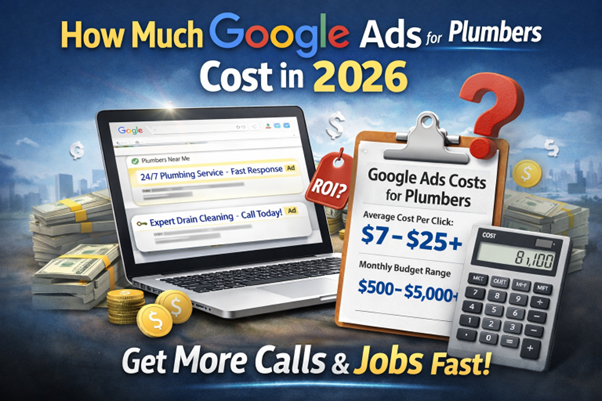
Costs vary by city and competition. There is no fixed number.
That said, plumbing clicks often cost more than average local services. Emergency terms cost the most.
Monthly budgets depend on goals.
Small operators often start modest spending around $10–$50 per day, while larger companies often invest $100–$500+ per day to capture higher volume.
The smart way to think about cost is return. One booked job often pays for dozens of clicks.
Some mistakes appear again and again.
Running ads without negative keywords wastes money fast.
Sending traffic to weak pages lowers conversion rates.
Ignoring missed calls hides real problems.
Pausing campaigns too soon kills learning data.
Ads need time and tuning. Panic stops progress.
This question comes up often.
SEO builds long-term visibility. Ads bring instant calls.
Most successful plumbers use both. Ads fill the gap while SEO grows. SEO lowers ad dependence later.
It is not either or. It is timing and balance.
Running ads alone saves fees but costs time and learning mistakes.
Hiring help costs money but saves stress and errors.
The right choice depends on time, budget, and comfort with data.
A good rule helps here. If ads feel confusing or stressful, help often pays for itself.
Google Ads still reward plumbers who think like customers. Speed matters. Clarity matters. Trust matters.
The system works best when built step by step. When tracking stays honest. When calls get answered fast.
At the end of the day, the question is simple.
Are the ads built to win clicks, or to win jobs?
Content pruning is the process of reviewing existing website content and updating, consolidating, or removing pages that are outdated, low quality, or underperforming to improve overall site health and SEO.
Pruning reduces index bloat. Index bloat happens when a website has too many low-value or unnecessary pages indexed by search engines. This makes it harder for search engines to properly crawl, understand, and rank the pages that actually matter. Content pruning helps search engines crawl and understand your site more efficiently, and allows your best pages to rank better by removing weak or duplicate content that dilutes authority.
A content audit collects data and evaluates your pages, while content pruning is the action phase where you decide whether to keep, improve, merge, or delete specific content based on that audit.
Most websites benefit from a light pruning review every quarter and a deeper, sitewide pruning project at least once a year, depending on how frequently new content is published.
Content pruning usually works best as a collaboration between SEO specialists, content strategists, and stakeholders from product or marketing, with one owner responsible for final decisions and documentation.
Start using our A/B test platform now and unlock the hidden potential of your website traffic. Your success begins with giving users the personalized experiences they want.
Start Your Free Trial

Empowering businesses to optimize their conversion funnels with AI-driven insights and automation. Turn traffic into sales with our advanced attribution platform.
Trusted by Customers


©CausalFunnel Inc. All rights reserved.