



Free Funnel Audit
Convert more customers today!
SEO
10 mins read

SEO
10 mins read
If you have ever changed a title tag and just hoped for better rankings, you are not alone. We’ve all done it, tweaking pages and refreshing Google Search Console like it is a scoreboard. But hope is not a strategy. That’s when SEO split testing gives you proof before you scale changes across your site.
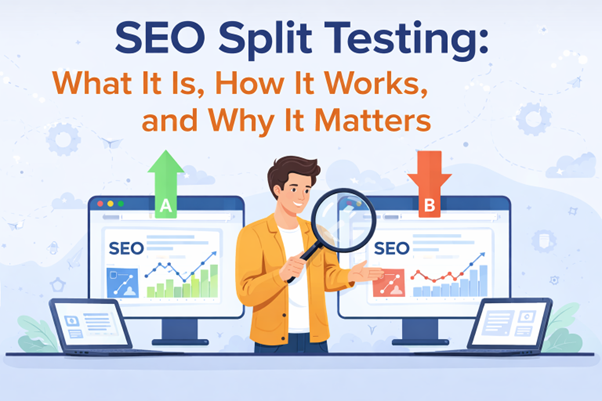
SEO split testing is a method of testing changes on some pages and comparing the results. You divide similar pages into control and variant groups to measure real SEO impact.
In simple terms, it compares one group of pages against another. One group stays the same, and the other gets a change, and then you track what actually improves. This approach helps you understand how search engines respond to changes without guessing blindly.
If you’re still confused about what exactly it is, keep reading this blog, as we’ll explain everything about SEO split testing and how to implement it to measure results correctly.
Let’s start with what SEO split testing exactly means.
SEO split testing is a process where you change a group of pages and compare them with unchanged pages. The goal is to measure how those changes affect organic search performance.
It is different from general testing because it focuses on how search engines react. Instead of testing users directly, you test how Google reads and ranks your pages. This makes it more complex but also more valuable for long-term SEO growth.
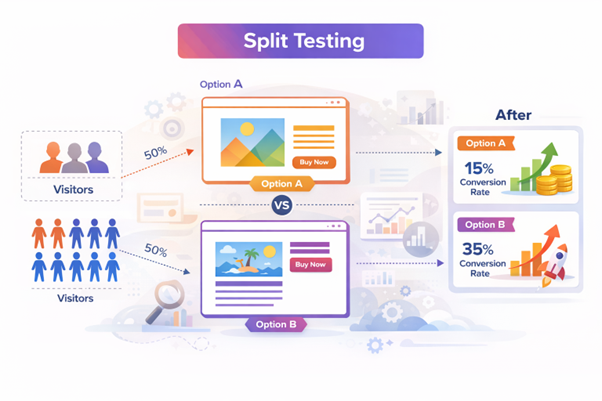
Instead of updating your entire website at once, you test changes safely on selected pages. You select pages with the same layout or template. Then you apply a change only to some of those pages. The rest stay unchanged and act as your control group.
You then compare performance like traffic, clicks, or conversions between both groups. This gives you clear data on what works and what does not.
This approach is often called A/B testing for SEO, but the process works differently. You are not splitting users, but splitting pages and tracking their performance over time.
Key elements of SEO split testing include:
This method helps you make decisions based on data, so you can move ahead without any assumptions.
Many people who know about A/B testing wonder if SEO split testing and A/B testing are the same.
SEO split testing and A/B testing for SEO may sound similar, but they are slightly different from each other. The main difference lies in what you split and how results are measured.
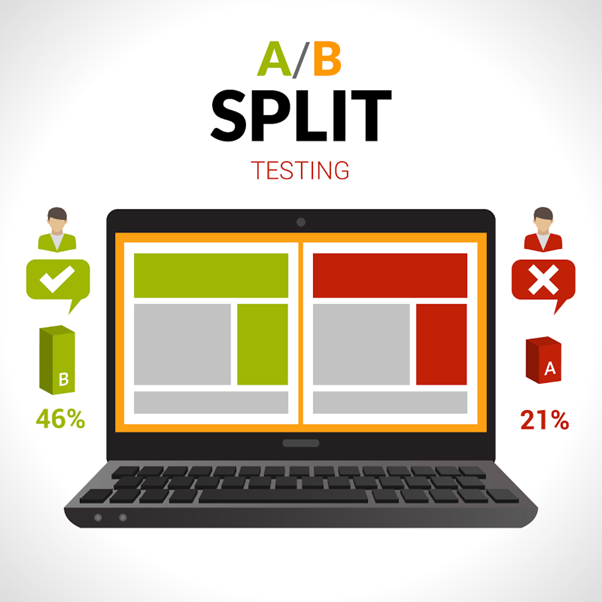
In A/B testing, users are divided into groups and shown different page versions. In SEO split testing, pages are divided into groups, not users. This happens because search engines cannot be split like human visitors.
You also cannot create two versions of the same page for SEO testing. If you do that, it may create duplicate content issues and confuse search engines.
Key differences include:
Understanding this difference helps you choose the right method for your goals.
Most SEO decisions are based on assumptions or industry advice. But what works for one site may fail for another. Testing helps you validate changes before rolling them out.
SEO split testing helps you make better decisions using real data instead of guesses. It allows you to test ideas safely before applying them across your entire website. With testing, you can confirm what works for your specific website and audience.
For example, a simple title change may increase click-through rate and traffic. Testing helps you prove that the improvement works before scaling it to more pages.
Think about this for a second. Would you redesign your entire website without testing one version first? Probably not. SEO deserves the same discipline.
Key benefits of SEO split testing include:
This approach turns SEO into a data-driven process instead of trial and error.
SEO split testing follows a structured process that ensures reliable and useful results. Each step builds on the previous one to create a controlled experiment.
Instead of making random changes, you follow a clear method to test and measure impact. This helps you isolate variables and understand what truly drives performance.
Every SEO test should start with a clear and simple hypothesis. This defines what you want to change and why you expect results.
You should first review your website data to find weak areas. Look for pages with low traffic, poor engagement, or declining performance.
A good hypothesis includes three parts:
For example, you think moving content higher will improve rankings. You test this idea and measure the results after implementation. Another instance is when you may notice low click-through rates on category pages. You test more engaging title tags and expect higher clicks.
These steps ensure your testing is focused and meaningful from the start.
Many people focus only on rankings, but rankings can be misleading. Traffic and clicks give a clearer picture. Therefore, choosing the right metrics is important for measuring success accurately. You need metrics that reflect real SEO performance, not just surface-level changes.
Common metrics include organic traffic, clicks, click-through rate, and conversions. These metrics show how users interact with your pages after search.
Rankings can also be tracked, but they are not always reliable. They often change due to external factors like algorithm updates or competition shifts.
Important metrics to consider include:
Using the right metrics helps you make decisions based on meaningful data.
This step is where most mistakes happen, so pay attention.
This step involves dividing your pages into two groups for testing. One group remains unchanged, while the other receives the new change. They should have comparable traffic, structure, template, and intent. This keeps the test fair and reduces bias in the results.
It is important to balance traffic between both groups. If one group gets much more traffic, your results may become unreliable.
For example, if you test blog pages, do not mix product pages in the same test. That will skew your results.
The goal is to make both groups as similar as possible before the test starts.
Ways to create groups include:
Control groups help you understand what would happen without any change. This makes your results more trustworthy and actionable.
Once your groups are ready, apply the change only to the variant pages.
The control pages should remain exactly the same during the test. Even small unintended changes can affect results.
Make sure:
Each page must have only one version to maintain SEO integrity. Clear implementation ensures that your test measures the correct impact.
If possible, use server-side changes for better control. This helps ensure consistency across all variant pages.
After launching the test, you need to track performance over time. Compare the results between the control and variant pages carefully.
You compare expected performance with actual results. This helps you understand if the change made a real difference.
Key things to consider:
Short tests or small changes may not provide reliable results, but proper analysis helps you decide whether to scale the change or discard it.
Also, tests need enough time to show results. Ending a test too early can lead to wrong conclusions.
SEO split testing allows you to test many elements that impact search performance. SEO split testing can cover many on-page and technical elements. You should focus on changes that affect how search engines read and rank your pages.
Start with elements that influence visibility, relevance, and user engagement. These areas often produce measurable improvements when tested correctly.
The goal is to test changes that impact search visibility and user engagement.
Common elements you can test include:
Each test should focus on one change at a time. This helps you clearly understand what caused the performance difference.
SEO split testing works best when you have enough data and similar pages to compare. It is not useful when your website has very few pages or unstable traffic patterns.
The best time to use SEO split testing is when you want clear proof before making big SEO changes. It helps you avoid risky updates that could hurt your rankings or traffic.
For example, changing titles across hundreds of pages without testing can be risky. A small test helps you confirm results before scaling the change safely.
You should use SEO split testing in these situations:
SEO split testing is especially useful for websites that scale content in large volumes. These sites can test ideas faster and get more reliable results.
Common website types that benefit most include:
You should also consider using SEO split testing when your team needs proof. Many SEO ideas require developer time and business approval before implementation. Testing helps you show real results and justify those decisions.
However, SEO split testing may not be ideal in some cases. Small websites with low traffic may struggle to get meaningful results. Tests may take longer, and changes may not reach statistical significance quickly.
In such cases, you can still test, but you should expect slower learning cycles. Larger websites usually see faster and clearer outcomes from testing. In simple terms, use SEO split testing when you have scale, stability, and a clear goal. That is when testing becomes powerful and reliable.
Testing helps you confirm what works before making large changes across your site.
Many SEO tests fail because of simple but critical mistakes. Avoiding these errors will improve your results and save time.
Testing without a clear process often leads to unreliable conclusions. You should always follow a structured approach for accurate outcomes.
A control group is your baseline, and without it, your test means nothing.
Many people change a group of pages and assume results come from that change. But traffic can increase or drop for many reasons. Without a control group, you cannot prove what caused the shift.
Think of it like this. If both groups grow at the same rate, your change did nothing. If only the variant grows, then your test works.
Small sample sizes lead to misleading results, and this is very common.
If you test only 5 or 10 pages, one random spike can change your entire conclusion. SEO data naturally fluctuates, so you need enough pages to balance that noise.
For example, a blog post going viral can distort your test outcome. That does not mean your SEO change worked.
A better way to do it is by using larger page sets with a similar structure, ensuring consistent traffic across groups and avoiding mixing different page types. This works because you have more data and the more the data, the more accurate the results you’ll get.
Patience is hard, but ending tests early is one of the biggest mistakes. SEO changes take time to reflect in search results. This is because Google needs to crawl, process, and re-evaluate your pages and that does not happen overnight.
Many people stop tests after a few days and jump to conclusions. This often leads to wrong decisions. Instead, you should give your test enough time to stabilize. This will then show you consistent traffic patterns, using which you can monitor trends over weeks, and avoiding reacting to short-term spikes.
Not all metrics tell the full story, and focusing on the wrong ones can mislead you.
Rankings are the most common trap. A page may drop in rankings but still gain more clicks. That happens when titles or snippets improve.
You should focus on metrics that reflect real performance, like organic traffic growth, click-through rate, engagement, time on page, and conversions from organic search.
For example, if traffic increases but conversions drop, something is off. That is a signal worth investigating. Always align your metrics with your business goals, not just vanity numbers.
SEO does not exist in a vacuum, and external factors can affect your results.
Traffic may increase because of a seasonal trend, not your test. It may drop due to a Google algorithm update. If you ignore these factors, you may credit the wrong cause.
Here is what you should watch for:
For example, an ecommerce site may see traffic spikes during festive sales. That does not mean your test caused the growth.
Mistakes in SEO split testing are not always obvious at first. But once you know what to watch for, your tests become sharper and more reliable. And honestly, this is where most marketers separate guesswork from real strategy.
If you want results that go beyond traffic, you need a tool that connects SEO changes to real business outcomes. This is where CausalFunnel stands out.
Most SEO testing tools focus only on rankings or traffic. But let’s be honest, traffic alone does not pay the bills. You need to know which visitors actually convert and bring value.
CausalFunnel takes a different approach. It combines SEO split testing with AI-driven audience analysis and conversion tracking. This means you are not just testing what improves traffic, but also what improves lead quality.
Here is how it helps in real scenarios:
Let’s say you test two versions of a category page. One version drives more traffic, but the other drives better leads. CausalFunnel helps you see that difference clearly.
This is a big shift in thinking. Instead of wondering if the traffic increases, you think about whether the change brought better customers. If you are serious about SEO growth, that question matters more than anything else.
SEO split testing changes how you approach SEO decisions. Instead of guessing, you rely on real data and controlled experiments. It helps you make smarter decisions using real data and allows you to test changes safely before applying them across your website.
Instead of guessing what works, you can measure actual impact and improve results confidently. This reduces risk and increases long-term SEO success.
The key is to follow a structured process and focus on meaningful metrics. Test your ideas, measure results carefully, and scale what works best.
SEO split testing is a method to test SEO changes across groups of pages. It measures the real impact using data.
SEO testing focuses on pages, while A/B testing focuses on users. Search engines require a different testing approach.
Most tests should run for several weeks. The exact duration depends on traffic and page volume.
A control group is a set of pages that remain unchanged, which helps you compare results accurately.
Small websites can test, but results may not be reliable. Larger datasets produce better insights.
Start using our A/B test platform now and unlock the hidden potential of your website traffic. Your success begins with giving users the personalized experiences they want.
Start Your Free Trial

Empowering businesses to optimize their conversion funnels with AI-driven insights and automation. Turn traffic into sales with our advanced attribution platform.
Trusted by Customers


©CausalFunnel Inc. All rights reserved.