



Free Funnel Audit
Convert more customers today!
SEO
10 mins read

SEO
10 mins read
So you want an SEO-optimized site for your business? You may have heard that the process is long drawn. It is also complex. But don’t let that overwhelm you.
Creating an SEO-friendly website isn’t as arduous as the internet may lead you to believe. However, it requires three things from you. The first is clarity regarding your SEO goals. The second is patience because SEO is a long-term process. The third is the correct approach to creating such a site.
Let’s find out more about it.
It is that website that search engines can quickly comprehend. It means that they know what your site is about. Simultaneously, such a site is effortless for people to use and find the stuff they are looking for.
An SEO-friendly site helps both the search engine and your target audience to find what they want.
A website becomes “friendly” when:
To understand rankings, you need to know how Google works in a simple way.
Google looks at three main things:
Google is, at its core, a place where people research about the products, services or any other thing they want. So, whenever someone searches for something, Google wants to give them the best source for it. If your site has answered something well, Google will show that if someone searches for that thing. For this to happen, you must have proper content on or structure in your site. Content that is helpful and clear is the type of content that Google shows to the users.
A well-organized website helps Google understand what your pages are about. It also helps users move easily from one page to another.
If people enjoy using your website, stay longer, and explore more pages, Google sees that as a positive signal.
If your website is slow, confusing, or poorly written:
So, SEO is not just about keywords. It is about the full experience.
Let’s break this down into three simple steps.
This is when Google sends bots to discover your pages. These bots follow links and scan your content.
Once Google finds your page, it tries to understand it and store it in its database.
When someone searches, Google decides which pages to show and in what order.
If your website:
Everything you do in SEO supports these three steps.
This is the foundation of everything. If you get these right, you are already ahead of many websites.
Your content should solve real problems. It should be:
Instead of writing for search engines, write for people first.
Your website should feel simple to explore.
Good structure looks like:
Users should never feel lost. Every page should be reachable within a few clicks.
Speed matters a lot. If your website takes too long to load, people will leave.
Some common ways to improve speed:
Most users browse on mobile devices. So your website must:
Your URLs should be clean and readable.
Bad example:
example.com/page?id=123
Good example:
example.com/seo-friendly-website
Headings help organize your content.
This helps both users and search engines understand your page structure.
Images should:
Alt text helps search engines understand what the image is about.
Linking to other pages on your website:
For example, if you mention “keyword research,” link to a related guide.
Security is important. Websites using HTTPS are safer for users.
Google also prefers secure websites.
Your content should be:
Short paragraphs and clear formatting make a big difference.
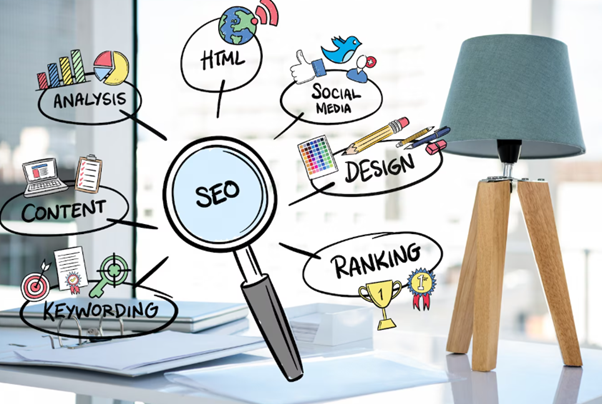
Now let’s turn everything into action.
Keyword research is the foundation of SEO. It helps you understand what people are searching for and why. Doing it properly ensures your content reaches the right audience.
Every search has a purpose. Knowing the intent helps you create content that actually satisfies the user. There are three main types of search intent:
When doing keyword research, focus on intent first, not just the words.
Long-tail keywords often convert better because they match a specific need.
Not every keyword is worth targeting. Keyword difficulty shows how hard it is to rank.
Choosing a mix of low- and medium-difficulty keywords helps you grow faster.
There are several tools to find and analyze keywords:
Write content that:
Avoid copying content. Originality matters.
Structure your website in a logical way.
Example:
Page Type | Example |
Homepage | Main overview |
Category | SEO Guides |
Blog Post | SEO-Friendly Website Guide |
These appear in search results.
Make them simple and engaging.
Focus on:
Even small improvements can boost rankings.
Test your website on different devices.
Make sure:
Connect related pages.
This helps:
Use:
This improves both speed and SEO.
Check for:
These small issues can hurt your rankings.
Use tools like:
Submit your sitemap so Google can find your pages faster.
Design is not just about looks. It directly affects SEO.
A clean design:
If your page is crowded:
Good spacing makes content easier to read.
Users should know where to go next.
Clear menus and links help guide them.
Your website should be usable by everyone.
This includes:
Better accessibility often leads to better SEO.
You do not need to be a developer to understand technical SEO. But you do need to go a bit beyond the basics.
Earlier, technical SEO was mostly about sitemaps, robots.txt, and fixing broken links. Those things still matter. However, today’s SEO is more advanced. Google now looks at performance, structure, and clarity at a deeper level.
Let’s break this down in a simple way.
Here is a quick comparison so you can see the difference clearly:
Old Basics | Modern Technical SEO |
Sitemap | Core Web Vitals |
robots.txt | Schema markup |
Broken links | Canonical tags |
Basic crawlability | Page experience signals |
So yes, the foundation is still important. But you need more than that to compete today.
A sitemap is a file that lists your important pages.
It helps search engines:
Even today, it plays a key role. Especially if your site is large or new.
This file gives instructions to search engines.
It tells them:
For example, you may want to block admin pages or private sections.
Broken links create a poor experience.
They:
So it is important to check them regularly and fix or redirect them properly.
Now let’s talk about something more modern.
Core Web Vitals measure how your website feels to users.
They focus on:
If your website is slow or unstable, users leave. And when that happens, rankings often drop.
Schema markup helps search engines understand your content better.
It adds extra context to your pages.
For example:
When used correctly, it can also improve how your page appears in search results.
Sometimes, the same content can exist on multiple URLs.
This can confuse search engines.
Canonical tags solve this problem. They tell Google which version of a page is the main one.
This helps:
Even with advanced SEO, the basics still matter.
Make sure:
Think of it like guiding someone through your website. The easier the path, the better the experience.
Google looks at how users experience your website.
This includes:
If your website feels safe and smooth, it builds trust. And that trust helps your rankings.
If you want your website to rank well, you cannot ignore Core Web Vitals. These are real performance signals that Google uses to measure user experience.
In simple terms, they tell you how fast, stable, and responsive your website feels.
Even if your content is great, poor performance can hold you back. In fact, studies have shown that websites with LCP above 3.0 seconds can see around 23% more traffic loss compared to faster competitors with similar content quality. So yes, speed and experience truly matter.
Let’s break this down in a simple way.
Core Web Vitals focus on three key areas:
Metric | What It Measures | Why It Matters |
LCP (Largest Contentful Paint) | Loading speed | How fast your main content appears |
INP (Interaction to Next Paint) | Responsiveness | How quickly your site reacts to user actions |
CLS (Cumulative Layout Shift) | Visual stability | How stable your page layout feels |
LCP measures how long it takes for the main content of your page to load.
This could be:
If this takes too long, users feel like the page is slow.
Good benchmark:
How to improve LCP:
INP measures how quickly your website responds when a user interacts with it.
For example:
If there is a delay, users get frustrated.
Good benchmark:
How to improve INP:
CLS measures how stable your page layout is while loading.
You may have seen this before:
That is a poor CLS experience.
Good benchmark:
How to improve CLS:
Core Web Vitals are part of Google’s page experience signals. That means they directly affect rankings, especially when content quality is similar across websites.
Here is what happens when your scores are poor:
On the other hand, a fast and smooth website:
You can easily test your website using free tools:
These tools will show:
Avoid these mistakes.
Users leave quickly. Rankings drop.
Most users are on mobile.
Using too many keywords looks unnatural.
Google prefers original and valuable content.
Titles and descriptions are important.
Confuses both users and search engines.
If users are unhappy, rankings suffer.
Type | What It Means | Example |
On-Page SEO | Content and page optimization | Keywords, headings |
Technical SEO | Backend improvements | Speed, sitemap |
Off-Page SEO | External signals | Backlinks |
Each type supports the other.
Together, they improve rankings.
Ask:
These show how your website is performing.
Solve real problems. That is what users want.
Fresh content signals relevance.
Links from trusted websites increase credibility.
Small improvements add up over time.
If you want to rank well today, you need to understand E-E-A-T.
It may sound technical, but the idea is simple. Google wants to show content that people can trust.
E-E-A-T stands for:
Google’s systems are designed to prioritize content that shows these qualities. This has become even more important in recent years, especially for competitive topics.
Let’s break it down in a simple way:
Element | What It Means | Simple Example |
Experience | First-hand knowledge | A product review written after actually using it |
Expertise | Skill or knowledge | A detailed guide written by someone who understands the topic |
Authoritativeness | Reputation | Being mentioned or linked by trusted websites |
Trustworthiness | Reliability | Accurate, honest, and secure content |
Each of these signals helps Google decide if your content is worth showing.
Search results are more competitive than ever. At the same time, users are more careful about what they trust.
So Google focuses on:
If two websites have similar content, the one with stronger E-E-A-T signals is more likely to rank higher.
You do not need to be famous to build E-E-A-T. You just need to be clear, honest, and helpful.
Here are practical ways to do that:
Tell readers who created the content.
Include:
This builds trust instantly.
If your topic requires expertise, mention your qualifications.
For example:
This helps users feel confident in your content.
Support your content with accurate information.
You can:
This shows that your content is well-researched.
This is where many websites fall short.
Instead of writing generic content:
Even small personal insights can make your content stronger.
Authority does not happen overnight.
You can build it by:
Over time, your website becomes more trusted.
Make your website feel safe and reliable.
This includes:
If users trust your site, Google is more likely to trust it too.
SEO is not about tricks. It is about clarity and usefulness.
If your website:
It will naturally perform better.
Focus on people first. Structure your content well. Keep improving.
That is how you build an SEO-friendly website that ranks and stays on top.
Local SEO for restaurants is the process of improving your online presence so your restaurant appears in local Google searches. It helps your business show up in Google Maps and “near me” results.
When someone searches for food nearby, local SEO decides whether they find you or a competitor. It directly connects searchers with nearby restaurants ready to visit.
Local SEO is important because most customers search online before choosing where to eat. If your restaurant is not visible, you lose potential customers instantly.
It helps you:
Without local SEO, even good restaurants stay hidden online.
Google ranks restaurants based on three main signals:
Prominence comes from reviews, backlinks, and activity. Stronger signals increase your chance of appearing in the top 3 Map Pack.
To rank higher in Google Maps, focus on activity and trust signals.
Key actions include:
Active profiles get better Map Pack visibility.
The Google Map Pack is the top 3 local business results shown on Google. It appears above organic search results.
Being in the Map Pack leads to:
Most users click one of these top 3 listings.
Yes, new restaurants can compete in local SEO if they optimize correctly. Google does not require years of history to rank locally.
To compete faster, you require:
Consistency helps new restaurants gain visibility quickly.
Start using our A/B test platform now and unlock the hidden potential of your website traffic. Your success begins with giving users the personalized experiences they want.
Start Your Free Trial

Empowering businesses to optimize their conversion funnels with AI-driven insights and automation. Turn traffic into sales with our advanced attribution platform.
Trusted by Customers


©CausalFunnel Inc. All rights reserved.