



Free Funnel Audit
Convert more customers today!

SEO
10 mins read

SEO
10 mins read
Most people now search online before choosing an accountant. They want someone nearby and easy to reach. Local search decides which firms get calls and which get overlooked. Proper use of SEO for accounting firms can help your firm appear in city-based searches, including phrases like “accountant near me” or location terms such as “CPA in Austin.”
When your firm does not appear locally, potential clients choose competitors instead. This can happen even when your service quality is strong. Local SEO places your firm in front of nearby clients at the exact moment they need accounting help. The right organic traffic tools make this process easier by showing what people search and how they find local firms.
This guide explains local SEO in a clear and practical way. Each section focuses on actions that actually work for accounting firms. No confusing terms. No extra noise. Just clear steps you can support with the right organic visibility tools.

Local SEO for accounting firms helps businesses show up in nearby search results. It targets searches with strong local intent and clear location signals. These searches usually display map listings first. Standard website results often appear below the map section.
For example:
If someone searches “CPA near me,” Google shows nearby firms. Those firms appear on a map with contact details. Local SEO helps your firm get into those results. It tells Google where you are and what you offer.
Local SEO follows clear and basic rules. Google wants to show helpful and nearby businesses.
Here is how it works step by step.
Google checks the searcher’s city or area. It then shows accounting firms close to that location. If your firm sends clear location signals, you rank better.
Accounting is a local service for most people. Clients prefer firms close to home or work. They do not want help from another state. Google understands this preference. That is why local ranking matters more.
Google looks at your business information closely. This information tells Google who you are.
It includes:
Clear details reduce confusion for Google. They also improve trust.
Reviews tell Google your firm is active. They also tell clients your firm is trustworthy. More quality reviews improve local rankings. Fresh reviews matter more than old ones.
Your business information must match everywhere online. This includes name, address, and phone number. Even small differences can cause ranking problems. Consistency helps Google trust your data.
Local SEO is mainly about two things:
Google prefers accounting firms that are:
When your firm meets these signals, rankings improve.
Local SEO for accounting firms attracts people already looking for nearby help. These people are ready to contact an accountant. That makes local SEO very powerful.
Local visitors are not browsing randomly. They are searching for a service they need.
This leads to:
These leads convert better than broad traffic.
Paid ads stop when your budget ends. Local SEO keeps working over time. Once your firm ranks locally, visibility stays steady. This makes growth safer and more predictable.
People trust firms they see on maps. They trust reviews from nearby clients. By the time they call you, trust already exists. This makes conversations easier.
Many referrals still happen offline. But people search your firm before calling. Local SEO ensures they find correct information. That prevents lost opportunities.
Local SEO offers strong business advantages.
Some key benefits include:
For most accounting firms, local SEO delivers the best return.
Google uses clear signals to rank firms locally. Understanding these signals helps you improve SEO in accounting rankings in your area.
There are three main ranking factors.
Google checks how well your firm matches the search. Your services must clearly match user intent. Clear service descriptions improve relevance. Vague content weakens rankings.
Closer firms often rank higher in local searches. You cannot control your physical location. But strong signals can still help.
Prominence shows how well-known your firm is online. Trust signals include reviews and mentions. Consistency also plays a major role here.
Important Local Ranking Signals to Focus On
Some signals matter more than others. Key local ranking factors include:
Improving weak areas boosts overall local performance.
Many accounting firms focus on tactics before fixing basics. This delays results and wastes effort.
Local rankings drop when Google sees unclear or conflicting information. Most issues start small but grow over time.
The first fixes should always be simple:
Firms that delay these steps often struggle to enter the map pack. Rankings improve faster when foundations stay clean and accurate.
Many firms rank between positions four and six locally. This is the hardest position to escape.
Google already sees these firms as relevant. Trust signals are usually the missing piece.
Common causes of ranking stalls include:
Small improvements here often create noticeable ranking jumps. Google favors firms that stay active and consistent.
Google Business Profile activity sends strong freshness signals. Inactive profiles lose visibility over time.
Posting updates helps Google understand your firm is active and open.
Useful updates include:
Even short updates help. Consistent activity matters more than long posts.
Many firms publish blogs but ignore service clarity. This often limits local rankings. Google ranks service pages for local intent searches. Blogs support authority but rarely drive local leads alone.
Strong service pages should:
Clear service content builds relevance faster than frequent blogging.
Some firms create many city pages with similar content. This often backfires. Google detects duplication easily. Thin pages weaken trust and rankings.
Create city pages only when:
Fewer strong pages outperform many weak ones.
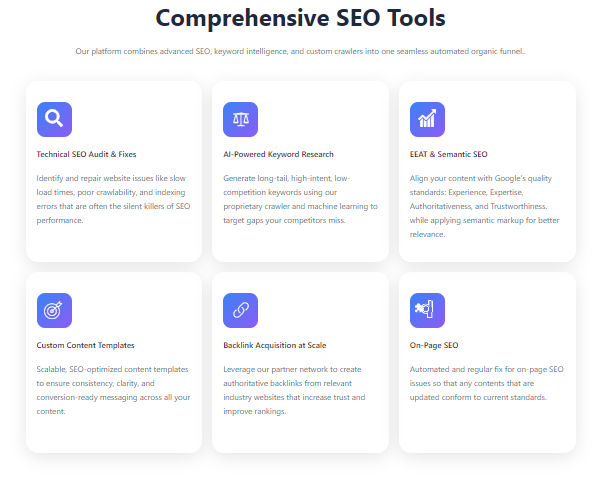
Local SEO mistakes often slow growth. Professionals help avoid common issues early. They focus on actions proven to influence local rankings. Instead of guessing, professionals rely on performance data. This saves time and reduces trial errors. Platforms like CausalFunnel support this approach through automation and insight-driven tools.
Professionals use such platforms to:
This keeps Local SEO for accounting firms focused on outcomes, not assumptions.
An accounting firm in Austin ranks on page two locally. Reviews appear rarely. Profile updates stopped months ago. Service pages lack city context.After consistent profile updates and review activity, calls increase. Rankings slowly move toward the map pack. No shortcuts. Just steady improvements.
Local SEO rewards clarity and consistency. Each signal supports the next. Accurate information builds trust. Helpful content answers real needs.
Firms that stay active avoid ranking drops. Stable effort creates stable visibility. Over time, local presence becomes harder for competitors to replace.
Local SEO works best when all parts support each other. Small fixes alone rarely improve rankings. A clear structure helps Google trust your firm and helps users take action. These strategies focus on visibility, clarity, and trust within your city.
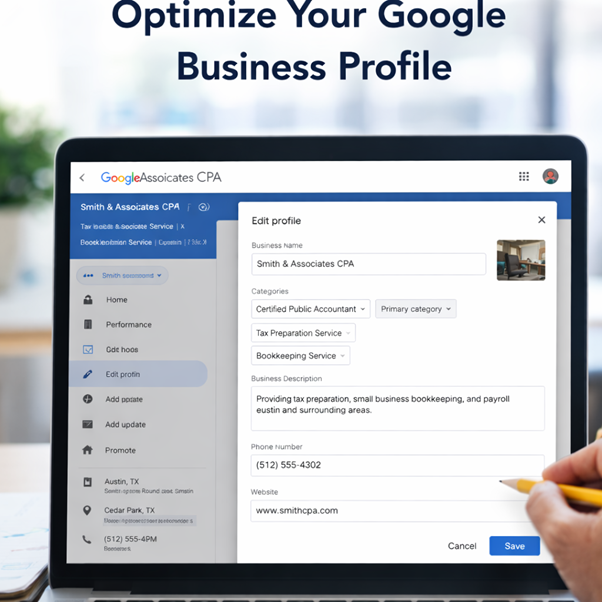
Your Google Business Profile is your strongest local SEO asset. It often appears before your website in search results. A complete and active profile increases calls and map visibility quickly.
Google uses this profile to understand who you are and where you operate. Start with the correct primary category. This tells Google your main service. Add secondary categories only when they truly apply. Write a clear business description using simple words. Explain what you do and who you help. Avoid sales language and keyword stuffing.
Add accurate service areas. Only list cities where you actually serve clients. This avoids wasted traffic and ranking confusion. Keep your profile active and updated. Google prefers businesses that show regular activity.
Profile optimization basics include:
Example: An accounting firm in Austin should list “Certified Public Accountant” as the primary category and clearly explain tax and bookkeeping services for local businesses. In short, a complete and active profile improves trust and local rankings.

Your website must clearly show where your firm operates. Google looks for location signals to match your site with local searches. These signals should feel natural and helpful. Avoid repeating city names in every sentence.
This harms readability and trust. Instead, add location references where they make sense. Strong places to add them include service pages and contact pages. About pages can explain your local experience. Blog posts can mention cities when relevant to the topic.
Examples of natural keyword use include:
Each mention should help the reader understand your location and service. Clarity matters more than repetition. Google rewards helpful language, not forced keywords.
City-specific pages can help rankings when done correctly. They work best for firms serving multiple nearby cities. Each page must provide real value. Avoid creating many pages with only city names changed.
Google can detect duplication and may lower rankings. Each page should answer real questions from local clients. Include services offered in that city. Mention local industries or rules when relevant. Add unique introductions and conclusions.
Helpful elements for strong city pages include:
Example: A firm serving Austin and Round Rock can create two pages, each explaining services for that area. If your firm serves only one city, focus on one strong local service page. This avoids thin content and confusion.
Google reviews strongly influence local rankings and trust. They help Google confirm your firm is real and active. Reviews also help users feel confident before contacting you. Reviews work best when they are frequent and honest. Large gaps between reviews slow ranking growth. Ask clients for reviews after successful interactions. Make it easy and respectful. Never offer rewards or request fake reviews. Respond to all reviews.
Thank clients for positive feedback. Respond calmly to negative reviews and offer help. This shows professionalism and care.
Best review practices include:
In short, reviews improve both rankings and conversions.
NAP stands for name, address, and phone number. Consistency builds trust with Google. Inconsistent details create confusion and weaken local signals. Your NAP must match exactly everywhere online.
This includes your website, Google Business Profile, directories, and social profiles. Even small differences can cause issues. Check abbreviations and formatting carefully. “Suite” and “Ste” should match everywhere. Phone numbers should follow one format.
Key places to review include:
Fix errors quickly when found. Consistent information strengthens authority and improves ranking stability.
Most local searches happen on mobile devices. Google prioritizes mobile-friendly websites in local results. Slow sites increase frustration and bounce rates. Fast sites improve engagement and trust. A good mobile experience includes readable text and easy navigation. Buttons should be easy to tap. Pages should load quickly.
Key improvements include:
Many firms harm rankings by following outdated advice. Others focus on rankings instead of users. Keyword stuffing is a common mistake.
Repeating city names hurts trust and readability. Creating duplicate city pages is another issue. Thin pages rarely rank well. Ignoring reviews also damages trust. Unanswered reviews weaken credibility.
Mistakes to avoid include:
Strong local SEO prioritizes users, clarity, and honesty.
Once the basics are solid, advanced local SEO in accounting signals add strength. These signals improve trust, clarity, and authority. They help firms compete in crowded local markets. Advanced steps work best after profiles, reviews, and content are stable.
Local content works when it answers real questions. Accounting clients often search with urgency. Content should reflect local needs and timing. Avoid generic blog topics without location value. Focus on city and state-specific issues instead. Strong local content ideas include:
• Local tax deadline reminders
• State or city regulation updates
• Industry-specific accounting challenges
• Small business compliance guides
Helpful content builds trust and engagement. Google rewards content that serves users clearly.
Internal links help Google understand page importance. They also guide users toward helpful services. Link service pages to city pages naturally. Avoid repeating the same anchor text. Use clear and descriptive phrases. Effective internal linking improves crawlability and user flow.
Schema markup helps search engines read your site correctly. It explains your business details clearly. Local business schema improves accuracy in search results. Useful schema types include:
• Local business schema
• Organization schema
• Review schema
Schema works quietly in the background. It improves clarity without affecting readability.
Tracking shows what works and what needs improvement. Monitor local rankings, traffic, and profile actions. Use Google Business Profile insights often. Key metrics to track include:
• Profile views
• Calls and direction requests
• Local keyword visibility
Data-driven adjustments produce steady growth.
SEO in accounting requires consistency. Update profiles when changes happen. Collect reviews regularly. Refresh content as rules change. Monthly checks prevent ranking drops. Stable effort protects long-term visibility.
SEO in accounting firms grows in a steady and predictable way. It connects your firm’s visibility with real local demand from people actively searching for accounting help. Clear business information, strong trust signals, and consistent activity drive long-term results. Firms that focus on user needs earn stronger and more stable local rankings over time.
While many firms handle the basics themselves, working with professional SEO support can help rankings improve faster and more reliably. Experienced teams use data, tools, and proven methods to reduce guesswork and focus effort where it matters most. When local SEO is guided by insight instead of trial and error, accounting firms compete more efficiently and stay visible when clients need them most.
SEO in accounting helps firms appear when people search for tax or financial services online. It improves website visibility, local listings, and trust signals. The goal is to attract clients who are actively looking for accounting help.
SEO takes time to build trust and visibility. Most accounting firms see early movement in three months. Strong and stable results often take six months or more. Progress depends on competition, location, and consistency.
Yes, it helps a lot. Google Business Profile often shows before websites in search results. A complete and active profile increases calls, directions, and local trust. Reviews and updates make it even stronger.
Local SEO works long-term, while ads stop when spending ends. SEO builds steady visibility and trust over time. Ads can help short-term, but local SEO delivers better value for consistent client growth.
Local SEO starts with accurate business information. Create a complete Google Business Profile. Use location-based keywords naturally on your website. Collect reviews and keep details consistent across all listings. These steps help Google trust and rank your business locally.
Yes, nearly half of Google searches have local intent. Many users search for nearby services, hours, or directions. This makes local SEO important for businesses that depend on local customers, including accounting firms.
Start using our A/B test platform now and unlock the hidden potential of your website traffic. Your success begins with giving users the personalized experiences they want.
Start Your Free Trial

Empowering businesses to optimize their conversion funnels with AI-driven insights and automation. Turn traffic into sales with our advanced attribution platform.
Trusted by Customers


©CausalFunnel Inc. All rights reserved.