



Free Funnel Audit
Convert more customers today!

SEO
10 mins read

SEO
10 mins read
Paid advertising is more crowded today than it has ever been. Your prospects see countless search ads, display banners, and social promotions daily now. Costs keep rising, while many campaigns still struggle to turn clicks into customers.
In this climate, guessing your next move is a very expensive habit. You need to see what rivals are actually doing inside the ad auctions. You must understand where they spend, how they message, and who they target. This is where PPC competitive intelligence becomes a real strategic advantage. With the right system, you stop flying blind against better-funded competitors.
You learn where they win, where they waste, and where you can outsmart them. This article shows how to build that system and turn insight into action.

PPC competitive intelligence is the structured study of your competitors’ paid campaigns. You collect real data about their keywords, ads, landing pages, and visible bidding behavior. Then you turn those observations into clear decisions for your own campaigns.
It goes deeper than simple PPC competitor analysis done once each quarter. Instead, it becomes an ongoing cycle that tracks how their approach changes over time. You look for patterns, gaps, and threats that matter to your market. This work helps answer questions your internal data cannot answer alone. Studying ppc competitor analysis examples helps you see how these patterns appear in real campaigns and how different brands respond to market shifts in practical situations.
Why do prospects keep mentioning another brand on sales calls recently? Which offers or claims are pushing people toward those rival landing pages?
When done well, PPC competitive intelligence connects the outside landscape with your strategy. It guides what you say, where you bid, and how you structure your offers.
You cannot judge competitors’ campaigns if basic metrics still feel confusing today. So start by revisiting the core numbers that drive every paid search account.
Key metrics to understand clearly include these essentials:
These metrics shape the context for competitive analysis for PPC campaigns. You might accept higher costs if your conversion rate is much stronger. You might ignore certain battles where rivals clearly tolerate weaker efficiency.
Once these basics feel natural, competitor data becomes far easier to interpret.
Not all PPC competitive intelligence serves the same goal or time horizon. Some work helps you make better decisions this week or this month. Other work guides your direction for the next quarter or even longer.
Tactical intelligence focuses on immediate levers you can pull quickly. You watch current ads, bids, and landing pages inside live auction environments. You adjust your keywords, copy, or budgets to respond to these short-term moves, including tactics like bidding on competitors brand name in ppc when it helps capture high-intent traffic during key moments.
Strategic intelligence looks at deeper patterns across a longer timeline. You study which segments competitors target and which they consistently ignore. You note messaging themes that repeat and categories they attempt to dominate. This helps you design positioning and channel strategy that plays to your advantage.
When both levels work together, you stop reacting randomly inside crowded auctions. Instead, every decision fits a clear plan shaped by real external evidence.
A strong system covers several layers of insight working together in harmony. PPC competitive intelligence is not one report; it is a set of connected views.
These views look at keywords, creative, landing experiences, and auction behavior.
Keywords reveal where your competitors believe demand actually exists right now. Search queries reveal how real people describe their problems and desired outcomes.
Useful keyword intelligence work might include these steps:
When you map patterns across these terms, you start uncovering competitors ppc keywords that shape how the market behaves and where real demand is shifting.
This is where PPC competitor analysis moves from curiosity into concrete opportunity. You end up with a prioritized list of areas to attack, defend, or abandon.
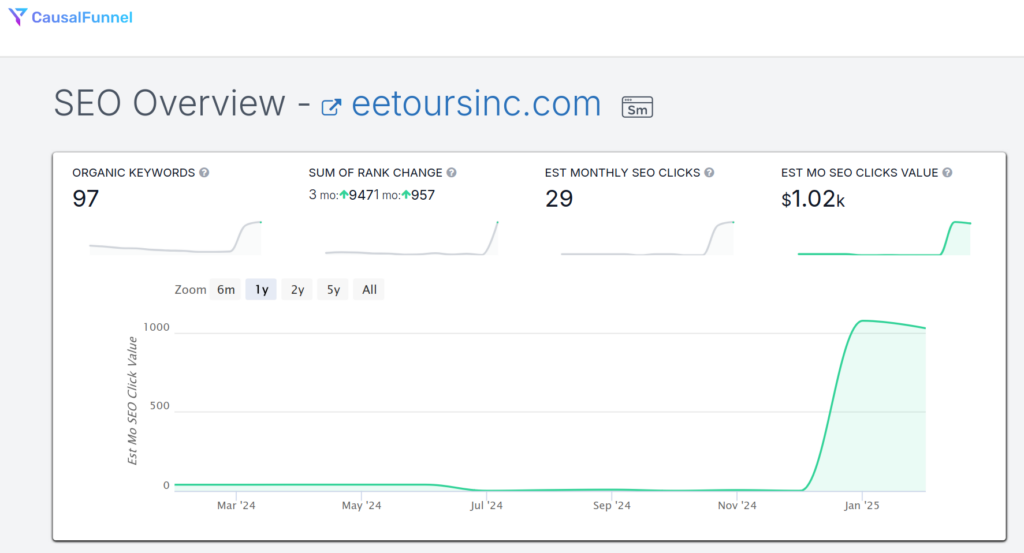
AI-powered SEO tools help you identify keywords (including long-tail keywords) that have a higher potential with less competition. A tour company based in New York saw a $1k monthly increase in organic traffic using SEO tools combined with other SEO efforts.

Ads show how competitors position themselves when attention is tight and expensive.
You can learn a lot by watching which angles they repeat across many campaigns.
Look closely at elements like these in their search or social ads:
This analysis should not inspire copying; it should inspire better clarity. You want to understand which promises dominate the category conversation today.
Then you decide where to align, where to sharpen, and where to stand apart.
The click is only the first half of any successful visit or lead. Competitive intelligence must also review what happens after someone hits their pages.
Evaluate these aspects on key competitor landing pages reached from ads:
This view helps you estimate how hard rivals work to turn traffic into revenue. You can often outperform them with clearer offers and fewer points of friction.
You cannot see exact budgets, but you can glean useful directional hints. Auction-level metrics reveal how aggressively competitors show up beside your ads.
Look for patterns in signals like these inside your main ad platforms:
This perspective supports a smarter competitive analysis for PPC campaigns overall. You may find periods where you can win more cheaply with a strong presence. You may also find fights where stepping back will protect your profitability longer. Using a well-structured ppc report template helps document these insights clearly so your team can review trends, compare competitor behavior, and make stronger strategic decisions.
You do not need every tool on the market to gain an advantage. You mainly need consistent data from a few reliable and connected sources. This includes direct platform information, trusted third parties, and internal systems.
Useful tips:
Your ad platforms hold some of the best data for Google Ads competitor research. Auction reports show who appears with you and how often they beat you.
Useful in-platform signals often include items like these:
Treat these numbers as direction, not absolute truth, and watch trends over time. They are still powerful guides when making strategic bidding and budgeting decisions.
Third-party tools help you see beyond the walls of your own ad accounts. They often provide archives of ads, estimates of spend, and keyword coverage ranges.
They are especially useful when you want to:
Use these tools to broaden your view, then confirm insights with platform data later
Your own systems turn external signals into meaningful stories about performance. They connect auction behavior with real leads, deals, and long-term customers. In many teams, a ppc reporting tool also plays a key role here by organizing these insights into clear dashboards that make trends easier to interpret.
Helpful internal sources might include these three core systems:
These inputs help confirm whether competitor moves actually threaten your results
PPC competitive intelligence works best as a repeatable cycle, not a loose habit. Each pass through the cycle clarifies your position and sharpens your next actions. You define objectives, collect data, analyze patterns, test, and then refine again.
Start by deciding why you are performing this analysis at all. Goals might include lower acquisition costs or better coverage on strategic keywords.
Clarify these simple points before you gather any serious data:
Clear focus prevents you from drowning in distracting details that will never drive action.
Next, decide what you will track and how often the collection should happen. Weekly checks work well for auctions, while monthly checks suit deeper keyword studies.
You might create a simple cadence like this starter rhythm:
Assign owners for each piece so nothing gets forgotten during busy campaign periods.
Now turn raw data into insights that actually guide choices and experiments. Look for patterns in which messages, channels, and keyword themes repeat frequently.
Your analysis might produce artefacts such as these example deliverables:
Focus on questions that link directly to performance, not just curiosity about behavior.
Insights only matter when they guide concrete tests inside your live campaigns. Each major finding should translate into at least one specific experiment or change.
For example, you might design tests like these simple trial ideas:
Plan these tests in sprints, then measure results against your original objectives.
Finally, share the story, not just the numbers, with relevant stakeholders. Explain what you learned, what you tried, and what happened in real business terms.
Close each cycle by choosing which practices become permanent and which get dropped. Then decide which competitors, channels, or segments deserve focus in the next cycle.
It helps to see how this work plays out in real business situations. Here are several focused cases where these methods create clear competitive gains.
High-intent keywords often attract very heavy competition and rising click prices. Without context, you might either overspend there or avoid them entirely instead.
PPC intelligence helps you find a smarter middle path across these terms.
You can:
This approach lets you win real revenue while competitors use up their budget far less efficiently.
Ad analysis shows which claims and stories your competitors repeat most frequently. This insight turns into powerful creative direction for your own campaigns.
Through focused PPC competitor analysis, you might notice a common pattern emerging. Perhaps several brands push speed while ignoring service quality after onboarding ends.
You can then position around reliability, support, or long-term partnership instead. Your ads acknowledge their claim indirectly but show why it is not the full story.
Sometimes a competitor suddenly appears everywhere and drives costs upward rapidly. You see impression share drop, and your usual positions become harder to maintain.
PPC competitive intelligence helps you respond with discipline instead of panic.
You might:
This calm response often beats reacting with uncontrolled bids that only benefit platforms.
Insights from ads and landing pages help more than just the marketing team. They also reveal how competitors frame value in ways prospects will repeat.
You can share structured findings with sales, product, and leadership teams.
Examples include:
This cross-functional view turns ad monitoring into fuel for wider strategic decisions. Real-world ppc examples from competitor campaigns make these insights easier to understand, discuss, and apply across teams.

A good system does more than explain what already happened last quarter. It warns you early when the landscape is starting to move under your feet.
You can design a lightweight early warning system built around key signals.
Weekly checks keep you aware of fast shifts in auctions and creative changes. Monthly checks track slower shifts in offers, positioning, and channel mix choices.
Consider a checklist like this when planning monitoring routines and dashboards:
Consistent small checks are better than massive reviews done only once yearly.
Signals alone do nothing without a clear response playbook behind them. You need simple rules so teams know when to watch and when to act.
For example, you might define responses like these structured options:
This structure keeps your reaction measured, instead of driven by fear or guesswork.
Many teams start strong, then fall into traps that reduce the value of this work. Knowing these pitfalls upfront helps you build a more resilient practice.
Common mistakes include these recurring patterns across different organizations:
Avoid these by staying anchored to business outcomes and clear testing roadmaps. Competitive data should always feed experiments, not replace your own thinking.
When used well, PPC competitive intelligence becomes a quiet engine behind growth. It keeps you grounded in reality while your competitors guess and hope instead.
You learn where to fight, where to pivot, and where to lead the category. You design campaigns that reflect what people truly see across the entire landscape.
Start small by mapping a few key rivals and their most visible campaigns. Layer in regular data collection, simple analysis, and focused testing from there.
Over time, this steady approach builds an advantage that feels almost unfair. You are no longer just buying clicks; you are outthinking the market every day. This strategic mindset also helps teams understand practical differences in ppc vs cpc decisions, so budgeting and optimization stay aligned with real competitive insights.
Start using our A/B test platform now and unlock the hidden potential of your website traffic. Your success begins with giving users the personalized experiences they want.
Start Your Free Trial

Empowering businesses to optimize their conversion funnels with AI-driven insights and automation. Turn traffic into sales with our advanced attribution platform.
Trusted by Customers


©CausalFunnel Inc. All rights reserved.