



Free Funnel Audit
Convert more customers today!

SEO
10 mins read


SEO
10 mins read

The question “how many keywords should I use for SEO” comes up all the time. Here’s a quick answer.
Focus on one primary keyword per page. Support it with a few related secondary keywords. Trying to stuff dozens into an article rarely works. Google reads context, not lists of words.
Many assume more keywords mean higher rankings. That’s a myth. Overloading a page confuses search engines and weakens focus. Here’s a calm, practical guide to get it right.
Keyword strategy is not just about numbers or search volume; it’s about clarity of focus and intent. Think of it like telling a coherent story to your audience. Jumping between ten unrelated topics would confuse anyone and dilute the message. Google works the same way, rewarding content that stays focused, consistent, and clearly aligned around a central theme. Think of it like telling a story. Jumping between ten unrelated topics would confuse anyone. Google works the same way.
For example, an article about Himalayan trekking has the potential to pull lots of clicks and traffic. But this is only possible if it ranks well. What can hinder its ranking? If you divert the focus from trekking and include other things like beach resorts.Focus is everything. Understanding primary vs. secondary keywords keeps your content sharp and relevant.
A primary keyword is the main topic of your page. It shows Google what your content is about. Examples of placement include:
In this article, the primary keyword is how many keywords should I use for SEO. It anchors all other content.
Secondary keywords are related terms. They add context and semantic depth. Examples here include:
These keywords help search engines understand the topic.
There’s no need to get tangled up in a web of confusion over the number of SEO keywords per page. Here’s a simple method. Just target one core or primary search term. Along with that, include two to five secondary or supporting search terms.
This keeps content focused and readable. Overstuffing reduces quality and engagement. Google values pages that fully satisfy intent, not pages with repeated words.
Tools like Google Keyword Planner, Ahrefs, or SEMrush are helpful. Look for keywords with a good balance of search volume and competition. In these tools, start by entering a seed term into features like Keyword Planner’s “Discover new keywords”, Ahrefs’ Keywords Explorer, or SEMrush’s Keyword Overview to see related terms, estimated traffic, and ranking difficulty before choosing your primary focus.
Ask:
For example, how many keywords should I use in an article is a natural variation. Including it adds semantic relevance.
Pick 2–5 related terms. Tools like AnswerThePublic show common questions people ask.
Supporting keywords could be:
They provide depth and context without repetition.
Placement matters. Include the primary keyword:
Secondary keywords should appear naturally in the body and subheadings. Don’t force them. Smooth, readable sentences come first.
Check your rankings, clicks, and engagement. Ask:
Updating content over time keeps it relevant and competitive.
Even experienced writers make mistakes. Avoid:
Do this simple test: Read what you wrote aloud. If it sounds robotic, rewrite.
This section covers key SEO ideas that can take your content from good to top-ranking. Each concept is explained with examples and practical tips.
Keyword clustering is about grouping related keywords around a main topic. Instead of focusing on a single keyword, you write content that covers multiple variations and subtopics.
For example, if your primary keyword is how many keywords should I use for SEO, related keywords could include keyword density, semantic SEO, and content optimization. Writing around these creates a cluster. Google then sees your page as a complete resource. Clusters improve rankings and help your page appear for multiple searches naturally.
Keyword cannibalization happens when multiple pages compete for the same keyword. This can confuse Google and harm your rankings.
To avoid it:
You can detect cannibalization using Google Search Console. Look for multiple URLs ranking for the same keyword. Fixing cannibalization improves clarity and boosts ranking potential.
Every keyword has an intent. Understanding it ensures your content matches what people want. There are four main types:
Creating content that aligns with the correct intent increases user satisfaction and ranking chances.
LSI keywords are related terms that give context to your main keyword. Google uses them to understand the topic fully.
For example, for how many keywords should I use for SEO, LSI keywords could include semantic SEO, keyword research, or content optimization. Using these naturally in paragraphs and headings improves topical depth and shows Google that your page covers the subject comprehensively.
Topical authority is when Google sees your website as an expert on a topic. Pages that cover a topic fully and in depth gain authority.
How to build topical authority:
Strong topical authority often leads to ranking for many related searches, not just the primary keyword.
Here’s a clear table of tools that make keyword research, optimization, and tracking easier. Each tool includes key features and purpose.
Tool | Purpose / Use | Key Features | Why It’s Helpful |
Keysearch | Keyword research & content planning | Content Assistant, search volume, difficulty analysis | Helps select primary and secondary keywords and write content optimized for them |
SEMrush / Ahrefs | Competitive analysis | Competitor keyword tracking, top-performing pages, backlink analysis | Understand what works in your niche and plan a strategy to outrank competitors |
AIOSEO / Yoast (WordPress) | On-page optimization & density checks | Keyword placement guidance, readability analysis, meta tag optimization | Ensures proper primary and secondary keyword usage and natural keyword density |
Google Search Console | Performance tracking | Impressions, clicks, average position, cannibalization detection | Identify underperforming keywords, detect content conflicts, track ranking improvements |
Keyword Density Checkers (Free Online Tools) | Keyword frequency analysis | Counts keyword appearances, calculates density | Ensures primary/secondary keywords remain within safe 0.5–0.7% range without stuffing |
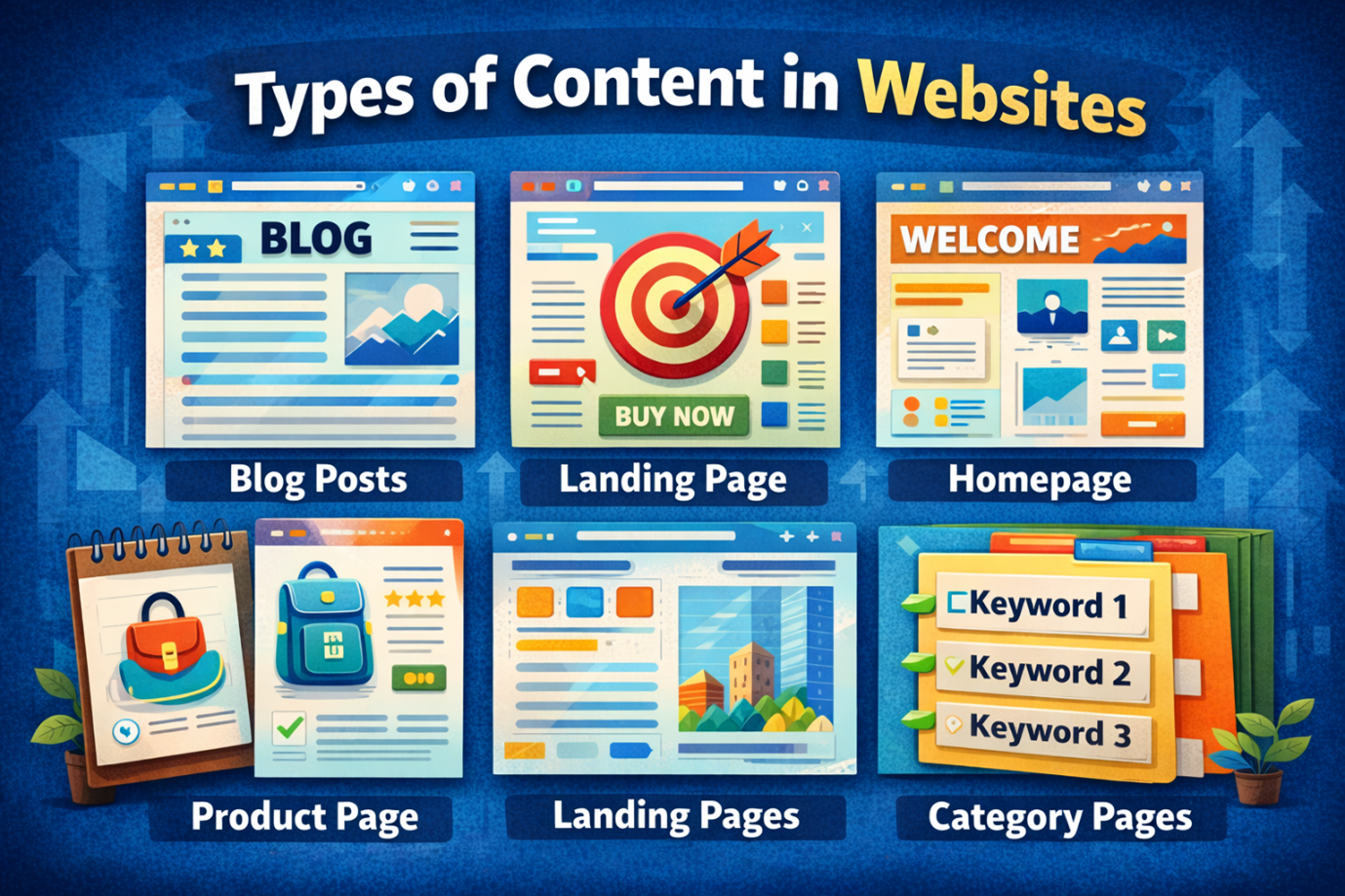
Different types of content need different keyword strategies. Here’s a quick guide:
Content Type | Keyword Recommendations | Notes / Tips |
Blog Posts | 1 primary + 2–5 secondary | Focus on one main topic with supporting keywords. Use clusters and LSI terms for depth. |
Product Pages | 5–10 keywords | Include variations like product features, benefits, and comparisons. Keep it natural. |
Landing Pages | 3–5 focused keywords | Highlight the main offer. Keep content concise and persuasive. |
Homepage | Multiple strategic keywords | Target core topics or services. Balance across sections, headings, and meta tags. |
Category Pages | Cluster approach | Use a main keyword with related terms. Link to relevant subpages to show authority. |
Understanding search intent is key to creating content that matches what people actually want. Not all keywords serve the same purpose. Here’s a closer look:
The user wants to learn something.
Example: “how many keywords should I use in an article.”
For these keywords, focus on guides, tutorials, and step-by-step articles.
The user is comparing products or services.
Example: “best SEO keyword tools 2026.”
Content should include reviews, comparisons, pros and cons.
The user wants to buy or take an action.
Example: “buy SEO software subscription.”
Pages should be product-focused, with clear calls-to-action.
The user wants to reach a specific website or page.
Example: “Ahrefs keyword research page.”
Make sure your content is branded or directional, helping users land exactly where they intend.
Tools to Analyze Search Intent:
Where you put your keywords matters as much as how many you use. Strategic placement helps Google understand your page.
Include your primary keyword in the URL.
Example: /how-many-keywords-should-i-use-for-seo
Keep it short, clear, and descriptive.
Google pays attention to early content. Include the primary keyword in the first 100 words.
Example: “Most people wonder how many keywords should I use for SEO. The answer is simple…”
Describe images naturally. Include the keyword if relevant.
Example: <img alt=”SEO keyword placement checklist”/>
This improves accessibility and SEO.
Link to related pages with descriptive anchor text.
Example: Link “keyword clustering guide” to a full article about clusters.
Helps Google see topic structure and distributes authority.
Use H2/H3 headings in your TOC. Include keywords naturally. This makes the page scannable and signals content structure to Google.
Tracking the right metrics is essential to know if your SEO strategy is working. You need both traffic indicators and engagement signals to make informed decisions.
Keep an eye on where your page ranks for its main keyword. Small movements can indicate if your optimization is working.
Example: Check if how many keywords should I use for SEO moves from page two to page one in Google.
Impressions show how many times your page appears in search results. CTR (click-through rate) shows how many people clicked on it. High impressions with low CTR may mean your title or meta description needs improvement.
Monitor overall traffic from search engines. An upward trend means your keyword targeting and content strategy are effective.
Look at time on page and bounce rate. Longer time and lower bounce rate indicate that visitors find your content useful. Short visits may mean your content isn’t satisfying the search intent.
Track actions like sign-ups, purchases, or downloads. See which keywords lead to the most conversions. This tells you which terms are not only attracting traffic but also driving results.
Imagine a blog on “best trekking boots for beginners.” The primary keyword: best trekking boots for beginners. Secondary keywords: lightweight hiking boots, waterproof trekking boots, affordable hiking shoes.
Sprinkle these naturally in product tips, FAQs, and comparison charts. Google understands the topic. Readers get value.
The same principle applies here: primary keyword is how many keywords should I use for SEO, supported by how many keywords should I use in an article and Google Keyword Planner. Semantic richness without stuffing.
Ask yourself at each step:
These checkpoints keep your content human-centered and effective.
Less is more. Focus on one primary keyword with a few supporting ones. Use tools like Google Keyword Planner for guidance.
Every paragraph should answer a question or provide insight. Readers stay longer, engage more, and return.
The real challenge isn’t just knowing how many keywords should I use for SEO. It’s making every word on your page count. Are you ready to make your content unforgettable?
Check every 3–6 months or when search trends change. Update if traffic drops or competitors improve.
Yes. Refresh content and headings with better keywords. Google can reindex updated pages.
Adjust your content and target the right terms. Remove or replace irrelevant keywords.
SEO usually takes 2–6 months. Some competitive keywords may take longer.
Include conversational phrases and questions. People speak differently than they type.
One primary keyword per heading is enough. Add a few related terms naturally.
Start using our A/B test platform now and unlock the hidden potential of your website traffic. Your success begins with giving users the personalized experiences they want.
Start Your Free Trial

Empowering businesses to optimize their conversion funnels with AI-driven insights and automation. Turn traffic into sales with our advanced attribution platform.
Trusted by Customers


©CausalFunnel Inc. All rights reserved.