



Free Funnel Audit
Convert more customers today!
SEO
10 mins read

SEO
10 mins read
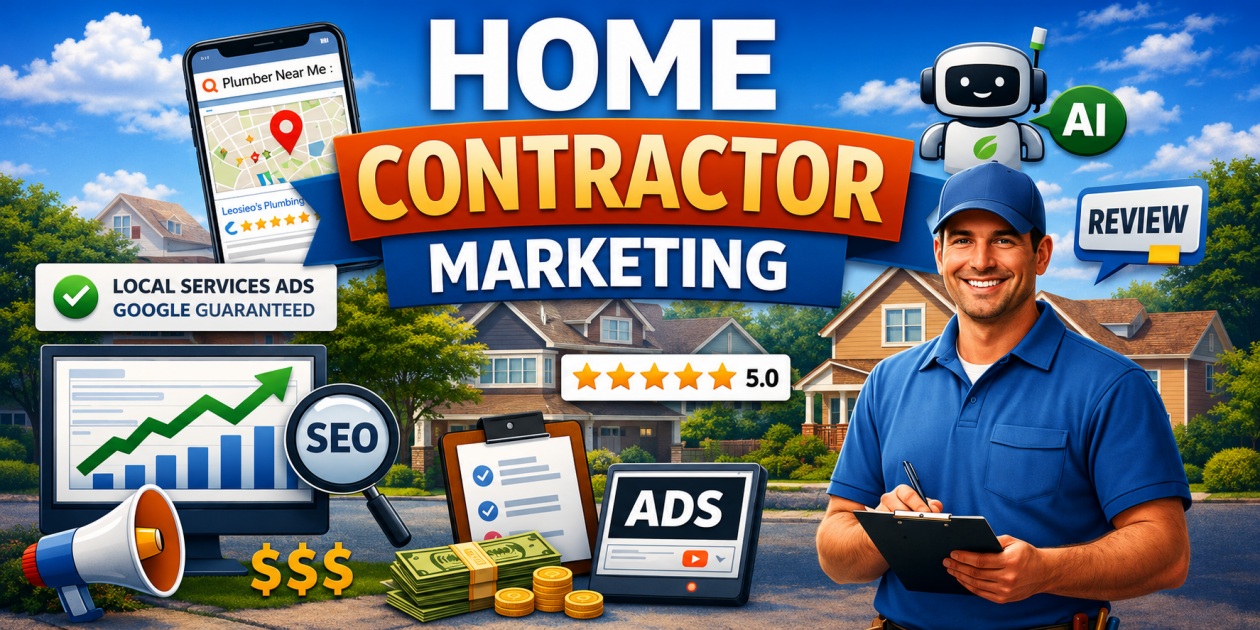
Most contractors face the same problem. Leads come in waves. One week feels good. The next week feels empty. This gap creates stress, slow months, and unpredictable income.
Word-of-mouth still matters, but it is no longer enough. Homeowners now trust Google more than neighbors. A friend may suggest a name, but the final check still happens online.
A lot has changed in 2026. AI search tools now show contractor lists. Google Maps ranks businesses based on trust signals. Ads are more expensive than before. Competition is sharper in every city.
The goal is to build a system that brings steady local leads every week, not just random referrals.
That is where home contractor marketing becomes essential.
Home contractor marketing is not just ads or posters. It is everything that helps a contractor get found and chosen by local homeowners.
It includes Google visibility, reviews, website quality, and follow-ups.
Marketing is different from referrals. Referrals are random. Marketing is predictable. Referrals depend on luck. Marketing depends on structure.
Local visibility is the core. If a plumber, roofer, or electrician is not visible in local search, the job goes to someone else who is.
Good marketing for contractors looks simple:
Many contractors think marketing is “extra work.” But in reality, it is the bridge between skill and income.
Without it, even the best work stays invisible.
Homeowners do not choose quickly anymore. They follow a pattern.
First, they search for things like “roof repair near me” or “electrician in my area.” Google instantly shows a list.
Then they scan reviews. A business with 4.5 stars looks safe. Anything lower gets ignored.
Photos matter a lot. A clean before and after picture builds instant trust. Blurry images reduce confidence.
Finally, they compare 2 to 3 options. Then they call the one that feels reliable.
This is a multi-step journey:
Search → Compare → Trust → Call
A common doubt homeowners have is simple. “Will this contractor show up on time?” or “Is this price fair?” or “Have they done similar work before?”
This is where strong home contractor marketing makes a difference. It answers these doubts before the call even happens.
Many contractors focus on website traffic. But traffic does not pay bills.
Calls do.
A visitor who never calls is useless. A small number of high-quality leads is better than thousands of random visits.
A qualified lead is someone who:
Bad leads waste time. They ask many questions but never book. Good leads move fast.
Think of it like this. Ten serious calls are worth more than 200 random website visits.
Home contractor marketing must focus on leads, not vanity numbers. This shift alone changes how businesses grow.
A strong system has four parts.
Visibility means showing up in Google search and Maps. Trust means reviews, photos, and branding. Traffic means ads and content that bring people in. Conversion means turning visitors into calls.
All four must work together. If one is weak, leads drop.
For example, a contractor may run ads but have no reviews. Calls will be low. Or a contractor may have reviews but no website. People will hesitate.
Home contractor marketing works best when all parts connect like a chain.
Google Business Profile (GBP) is one of the most important tools for getting local contractor leads in the US. It is what shows up on Google Maps and in the local pack when someone searches things like “plumber near me” or “roof repair in Dallas.”
In most real cases, this is the first impression a homeowner gets. That is why this step cannot be rushed or treated like a one-time setup.
Homeowners usually decide in seconds. They look at:
So if the profile feels empty or outdated, trust drops quickly. On the other hand, a complete and active profile often brings calls without even needing a website visit.
This is also where many contractors lose leads without realizing it.
Google Business Profile categories tell Google what the business actually does. This is not just a label. It directly affects rankings.
This defines the main service. Examples by trade:
| Trade | Strong Primary Category Examples |
| Plumbing | Plumber |
| Roofing | Roofing Contractor |
| Electrical | Electrician |
| HVAC | HVAC Contractor |
| General contractor | General Contractor |
| Remodeling | Remodeler or Home Renovation Contractor |
| Painting | Painter |
The primary category should match the core revenue service, not every service offered.
Secondary categories help expand reach, but they should be used carefully.
Examples:
Think of secondary categories as “extra signals,” not the main identity.
A common mistake is adding too many unrelated categories. That can confuse Google instead of helping it.
Many contractors leave service sections blank or too short. That is a missed opportunity. A strong service description should:
“Emergency plumbing repair for homes and small businesses in Dallas and nearby areas. Services include leak repair, drain cleaning, pipe replacement, and water heater issues.”
It is short, clear, and natural. No keyword stuffing. Just real language homeowners use.
Google Posts are small updates that show directly on the profile. They act like mini updates and can improve visibility in search.
They also help Google understand that the business is active.
Example 1: Job update
“New roof repair completed in Austin after storm damage. Fast inspection and same-week repair available.”
Example 2: Seasonal service
“Winter HVAC checkups now available in Chicago. Avoid heating breakdowns before peak cold season.”
Example 3: Tip-based post
“Small leak under the sink? Early repair can prevent major water damage later.”
These posts do not need to be fancy. They just need to be consistent and real. Posting once a week is enough to stay active.
Photos are not decoration. They are proof. Homeowners often scroll photos before calling.
Google prefers active profiles. That means:
A short but natural reply is enough.
Example:
“Thank you for trusting us with your kitchen repair. Glad the work met expectations.”
This shows responsiveness without sounding robotic.
Many contractors serve more than one city. In that case, structure matters.
Best when:
Set service areas clearly like:
Each location should have:
Google can penalize fake or duplicate locations, so accuracy matters more than expansion.
A lot of contractor websites look clean and modern. But many of them still do not bring calls. That is because a website is not meant to just “look good.” It should work like a 24/7 salesperson that brings in local leads.
A good contractor website has only one job. It should make it easy for a homeowner to call without confusion or doubt.
That means:
If a visitor has to “think too much,” they usually leave.
Every strong contractor website should have these core pages:
These are the most important pages for SEO and leads. Each major service should have its own page, such as:
These help rank in nearby cities. Example:
Each page should feel local, not generic. Even small mentions of neighborhoods help build trust.
This is where leads convert. A strong contact page includes:
Most service pages online are too short or too vague. A good one follows a simple structure.
Design is not the main trust factor. Proof is. Strong trust signals include:
A homeowner is often thinking:
“Will this person do a safe job in my home?” Trust signals answer that silently.
Most contractor traffic in the US comes from mobile phones. So the website must be built for mobile first, not desktop.
If a website is hard to use on mobile, leads are lost before the first scroll.
Speed directly affects leads. If a page is slow, homeowners leave quickly.
Real performance targets:
Schema markup helps Google understand what the website is about. It improves visibility in search results.
Important schema types for contractors:
Helps Google understand business name, address, and services.
Displays questions and answers directly in search results.
Helps show ratings and reviews in search snippets.
Even a good website fails if the call-to-action is hidden. CTAs should appear:
And on mobile, a sticky call button works best. A simple rule works well here.
If a homeowner wants to call, they should never have to search for the button.
Local SEO is what helps a contractor show up when someone nearby searches for help. It is about being visible in the exact city or neighborhood where the work is needed.
So when someone types:
Google tries to show the most relevant local businesses first.
But many contractors create one page and expect results. Local SEO does not work like that anymore.
It needs structure, not just keywords.
Most people start with random keywords. A better way is to think like a homeowner. They usually search in three ways:
A simple keyword process looks like this:
This helps avoid random content and builds focus.
A single service page cannot rank for everything. Instead, think in clusters.
Main page (pillar page):
Supporting pages:
Blog support content:
This structure builds something called topical authority.
It tells Google:
“This business knows this topic deeply.”
This improves rankings over time.
Internal links connect pages on a website. They help Google understand structure.
A simple rule works well:
Example:
A blog about “water leak signs” should link to:
→ Water Leak Repair Service Page
This creates a clear path for both users and search engines. It also helps visitors move naturally from information to action.
Citations are online listings of a business name, address, and phone number. They help Google verify that a business is real and consistent.
The key is not just quantity. It is consistency. Name, address, and phone number must match exactly everywhere.
Even small differences can reduce trust signals.
FAQs are not just filler content. They help match real search questions.
Better FAQ examples include:
These questions reflect real homeowner thinking. They also help capture long-tail searches that competitors often ignore.
General SEO tries to reach everyone. Local SEO focuses on people ready to hire.
A person searching “how plumbing works” is just learning. A person searching for a “plumber near me” is ready to call.
That is why intent matters more than traffic. Local SEO wins because it connects directly to urgent needs.
Reviews build trust faster than anything else. Most homeowners read reviews before calling.
A simple review system works best:
Good timing matters. Right after finishing work is best. Respond to reviews too. Even short replies show care.
Paid ads are the fastest way to get contractor leads in the US. But they are also the easiest place to waste money if they are not set up properly.
Ads are not for every situation. They work best in specific cases:
If none of these apply, organic channels may work better first.
Most contractors run ads without structure. That is where money gets lost. A clean setup usually looks like this:
Inside each campaign:
Each ad group should focus on one clear intent. Example:
This keeps ads relevant and improves Quality Score.
| Match Type | What it does | Best use case |
|---|---|---|
| Exact Match | Shows only close searches | High intent leads |
| Phrase Match | Shows similar searches | Balanced traffic |
| Broad Match | Shows wide variations | Only with strong filtering |
For contractors, exact and phrase match usually perform better. Broad matches can waste a budget if not controlled.
Negative keywords block irrelevant searches. Without them, ads show for the wrong audience.
These filters help avoid people who are not looking to hire. Over time, more negatives should be added based on real search data.
Quality Score affects how much you pay per click.
It depends on:
A good target range:
Better ads = lower cost per lead.
Ads should never target too wide an area. A better approach is:
For example, a Dallas contractor should not target all of Texas. That kind of targeting burns the budget fast.
Costs depend on service type and competition.
| Service Type | Avg CPL (Google Ads) |
| Plumbing | $50 – $150 |
| Roofing | $80 – $250 |
| HVAC | $60 – $200 |
| Electrical | $40 – $180 |
| Remodeling | $100 – $300 |
Emergency services usually sit at the higher end because urgency increases competition.
LSAs are different from regular Google Ads. They show at the very top of search results and include the “Google Guaranteed” badge.
| Feature | Google Ads | LSAs |
| Pricing | Pay per click | Pay per lead |
| Position | Below LSAs | Top of page |
| Trust badge | No | Yes (Google Guaranteed) |
| Lead quality | Medium–High | High intent |
The strongest setup is not choosing one or the other. It is using both. A simple strategy looks like this:
Together, they cover more search space and reduce missed leads.
Google Local Service Ads (LSAs) are a special type of ad made for local service businesses like plumbers, electricians, roofers, and general contractors. These ads show at the very top of Google search results. They are even above regular ads and maps in many cases.
Unlike normal Google Ads, LSAs focus on verified businesses. Google checks basic details before showing your listing.
Here is what usually happens:
Once approved, the business gets the Google Guaranteed badge.
The Google Guaranteed badge is a trust signal from Google. It shows that the business has passed Google’s screening process.
It appears next to your business name in the ad listing.
This matters because homeowners often think:
The badge quietly answers these doubts before the call even happens. It builds confidence fast, especially for first-time customers.
The process is quite straightforward:
So instead of paying for clicks, the focus is on actual inquiries. That shift alone makes LSAs very different from traditional ads.
LSAs do not use a fixed monthly price. Instead, they use a pay-per-lead model.
This means:
The cost per lead can vary based on:
Here is a simple breakdown:
| Factor | What it means for cost |
| High competition area | Higher cost per lead |
| Emergency services | Usually higher leads cost |
| Niche services | Often lower competition |
| Peak season demand | Cost can increase temporarily |
Many contractors like LSAs because they feel controlled. There is no guessing game with impressions or clicks. Instead, there is a direct connection:
Lead comes in → Phone rings → Job opportunity
But there is a catch too.
Not every lead turns into work. Some calls may be price checkers or non-serious inquiries. That is why response time and follow-up matter a lot.
A slow reply often means the lead moves to someone else within minutes.
LSAs work best when:
They may not be ideal if:
LSAs sit right between visibility and conversion:
When combined properly, LSAs can become a strong shortcut for steady local leads. This is especially true in competitive markets where organic SEO takes time to build.
Most contractors in the US eventually ask the same question.
“Which marketing channel actually gives the best cost per lead?”
Costs change based on city size, competition, service type, and even season. A roofing lead in Florida during hurricane season is not the same as a handyman lead in a small town in Ohio.
Still, there are realistic benchmark ranges that help set expectations and avoid surprises.
Google Ads bring high-intent traffic. These are homeowners actively searching for help like “plumber near me” or “roof repair in Dallas.”
Typical cost per lead range in the US:
Why this range changes so much:
A simple real-world pattern looks like this:
A contractor spends $1,000 in a week. They may get 5 to 20 leads depending on niche and setup. But only a portion will turn into booked jobs, based on follow-up speed and pricing.
So Google Ads works fast, but efficiency depends heavily on setup quality.
These ads work differently. Homeowners are not actively searching. They are scrolling through content, videos, and updates.
Typical cost per lead range in the US:
At first glance, this looks cheaper than Google Ads. But there is a catch.
Lead intent is lower.
People may click because they see a renovation photo or offer, not because they urgently need service.
So contractors often notice:
That said, Facebook works well for:
It behaves more like long-term visibility than immediate job generation.
LSAs are one of the strongest lead sources for US contractors.
They appear at the very top of Google search results and show the “Google Guaranteed” badge, which builds instant trust.
Typical cost per lead range in the US:
Why LSAs often feel different:
But there is an important detail.Lead quality is generally high, but not every call converts. Some homeowners still price shop or compare multiple contractors.
A common contractor experience is simple. “The phone rings, and the customer already wants someone today.”
That is why LSAs often convert better than social ads.
SEO does not charge per click or lead. Instead, it builds long-term visibility in Google search results and Google Maps.
If we translate it into real-world cost expectations:
Why SEO is powerful in the US market:
But SEO is not instant. Typical timeline is as follows:
So SEO behaves like building equity. Slow at first, but valuable over time.
| Channel | Cost Per Lead (US) | Speed | Lead Quality | Stability |
| Google Ads | $50 – $250 | Fast | High | Medium |
| Facebook / Instagram Ads | $15 – $80 | Fast | Medium | Low–Medium |
| Google Local Service Ads (LSAs) | $30 – $150 | Very Fast | Very High | High |
| SEO (Organic Search) | $20 – $100 (long term) | Slow | Very High | Very High |
A common mistake is chasing the cheapest leads.
But in reality, low-cost leads often require more filtering, more follow-up, and more time. That hidden effort increases real cost.
For example:
So the real focus should always be:
Not just the number on paper.
Social media is not about going viral. It is about showing real work. Post simple things:
Facebook and Instagram work best for contractors.
Remember that consistency matters more than creativity. A small weekly post builds familiarity. Over time, people remember the name.
This is quiet but powerful home contractor marketing in action.
Many contractors lose leads because websites are slow or confusing. Fixing conversion is simple:
Speed matters. If response is slow, leads move to competitors.
A homeowner thinking “Should I wait or call someone else?” will usually call the fastest option.
Home contractor marketing is not just about getting traffic. It is about capturing it.
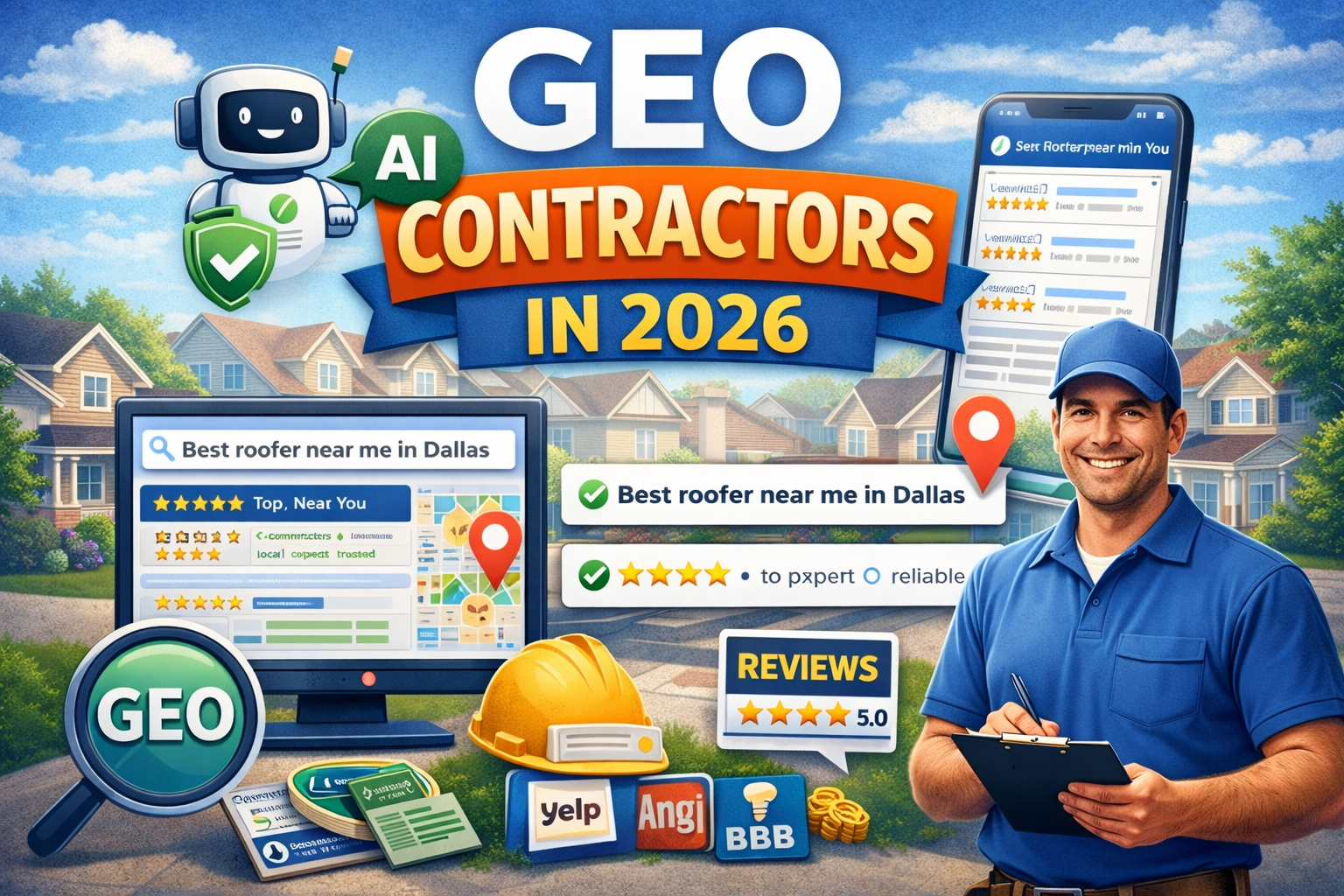
Search is changing fast in the US. Homeowners are not only using Google anymore. They are also asking AI tools like ChatGPT and Google AI Overviews questions like:
Instead of showing 10 blue links, AI often gives 3 to 5 direct recommendations. So, how does a contractor get picked by AI?
That is where GEO comes in. GEO means Generative Engine Optimization. It is the process of making a business visible inside AI-generated answers.
AI search is growing because homeowners want faster answers. They do not want to click 10 websites anymore. They want a shortlist they can trust.
So now discovery looks like this:
Old way:
Google search → click websites → compare → decide
New way:
Ask AI → get recommendations → visit 1–2 sites → call
This means fewer clicks overall, but higher intent per lead.
If a contractor is not mentioned in AI answers, they are already losing visibility without even realizing it.
AI tools do not randomly pick businesses. They rely on patterns from across the web.
Here is what influences visibility:
This is not about complicated tech work. It is about clarity and trust.
Name, address, and phone number should match exactly across:
Each service should have its own page. For example:
These pages should clearly explain:
This helps AI understand exactly what the business does.
Generic reviews help, but detailed reviews help more.
For example:
Better review:
“Fixed my roof leak in Houston after heavy rain”
This kind of detail strengthens AI understanding of service + location.
In the US, these platforms matter:
These act like confirmation signals for legitimacy.
Simple content like:
This helps AI connect expertise with location. It also builds topical authority over time.
A homeowner might ask:
“Who is the best HVAC contractor near me in Phoenix?” AI will scan trusted sources and reviews. It will then show a small list.
If a contractor has:
They have a much higher chance of appearing in that shortlist. If not, they may not appear at all, even if they are good at their work.
That is the reality shift happening right now in home contractor marketing.
Without tracking, marketing becomes guesswork. It feels like money is going out, but it is hard to know what is actually working.
You do not need complicated dashboards. Just focus on a few key numbers.
This gives a real picture of performance.
For example, if Google Ads brings 20 leads but only 2 jobs, something is off. Maybe targeting or landing page needs work.
Most contractor leads come through phone calls. So tracking calls is very important.
When a call comes in, the system records:
This helps answer a very important question: “Which channel actually brings paying customers?”
Without this, everything looks mixed.
Not every lead calls. Some fill out forms. To track them properly:
A basic setup ensures every form submission is counted as a lead. Even small improvements here can reveal hidden lead sources.
UTM parameters are small tags added to links. They help track where traffic comes from.
Example:
yourwebsite.com/service?utm_source=google&utm_medium=ads&utm_campaign=roofing
This helps answer:
It removes guesswork completely.
Many contractors stop at cost per lead. But that is not enough. Real success is measured by ROI.
ROI = (Revenue from jobs – Marketing cost) ÷ Marketing cost × 100
Example:
ROI = (8000 – 2000) ÷ 2000 × 100
ROI = 300%
This shows the real value of marketing, not just lead numbers.
This simple 30-day plan builds the foundation first, then adds traffic, and finally improves conversions.
This is the most important starting point. Without this, nothing else performs well.
Day 1–2: Setup and verification
Day 3–4: Service setup
Day 5–6: Photos upload
Day 7: First optimization check
This week focuses on turning visitors into calls.
Day 1–2: Fix structure
Day 3–4: Add trust elements
Day 5: Improve contact flow
Day 6–7: Speed and mobile check
Now the focus shifts to getting found and building trust.
Day 1–2: Basic SEO setup
Day 3–4: Create local content
Day 5–6: Start review generation
Day 7: Review optimization
This week brings traffic and measures what actually works.
Day 1–2: Set up Google Ads or LSAs
Day 3: Add tracking tools
Day 4–5: Launch campaigns
Day 6–7: Analyze performance
At the end of this cycle, the system starts to take shape.
This is where home contractor marketing stops feeling random and starts feeling structured.
Most contractors fail because they treat marketing like a task. It is not a task. It is a system.
When visibility, trust, traffic, and conversion work together, leads become steady. The real shift happens when every call feels predictable instead of random.
What would happen if every week had consistent leads instead of waiting for referrals?
Measuring marketing effectiveness means checking if your marketing drives real business results. It focuses on outcomes like revenue, conversions, and customer growth, and not just about tracking clicks or impressions.
The most important metrics are tied directly to business outcomes. These include:
These metrics help you understand profitability and long-term growth clearly.
Vanity metrics look good but do not reflect real performance. They do not show whether your marketing drives revenue or growth.
Common vanity metrics include:
They should support insights, not guide strategy decisions.
You should track performance regularly, ideally every week. A weekly routine helps you spot trends and fix issues early. It also keeps your team aligned and proactive.
No, data alone is not enough to improve performance. You also need to understand customer behavior and intent clearly. Combining data with insights leads to better decisions.
You should act on real-time data and fix issues early.
Quick actions include:
Small changes can lead to strong improvements over time.
Start using our A/B test platform now and unlock the hidden potential of your website traffic. Your success begins with giving users the personalized experiences they want.
Start Your Free Trial

Empowering businesses to optimize their conversion funnels with AI-driven insights and automation. Turn traffic into sales with our advanced attribution platform.
Trusted by Customers


©CausalFunnel Inc. All rights reserved.