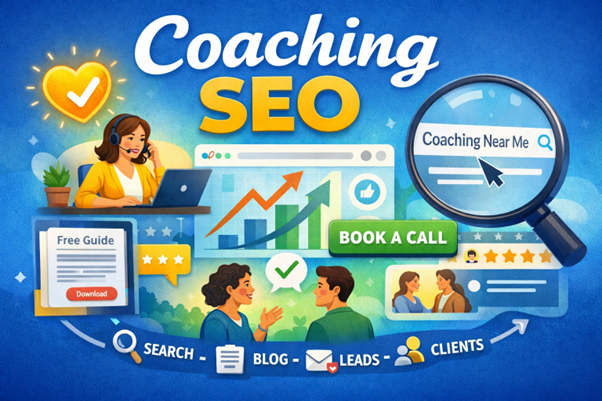
You are a great coach. You help people change their lives. But your site gets no traffic. No calls. No leads. No clients.
That hurts. And it’s common.
At CausalFunnel, we have worked on SEO for service brands, coaches, and personal brands for years. We’ve seen what works. We’ve seen what fails. Here’s what we found out:
Most coaches are using the wrong SEO model.
But don’t worry. There’s good news as well.
Small SEO changes can bring real leads fast.
In this blog, you will learn:
- What coaching SEO really means
- How people search for coaches
- How to choose the best SEO keywords for coaching
- How to rank for buyer intent terms
- How to turn traffic into real clients
- How to build SEO that lasts for years
This blog is for:
- Life coaches
- Business coaches
- Career coaches
- Health coaches
- Mindset coaches
- Leadership coaches
- New coaches
- Experienced coaches
- Solo coaches
- Coaching agencies
If you want real clients, not just traffic, this is for you.
What Is Coaching SEO (And Why It’s Different from Normal SEO)
Coaching SEO is not normal SEO.
Normal SEO = traffic.
Coaching SEO = trust + intent + clients.
What is coaching SEO
Coaching SEO is the system of ranking for searches made by people who want help, change, and guidance. Not products. Not tools. Not apps. Humans. Real people. Real problems.
It mixes:
- SEO for coaches
- coaching marketing
- niche SEO
- trust building
- buyer psychology
Why generic SEO strategies fail for coaches
Most SEO guides are built for:
- ecommerce
- SaaS
- blogs
- content sites
They focus on:
- traffic volume
- backlinks only
- keyword stuffing
- AI content
- mass blogs
Coaching does not work like that. Coaching is trust-based. It means that people don’t “buy” coaching. They choose a human.
Coaching buyer intent vs general buyer intent
Normal buyer intent:
- “buy laptop”
- “best phone”
- “cheap hosting”
Coaching buyer intent:
- “how to stop burnout”
- “career coach for professionals”
- “life coach for anxiety”
- “business coach for startups”
The intent of a coaching buyer is:
- Emotional
- Personal
- Trust-driven.
Trust-based search behavior in coaching niches
People search:
- when they feel stuck
- when they feel lost
- when they feel stressed
- when they want change
- when they want clarity
They don’t want info only. They want help.
Search psychology of coaching clients
While searching for a coach, clients have the following questions in mind:
- “Can I trust this person?”
- “Do they understand me?”
- “Do they get my problem?”
- “Are they real?”
- “Have they helped others?”
This is why coaching SEO must be human, not robotic.
How People Actually Search for Coaches on Google
This is where most SEO fails.
Problem-based searches vs service-based searches
Service-based:
- “life coach near me”
- “business coach online”
Problem-based:
- “I hate my job”
- “how to stop overthinking”
- “burned out entrepreneur help”
- “stuck in career at 30”
Problem searches convert better.
Emotional search intent
People search with emotion:
- fear
- stress
- confusion
- anger
- sadness
- hope
Examples:
- “I feel lost in life”
- “no direction in career”
- “burnout recovery help”
- “confidence issues at work”
Local vs global coaching searches
Local:
- “life coach in London”
- “career coach NYC”
Global:
- “online business coach”
- “remote life coach”
Both matter. This is because local searches capture high-intent clients ready to buy in a specific area. On the other hand, global searches expand your reach and allow you to attract scalable, location-independent opportunities.
Informational → commercial → transactional journey
Stage 1: Informational
- “how to find purpose”
- “why am I unhappy at work”
Stage 2: Commercial
- “life coach for purpose”
- “career coach for change”
Stage 3: Transactional
- “hire life coach”
- “book career coach”
SEO must cover all stages.
Real search patterns
Here are real examples:
Search Type | Example |
Problem | “I feel stuck in life” |
Emotional | “lost in career” |
Solution | “career coaching for professionals” |
Buyer | “best career coach online” |
Local | “life coach near me” |
This is buyer psychology SEO.
Coaching SEO Keyword Strategy (The System That Wins Rankings)
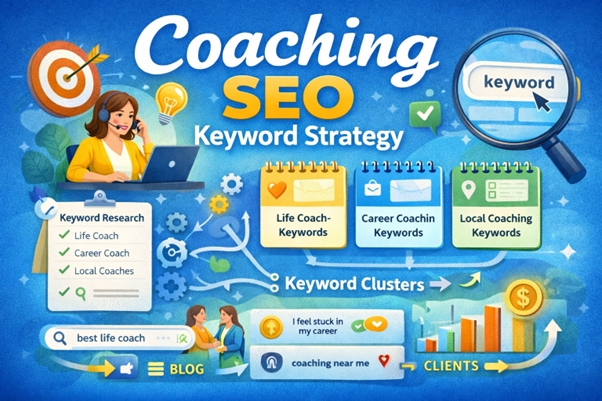
High-Intent Coaching Keywords vs Traffic Keywords
Traffic keywords bring views. Buyer keywords bring clients.
Vanity keyword:
Lead keyword:
Learning keyword:
Buyer keyword:
- “hire business coach for startup”
Long-Tail SEO for Coaches (Low Competition, High Conversion)
Long-tail wins coaching SEO. These keywords have:
- Less competition
- High intent
- Clear problems
- High trust need
Examples by niche:
Life coaching
- “life coach for burnout”
- “confidence coach for women”
- “life coach for anxiety”
Business coaching
- “business coach for solopreneurs”
- “startup business coach online”
- “coach for scaling small business”
Health coaching
- “health coach for weight loss mindset”
- “nutrition coach for busy moms”
Career coaching
- “career coach for career change”
- “career coach for tech professionals”
Mindset coaching
- “mindset coach for entrepreneurs”
- “confidence coach for public speaking”
Leadership coaching
- “leadership coach for managers”
- “executive coach for women leaders”
These convert.
Niche Authority Mapping
This is core to coaching SEO. One niche → many pages.
Example: Career coach
Clusters:
- career burnout
- career change
- career growth
- confidence at work
- leadership growth
- job transitions
Each cluster = content group.
This builds topical authority. Google sees you as a real expert not just a blogger.
Coaching SEO Content Architecture (How to Structure Your Site to Rank)
Pillar Pages vs Blog Posts
Pillar pages = core service pages
Blog posts = support pages
Structure:
Pillar page:
Support blogs:
- “Signs you need a career change”
- “How to escape burnout”
- “How to switch careers safely”
- “Confidence at work tips”
All link to the pillar. This builds authority hubs.
Coaching Funnel SEO Model
SEO should follow a funnel:
Discovery content
- problem blogs
- awareness topics
Trust content
- case studies
- stories
- experience pages
- about pages
Conversion content
- service pages
- booking pages
- coaching packages
Traffic → trust → client.
On-Page SEO for Coaches (That Actually Moves Rankings)
Title Optimization for Coaching SEO
Good titles:
- clear
- human
- problem-focused
- keyword-smart
Bad:
Life Coaching Services | Home
Good:
Life Coach for Burnout, Stress, and Clarity | Online Coaching
CTR matters.
Content Structure That Google Rewards
Use:
- clear headers
- short paras
- clean flow
- topic depth
- natural language
- real questions
Google reads meaning, not just keywords.
Trust Signals in Content
You must show:
- real stories
- real experience
- client results
- personal voice
- clarity
- honesty
- expertise
- social proof
This builds authority naturally.
Technical SEO Foundations for Coaching Websites
Simple but vital:
- Fast site speed
- Mobile friendly design
- Clean URLs
- Simple structure
- Good navigation
- Core Web Vitals
- Proper indexing
- Clean sitemap
- Schema for coaches
- Clear site hierarchy
Tech SEO keeps rankings stable.
Off-Page SEO for Coaches (Authority Signals That Matter)
Link Building for Coaching Brands
Focus on:
- niche blogs
- podcasts
- interviews
- guest posts
- coaching platforms
- authority sites
Quality > quantity.
Digital Authority Signals
Google trusts:
- brand mentions
- reviews
- citations
- social proof
- reputation
- expert platforms
- directory listings
Local Coaching SEO (If You Serve Specific Regions)
If you serve a city, a town, or a region, local SEO is one of the fastest growth paths for coaches.
People search:
- “life coach near me”
- “career coach in London”
- “business coach NYC”
- “health coach in Toronto”
These are not browsers. These are buyers.
Step-by-Step Google Business Profile Setup
Your Google Business Profile (GBP) is your local SEO engine. Here’s how to create and harness its power.
Step 1: Create or claim your profile
- go to Google Business
- search your name or brand
- claim your listing
- verify it
Time: 20–30 minutes
Step 2: Choose the right category
Primary category matters for rankings. Examples:
- life Coach
- business Coach
- career Coach
- health Coach
- coaching Center
Step 3: Optimize your profile
Fill everything:
- business name
- services
- description
- location
- contact info
- website
- booking link
- hours
Write the description like a human:
- who you help
- what problem you solve
- where you serve
- how you help
Step 4: Add photos
Profiles with photos rank better. Add:
- your photo
- office photo
- workspace photo
- branding image
- calm, human visuals
Step 5: Add services
Example:
- Career clarity coaching
- Burnout recovery coaching
- Leadership coaching
- Confidence coaching
Step 6: Post weekly updates
Simple posts keep your profile active. Some posting ideas are given below:
- tips
- quotes
- blog links
- updates
- client wins
How to Find Local Keywords (Simple Method)
This is easy.
Step 1: Open Google
Type:
life coach [city]
Examples:
- life coach london
- career coach toronto
- business coach new york
Step 2: Look at suggestions
Google will show:
- near me searches
- service searches
- area searches
Step 3: Use patterns
Examples:
- “life coach in [city]”
- “career coach near me”
- “business coach [area]”
- “online coach in [city]”
Step 4: Build a local list
Create a simple table of your local pages:
Keyword | City |
Life coach | London |
Career coach | Toronto |
Business coach | NYC |
Health coach | Austin |
Local Page Strategy (Without Duplicate Content)
Don’t copy-paste pages. Google hates that. Do this instead:
City page structure:
Intro
- Local message
- Local problem
- Local language
Local context
- Work culture
- City lifestyle
- Local stress points
Your service
- How you help locals
- Who you serve
- Your approach
Trust
- Local clients
- Stories
- Reviews
CTA
- Book a local call
- Local support message
Each city page should feel written for that city.
Local Content Ideas for Coaches
- “Burnout in [City]: Why It’s Rising”
- “Career Pressure in [City] Professionals”
- “Work-Life Balance in [City]”
- “Startup Stress in [City]”
- “Mental Health in [City] Work Culture”
This builds local authority.
Local Link Building (For Coaches)
Local links build trust fast.
Where to get links:
- Local directories
- Coaching directories
- Therapy & wellness platforms
- Business associations
- Chamber of commerce
- Women entrepreneur groups
- Local podcasts
- Local blogs
- Community sites
Coach-specific link sources:
- Coaching associations
- Wellness platforms
- Mental health blogs
- Career platforms
- HR communities
- Startup communities
- Entrepreneur groups
Review Generation System (Simple + Ethical)
Reviews = ranking power + trust.
Simple system:
After session email template:
Subject: Thank you for today
Hi [Name],
I loved our session today.
If you feel comfortable, I’d really appreciate a short review.
It helps other people find support too.
Here’s the link: [Google review link]
Thank you so much
Review tips:
- Never fake reviews
- Never buy reviews
- Always ask naturally
- Make it easy
- Share the link
Multi-Location Strategy (If You Serve Many Cities)
If you serve multiple areas:
Structure:
- One main hub page
- City pages under it
Example:
- /locations
- /life-coach-london
- /life-coach-manchester
- /life-coach-birmingham
Each page:
- Unique content
- Local context
- Local trust
- Local CTA
Local Schema Markup (Simple Guide)
Schema helps Google understand location.
Add:
- LocalBusiness schema
- Service schema
- Review schema
- Person schema
This helps with:
- map results
- local packs
- rich results
- trust signals
You don’t need code skills. Most SEO plugins do this for you.
Why Local SEO Works So Well for Coaches
Because:
- low competition
- high intent
- fast trust
- fast rankings
- real buyers
- real needs
- real urgency
Local SEO is not traffic SEO. It’s client SEO.
What Local SEO Can Do for You
- Booked calls
- Local authority
- City trust
- Word-of-mouth
- Brand growth
- Community presence
- Long-term stability
How to Turn SEO Traffic into Coaching Client
This is the most important part of coaching SEO. This is where visitors become real humans on calls.
SEO Traffic Psychology
People don’t come to your site ready to buy. They come:
- confused
- stressed
- tired
- stuck
- unsure
- overwhelmed
They are not shopping. They are searching for help. Traffic doesn’t convert when your brand:
- feels cold
- feels fake
- feels generic
- feels unclear
- feels salesy
- feels robotic
Most coaching sites fail because they:
- don’t guide users
- don’t build trust
- don’t show authority
- don’t feel human
- don’t tell people what to do next
People need direction, not just content.
Client Journey: From Google to First Session
Here’s the real journey:
Step 1: Search
“I feel stuck in my career”
Step 2: Blog
They read your post about burnout.
Step 3: Trust Check
They visit:
- About page
- Client stories
- Experience page
Step 4: Value Exchange
They download a guide or checklist.
Step 5: Relationship
They get emails from you.
Step 6: Clarity
They book a call.
Step 7: Safety
They feel understood.
Step 8: First Session
They convert into a client.
Detailed SEO Conversion Funnel
Here’s a simple visual map:
Traffic Funnel
Google Search
↓
Problem Blog
↓
Trust Page
↓
Lead Magnet
↓
Email Sequence
↓
Booking Page
↓
Call
↓
Client
Stage 1: Discovery Content
This is SEO content. Examples:
- “Why you feel burned out”
- “Signs you need a career change”
- “Why success feels empty”
- “Why you feel stuck in life”
Goal:
“This person gets me.”
Stage 2: Trust Content
This builds safety. Trust comes from pages like:
- About page
- Story page
- Client stories
- Case studies
- Experience page
- Values page
Goal:
“I trust this person.”
Stage 3: Lead Capture
This is where trust begins. A visitor becomes a lead. You are not selling yet. You are helping.
You give value. They feel safe. They feel supported. Trust starts here.
Goal:
“This helps me.”
Stage 4: Relationship
Email, nurture, trust, warmth. This is where trust grows. This is where the bond forms.
You stay in touch. You share value. You show care. You stay human.
They feel seen. They feel safe. They feel supported.
Goal:
“I feel safe with this coach.”
Stage 5: Conversion
Booking, call, session. This is the decision point. It’s where action happens.
They book a call. They talk to you. They feel clarity.
Fear drops. Trust stays. The journey becomes real. This is where a visitor becomes a client.
Goal:
“I’m ready.”
Lead Magnet Ideas (By Coaching Niche)
Lead magnets must solve small problems fast. Below are lead magnet ideas for different types of coaches.
Career coaches
- “Resume Red Flags Checklist”
- “Career Change Readiness Test”
- “Career Clarity Worksheet”
- “Burnout Recovery Guide”
Life coaches
- “7-Day Clarity Journal”
- “Life Reset Planner”
- “Daily Confidence Rituals”
- “Purpose Discovery Workbook”
Business coaches
- “Startup Mistake Checklist”
- “Client Attraction Guide”
- “Offer Clarity Workbook”
- “Pricing Strategy Sheet”
Mindset coaches
- “Overthinking Reset Guide”
- “Confidence Builder Journal”
- “Fear Mapping Worksheet”
Health coaches
- “Habit Reset Plan”
- “Healthy Routine Builder”
- “Energy Recovery Guide”
Email Sequence Template (Simple & Human)
This is what happens after a download.
Email 1: Welcome (Day 0)
Subject: You’re not broken
Content:
- Welcome them
- Normalize their struggle
- Give the resource
- Warm tone
Email 2: Story (Day 2)
Subject: I’ve been there too
Content:
- Your story
- Your struggle
- Why you coach
- Human voice
Email 3: Value (Day 4)
Subject: One small shift that helps
Content:
- Tip
- Insight
- Simple action
- No selling
Email 4: Trust (Day 6)
Subject: A client story
Content:
- Client result
- Transformation
- Gentle proof
Email 5: Invite (Day 8)
Subject: Want support?
Content:
- Soft invite
- Book a call
- No pressure
Booking Page Optimization
Before (Bad Page)
- “Book Now”
- No context
- No trust
- No story
- No clarity
- No benefits
After (High-Converting Page)
Structure:
- Warm headline
“Let’s bring clarity to your life.”
- Who it’s for
“This call is for people who feel stuck, tired, and unsure.”
- What happens
- 30 min clarity call
- No pressure
- No sales tricks
- Real talk
- Safety signals
- Client quotes
- Your story
- Your experience
- Clear CTA
“Book your free clarity call”
CTA Placement Strategy
CTAs should guide, not push.
Where to place CTAs:
- Top of blog
- Middle of blog
- End of blog
- Sidebar
- Trust pages
- About page
- Footer
CTA types:
Page | CTA |
Blog | “Download guide” |
Trust page | “Read client stories” |
About page | “Book clarity call” |
Service page | “Start your journey” |
Footer | “Free coaching call” |
Conversion Benchmarks
Realistic numbers:
Metric | Average |
Blog conversion | 1–3% |
Lead magnet opt-in | 20–40% |
Email open rate | 30–45% |
Call booking rate | 2–5% |
Call → client | 20–40% |
Coaching sites usually convert at 2–5% from traffic to leads. With trust systems, this grows fast.
SEO → Lead → Client Pathway
Here’s the clean flow:
Google
↓
Problem Blog
↓
Trust Page
↓
Lead Magnet
↓
Email Relationship
↓
Booking Page
↓
Call
↓
Client Session
Coaching SEO Mistakes That Kill Rankings
- Generic content
- Wrong keywords
- No niche focus
- No authority
- No trust signals
- AI-thin blogs
- Bad structure
- No internal links
- No conversion path
- No brand voice
Coaching SEO Roadmap (90-Day Ranking Plan)
Here’s a real, step-by-step plan you can actually follow
Phase 1: Foundation (Days 1–30)
Goal: Build a clean base that Google can trust.
Week 1: Setup & Clarity
Focus: Tools + niche + structure
Tasks
Day 1
- Install SEO plugin (Yoast or RankMath) – 15 min
- Connect Google Search Console – 20 min
- Connect Google Analytics – 20 min
Day 2
- Define your niche – 45 min
Ask:
- Who do I help?
- What problem do I solve?
- Who is my ideal client?
Day 3
- Define your audience – 45 min
Write:
- Age group
- Job type
- Pain points
- Fears
- Goals
Day 4
- Site structure review – 1 hour
Check:
- menu
- URLs
- page layout
- navigation
Day 5
- Create site map – 45 min
Plan:
- Home
- About
- Services
- Blog
- Contact
- Lead pages
Success metrics (Week 1)
- Google Search Console active
- Google Analytics tracking
- Clear niche defined
- Clear audience defined
- Clean site structure map
Common mistakes (Week 1)
- Trying to target “everyone”
- No niche focus
- No clear service pages
- Too many menus
- No tracking tools
Week 2: Keyword Mapping
Focus: Intent, not volume
Tasks
Day 1
- Keyword research session – 2 hours
Use:
- Google
- Search Console
- Ahrefs/Ubersuggest
Day 2
- Sort keywords into types – 1 hour
Type | Example |
Problem | “career burnout” |
Solution | “career coach for burnout” |
Buyer | “hire career coach online” |
Local | “career coach in london” |
Day 3
- Map keywords to pages – 1 hour
Day 4
- Choose 1 main niche – 30 min
Day 5
- Build keyword clusters – 1 hour
Success metrics (Week 2)
- 30–50 niche keywords
- 5–8 core clusters
- Clear buyer keywords
- Clear long-tail keywords
Common mistakes (Week 2)
- Chasing high-volume keywords
- Ignoring buyer intent
- Mixing niches
- No structure
- Random keywords
Week 3: Pillar Pages
Focus: Authority pages
Tasks
Day 1
- Create main service page – 2 hours
Day 2
Day 3
- Write about page with story – 1.5 hours
Day 4
- Create contact + booking page – 1 hour
Day 5
- Internal linking setup – 45 min
Success metrics (Week 3)
- 1 main pillar page live
- 1 niche authority page live
- Clear service message
- Clear CTA
Common mistakes (Week 3)
- Generic service pages
- No clarity
- No call-to-action
- No internal links
- AI-only content
Week 4: Trust Setup
Focus: Credibility
Tasks
Day 1
- Add testimonials – 1 hour
Day 2
- Add trust badges or proof – 30 min
Day 3
- Add story section – 1 hour
Day 4
Day 5
- Site speed check – 45 min
Success metrics (Week 4)
- Trust pages live
- Social proof added
- Faster site speed
- Clean UX
Expected results by Day 30
- Google indexing started
- Pages indexed
- Structure ready
- SEO foundation built
- Trust base created
- Early impressions in Search Console
Phase 2: Authority Build (Days 31–60)
Goal: Become a niche expert.
Week 5: Content Clusters
Tasks
- Day 1; Write blog 1 – 2 hours
- Day 2; Write blog 2 – 2 hours
- Day 3; Write blog 3 – 2 hours
- Day 4; Internal links – 1 hour
- Day 5; SEO optimize pages – 1 hour
Week 6: Trust Content
Tasks
- Case study page – 2 hours
- Client stories – 1.5 hours
- Experience page – 1 hour
- Authority content – 1.5 hours
Week 7: Site Authority
Tasks
- Improve internal links – 1 hour
- Add schema – 1 hour
- Improve UX – 1 hour
- Improve content depth – 2 hours
Success metrics (Days 31–60)
- 6–10 blogs live
- Internal links active
- Topical clusters formed
- Authority structure built
- Keyword impressions rising
Common mistakes (Days 31–60)
- Thin content
- AI spam blogs
- No internal links
- No structure
- Random topics
Expected results by Day 60
- Keyword impressions growing
- Some keywords ranking
- Early organic clicks
- Google trust building
- Authority signals forming
Phase 3: Ranking Push (Days 61–90)
Goal: Turn structure into rankings and leads.
Week 8: Optimization
Tasks
- Title rewrite – 2 hours
- Meta descriptions – 1 hour
- Header optimization – 1.5 hours
- CTR improvements – 1 hour
Week 9: Backlinks + Authority
Tasks
- Outreach emails – 2 hours
- Guest post pitch – 2 hours
- Podcast outreach – 1.5 hours
- Directory listings – 1 hour
Week 10: Conversion System
Tasks
- Lead magnet setup – 2 hours
- Funnel page – 1.5 hours
- Booking flow – 1 hour
- Email automation – 1.5 hours
Week 11–12: Refinement
Tasks
- Page updates – 2 hours
- Content upgrades – 2 hours
- UX improvements – 1.5 hours
- Funnel testing – 1.5 hours
Success metrics (Days 61–90)
- Keywords in top 30
- Some keywords in top 10
- Organic leads starting
- Conversions starting
- Brand search growth
Common mistakes (Days 61–90)
- No conversion system
- No funnels
- No trust pages
- Traffic without CTA
- SEO without sales flow
Expected Results Timeline
Time | What to Expect |
Day 30 | Indexing + impressions |
Day 60 | Rankings + clicks |
Day 90 | Leads + traffic |
Month 4–6 | Consistent clients |
Month 6+ | Compounding growth |
Simple SEO Checklist (Save This)
Foundation
- Niche defined
- Audience defined
- SEO tools setup
- Site structure clean
Authority
- Pillar pages
- Content clusters
- Internal links
- Trust pages
Ranking
- Titles optimized
- Backlinks built
- Funnels setup
- Conversion flow active
Coaching SEO Tools Stack
Keyword tools
- Google Search Console
- Google Keyword Planner
- Ubersuggest
- Ahrefs
- SEMrush
SEO tools
- CausalFunnel
- Rank trackers
- Page speed tools
- Screaming Frog
Analytics
- Google Analytics
- Search Console
AI tools (support only)
Coaching SEO as a Long-Term Business Asset
SEO is not marketing. SEO is infrastructure. SEO ultimately becomes:
- client engine
- brand engine
- trust engine
- growth engine
- lead system
Final Thoughts: Why Coaching SEO Is a Growth Strategy
Coaching SEO is not about rankings. It’s about building digital trust. Coaching SEO creates:
- long-term traffic
- steady leads
- client flow
- brand authority
- business stability
It gives:
- independence from ads
- independence from platforms
- control over growth
- predictable income
SEO becomes your business moat. This is what coaching SEO is meant to do.