



Free Funnel Audit
Convert more customers today!
SEO
10 mins read

SEO
10 mins read
You publish blog posts, share on social media, yet the traffic stays flat. The problem is rarely effort, but what and how you are doing it. Traffic income not by posting more, but by publishing the right thing, in the right format, for the right moment.
If you are searching for content marketing ideas that truly move the needle, you likely feel stuck. Smart content marketing strategies focus on intent, distribution, and reuse.
In this guide, you will find 20 practical ideas built for traffic first. Some rank on Google, some spark shares, and some bring leads. Each includes why it works, examples, quick steps, and a simple KPI.
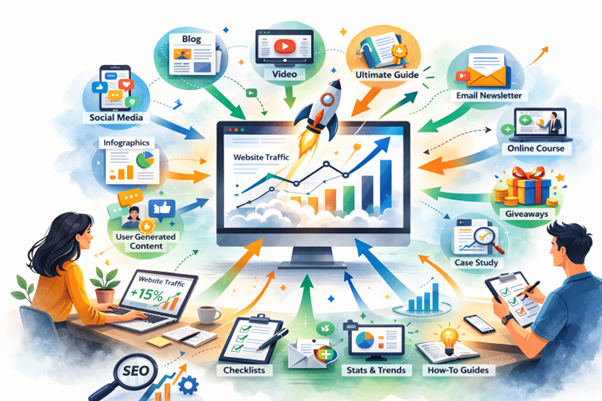
Content marketing is not just about filling the content calendar but about using strategies that become a long-term growth engine for your business. Here are the core benefits you can get from content marketing:
When content is aligned with clear goals and consistent distribution, it becomes an asset that compounds. Each article, guide, or resource adds to your visibility, authority, and long-term growth.
Before you chase new tactics, you need to understand why some content works and some quietly die.
Traffic is unpredictable, but it follows predictable behavior. People click only when something feels relevant, and they return when you show up consistently. They choose you over others when your angle feels fresh, useful, and different from others.
We’ve seen brands publish great content marketing ideas that never gained traction simply because they ignored these fundamentals. The idea itself was fine, but the execution was not aligned with how people search, scroll, and decide.
Let’s break them down in plain terms so you can apply them immediately.
You can publish 30 posts a month and still see nothing, but one relevant post can outperform all of them.
Relevance means answering what people are already searching, discussing, or worrying about that aligns with pain points. When someone clicks and finds exactly what they hoped for, they stay, scroll, and share.
Why this works:
Whenever you’re writing something or creating any kind of content, always think first whether people are searching for the topic you’ve planned on. If the answer is no, it’s time to rethink the angle.
Traffic often grows slowly, then suddenly it jumps. That jump is not luck, but compounding.
When you publish consistently, you create internal links, search engines crawl more often, and readers expect your updates. As a result, your site becomes a living resource.
Here is a simple cadence that works for most teams:
This steady rhythm sends a strong signal that you are active, relevant, and deserve visibility.
Unique does not mean complicated. It can mean fresh data, a bold opinion, or curated expert insights.
When someone sees ten similar headlines, what makes them click yours? Headlines are the first thing that people see online, and that encourages them to click on your content. Which is why your headline should solve a problem according to the search intent in the first place
You can do that by:
Clicks drive traffic, and better clicks improve rankings. And that loop matters to grow your business and drive your content.

Now let’s get practical. If you’re serious about growing traffic, you don’t need more random posts. You need focused ideas that attract clicks, keep people reading, and earn visibility over time. Some ideas work fast, and others build momentum slowly. The key is knowing which to use and when.
Below are 20 proven ideas you can use right away. Each idea below includes what it is, why it drives traffic, examples, execution steps, and one KPI to track.
If you want traffic that grows steadily, SEO is your foundation. Social posts fade, ads stop when you stop paying, but search-driven content can bring visitors for months or even years when it targets real intent.
This section focuses on long-term assets, not quick spikes. When done right, these pieces build authority, strengthen internal links, and create consistent inbound traffic without daily promotion.
Comparison pages attract some of the highest intent traffic you can get. When someone searches “X vs Y,” they are not browsing causally, rather evaluating options and getting close to a decision.
When done right, comparison pages rank well, earn trust, and bring steady visitors who are ready to take action.
Examples:
How to execute:
KPI: Organic clicks from high-intent keywords.
Beginner guides attract steady traffic because people constantly search for simple explanations. When you explain concepts clearly and without complicated jargon, you become their starting point. The idea here is to keep it simple, structured, and genuinely helpful.
Examples:
How to execute:
KPI: Time on page and organic impressions.
A topic cluster series helps you build authority instead of publishing random posts. Instead of writing disconnected blogs, you create one strong pillar page and support it with several related articles that link back to it.
This signals depth to search engines and makes it easier for readers to explore your site. Over time, clusters strengthen rankings across multiple keywords, not just one.
Examples:
How to execute:
KPI: Growth in ranking for the pillar keyword.
Sometimes the fastest traffic growth comes from improving what already exists. Posts that once performed well can decline due to outdated information or stronger competitors.
Refreshing stats, improving clarity, and strengthening internal links can quickly revive rankings and bring steady traffic back.
Examples:
How to execute:
KPI: Traffic increases within 30 days.
The “People Also Ask” section on Google shows exactly what users want to know next. Instead of guessing topics, you answer real, related questions in short, clear sections.
These posts often rank for multiple long tail queries and can capture featured snippets. When structured well, they bring steady organic traffic from highly specific searches.
Examples:
How to execute:
KPI: Featured snippet visibility.
Evergreen templates attract traffic because they offer instant value. People search for ready-to-use checklists, scripts, and frameworks that save time.
When you provide a practical template, you increase the chances of shares and backlinks. Since these resources stay relevant for years, they can become steady, long-term traffic drivers.
Examples:
How to execute:
KPI: Backlinks earned.
Seasonal and annual planning posts capture traffic when interest spikes. Every year, people search for trends, forecasts, and upcoming strategies tied to specific events or time periods.
If you publish early and update consistently, these posts can generate predictable waves of traffic. While seasonal, they often return year after year with small updates.
Examples:
How to execute:
KPI: Seasonal traffic spikes.

Traffic is good, but traffic that converts is better. Not all traffic is equal, as some visitors read and leave, and others sign up, book a demo, or request more information. The catch is to create content that does both. These ideas attract organic visitors while also guiding them toward a clear next step.
Instead of separating traffic and lead generation, treat them as they are connected. When you structure content with value first and conversion second, you build trust and grow your list at the same time.
In this section, you’ll learn about ideas that bring clicks and turn those clicks into measurable growth.
A blog plus a gated asset pair turns organic traffic into leads. Here, you publish a strong SEO focused article, then offer a deeper resource like a checklist or template in exchange for an email. The blog attracts visitors, and the bonus asset captures readers who want more value.
Examples:
How to execute:
KPI: Email signups per 1000 visitors.
One client webinar can fuel your content for weeks. This means you can multiply a webinar’s reach without creating everything from scratch. You get traffic from search, social, and email using one core piece of content.
Different content pieces you can create are:
Examples:
How to execute:
KPI: Traffic from multiple channels.
Case study story pages turn real results into traffic and trust. Instead of listing features, you walk readers through a clear problem, the steps taken, and the measurable outcome.
This narrative format makes your expertise tangible and relatable. When these pages are optimized properly, case studies can rank for solution-based keywords while also helping visitors move closer to a decision.
Structure:
Example:
How to execute:
KPI: Assisted conversions from case study pages.
An interactive quiz pulls traffic because it feels fun, personal, and easy to start. People like getting a quick result, especially when the questions reflect a real problem they’re trying to solve.
Quizzes also keep visitors on your site longer, which can boost engagement signals. If you tie the results to helpful next steps, you can turn curiosity clicks into qualified leads without sounding salesy.
Examples:
How to execute:
KPI: Social shares and time on site.
A weekly newsletter turns your email list into a reliable traffic source. Instead of relying only on search or social algorithms, you send readers directly back to your best content.
You can curate your latest posts, add quick insights, and highlight one key resource each week. Over time, this builds returning visitors and keeps your audience engaged without needing constant new content.
Examples:
How to execute:
KPI: Returning visitors from email.

Search builds steady traffic, and social and community engagement multiply it. When your content sparks conversation or gets shared inside trusted groups, it reaches audiences far beyond your website. The key here is participation, not promotion.
This section offers different ways to use social platforms and online communities to expand your reach, increase referral traffic, and strengthen brand visibility beyond search alone.
User-generated content prompts turn your audience into contributors. So, instead of creating everything yourself, you invite customers to share results, screenshots, reviews, or stories tied to your product or niche.
This not only builds trust through social proof but also expands your reach as people share their contributions with their own networks. As a result, this also drives engagement and referral traffic.
Examples:
How to execute:
KPI: Referral traffic from social.
Join-the-conversation posts tap into topics that are already trending in your industry. Instead of starting a new discussion, you add your perspective to one that people are actively engaging with.
This increases visibility, encourages shares, and positions your brand as relevant and timely. When your insights stand out, these posts can drive quick spikes in referral traffic.
Examples:
How to execute:
KPI: Traffic within 72 hours of publishing.
Expert roundups bring credibility and built-in distribution. When you invite industry professionals to share quick insights on one focused question, you create content that feels authoritative and diverse.
Contributors are also likely to share the final piece with their audiences, expanding your reach. This mix of expertise and amplification makes roundups strong drivers of referral traffic and brand visibility.
Example:
How to execute:
KPI: Referral visits from contributors.
Niche community posts help you reach highly targeted audiences where real conversations are already happening. Instead of dropping links randomly, you engage thoughtfully in forums, LinkedIn groups, or industry communities.
Examples:
How to execute:
KPI: Community-driven sessions.
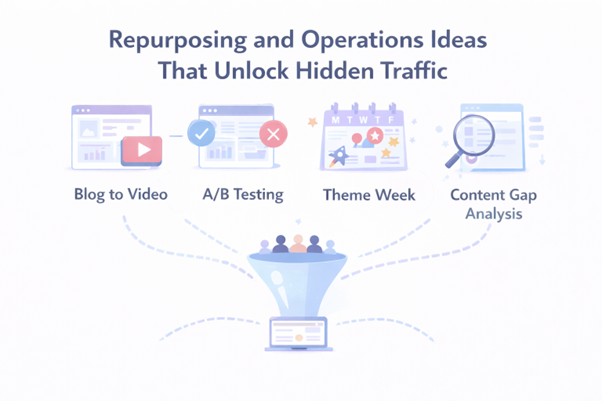
You don’t always need new content to grow traffic. Sometimes the opportunity is hidden inside what you’ve already created.
Smart repurposing and better content operations help you extract more value from each asset. This section focuses on practical systems that turn existing content into consistent traffic drivers.
One strong blog post can fuel an entire week of content. Instead of writing something new every day, break one article into multiple formats.
This approach increases visibility across platforms without increasing workload. The more places your ideas appear, the more entry points you create for traffic.
From one blog, create:
Examples:
How to execute:
KPI: Traffic lift from non-search channels.
Theme weeks bring focus and momentum to your content. What you do here is publish unrelated posts by choosing one core topic and creating multiple pieces around it across formats.
Examples:
How to execute:
KPI: Increased page views per session.
Sometimes, traffic is not the problem, but the headline is. Even strong content can underperform if the title fails to grab attention.
By testing two different headline variations in email, social posts, or paid promotion, you can see which one earns more clicks before updating your main page. Even small changes in wording, clarity, or specificity can significantly improve click-through rates and unlock hidden traffic.
CausalFunnel can help here thoroughly with their A/B Testing Platform that compares and analyzes in detail what’s working for your website.
Examples:
How to execute:
KPI: Click-through rate improvement.
A content gap sprint helps you find traffic opportunities your competitors are already capturing. By analyzing which keywords they rank for and you do not, you uncover clear content priorities.
Instead of guessing what to create next, you build articles that fill those gaps with better depth and clarity.
Examples:
How to execute:
KPI: New keyword rankings within 60 days.
Trying to implement all twenty ideas at once will dilute your focus and slow the progress. Strong growth comes from selecting a small set of tactics that align with your current goals, resources, and audience behavior.
The right combination depends on whether you need quick visibility, steady long-term traffic, or stronger lead generation.
So, what do you do?
Here’s a framework of what you should do according to the different industries.
If you are a small team with two hours a week, start with:
If you are B2B focused, lean into:
If you are ecommerce, focus on:
Real growth begins with a clear strategy and aligned execution. When your content choices match your goals, audience intent, and distribution channels, results become predictable instead of random.
Comparison posts and trend reaction posts tend to generate fast clicks. They align with high-intent queries and active conversations. Pair them with strong distribution in the first week for best results.
Small teams should focus on evergreen SEO posts and smart repurposing. One strong pillar page can drive traffic for years if supported by consistent updates.
Search-based content can take three to six months to show strong results, whereas social-driven content can show results within days. The mix depends on your distribution strength.
Guides, comparison pages, templates, and glossary posts tend to rank well. They match clear intent and often attract backlinks.
Two strong posts per month can work if they are well researched and promoted. Quality and consistency matter more than volume.
Start using our A/B test platform now and unlock the hidden potential of your website traffic. Your success begins with giving users the personalized experiences they want.
Start Your Free Trial

Empowering businesses to optimize their conversion funnels with AI-driven insights and automation. Turn traffic into sales with our advanced attribution platform.


