



Free Funnel Audit
Convert more customers today!
SEO
10 mins read

SEO
10 mins read
Retargeting and remarketing can sound like the same marketing idea. That is why many people mix them up at first. Both help brands reconnect with people who showed interest before. Still, the way each method works can be quite different.
Retargeting usually uses paid ads to bring past visitors back, while remarketing often uses email to reach known leads or customers. Some platforms also use both terms for very similar tactics. So, the label alone does not always tell everything.
A better approach is to check three simple things. Look at the audience, channel, and goal of each campaign. Those details make retargeting vs remarketing much easier to understand.
If you want clearer funnel insights, explore CausalFunnel for conversion-focused tools. It helps teams study user behavior and improve key journeys.
Here is a quick retargeting vs remarketing comparison:
Factor | Retargeting | Remarketing |
Main goal | Bring interested visitors back | Reconnect with known leads or buyers |
Common audience | Website visitors and app users | Leads, subscribers, and past customers |
Common channel | Display and social media ads | Email and direct customer messages |
Common data | Website visits and user actions | Contact details and customer records |
Typical use | Recover people who left early | Nurture, retain, or reactivate people |
Simple example | Shoe ad after viewing shoes | Follow-up email after leaving a cart
|
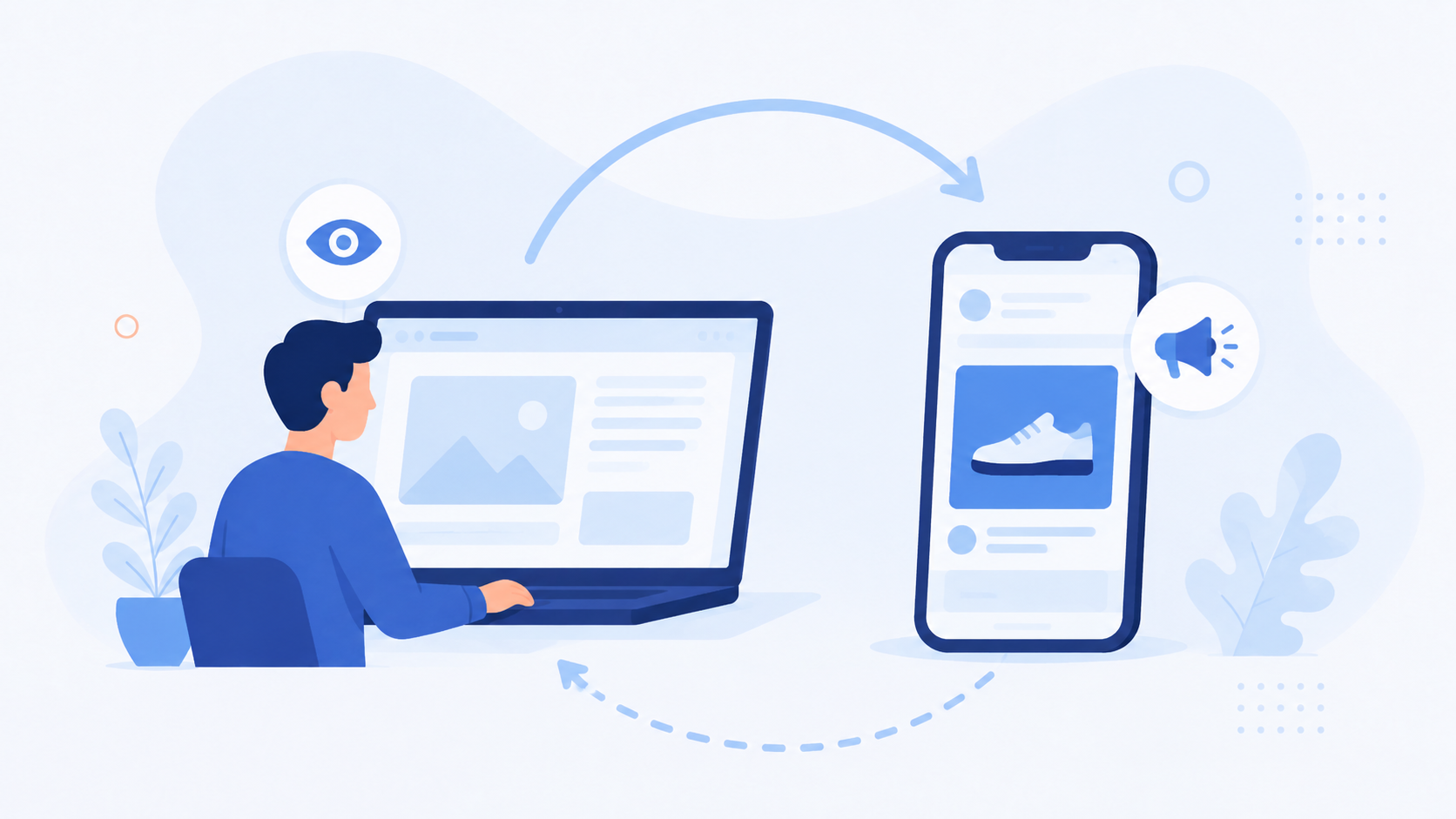
Retargeting helps you reach people who visited your site before. They may have viewed products, prices, services, or plans. A retargeting campaign usually uses paid ads to bring them back.
You might retarget people who:
These visitors already know something about your brand. Their past actions can also show buying interest.
The process is simple:
Good timing and audience rules matter. Too many ads can feel annoying.
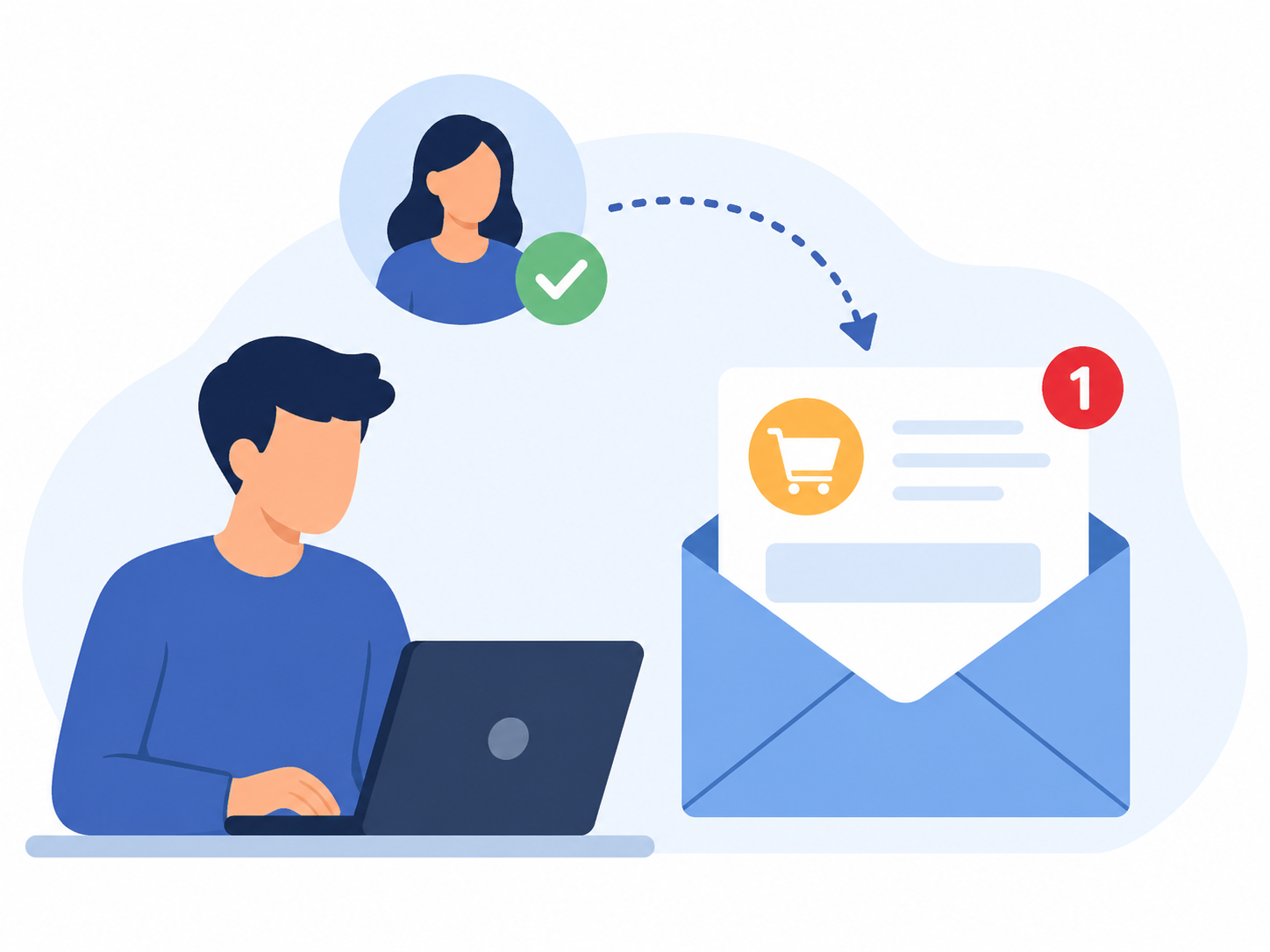
Remarketing reconnects with known leads, subscribers, or customers. It often uses direct channels such as email.
Common remarketing campaign uses include:
Email remarketing works best when the message feels relevant. A past customer should not receive a random sales email. Some platforms also call paid ads “remarketing.” That is why remarketing vs retargeting can feel confusing. Focus on the audience, channel, and campaign goal.
The clearest way to compare both methods is by looking at seven areas. These differences show how each strategy works in real campaigns.
Retargeting usually focuses on people who visited your website or app. They may have viewed products, checked pricing, or started checkout. These visitors may not have shared their contact details yet. You often know them through their recent online actions instead.
Remarketing usually works with people your business already knows. That group may include leads, subscribers, or past customers. You may already have their email, account details, or purchase history that gives you more context for the next message.
Key difference: Retargeting often starts with behavior, while remarketing often starts with a known relationship.
Retargeting most often happens through paid advertising channels. Common examples include display ads and social media ads. Those ads may appear while users browse other websites. They can also appear inside social platforms they already use.
Remarketing often uses more direct communication channels. Email is one of the most common options. Some brands may also use text messages or CRM-based outreach. These channels let brands contact known users more directly.
Key difference: Retargeting often uses paid media, while remarketing often uses direct outreach.
Retargeting often depends on signals from recent online behavior. Those signals may include page views, product views, or checkout activity. This data can help group users by their level of interest. A pricing visitor may show more intent than a homepage visitor.
Remarketing can use customer and contact data already on hand. That may include past purchases, account activity, or email engagement. This information can support more detailed audience groups. It can also help brands avoid sending irrelevant messages.
Key difference: Retargeting often uses behavior data, while remarketing can use richer customer records.
Retargeting often aims to recover interest that may fade soon. The goal is usually to bring a recent visitor back. That person may return to finish checkout or request more information. The campaign often supports a clear short-term action.
Remarketing can support a longer customer relationship. It may focus on repeat sales, renewals, or lead nurturing.
A past customer may also receive a useful new offer. An inactive lead may receive helpful information before buying.
Key difference: Retargeting often supports return visits, while remarketing can support longer-term engagement.
Both methods can use personalization to improve relevance. The type of personalization usually depends on available data. Retargeting may use recent pages or products someone viewed. That makes the next ad closely match recent interest.
Remarketing may use purchase history or customer status. This can support more personal product suggestions or follow-up messages. Still, more personalization does not always mean better results. Messages should feel useful rather than overly specific.
Key difference: Retargeting often personalizes from recent behavior, while remarketing can use deeper customer history.
Retargeting often works well before the first purchase. It can bring back people who showed interest but left. For example, a pricing visitor may see another ad later. That reminder can bring them back during their research.
Remarketing can work across later stages of the customer journey. It may help with onboarding, renewals, repeat sales, or reactivation. That makes remarketing useful after someone becomes a known customer. It can also support known leads before their first purchase.
Key difference: Retargeting often supports early conversion stages, while remarketing can support longer customer relationships.
Retargeting often works best while recent interest remains fresh. That may mean reaching someone soon after a website visit. A person who abandoned checkout yesterday may still be interested. Waiting several months could make that message less useful.
Remarketing can use both short and long follow-up periods. A cart email may arrive soon after someone leaves. A customer win-back email may arrive several months later. The right timing depends on the previous action and buying cycle.
Key difference: Retargeting often focuses on recent intent, while remarketing can work across longer time periods.
Difference | Retargeting | Remarketing |
Audience | Past website or app visitors | Known leads and customers |
Channel | Paid ads | Email and direct outreach |
Data | Recent online behavior | Contact and customer data |
Goal | Bring visitors back | Nurture or re-engage users |
Personalization | Based on recent actions | Based on customer history |
Journey stage | Often before conversion | Can span the full relationship |
Timing | Usually tied to recent intent | Can support short or long follow-up |
These seven differences make the comparison much easier to apply.
They also help you choose the right method for each customer situation.
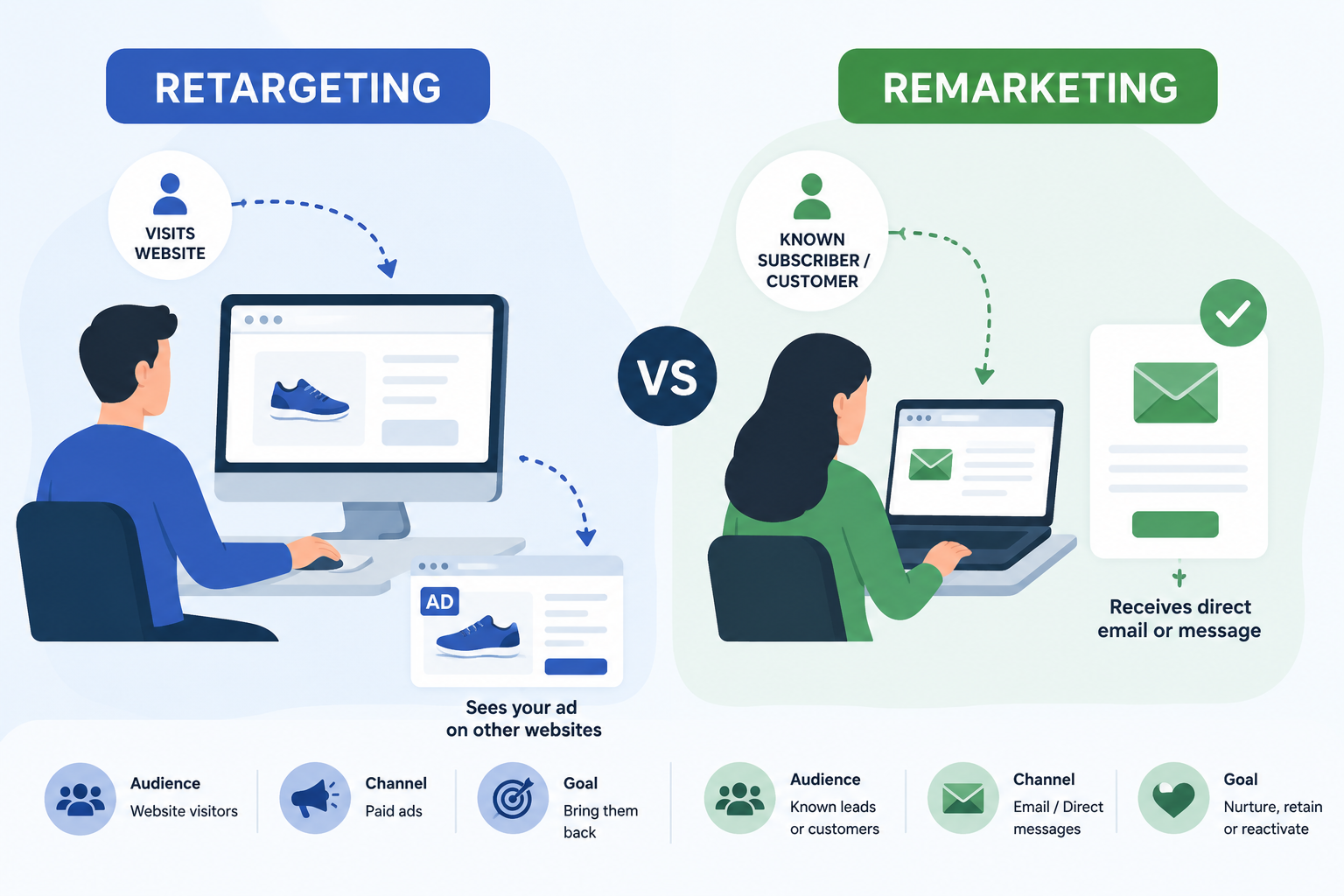
The best way to compare both is through context. Different firms use them for their own buyer needs. These cases show how the right choice can change.
A web shop may have many users leave early. Some may view goods without adding them to carts. Retargeting can bring those shoppers back through paid ads. The ad may match items they viewed before leaving.
Remarketing can help once the shop knows them. A shopper may get an email about matching goods, and a cart user may get a note about saved items. Both methods can help sales without doing the same job.
Software buyers may need time before they choose. They may read guides, compare plans, and check prices. Retargeting can keep the brand in view during research. Ads may focus on a plan the guest viewed.
Remarketing can start once that guest becomes a lead. A trial user may get tips based on progress, and an old user may get news about key updates. Each note now has a clear job to do.
Business deals may take more time to close. More than one person may help make the choice. Retargeting can reach past guests from high-value pages. Those ads can keep the brand known during research.
Remarketing can help leads stored in sales tools. Those leads may get guides, proof, or event notes. The goal is not sending more notes everywhere, but giving the right help each time.
Retargeting works well when your website already attracts regular traffic. It helps bring interested visitors back after they leave. By focusing ads on people with clear intent, teams can use their budget more wisely.
Key retargeting benefits can include these useful gains:
Still, retargeting can go wrong without clear rules. Too many ads can make users feel chased online. Weak groups can waste money on poor site traffic. Bad timing can show ads after interest is gone.
Remarketing can help brands gain more from known leads. It can support repeat sales, renewals, and lead care. It can also make each note fit past needs. That can help keep a clear brand link alive.
Key remarketing benefits can include these useful gains:
Remarketing works best with clean contact lists and relevant audience groups. Too many emails or outdated data can make messages feel unwanted.
Your goal should guide the choice you make first. Next, check what you know about each user. Paid ads work well when past site traffic is strong, and email works well when you know the user well.
Your sales cycle should shape the next move too. Fast sales may need a quick and clear prompt, while long sales may need more time and helpful content. Choose the path that fits the buyer’s next need.
Paid reach works well when your site gets steady traffic. It can help when warm users leave key pages. You may also have clear groups from site actions. In that case, ads can bring those users back.
Use paid retargeting when these points fit your case:
The goal should always stay clear and focused. Do not run ads just because traffic exists.
Email works best when you know the user. You may have their email or past sale details. That gives you more ways to shape each note. It can also help you build trust over time.
Use remarketing when these points fit your case:
The message should match what that person needs now. That makes each follow-up feel more natural and timely.
Some brands gain more when both methods work together. The key is giving each path one clear job. Paid ads can keep your brand in view. Email can help once the user is known.
Shared rules can stop both from becoming too much. Each note should fit the stage and recent action. That makes the full path feel clear and calm.
The best tool depends on the job you need. Some tools help run ads and build user groups, and others help send email or store known data. Web tools can show what users do next.
Use this table to match each job with tools.
Need | Tool Type |
Paid reach | Ad platform |
Email follow-up | Email tool |
User records | CRM tool |
Site action review | Web data tool |
Result checks | Ad and web tools |
Good results start with one clear goal first. Clicks alone cannot show if a plan worked. You need checks tied to sales and user value. Each goal may need a different success check.
Useful measures can include these simple choices:
Do not judge each plan with one score. A win-back email needs its own clear goal. Paid ads may need a different success mark. So, match the check to the action you want. Current ranking guides also stress campaign goals and performance checks.
Trust should be part of your plan from day one. Paid ads may use site data and ad tools, while email may use known data from past users. Rules can change by place, tool, and setup.
Your plan should respect each user’s clear choices. Teams should only keep data they truly need. Old data should be fixed or removed when needed. People should know why they get your messages. Clear data care can also help build trust.
Small setup errors can hurt good plans fast. Most issues come from weak rules or poor timing.
Check these points before your work goes live:
Clear rules make each plan easier to manage. They also help users get more helpful messages. Current top-ranking guides also warn against weak rules and poor audience control.
Retargeting and remarketing work best when each message serves a clear purpose. The aim is not to follow people across every channel, but to stay useful after interest has already been shown. That means giving people a good reason to return.
Strong campaigns feel relevant without becoming too frequent or intrusive. They also make the next step easy to understand. When done well, both methods can turn past interest into fresh action. They can also help brands build stronger customer relationships over time.
Turn more returning visitors into customers with CausalFunnel. Use smarter funnel insights to reduce drop-offs, improve conversions, and grow customer value.
Both retargeting and remarketing share one goal, but their common methods differ. Retargeting often means paid ads for past site users. Remarketing often means direct email for known users. Some ad tools use remarketing for paid ads too. So the setup matters more than the name alone.
Retargeting often uses paid ads after past site activity, while remarketing often uses email with known user data. Both aim to bring warm people back again. The best choice depends on your goal and data.
Google has long used remarketing for some audience ads. Many marketers may still call those ads retargeting today. That naming choice can make both terms seem unclear. Focus on how the ad reaches each user instead. The method matters more than the tool name alone.
Some email work can count as a remarketing method. It should reach someone with a past brand link. Win-back notes are one common use for this. A broad email blast does not always count. The user group and goal decide the final fit.
Yes, both methods can support one clear growth plan. Each path should have its own job and timing. Shared rules can stop users seeing too much. Teams should keep deals in sync across all paths. That makes the full path easier to follow.
Start using our A/B test platform now and unlock the hidden potential of your website traffic. Your success begins with giving users the personalized experiences they want.
Start Your Free Trial

Empowering businesses to optimize their conversion funnels with AI-driven insights and automation. Turn traffic into sales with our advanced attribution platform.
Trusted by Customers


©CausalFunnel Inc. All rights reserved.