



Free Funnel Audit
Convert more customers today!

SEO
10 mins read


SEO
10 mins read

The best way to get more pest control leads is to improve local visibility, build trust, and respond fast.
A great technician alone cannot grow a company. Even the best service can stay hidden without strong marketing. Think about how people search today. Most homeowners grab a phone and look for help right away.
A family in Dallas may need termite treatment. A homeowner in Tampa may find a rat in the attic. In each case, the search starts online.
That creates a simple challenge. Can potential customers find the business before they find another one? Many owners spend money on ads first. Yet ads alone rarely solve the problem. Leads can disappear if reviews are weak or the website is slow.
The strongest companies build a complete system. They show up in local searches and earn trust quickly. They make it easy to call, book, and stay loyal.
The strategies below focus on what works today. Some produce quick wins. Others build steady growth over time. Together, they create a reliable path to more leads and revenue year round without relying on referrals.
Pest control marketing is the process of promoting a pest control business to attract more customers and generate more leads through online and offline marketing strategies. The goal is to get more calls, more inspections, and more recurring service plans. Yet reaching that goal takes more than placing a few ads.
Marketing helps people discover a business before they need service. It also helps them choose that business when a pest problem appears.
Strong pest control marketing helps:
The best marketing plans combine several methods that support each other. A Google Business Profile may attract attention. A website may convince someone to call. Great service may lead to a five-star review. That review may bring the next customer.
Every piece works together.
For many companies, Google Business Profile generates more local leads than any other free channel.
Think about what happens when someone searches for “termite control near me” or “pest control company nearby.” Google often shows local business listings before traditional website results. Those listings receive a large share of clicks and phone calls.
A strong profile can help a company appear in local map results. It can also build trust before a customer ever visits the website.
Many business owners overlook this opportunity. They claim the profile once and never update it again. This makes them unknowingly miss out on many prospective customers.
Ensure that your business information is complete and accurate. Make sure the following details are current:
Next, upload high-quality photos. People trust real photos more than stock images. Show technicians in uniform. Include service vehicles. Add photos from actual jobs whenever possible.
Then focus on reviews. A profile with hundreds of recent reviews attracts more attention than one with only a few. Reviews give customers proof that others had a good experience.
Regular updates also help. Google allows businesses to publish posts, promotions, and company updates. Fresh activity shows that the business is active and engaged.
Several warning signs suggest a profile needs work:
Many pest control companies spend money driving people to a website. Then they lose those visitors because the site creates friction.
Imagine finding a company online during a pest emergency. The website loads slowly. The phone number is hard to find. The contact form asks too many questions.
Most people will leave. A website should make taking action feel easy. Every page should answer one question. Why should this customer trust this company?
Great websites focus on clarity. Visitors should immediately understand:
Clear calls to action matter too. Buttons such as “Call Now,” “Request a Quote,” or “Schedule Service” should be easy to find. Visitors should never have to hunt for the next step.
Mobile performance is equally important. Most local searches now happen on mobile devices. A website that looks great on a desktop but fails on a phone can lose valuable leads.
The most effective websites have features that reduce uncertainty and encourage action.
Many websites struggle because of common mistakes like:
A website should work like a top salesperson. It should answer questions and build trust. Most importantly, it should guide visitors toward a decision.
Local SEO helps a business appear when nearby customers need help. Most homeowners do not search for pest control companies across the country. They look for solutions close to home. That is why local search is critical to attracting new customers.
Unlike paid ads, strong local rankings can generate leads for months. The work takes time. But the payoff often lasts much longer. When done correctly, local SEO can deliver some of the highest-quality leads. These people are already looking for help. You just have to appear where they are searching.
Make it clear where services are offered. Search engines and customers need location signals. Create dedicated pages for each service area. A page for Denver should be different from a page for Colorado Springs. Generic content rarely performs well.
Local SEO improvements include:
It also helps to answer local questions. For example, homeowners in Florida often worry about termites. Residents in Arizona may deal with scorpions. Regional concerns create opportunities for useful content.
Focus on these priorities first:
Many pest control businesses wonder about the time it takes for local SEO to give results. That depends on competition. Smaller markets may see progress within months. Larger cities often take longer. The key is consistency.
Google Ads can produce leads much faster than local, organic marketing. When someone searches for emergency pest removal, they usually want help now. The same applies to rodent infestations, wasp nests, and other problems. These searches carry strong buying intent.
That creates an opportunity. Google Ads allows businesses to appear near the top of search results almost immediately. Companies don’t need to wait for rankings to improve. They can place their message in front of ready-to-buy customers.
Google Ads often works well when:
So should money go toward SEO or ads? It depends on timing. SEO builds long-term visibility. Ads create faster exposure. The strongest growth plans usually combine both.
Success depends on targeting. Broad campaigns can waste money. Focused campaigns usually perform better.
Strong campaigns include:
These mistakes below often increase costs:
Reviews act as digital word-of-mouth. Imagine finding two similar companies online. One has 12 reviews. The other has 350 recent reviews. Which feels more trustworthy? Most people make a decision within seconds.
Reviews often influence local rankings as well. Search engines view strong review profiles as signs of quality and relevance.
The best time to request a review is shortly after a successful service visit. The customer is happy. The experience is still fresh. That moment often produces the highest response rate.
It’s important to keep the review process simple. Customers should not need several steps to leave feedback. Many companies increase review volume by:
Thank customers for positive feedback. Keep responses professional and personal. Negative reviews require extra care. Avoid arguments. Focus on solutions. Future customers often pay attention to how complaints are handled.
Many pest control websites place every service on one page and hope customers find what they need. Unfortunately, that approach rarely works well.
People search for specific problems. They do not usually search for “all pest services.” They search for termite treatment, mosquito control, rodent removal, etc..
Search engines work the same way. A dedicated page gives search engines clear information about a specific service. It also gives potential customers answers that match their needs.
Every core service deserves a dedicated page. Common examples include:
Each page should explain the problem, treatment options, and expected results.
Good service pages help customers make decisions. Include information such as:
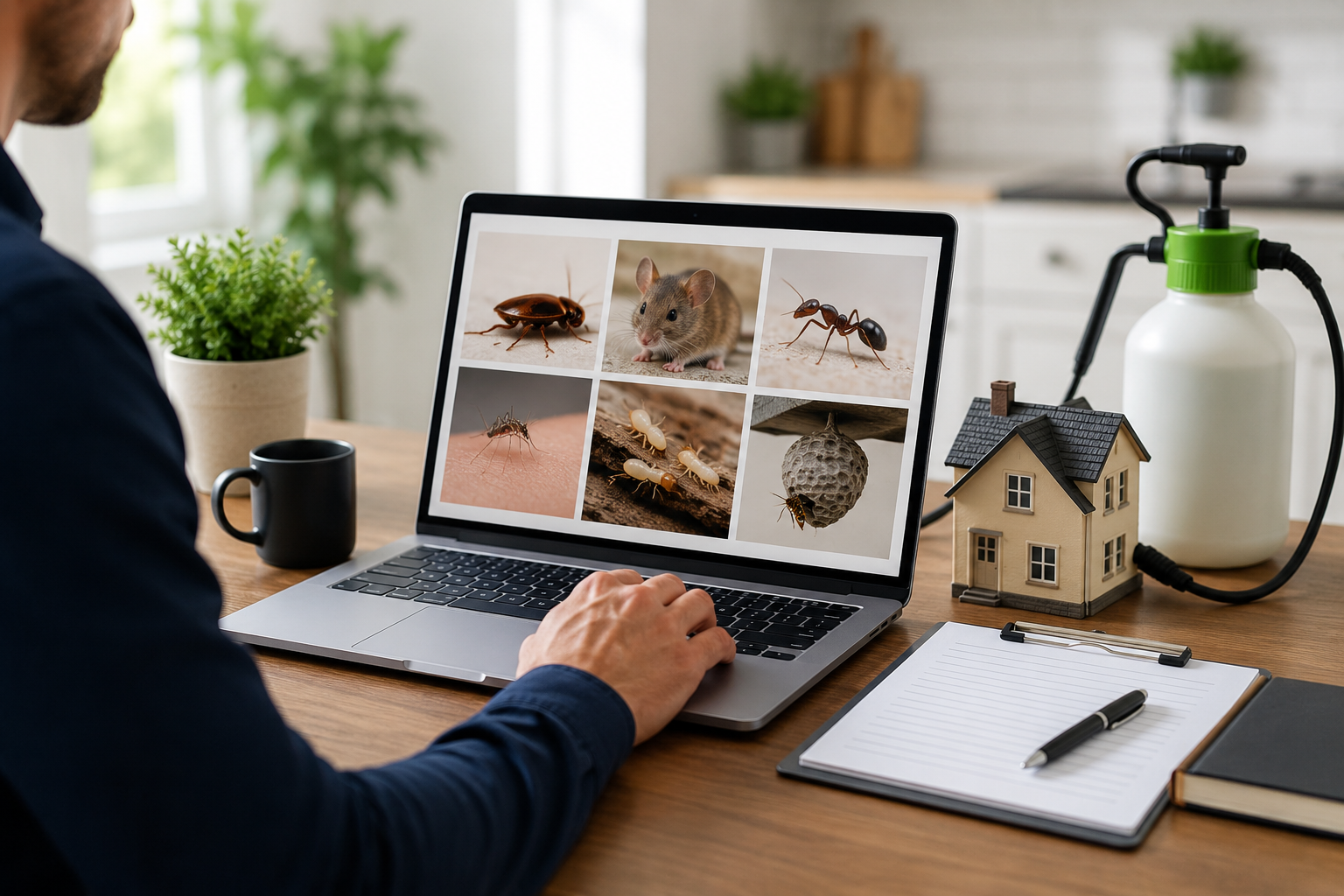
Customers search because they have a concern. Maybe ants keep returning. Maybe rodents are making noise in the attic. Helpful content answers these questions. It also helps businesses appear in search results before competitors.
This allows it to become the trusted source people remember when they need help.
The most effective content solves real problems. Strong content topics include:
Some topics perform well regardless of season. Examples include:
Local content can also perform well. A company serving Houston may write about termite risks in Texas. A business in Minneapolis may discuss winter rodent problems. These local details make content more useful and more relevant.
Email remains one of the easiest ways to stay connected with existing customers. It reaches people who already know the company. That often makes it more effective than starting from scratch with a new prospect.
Think about recurring pest services. Customers may not think about treatment schedules every month. They may forget renewal dates. They may postpone service until a problem returns. Email helps keep the business top of mind.
Acquiring a new customer usually costs more than keeping an existing one. That is why retention matters.
Email can support:
A simple reminder sent at the right time can prevent customer churn.
Start with a few practical campaigns. Useful examples include:
People ignore messages that feel generic. Useful emails perform better. Focus on topics customers care about. Keep messages clear and direct. Respect inboxes. Nobody wants daily promotions. A short email about spring mosquito prevention may earn more attention than a lengthy sales message.
Social media can generate instant leads. But trust is usually the bigger benefit. An active profile sends a simple message. This company is real and is active. It serves local customers. That reassurance matters.
People invite pest control professionals into their homes. Trust plays a huge role in that decision.
Customers on social media want useful information and proof of quality work. Strong social media content includes:
For most pest control businesses, these channels offer the best opportunities:
Facebook remains valuable for local engagement. Instagram works well for visual content. YouTube can help answer customer questions through short videos. Whichever platform you choose, post consistently there.
Your prospective customer contacts several companies at once. But who gets the job? In many cases, it is the first company that responds.
People dealing with pest issues often want answers quickly. Delayed responses create uncertainty. Most importantly, uncertainty pushes customers toward competitors.
Faster is almost always better. Every hour that passes creates risk. Every missed call creates another opportunity for a competitor.
Ask yourself: If a potential customer calls right now, how long will it take to receive a response?
Strong response systems often include:
Many lost leads come from avoidable issues like:
Technology can help. Automated text replies reassure prospects that their request was received. Online scheduling tools allow customers to take action without waiting.
These small improvements can have a big impact.
Lead generation is often seen as the biggest challenge. But sometimes the real problem happens later. Leads arrive. Calls come in. Estimates are provided. Yet customers never move forward.
That is often a sales process issue. An effective sales process helps convert more opportunities into paying customers. It increases revenue without increasing marketing spend.
Most customers are not pest experts. They want reassurance. Questions that often run through their minds are:
A good sales process addresses these concerns before customers ask them. When they get clear information, it grows their confidence in your services.
Look for areas where confusion may occur in your sales journey. Good sales processes often include:
Many homeowners do not make decisions immediately. That does not always mean the lead is lost. Follow-up can make a major difference.
Simple follow-up methods include:
The key is persistence without pressure.
Many lost sales happen for predictable reasons. Customers leave because:
Improving these areas can increase conversions significantly.
New customers drive growth. But existing customers often provide the best opportunities. They already know the company. They have experienced the results. Keeping a customer is usually easier than replacing one.
Renewals do not happen by accident. Customers need reminders. They need reasons to stay engaged. Effective retention strategies include:
People remember experiences. A smooth experience encourages loyalty. A frustrating one creates churn. Customers appreciate:
Trust grows through repeated positive interactions.
Marketing decisions should rely on data, not guesses. Without tracking, it becomes difficult to know where to spend money and where to cut back.
Focus on metrics that connect directly to growth. Important metrics include:
These numbers help reveal what is driving results. A campaign may generate lots of clicks. But if it produces few customers, the clicks mean very little.
Many pest control leads begin with a phone call. That makes call tracking valuable. Call tracking helps identify:
Without this information, businesses often make decisions blindly.
Traffic alone does not pay the bills. Conversions do. A website with fewer visitors can outperform a website with more visitors if it converts better. Ask these questions regularly:
A few numbers deserve monthly attention. Review:
Tracking these metrics helps businesses make smarter decisions. Marketing becomes much easier when the numbers tell a clear story.
There is no single best strategy. The strongest results come from combining local SEO, Google Ads, reviews, referrals, and a high-converting website. These channels work together to generate consistent leads.
Many companies invest between 5% and 10% of annual revenue. New businesses often spend more to build awareness. The right budget depends on goals, competition, and growth plans.
Both have advantages. SEO builds long-term visibility and trust. Google Ads can generate leads faster. Many successful companies use both to balance short-term and long-term growth.
Results vary by market. Some businesses see improvements within a few months. Competitive cities usually take longer. Consistent optimization and quality content help speed progress.
Focus on reviews, referrals, website conversions, and faster lead response times. Small improvements in these areas often increase leads without requiring additional advertising spending.
Renewal reminders, seasonal service plans, strong customer service, and helpful email communication work well. Customers are more likely to stay when the experience remains consistent.
Start using our A/B test platform now and unlock the hidden potential of your website traffic. Your success begins with giving users the personalized experiences they want.
Start Your Free Trial

Empowering businesses to optimize their conversion funnels with AI-driven insights and automation. Turn traffic into sales with our advanced attribution platform.
Trusted by Customers


©CausalFunnel Inc. All rights reserved.