



Free Funnel Audit
Convert more customers today!
SEO
10 mins read

SEO
10 mins read
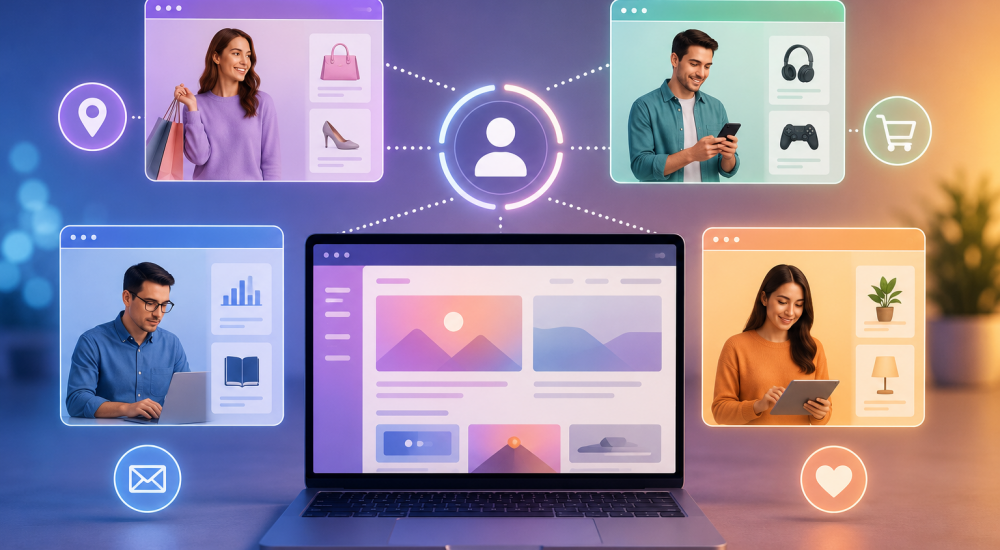
Website personalization helps every visitor see content that feels useful, relevant, and made for them.
Think about opening a favorite coffee app. The usual order sits at the top. It feels easy because the app remembers past choices. A good website creates that same feeling. People spend less time searching and more time taking action.
Shoppers today now expect this kind of experience. A sports fan in Boston may want different offers than a beach lover in San Diego. A first-time visitor needs guidance. But a repeat customer wants speed. A website that understands those moments stands out from the crowd.
Personalization is no longer reserved for giant brands with huge budgets. Small businesses and local service providers can all create better digital experiences.
This guide explains everything you need to know about this.
Website personalization is the practice of showing different content, products, or messages based on each visitor’s behavior and preferences.
A personalized website adjusts to fit individual needs. It makes every visitor feel understood.
In a personalized website, the visitor may see:
At its core, website personalization connects customer data with relevant experiences. That data can come from simple actions, such as:
Every personalized experience follows the same basic path.
Step 1: Collect useful information
A website notices visitor actions and preferences. This data should always be collected responsibly and with proper consent.
Step 2: Group similar visitors
People with similar interests or behaviors become part of audience segments.
Examples include:
Step 3: Show relevant content
The website displays content that fits each group.
That could mean a different homepage banner, product recommendation, or call-to-action button.
Step 4: Measure results
The process never stops. Smart businesses test ideas and watch customer behavior. Based on this, they improve the experience over time.
For example:
Website Personalization | Website Customization |
Product recommendations | Choosing dark mode |
Local promotions | Rearranging dashboard widgets |
Recently viewed items | Selecting a preferred language |
Personalized homepage | Saving favorite categories |
One responds to behavior. The other responds to direct user choices.
Content personalization is one part of website personalization. Content personalization focuses on changing articles, headlines, or educational resources.
Website personalization covers the entire experience, including:
People expect websites to remember them. That expectation grows every year.
A decade ago, personalized experiences felt like a bonus. Today, they feel normal. Online shoppers compare every website to the smooth experience they get from major retailers. A slow or generic website can feel like waiting in a long checkout line on Black Friday.
Businesses that understand this shift create experiences people genuinely enjoy.
Modern customers want speed, relevance, and convenience. They expect websites to remember simple things like:
As a shopper begins looking into a site, questions like these often run through their mind:
“Do I have to search all over again?”
“Will this website remember what I liked?”
“Is this deal still available?”
A personalized experience answers those questions before they are even asked.
Privacy has changed how businesses collect and use customer information.
Instead of relying on outside tracking methods, many companies now focus on first-party data. This information comes directly from interactions on their own websites.
Examples include:
This approach creates a better balance between personalization and privacy.
Visitors also appreciate transparency. Clear cookie notices and simple privacy settings build confidence. People are more willing to share information when they understand how it improves their experience.
Artificial intelligence helps websites recognize patterns that people might miss. AI can analyze thousands of customer actions in real time.
For example, an outdoor gear store may notice that visitors buying hiking boots often return within a week to shop for backpacks. AI can automatically recommend those products during the next visit.
The same technology helps businesses:
Website personalization is not about showing off advanced technology. It is about making every visit easier.
When people find what they need quickly, they are more likely to:
The real value of personalization is that it removes small frustrations before they become reasons to leave.
Website personalization helps visitors find what they need faster. At the same time, it also helps businesses reach their goals.
Nobody enjoys digging through pages of information to find one answer. A personalized website reduces that effort. It can improve customer experience by:
Every website has a goal. That goal may be selling a product, booking appointments, or encouraging newsletter signups. Personalized experiences help visitors move toward those goals with fewer distractions.
For example, a software company can show different calls to action based on visitor behavior.
A first-time visitor may see:
“Learn How the Platform Works.”
A returning visitor who viewed pricing several times may see:
“Start Your Free Trial Today.”
The second message speaks directly to where that person is in the decision process.
People leave websites when they cannot find value quickly. Generic pages force visitors to do all the work. Personalized pages guide them toward relevant information from the start.
Think about searching for hiking gear before a trip to Yellowstone National Park. If the homepage immediately highlights hiking boots, trail backpacks, and other related things, the experience feels helpful.
If the homepage promotes winter skis and snowboards in July, visitors may leave within seconds.
Many online shoppers buy more when they discover products that naturally fit their needs. Picture someone buying a new espresso machine.
Helpful recommendations might include:
These suggestions solve real problems instead of pushing random products. The result feels like good customer service rather than aggressive selling.
Returning visitors appreciate websites that recognize their preferences without making them start from scratch.
Examples include:
These details encourage customers to return instead of exploring competitors.
Some people are ready to buy today. Others are still researching options. Website personalization helps match offers to each stage of the buying journey. You are more likely to generate better leads.
A business can present different resources based on visitor interests. For example:
Marketing teams spend time creating campaigns, writing content, and testing ideas. Personalization helps that work reach the right audience instead of everyone.
Businesses can deliver experiences based on:
This approach reduces wasted effort and improves engagement.
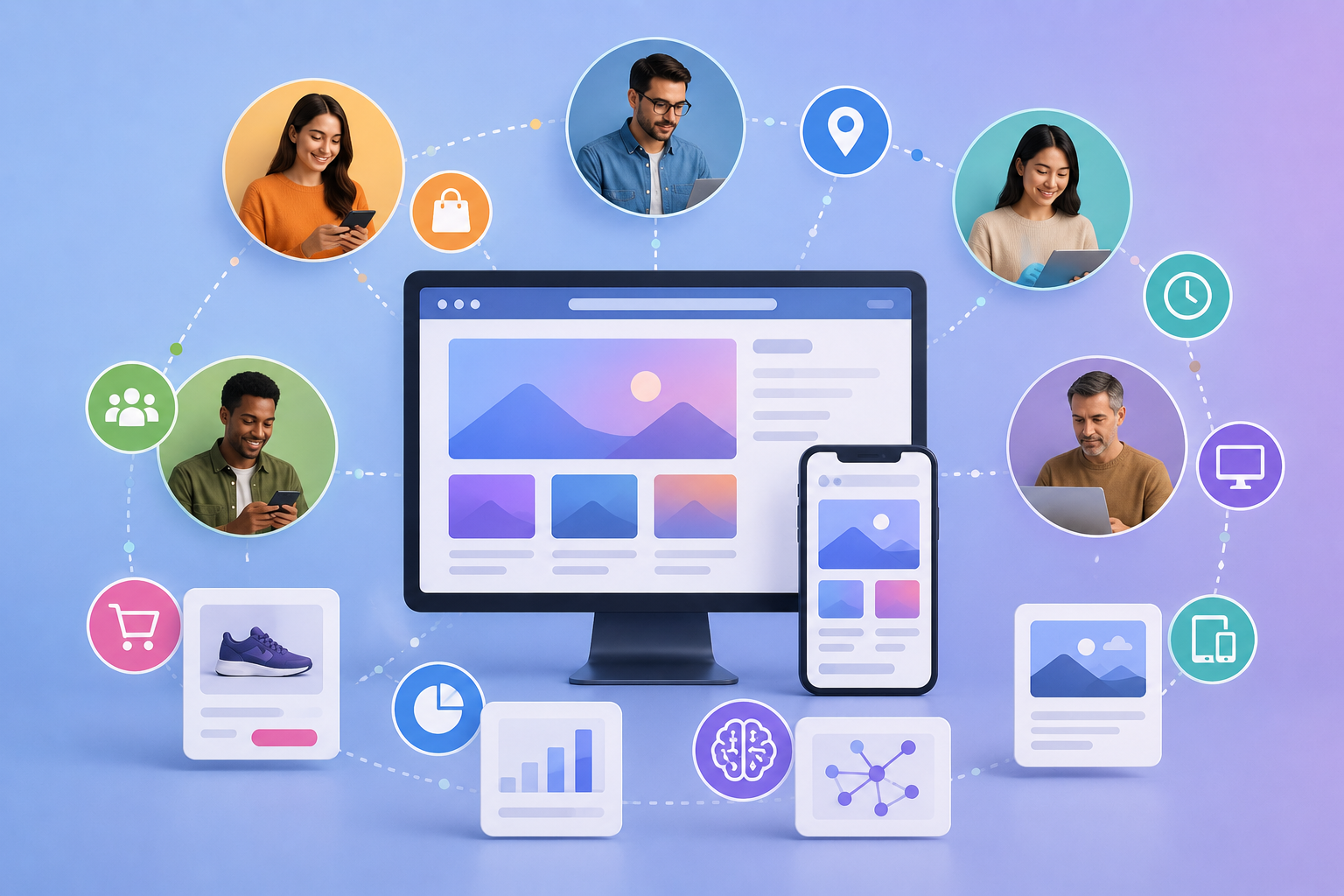
There are different types of personalization based on different customer needs.
Behavioral personalization uses past actions to shape future experiences. The website learns from what visitors actually do instead of what they say.
Common signals include:
Demographic personalization groups visitors based on shared characteristics. These may include:
A financial planning company may show retirement resources to older audiences while highlighting student loan tools for younger professionals. The goal is relevance. Good personalization still leaves room for individual preferences.
Location shapes buying decisions every day. A clothing retailer should not promote heavy winter coats to customers enjoying a sunny Florida afternoon.
Geographic personalization can adjust content based on:
Context focuses on what is happening right now. It looks at the visitor’s current situation instead of past behavior.
Useful signals include:
Meeting visitors where they are keeps the experience natural.
Mobile visitors often want speed and simplicity. Desktop users may spend more time comparing products.
Device-based personalization can include:
The path visitors take to reach a website tells an important story. Someone arriving from a Google search often needs basic information. Someone clicking an email promotion may already know the brand.
Referral source personalization adjusts content based on traffic origin. Examples include:
Artificial intelligence can recognize patterns across thousands of customer interactions. AI predicts what visitors may want next.
An online bookstore may notice that readers who buy mystery novels often explore crime podcasts. The website can suggest both without waiting for another search.
This creates experiences that feel timely instead of reactive.
Real-time personalization responds immediately to visitor actions. No waiting. No manual updates.
If someone adds hiking boots to a cart, the website can instantly suggest socks, backpacks, or trail guides. If a visitor spends several minutes reading pricing information, the website may display a live chat invitation.
These small adjustments happen within seconds. But visitors don’t notice the technology behind them.
They simply notice that everything feels easier.
Every personalized experience starts with data. The best personalization collects the right information and uses it responsibly.
First-party data comes directly from interactions on a company’s own website or app. It is one of the most trusted sources for personalization.
Examples include:
Zero-party data is information customers intentionally share. Instead of guessing preferences, businesses simply ask.
Examples include:
Every click, search, and page visit offers clues about visitor interests.
Behavioral data may include:
Past purchases often predict future needs. A customer who buys pet food every month may appreciate automatic reminders. An electronics shopper who recently purchased a laptop may soon need a carrying case.
Relevant suggestions create value because they solve the next problem before it appears.
Location helps businesses provide more useful information. Location data supports experiences such as:
Visitors interact with websites in different ways depending on their technology. Device information can improve:
Some of the best personalization comes directly from customer choices. Preferences may include:
Unlike temporary browsing behavior, these choices often remain valuable over time. That makes future visits faster and more enjoyable.
Website personalization works best when it improves moments that matter. The pages below are the most important to personalize.
The homepage creates the first impression. New visitors may need a simple introduction. Returning customers may want quick access to products or saved items. A personalized homepage helps people find value within seconds.
Landing pages perform better when they match visitor intent. Someone arriving from a social media ad expects different information than someone clicking an email campaign. Personalized headlines and offers create a more relevant experience.
Product pages can answer questions before customers ask them. They should have:
Navigation should adapt to visitor interests. A repeat customer might appreciate shortcuts to favorite categories. A first-time visitor may benefit from popular collections.
Small changes reduce clicks and improve usability.
Search personalization makes finding products or information much faster. Websites should show items based on browsing history, purchase behavior, or location of the visitor.
Popular recommendation sections include:
Calls to action should reflect where visitors are in their journey. Examples include:
An exit offer, or a local promotion can be effective when it matches visitor behavior. Timing matters just as much as the message.
Educational content benefits from personalization too. Readers interested in email marketing may appreciate related articles instead of unrelated topics.
Smart content recommendations keep visitors engaged and encourage deeper exploration.
Start by understanding your target audience. The stepwise strategies below are based on an understanding of this crucial factor.
Know what success looks like before making changes. Common goals include:
Create meaningful groups based on:
Walk through the website like a customer. Ask questions such as:
“Can the right information be found quickly?”
“Does this page answer the next logical question?”
“Would this experience feel helpful to a first-time visitor?”
Real decision moments reveal opportunities for better personalization.
Start with high-impact areas like:
Measure results before expanding.
What works for one audience may fail for another. Test different:
Customer behavior changes over time. A strategy that performs well today may need updates six months later. Review data regularly and look for patterns.
Website personalization is about removing friction and answering questions faster. Ultimately, it makes every interaction feel effortless.
The strongest strategies begin with understanding real people instead of chasing trends. A personalized homepage, a relevant recommendation, or a timely call to action may seem like small details. Together, those moments shape how customers remember a brand.
Every visitor arrives with a different goal. Some want answers. Some want inspiration. Others simply want the fastest path to checkout.
The real question is not whether a website should be personalized.
It is whether visitors will feel understood enough to come back tomorrow.
Website personalization shows relevant content based on visitor behavior, preferences, or location. It helps people find products, information, or services faster. Instead of giving everyone the same experience, the website adapts to individual needs, creating smoother journeys and stronger customer engagement.
An online store remembers recently viewed products and displays them during the next visit. A travel website suggests nearby destinations based on location. These simple changes save time, reduce searching, and make the browsing experience feel more useful and personal.
Personalization happens automatically using customer data and behavior. Customization depends on choices made by the user, such as selecting a language or theme. One adapts behind the scenes, while the other lets visitors control their own experience directly.
Website personalization improves user engagement by showing relevant content and reducing bounce rates. Visitors often stay longer and explore more pages. Search engines value positive user experiences, making thoughtful personalization a useful part of a broader SEO strategy.
Businesses commonly use first-party data, browsing history, purchase history, location, device type, and customer preferences. The best strategies collect only meaningful information and explain how it improves the visitor experience while respecting privacy and user consent.
Small businesses can benefit without large budgets. Personalized recommendations, local offers, and targeted landing pages improve customer experiences and conversions. Starting with one simple strategy often delivers better results than launching many complicated features at once.
AI analyzes visitor behavior and identifies patterns quickly. It recommends products, adjusts content, and predicts customer interests in real time. These insights help businesses create relevant experiences while reducing manual work and improving overall website performance.
Track conversion rate, bounce rate, click-through rate, average order value, customer retention, and time on site. These metrics reveal whether personalization improves engagement and supports business goals. Regular reviews help identify opportunities for continuous improvement.
Start using our A/B test platform now and unlock the hidden potential of your website traffic. Your success begins with giving users the personalized experiences they want.
Start Your Free Trial

Empowering businesses to optimize their conversion funnels with AI-driven insights and automation. Turn traffic into sales with our advanced attribution platform.
Trusted by Customers


©CausalFunnel Inc. All rights reserved.