



Free Funnel Audit
Convert more customers today!
SEO
10 mins read

SEO
10 mins read
Local SEO tools help businesses rank higher on Google Maps, get more customer reviews, and show up when nearby people search for services.
That sounds simple. But local SEO gets messy fast.
One tool tracks rankings but misses reviews. Another helps with citations but gives weak reports. Some look great in demos and then feel like a cluttered garage sale after a week of use.
If you run a local business in the U.S., every missed review or bad listing can cost real money. A plumber in Dallas, a dentist in Tampa, or a roofing company in Denver all fight for the same thing. Visibility. Calls. Trust.
The right local SEO tool helps make that happen.
This guide breaks down the best local SEO tools for rankings, reviews, and Google Maps visibility.
All SEO tools are not built for local search.
Some platforms focus on backlinks and blog traffic. That helps, but local SEO is different. It lives inside Google Maps, customer reviews, local listings, and “near me” searches.
A good local SEO tool should help businesses show up where buyers actually look.
Google Business Profile sits at the center of local SEO. If the profile has wrong hours, old photos, or missing categories, rankings drop. Customers notice too.
The best tools help businesses:
Think about a busy HVAC company during a heat wave in Phoenix. If the phone number is wrong in Google Maps, leads disappear in hours.
That is why profile management matters so much.
National rankings mean very little in local SEO. A pizza shop may rank first three miles away and barely appear across town.
Here, local rank tracking helps. Good tools show:
Geo grid tracking looks strange at first. Tiny squares everywhere. But it tells the truth about local rankings.
Reviews shape local rankings and customer trust. Most people read reviews before calling. Almost everyone checks star ratings.
A strong review tool helps businesses:
Speed also matters. If you don’t respond to a review for moe than a day, the customer tends to think that you aren’t interested in their feedback or experience. This lowers their trust i in your service. Remember this if you get a negative review. A calm reply often saves more customers than a perfect five star score.
Local SEO depends on consistency. If Yelp shows one phone number and Apple Maps shows another, Google gets confused.
Customers do too.
Good tools manage:
NAP means name, address, and phone number. Bad citations quietly damage rankings every month.
Sometimes rankings fall for simple reasons. Missing location pages. Slow mobile speed. Weak title tags. Broken schema.
A local SEO audit tool helps uncover those issues before they become expensive problems.
Local search feels like neighborhood politics. Everybody watches everybody.
The best tools help businesses track:
That insight matters. A bakery may think reviews are the issue. Then competitor tracking reveals the real problem. Every competitor has fresh photos and weekly Google posts.
Business owners want clarity. Strong reporting tools show:
Businesses that want local SEO, conversion optimization, and AI driven growth in one platform.
| Pros | Cons |
| Combines local SEO and conversion optimization in one platform | Pricing is much higher than many local SEO tools |
| AI powered keyword research helps uncover local opportunities | May feel too advanced for very small businesses |
| Includes offline conversion tracking for calls and bookings | Not as widely known as tools like Semrush or BrightLocal |
| Strong focus on revenue and lead generation, not just rankings | Some features require time to learn properly |
| Helps connect SEO performance with actual business outcomes | Better suited for businesses actively investing in growth |
CausalFunnel offers different pricing tiers based on its SEO services and growth solutions.
For Local SEO and Organic Traffic plans:
The platform also offers separate plans for conversion optimization, landing page testing, and ad management.
Pricing may change over time, so checking the latest plans on the official website is always recommended.
For businesses that only need rank tracking or citation management, CausalFunnel may feel expensive. However, companies focused on leads, revenue growth, and conversion performance may find more value in its broader feature set.
The platform focuses on what happens after traffic arrives. It combines local SEO with conversion optimization, behavioral analytics, landing page testing, and offline conversion tracking. That means businesses can connect rankings to actual leads and revenue instead of looking only at keyword positions.
One feature that stands out is its offline conversion tracking. Many local businesses still close sales through phone calls, appointments, or in person visits. CausalFunnel helps track those actions back to SEO and marketing efforts.
That makes the platform especially useful for service businesses where real revenue matters more than ranking reports alone.
Small businesses and agencies.
| Pros | Cons |
| Easy dashboard that most small business owners can learn quickly | Interface still feels dated in a few areas |
| Strong citation management tools for local listings | No native AI Overview tracking yet |
| White label reports work well for agencies | Some larger reports load slowly |
| Local rank tracking is clear and easy to understand | Fewer advanced backlink tools than platforms like Ahrefs |
| Good value for small businesses and agencies | Multi location workflows can feel limited for very large brands |
BrightLocal pricing starts around:
Pricing can change over time, so it is always smart to check the latest rates on the official website before signing up.
One thing many small businesses like about BrightLocal is that the pricing feels predictable. There are no giant enterprise contracts hiding around the corner.
BrightLocal feels built for real local SEO work. The citation tracker alone saves hours every month. Agencies especially love the white label reports because clients can actually understand them.
A lot of tools try to do everything. BrightLocal stays focused on local search.
Businesses that want SEO and local SEO in one platform.
| Pros | Cons |
| Combines traditional SEO and local SEO in one platform | Local features require an active Semrush subscription |
| Excellent keyword and competitor research tools | Expensive for businesses focused only on local SEO |
| Strong reporting and audit features | The dashboard can overwhelm beginners |
| Helpful content research and backlink data | Some local SEO features cost extra |
| Good for agencies handling both SEO and PPC campaigns | Local listing management is not as specialized as BrightLocal or Yext |
Semrush Local works as an add on to a standard Semrush subscription. Typical pricing starts at:
Pricing changes often, especially during promotions or annual billing offers.
For businesses already paying for Semrush, adding local SEO features usually makes sense. For smaller local businesses though, the total cost can feel pretty steep.
Semrush works well for businesses already investing in SEO. A law firm running content marketing, link building, and local SEO can manage everything in one place.
Still, the platform has a learning curve. Opening Semrush for the first time can feel quite overwhelming. But once teams learn it, the data becomes powerful.
Citation building and local ranking improvements.
Whitespark uses separate pricing for different tools and services. Examples include:
Because features are sold separately, total monthly costs depend heavily on what a business actually needs. Prices may change, so checking current plans directly with Whitespark is important.
Some agencies love this setup because they only pay for what they use. Others prefer bundled platforms with one monthly bill.
Whitespark understands local SEO deeply. The company built its reputation around citations long before most businesses cared about local listings.
The citation finder remains one of the best tools available for discovering listing opportunities competitors already use.
Google Maps rank tracking.
| Pros | Cons |
| Excellent geo grid rank tracking | Mostly focused on Google Maps rankings |
| Heatmaps make ranking gaps easy to spot | Limited broader SEO features |
| Great for service area businesses | Credit system can confuse new users |
| Helpful competitor comparison tools | Heavy scan usage can become expensive |
| Easy visual reports for clients and teams | Does not replace a full SEO platform |
Local Falcon uses a credit based pricing system. Plans start around $24/month, depending on scan volume and features.
Businesses that run lots of geo grid scans across multiple locations may spend much more each month. Pricing may change over time, especially as scan limits and AI features evolve.
This tool shows how rankings change street by street. A personal injury lawyer may dominate downtown Chicago but disappear in nearby suburbs. Local Falcon exposes those gaps instantly.
The heatmaps make rankings easier to understand too. Even non technical business owners can see weak spots fast.
Multi location businesses.
Moz Local pricing starts around:
Businesses managing many locations should calculate costs carefully because pricing scales per location.
Prices are subject to change. For regional chains though, the automation often saves enough time to justify the cost.
Moz Local simplifies local listing management. That simplicity helps busy teams.
A regional restaurant chain with twenty locations does not want to manually update holiday hours everywhere. Moz Local handles much of that work automatically.
Enterprise and franchise businesses.
| Pros | Cons |
| Strong enterprise level listing management | Pricing is higher than most local SEO tools |
| Excellent for franchise and multi location brands | Smaller businesses may not use all features |
| Centralized location control saves time | Contracts can feel less flexible |
| AI search integrations continue expanding | Learning curve for new users |
| Reliable data syncing across large networks | Better suited for enterprise workflows than small teams |
Yext uses custom enterprise pricing.
Costs depend on:
Because pricing is customized, businesses usually need to contact the sales team directly.
Prices can vary quite a bit between companies. For large franchise systems, the centralized control can be worth it. For a single local business, Yext often feels too expensive.
Yext handles complexity well. Big franchise brands often manage hundreds or thousands of locations. That creates endless listing problems.
Yext helps keep data consistent across huge networks. For smaller businesses though, it may feel too expensive and complex compared to what they actually need.
Local keyword research and backlink analysis.
Ahrefs pricing typically starts around:
Pricing may change over time. Ahrefs works best for businesses that care deeply about SEO strategy, content, and backlink growth alongside local SEO.
Ahrefs shines during research. It helps businesses understand what local customers search for and which pages competitors rank with.
For example, a roofing company may discover “hail damage roof repair” gets more searches in Texas than expected. That insight shapes smarter content and landing pages.
Every local business.
| Pros | Cons |
| Completely free to use | Limited reporting compared to paid local SEO tools |
| Essential for Google Maps rankings | Google support can be slow or inconsistent |
| Direct connection with Google Search and Maps | Suspensions can happen unexpectedly |
| Lets businesses manage reviews, photos, posts, and updates | Limited control over some public edits suggested by users |
| Strong visibility for local searches and “near me” queries | Managing multiple locations manually becomes difficult |
Google Business Profile is free. Businesses can create and manage listings without paying monthly fees. That said, many companies still spend money on:
So while the platform itself costs nothing, maintaining a strong profile still takes time and effort. Pricing for connected tools and services can also change over time.
No local SEO tool matters without a strong Google Business Profile. It remains the foundation.
Businesses sometimes chase fancy software while ignoring the basics. Missing categories. Old photos. No replies to reviews. That hurts rankings fast.
A polished profile still wins attention in crowded local markets.
Businesses that want better call tracking and lead attribution.
| Pros | Cons |
| Excellent call tracking accuracy | Not a complete local SEO platform |
| Strong lead attribution reporting | Costs rise with high call volume |
| Helpful AI powered conversation insights | Limited citation or listing management |
| Integrates well with Google Ads and SEO campaigns | Some advanced features cost extra |
| Great for service businesses that rely on phone leads | Reporting may feel too detailed for smaller teams |
CallRail pricing usually starts around:
Businesses with heavy inbound call traffic may pay much more. Pricing is subject to change.
For local service businesses though, understanding which campaigns drive actual calls can save a surprising amount of wasted ad spend.
Phone calls still drive a huge share of local business leads. That is especially true for industries like roofing, HVAC, legal services, dental clinics, and plumbing.
CallRail helps businesses understand where those calls actually come from. A business owner may think Google Ads drive most leads. Then CallRail reveals Google Maps listings bring higher quality calls instead. That changes marketing decisions fast. The conversation analytics also help spot patterns customers mention repeatedly.
Advanced local rank tracking and competitor analysis.
Pros:
Cons:
Places Scout pricing depends on:
The company offers different plans for agencies and businesses with larger tracking needs. Pricing can change, so checking directly with Places Scout is the safest option before choosing a plan.
Places Scout digs deep into local ranking data. The tool helps businesses understand how rankings shift block by block across cities and suburbs. For competitive markets like Los Angeles, Miami, or New York City, that level of detail matters.
The competitor tracking features are especially strong. Businesses can see which competitors gain visibility, where reviews increase, and which locations suddenly improve rankings. That insight helps teams react faster instead of waiting months to notice traffic drops.
Some local SEO specialists even use Places Scout alongside Local Falcon because the reporting angles feel slightly different.
Tracking local search performance and fixing visibility issues.
| Pros | Cons |
| Completely free to use | No built in citation management |
| Data comes directly from Google | Local rank tracking is limited |
| Excellent technical SEO insights | No review management tools |
| Helps identify indexing problems | Interface can feel overwhelming at first |
| Useful click through rate and keyword data | Historical data limits can frustrate advanced users |
Google Search Console is free.That makes it a valuable SEO tool available for local businesses. Still, free does not mean simple.
Many businesses barely scratch the surface of what the platform can actually reveal about rankings, clicks, and search visibility.
Google Search Console often gets overlooked in local SEO conversations. That is a mistake.
The platform shows how people actually find a business through Google Search. Businesses can track which local keywords drive clicks, which pages rank best, and where visibility drops over time.
Search Console also helps uncover indexing issues that quietly hurt local rankings. Sometimes a location page never appears in Google properly because of technical errors nobody noticed. Since the data comes directly from Google, the insights carry real weight.
Many local SEO tools estimate rankings. Google Search Console shows what users truly search, click, and see.
Local Falcon stands out for Maps visibility tracking. The geo grid reports reveal how rankings shift across neighborhoods. That insight helps businesses improve weak service areas instead of guessing.
BrightLocal and Yext both perform well here. BrightLocal works better for small businesses. Yext fits larger organizations with many locations.
Whitespark remains one of the strongest citation tools available. Its citation finder helps uncover missed local directories competitors already use.
BrightLocal offers excellent reporting and client management features. Agencies appreciate the white label reports and manageable pricing.
Moz Local and Yext handle large location networks effectively. Yext works best for enterprise brands. Moz Local suits growing regional businesses.
BrightLocal gives small businesses strong value without overwhelming complexity. That balance matters.
Most small business owners do not want ten dashboards and endless filters. They want more calls.
Google Business Profile still delivers the best free value. For paid options, BrightLocal remains cost effective.
Semrush Local combines traditional SEO and local SEO well. Businesses wanting one system for rankings, content, and local visibility often prefer it.
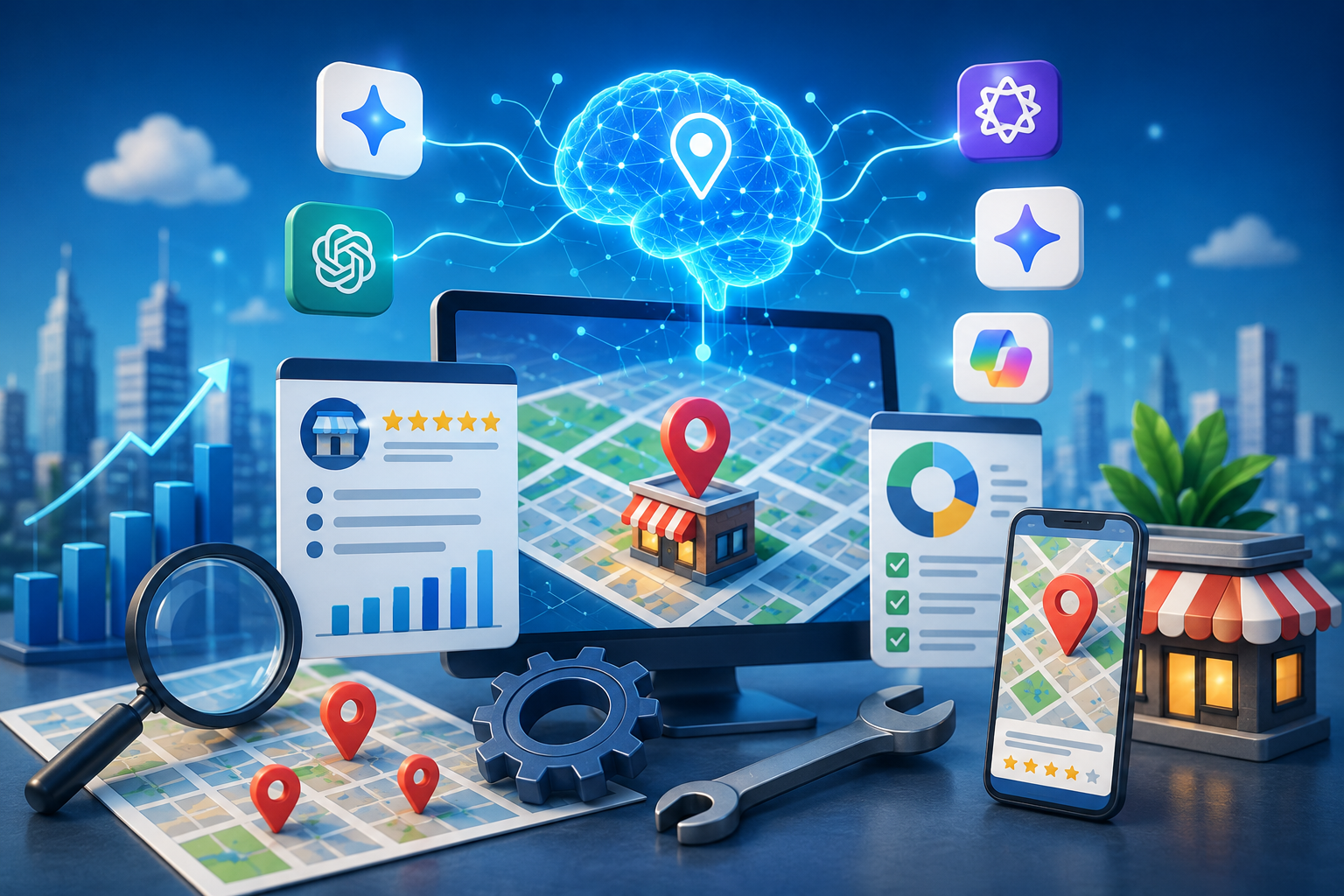
Local search looks very different in 2026. People still use Google Maps. That has not changed. But many users now search through AI tools before they ever visit a website or make a call.
Search behavior has become more conversational.
Instead of typing short phrases like:
People now ask full questions like:
That shift matters because AI systems pull answers differently than traditional search engines.
Tools like:
do not rely only on websites anymore.
They also look at:
That changes local SEO completely.
A business can have a beautiful website and still struggle in AI search if reviews are weak or listings are inconsistent.
Google AI Overviews now appear for many local searches.
Instead of showing only traditional blue links, Google often generates a quick AI summary at the top of the results page.
For example, someone searching:
“Best pediatric dentist near Scottsdale with weekend appointments”
may see AI generated recommendations pulled from:
This means businesses need stronger local trust signals than ever before.
Review quality matters more now. So does category accuracy, business descriptions, and service relevance.
A surprising number of businesses still ignore those basics.
People increasingly ask AI assistants for local recommendations directly.
ChatGPT local search has become especially popular for research based local queries. Many users ask for things like:
Meanwhile, Perplexity and Gemini often pull information from trusted local sources, review platforms, and business websites. Microsoft Copilot also blends Bing local search data with AI generated summaries.
The important part is this: AI systems reward businesses that look trustworthy everywhere online. Not just on one website.
A few local SEO tools now help businesses monitor AI visibility directly.
Local Dominator recently expanded into AI visibility tracking. The platform helps businesses monitor how often they appear inside AI driven local recommendations and map based search experiences.
This matters because traditional rank tracking alone no longer tells the full story. A business might rank well in Google Maps but barely appear inside AI generated summaries.
That gap matters more every month.
Yext Scout focuses heavily on entity understanding and AI search readiness. The tool helps businesses manage structured location data across multiple platforms. At the same time, they can monitor how AI systems interpret business information.
That is especially useful for:
Yext has invested heavily in AI search integrations because enterprise brands now care about visibility beyond traditional Google rankings.
Semrush continues adding AI focused search features into its platform. Businesses can now monitor:
Semrush also helps businesses understand which pages AI systems may view as authoritative sources. That insight helps guide local content strategy.
AI systems need confidence that a business is real, trustworthy, and clearly understood. That confidence grows when business details match everywhere online.
For example, imagine a dental office has:
That creates confusion. AI systems may struggle to trust the information fully.
Strong entity consistency means:
| Signal | Example |
| Business name consistency | Same business name everywhere |
| Address consistency | Matching address across all listings |
| Phone number consistency | Same phone number on every platform |
| Service consistency | Similar descriptions of services offered |
| Brand mentions | Reviews and websites describe the business similarly |
This becomes even more important for AI search because systems like Gemini and ChatGPT pull information from many sources at once. Consistency builds trust, which increases visibility.
Reviews now shape AI visibility far more than many businesses realize. AI systems analyze:
A Chicago dentist with many reviews mentioning “same day crowns” may appear more often for those searches.
The same happens for:
Specific language inside reviews helps AI systems understand what a business actually does well.
That is why generic reviews like “Great service!” carry less value than detailed reviews describing real experiences.
Even with AI search growing quickly, Google Maps still drives huge local traffic. People continue using Maps for:
AI tools still rely heavily on Google Business Profile data in many cases. That means businesses cannot afford to ignore Maps optimization.
A strong Google Business Profile still improves:
The best local SEO tool depends on the real problem a business needs to solve. Need stronger Google Maps visibility? Local Falcon makes sense. Need better citation management? Whitespark shines there.Need a balanced all around platform? BrightLocal remains one of the safest picks for many businesses.
Sometimes the smartest move is not buying another tool at all. Sometimes the biggest ranking gains come from finally replying to reviews, updating old listings, and posting fresh photos to Google Business Profile.
Because at the end of the day, local search is not really about software. It is about trust. When someone nearby searches for help, does the business look real, active, and worth calling?
BrightLocal is one of the best local SEO tools for small businesses and agencies. It helps with rankings, reviews, citations, and reporting in one place. The dashboard is easy to use, which makes daily tasks simpler. Many businesses like it because the pricing feels reasonable compared to larger enterprise tools.
Local Falcon is one of the strongest tools for Google Maps rankings. It uses geo grid tracking to show how a business ranks across different parts of a city. This helps businesses spot weak areas in their visibility. The visual heatmaps also make ranking data much easier to understand.
Free local SEO tools can work well for very small businesses that are just getting started. Google Business Profile and Google Search Console offer valuable insights at no cost. Still, as businesses grow, paid tools often become necessary for tracking rankings, managing reviews, and handling listings more efficiently.
Several tools help businesses improve Google Business Profile rankings. BrightLocal, Whitespark, Semrush Local, and Yext are among the most popular choices. These tools help manage listings, reviews, citations, and local SEO signals. They also make it easier to keep business information accurate across different online platforms.
BrightLocal works especially well for agencies because it includes white label reports and scalable pricing. Agencies can track rankings, monitor reviews, and manage multiple clients from one dashboard. Semrush Local is another strong option for agencies that also handle content SEO, backlink research, and broader digital marketing campaigns.
Geo grid rank tracking measures rankings across many points on a map instead of showing one average position. This gives businesses a clearer picture of local visibility. A company may rank well in one neighborhood but poorly in another nearby area. Geo grid tracking helps uncover those gaps more accurately.
Yes, local SEO tools can help businesses appear more often in AI search results. AI systems look at reviews, listings, business profiles, and online consistency when generating recommendations. Tools like Semrush, Yext, and BrightLocal help strengthen those signals. Strong local trust signals improve visibility across AI driven search platforms.
Local SEO tool pricing varies widely depending on features and business size. Some tools, like Google Business Profile and Google Search Console, are free. Small business tools may start around $20 to $50 per month. Larger enterprise platforms and agency software can cost several hundred dollars or more monthly.
Start using our A/B test platform now and unlock the hidden potential of your website traffic. Your success begins with giving users the personalized experiences they want.
Start Your Free Trial

Empowering businesses to optimize their conversion funnels with AI-driven insights and automation. Turn traffic into sales with our advanced attribution platform.
Trusted by Customers


©CausalFunnel Inc. All rights reserved.